Tag Archives: The Middle School Culture Blueprint by Ball & White

Clarity Is an Act of Service: Helping Middle School Students Know What Success Looks Like

The Middle School Culture Blueprint: Reflections from the Field | Episode 8

What if one of the most meaningful things we can do for middle school students is simply remove some of the unnecessary confusion they experience throughout the school day? I have been reflecting on this question as Dr. LaTonya White and I continue our work on The Middle School Culture Blueprint, a forthcoming manuscript in collaboration with the National Catholic Educational Association (NCEA).

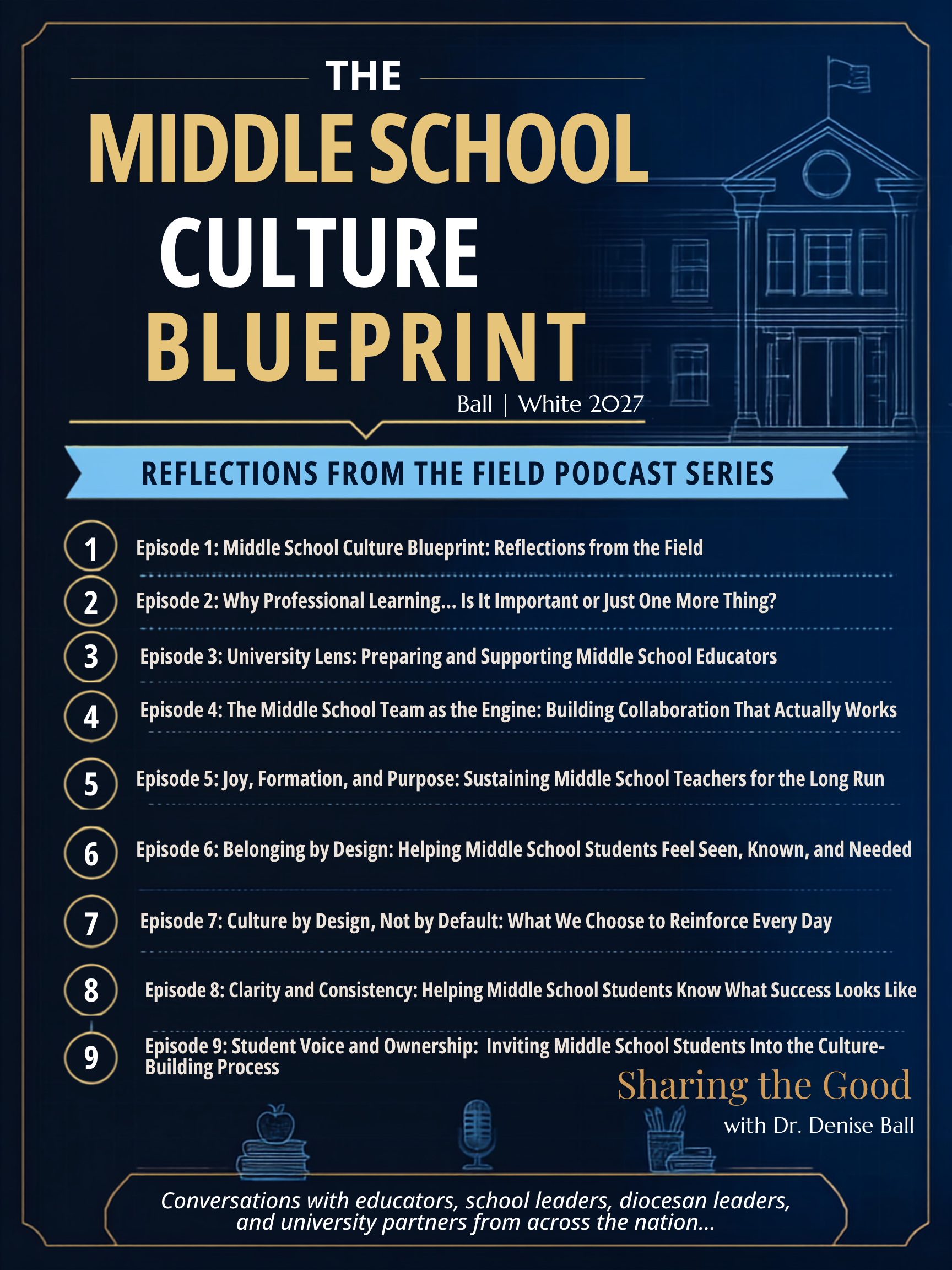
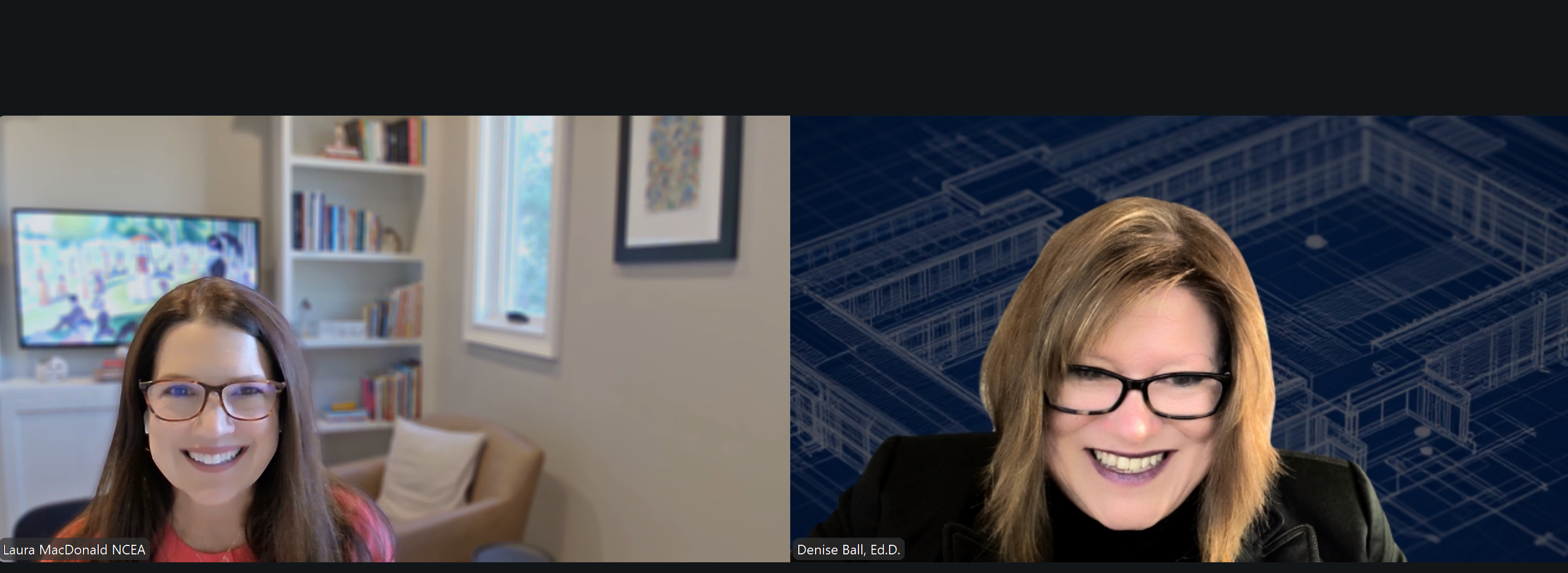
For Episode 8 of The Middle School Culture Blueprint: Reflections from the Field, I had the pleasure of welcoming Laura MacDonald, Vice President of Content and Program Development for NCEA, to explore an essential component of positive middle school culture: clarity and consistency. Laura brings a wealth of educational leadership experience and a deep commitment to supporting teachers and school leaders. Our conversation centered on an important question: How do we create learning environments where middle school students understand what is expected, know what success looks like, and feel confident enough to engage fully in learning? While clarity may sound like a simple concept, its influence on students, teachers, and the broader school community deserves our attention.

The Middle School Experience Through the Eyes of a Student

Imagine being a middle school student moving through six or seven different classrooms in a single day. Each classroom introduces a different teacher, instructional approach, set of routines, and perhaps a different way of communicating assignments or assessing student learning. Now consider the developmental changes students are navigating during early adolescence.

Middle school is a season of tremendous growth, possibility, and discovery. It can also bring uncertainty as students develop greater independence, manage increasingly complex academic responsibilities, and navigate changing relationships. When expectations differ significantly across classrooms, students may spend unnecessary energy simply trying to understand how each classroom operates. What if we could reduce some of that noise? This is where thoughtful clarity and consistency can make a meaningful difference.

The Education Endowment Foundation (2019), in its research-informed guidance Improving Behaviour in Schools, emphasizes the importance of clear and consistent approaches to expectations and behavior, while recognizing the need to understand and respond to individual students. Consistency, when thoughtfully implemented, can strengthen relationships and create supportive conditions for learning. For middle school teams, this means considering not only what we expect students to learn, but also how we communicate and reinforce those expectations across the school day.

Consistency Does Not Require Sameness

One of the distinctions I especially appreciate in conversations about school culture is the difference between coherence and conformity. Teachers bring extraordinary gifts, professional expertise, creativity, and personalities into their classrooms. These differences are strengths worth celebrating!

The goal of developing consistent schoolwide expectations is not to create identical classrooms or diminish the professional judgment of teachers. Rather, it is to identify the shared practices that help students experience greater clarity. For example, a middle school team might agree upon common language for classroom expectations, consistent procedures for communicating assignments, or shared approaches to helping students understand learning goals. Within those structures, teachers retain the freedom to design meaningful instruction, respond to student needs, and bring their individual strengths to the learning experience.

Consistency should create conditions for creativity, not eliminate it.

I believe this distinction is particularly important for school leaders and Laura provides some good insights during our conversation. When we invite teachers to collaborate in developing shared expectations, we honor their expertise while strengthening the collective experience of students. We are not asking teachers to become the same. We are asking them to work together with intention.
Clear Routines Can Create Greater Confidence and Independence

One of the most important purposes of classroom routines is to help students understand what comes next. When students know how to begin class, where to locate materials, how to ask for assistance, and what successful work looks like, they are better positioned to focus on learning. This is particularly valuable for students who need additional support with organization, attention, transitions, or managing multiple responsibilities.

Predictable routines can also provide a foundation for developing greater independence. The Education Endowment Foundation (2025), in its updated Metacognition and Self-Regulated Learning guidance, highlights the importance of explicitly teaching, modeling, and scaffolding strategies that help students plan, monitor, and evaluate their learning. These findings offer an important connection to our conversation about clarity. Students cannot be expected to independently manage their learning if we have not first helped them understand the expectations, processes, and strategies that support success.

For example, a teacher might model how to break a complex assignment into manageable steps, provide clear success criteria, or establish a consistent process for students to review their progress. Over time, these practices can help students become more confident and independent learners. Clarity, therefore, is not simply about classroom management. It is also about empowering students to take greater ownership of their learning.

The Power of Common Language

Another important consideration for middle school teams is the language we use when communicating with students and families. Do students encounter consistent terminology when teachers describe expectations, assignments, assessments, and behavior? Do families understand where to find information and how to support their children? Are our communications clear, or are we unintentionally adding complexity? These are important questions because communication is not simply about delivering information.

It is about ensuring that the intended message is understood. Common language can help students and families navigate the school experience with greater confidence. It can also strengthen collaboration among teachers by reinforcing shared priorities and expectations. This does not mean every communication needs to follow an identical script. Instead, it invites educators to consider how their communication practices support a coherent and understandable experience for students and families. Sometimes a small adjustment in language or process can make a meaningful difference.

Clarity Is Connected to Belonging, Coherence, and Formation

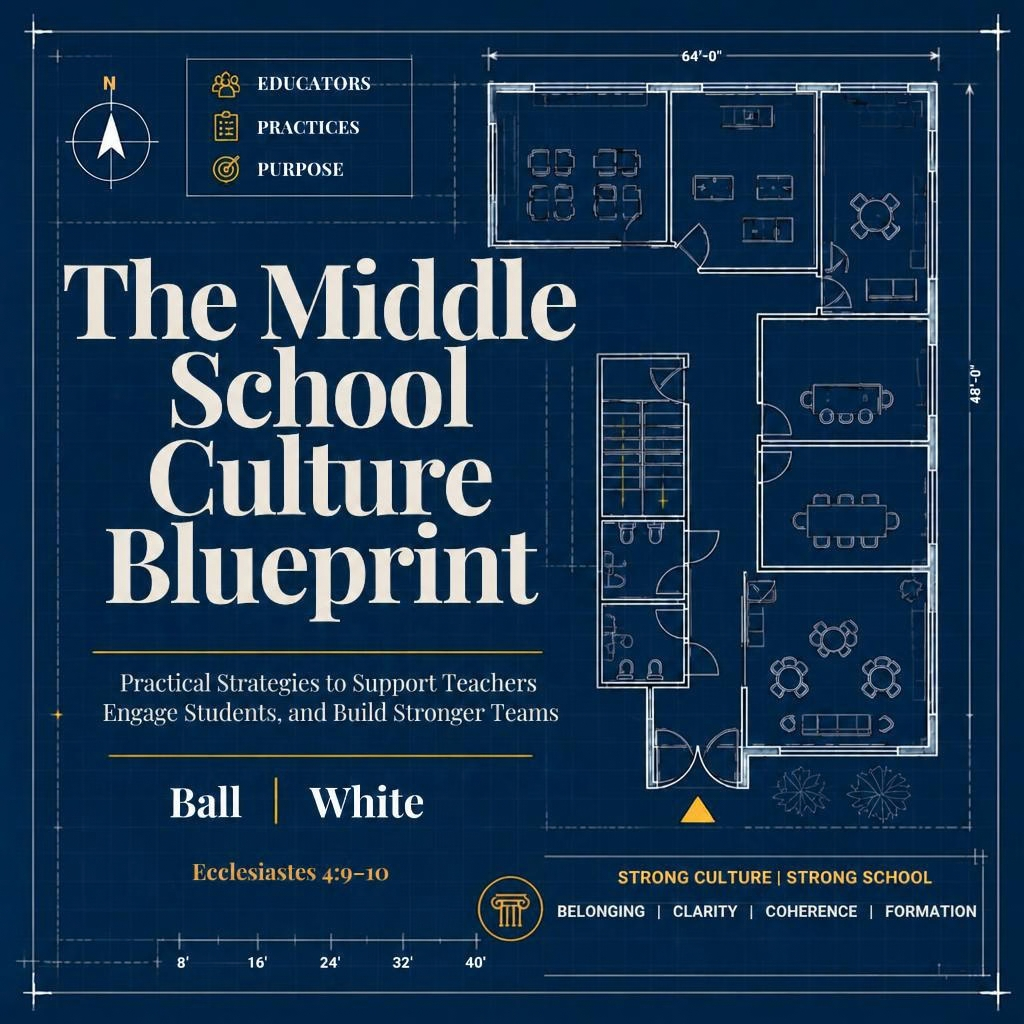
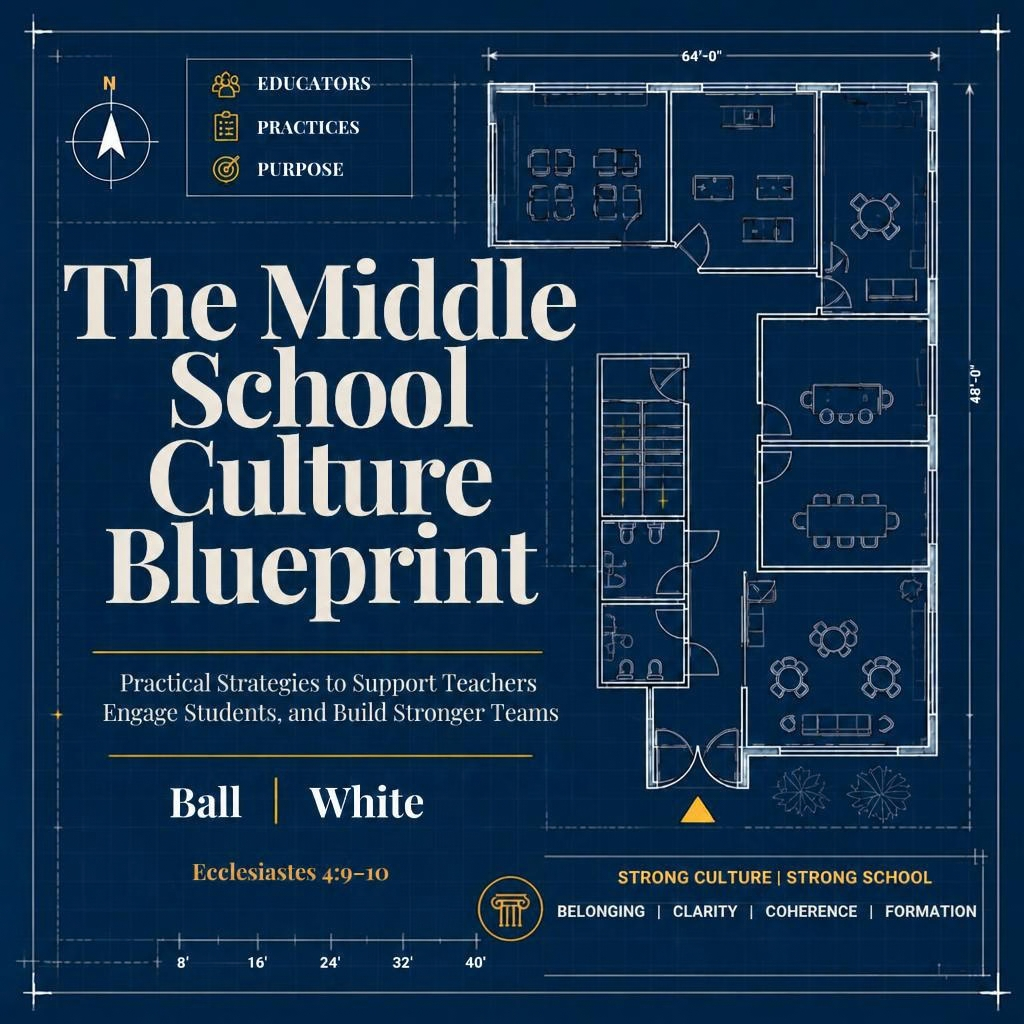
Throughout The Middle School Culture Blueprint, LaTonya and I have organized our work around four interconnected pillars: Belonging, Clarity, Coherence, and Formation. Although Episode 8 focuses specifically on clarity, it is difficult to consider this pillar without recognizing its relationship to the others. Belonging helps students know they are seen, valued, and needed within the community. Clarity helps them understand what is expected and how to experience success. Coherence ensures that the commitments we make as a school are reflected in the practices students experience throughout the day. Formation recognizes that our responsibility extends beyond academic instruction to supporting students’ growth in character, responsibility, faith, and service.

Together, these pillars offer a framework for creating the conditions in which middle school students and educators can thrive. I am drawn to the idea that clarity can communicate care. When we take time to explain expectations, establish understandable routines, and provide meaningful guidance, we communicate something important to students: We want you to succeed, and we are committed to helping you understand how. That is a powerful message for a young adolescent to experience.

Three Questions for Middle School Teams

As we consider how to bring greater clarity to the school day, I encourage middle school teachers and leaders to pause and reflect on three questions.

1. What should students be able to count on in every classroom?

Consider the routines, expectations, and communication practices that would benefit from greater consistency.

2. Where might we be creating unnecessary noise?

Take time to examine the school day through the eyes of a student. Are there competing expectations, confusing procedures, or processes that could be simplified?

3. How can we preserve teacher creativity while strengthening shared expectations?

Invite teachers into the conversation. Identify practices that benefit from consistency while protecting the professional judgment and creativity that make each classroom unique.

These questions do not require a new initiative or an elaborate implementation plan. They invite intentional reflection and collaborative action. and sometimes, that is exactly where meaningful improvement begins.

Clarity Is an Act of Service

As I reflect on this episode, I continue returning to one central idea. Clarity is an act of service. When we create understandable expectations, establish thoughtful routines, and communicate with consistency, we are helping students direct more of their energy toward learning, relationships, and growth. We are also supporting teachers by creating shared structures that can reduce unnecessary confusion and strengthen collaboration. Through clarity, we are also helping families experience a school community that is organized, intentional, and committed to student success.

A heartfelt thank you to Laura MacDonald for joining The Middle School Culture Blueprint: Reflections from the Field and contributing her leadership perspective to this important conversation.

I am grateful for the opportunity to continue learning alongside educators and leaders who generously share their experiences and wisdom for the good of our profession.

May we continue to pause, reflect, and recognize the opportunities we have to strengthen the daily experiences of the students and educators we serve.

Sometimes the most meaningful improvements are not the result of adding something new, but they begin by simplifying, clarifying, and protecting what matters most.

We can do so much more together!

May we continue to seek knowledge in all things,

Denise

References

Education Endowment Foundation. (2019). Improving behaviour in schools. https://educationendowmentfoundation.org.uk/education-evidence/guidance-reports/behaviour/

Education Endowment Foundation. (2025). Metacognition and self-regulated learning (2nd ed.). https://educationendowmentfoundation.org.uk/education-evidence/guidance-reports/metacognition


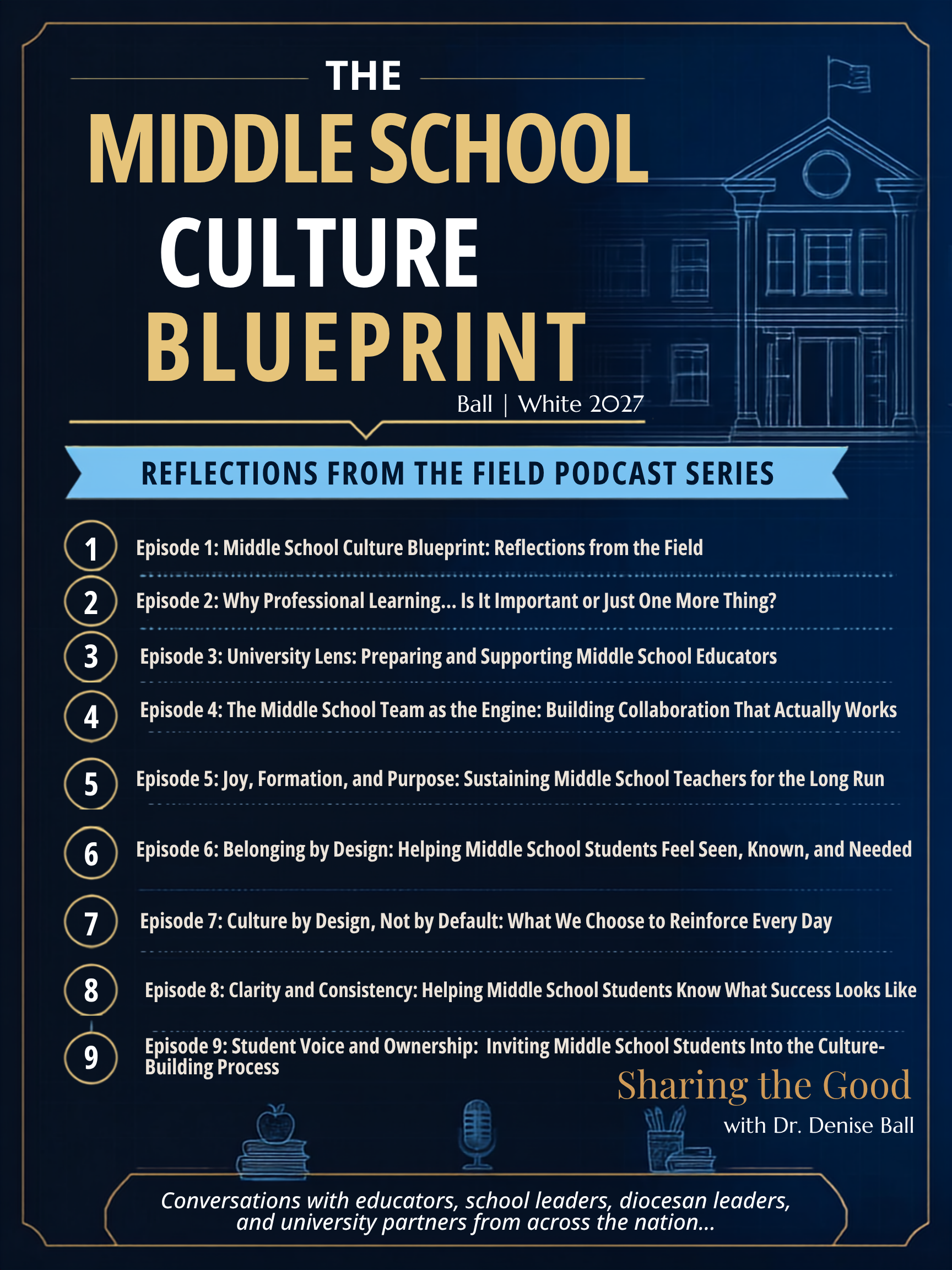
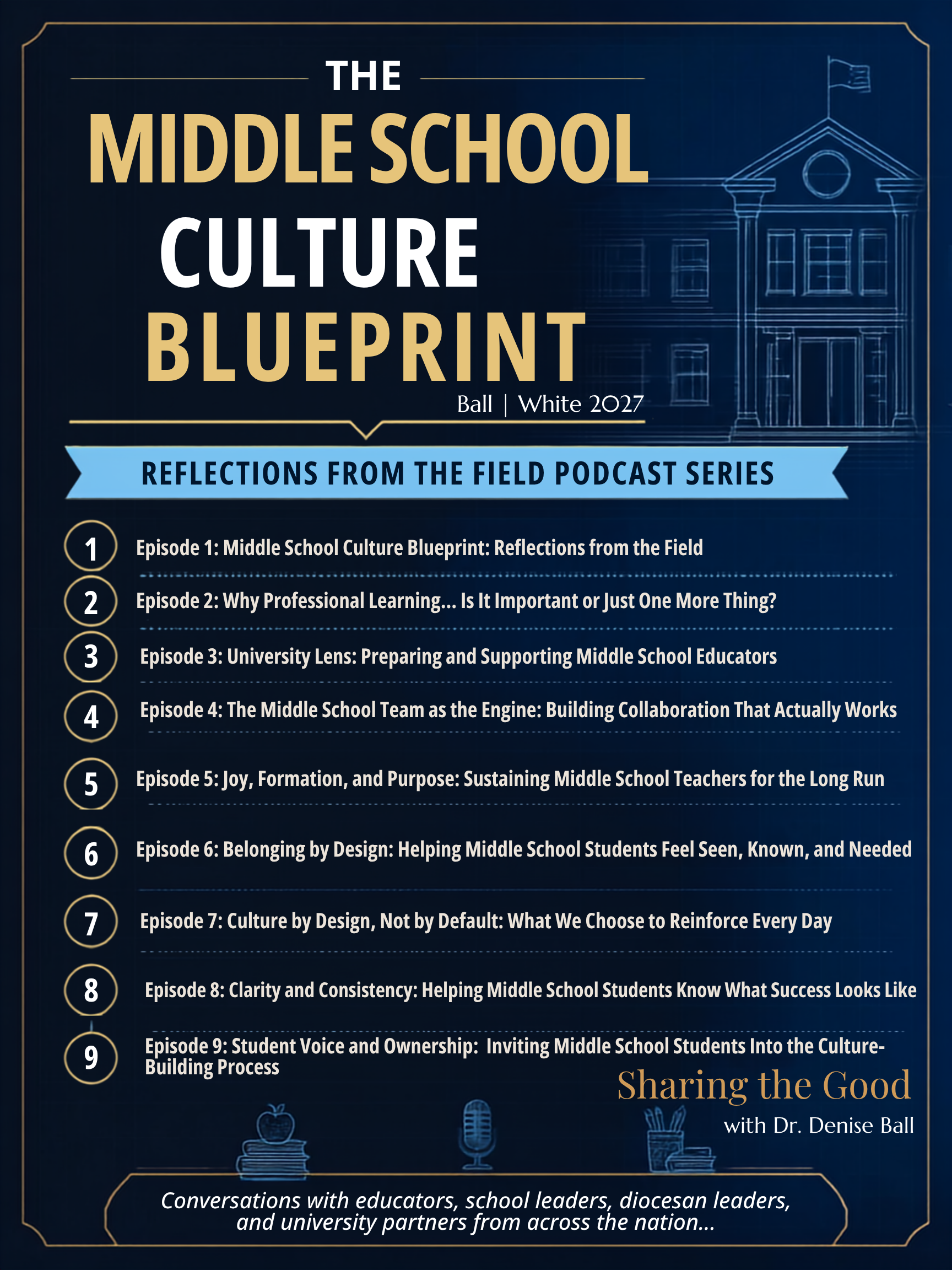
Join Dr. Denise Ball and Laura MacDonald for Episode 8, “Clarity and Consistency: Helping Middle School Students Know What Success Looks Like,” on Sharing the Good with Dr. Denise Ball. Watch on YouTube or listen wherever you enjoy your favorite podcasts.
Leave a comment

Filed under The Middle School Culture-Reflections from the Field Series

Culture by Design, Not by Default: The Courage to Listen, Learn, and Lead With Intention

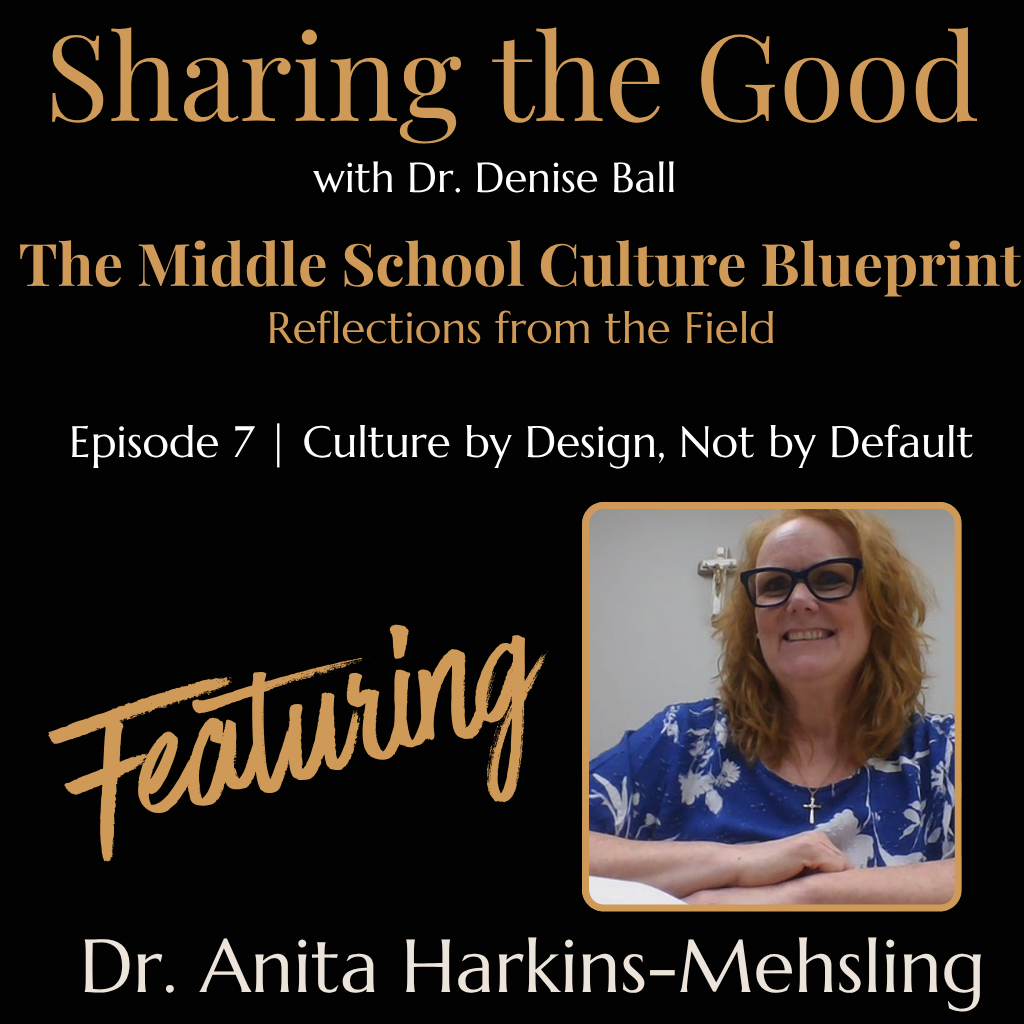
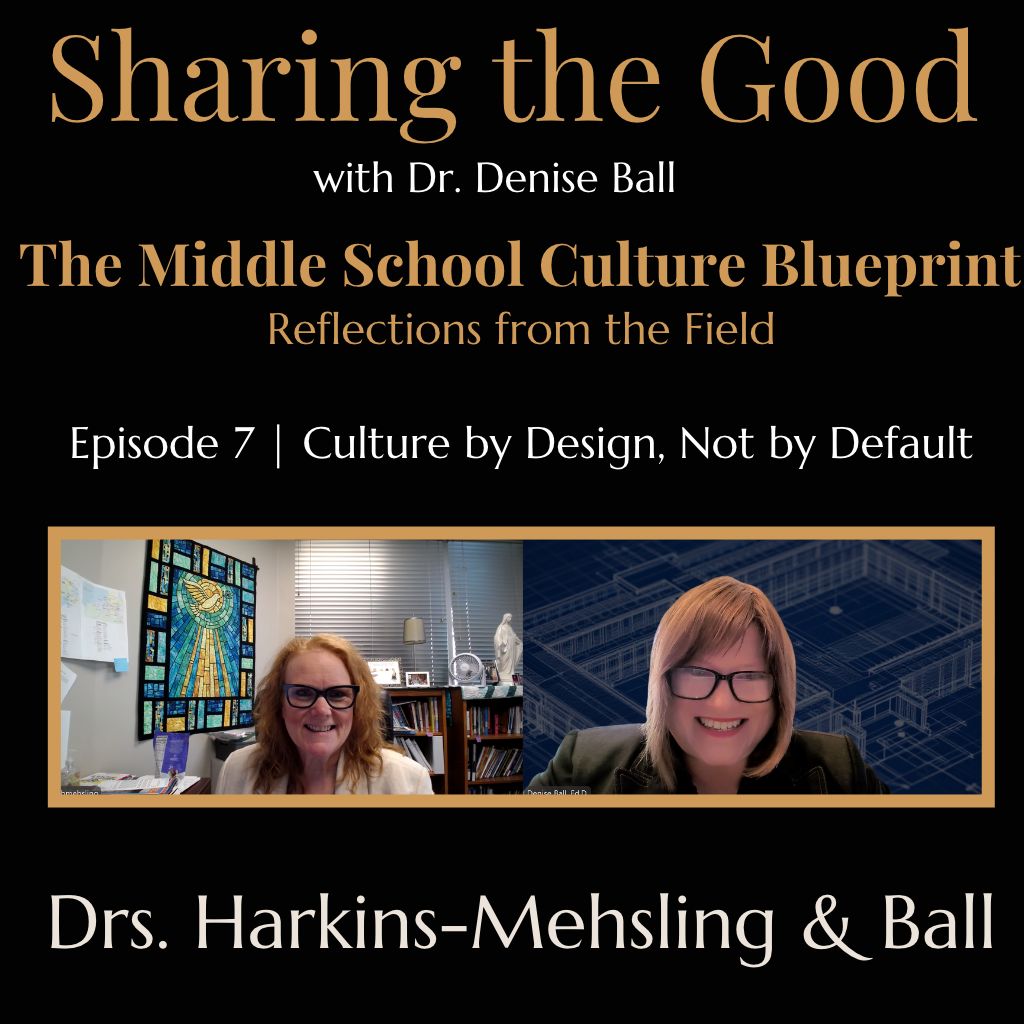
The Middle School Culture Blueprint: Reflections from the Field | Episode 7 with Dr. Anita Harkins-Mehsling

Sometimes the most powerful act of leadership is not offering a solution, but it is simply being present, listening, and acknowledging. This was one of the many meaningful reminders shared during my recent conversation with Dr. Anita Harkins-Mehsling, Associate Superintendent for the Archdiocese of Omaha Catholic Schools, for Episode 7 of The Middle School Culture Blueprint: Reflections from the Field.

Anita is a favorite voice of the Sharing the Good community, and it is always a JOY to welcome her into the conversation. With 36 years of experience serving in education, she brings a thoughtful combination of research, leadership experience, practical wisdom, and a deep commitment to Catholic education. Our discussion centered on a question that Dr. LaTonya White and I continue to explore through our work on The Middle School Culture Blueprint: How do we move from allowing school culture to develop by default to intentionally creating the conditions in which students and adults can thrive? Anita’s reflections offered several powerful lessons for school leaders and teachers alike.

Listening Is an Act of Leadership

Anita began by emphasizing the importance of intentional planning and discernment. As she reflected on professional learning and school improvement, she underscored the value of gathering feedback through surveys and then taking the additional step of personally asking questions, pausing, and truly listening to the responses. Even when feedback is constructive or difficult to hear, there is value in acknowledging the perspective being shared. I found this particularly important to share to remind us all.

As leaders, we can become so focused on solving problems, managing priorities, or moving initiatives forward that we unintentionally overlook the importance of simply listening. Yet the act of listening communicates respect. It reminds faculty, staff, families, and students that their voices matter. Most importantly, listening helps build trust. This is not always about agreeing with every perspective or immediately implementing every suggestion. It is about creating an environment where individuals know they have been heard and their contributions are valued.

Trust is strengthened when people experience that level of intentional care!

The Courage to Have Difficult Conversations

Another important thread in our conversation was the courage required to lead. Anita reminded us that school leaders must be willing to enter difficult conversations rather than avoiding them. This is especially important when we consider the culture we are creating within our school communities. Unresolved concerns, inconsistent expectations, and uncomfortable situations rarely disappear simply because they are left unaddressed. Leading with intention requires the courage to engage in honest dialogue while preserving the dignity of every individual involved.

I appreciate the connection between courage and compassion here because difficult conversations do not have to become confrontational conversations. When approached thoughtfully, they can become opportunities for understanding, growth, accountability, and stronger relationships. It is essential for us to recognize the dignity of every person, including in the moments when conversations are challenging.

Our Words Matter More Than We May Realize

One reflection that I hope every middle school educator takes to heart is Anita’s reminder about sarcasm. What an important point! Sarcasm can sometimes be perceived as harmless humor, but it can also be deeply hurtful, particularly for young adolescents navigating the complex social and emotional experiences of middle school. Students are paying attention to far more than the academic content we teach. They notice how adults speak to one another. They notice how teachers respond to mistakes. They notice whether corrections are offered with respect, and they notice whether humor strengthens relationships or comes at someone else’s expense.

Our middle school students come to us for learning, but they also come to us for formation. This is such an important distinction. We have the privilege of helping young people develop not only academic knowledge and skills but also character, confidence, responsibility, and an understanding of how to treat others. The words we choose are part of that formation. As Anita reminded us, the dignity of each person must remain at the heart of our work.

Collective Efficacy: Is This What Is Right for the Students?

One of my favorite moments in the conversation centered on collective efficacy and the importance of keeping students at the center of our decisions. Anita offered a question that I believe belongs at the forefront of every faculty meeting, leadership discussion, and school improvement effort:

“Is this what is right for the students?”

Such a simple question, yet one that can bring remarkable clarity to complex decisions. Anita then shared a story from her years in education that beautifully illustrates what collective commitment can look like in practice. While teaching at a school where English was a second language for many students, the faculty recognized an opportunity to strengthen communication with the students and families they served. Rather than placing the responsibility for communication entirely upon the families, the teachers approached the parent community with a question. Would parents be willing to tutor the teachers in Spanish one afternoon each week after school?

Think about the humility, trust, and partnership represented in that decision. The teachers recognized that they had something to learn from the very families they were serving. They identified a need. They invited collaboration, and they took collective responsibility for strengthening the school community. What a powerful example of educators placing students first!

This is the kind of story I hope we continue to celebrate and share. It reminds us that positive school culture is not simply created through programs, policies, or carefully written plans. It comes to life when individuals are willing to learn from one another and act together in service to students.

The Importance of Doing the Preparatory Work

As our conversation turned toward practical recommendations, Anita offered an important reminder to leaders who want to strengthen their school culture.

Do the preparatory work. Conduct an inventory and take time to have the conversations. Listen to the people who experience the culture every day, and allow the dignity of every person to guide the process.

I appreciate how closely this aligns with the work LaTonya and I are developing through the four pillars of The Middle School Culture Blueprint: Belonging, Clarity, Coherence, and Formation.

Belonging invites us to create environments where individuals feel seen, known, valued, and needed.

Clarity challenges us to establish shared priorities and expectations.

Coherence encourages us to align our practices and decisions with those priorities.

Formation reminds us that our work is ultimately about helping young people grow academically, socially, spiritually, and personally.

These pillars are interconnected, and none can be sustained through good intentions alone. They require thoughtful reflection and daily attention. A culture inventory, meaningful conversations, and a willingness to examine our practices can help us recognize both the strengths worth protecting and the habits that may need to change.

Sometimes Presence Is Enough

As we approached the end of our conversation, Anita shared a reminder that I believe every school leader needs to hear: You do not always have to have the solution. Sometimes your presence is what matters most, and listening is enough. Acknowledging another person’s experience is the very thing that helps strengthen trust and connection. In a profession where leaders encounter countless decisions, competing priorities, and unexpected challenges, this is a particularly meaningful reminder.

We do not have to respond to every concern with a new initiative. We do not have to fill every silence with an answer. There is wisdom in pausing, listening, and allowing others to know that they are not navigating challenges alone… an essential part of culture by design.

The Gift of Serving in Education

As I reflect on this conversation, I am reminded of the blessing of collaboration and the extraordinary relationships we develop through serving in education. Relationships matter and remind me that the culture we intentionally cultivate is not limited to the walls of a school building. It extends across our schools, dioceses, universities, and professional communities. We are connected through a shared commitment to serve students, support educators, and strengthen those placed in our care.

A Final Reflection for School Leaders

As you consider the culture of your own school community, I invite you to reflect on three questions:

  1. Are we creating intentional opportunities to listen to those we serve, including when their feedback challenges our assumptions?
  2. Do our daily words, actions, and decisions consistently reflect the dignity and respect we hope our students will demonstrate?
  3. Are we collectively asking, “Is this what is right for the students?”

Culture by design begins when we make the intentional choice to examine what we are reinforcing each day. It grows when we have the courage to engage in meaningful conversations, and it thrives when we remain committed to listening, learning, and serving one another.

A heartfelt thank you to Dr. Anita Harkins-Mehsling for sharing her wisdom, experiences, and leadership with our Sharing the Good community.

Your commitment to serving others is a blessing to our profession.

May we continue to recognize that our words and actions matter, that every person deserves to be treated with dignity, and that we are called to serve with both courage and grace.

We can do so much more together.

Please feel welcome to watch Episode 7 of The Middle School Culture Blueprint: Reflections from the Field on Sharing the Good with Dr. Denise Ball, available on YouTube and your favorite podcast platforms.

Whether during your morning commute, a quiet moment of reflection, or a well-deserved pause in your day, I hope these conversations invite us to be intentional about learning from one another, reflecting on our shared mission, and rediscovering the JOY that first called us to serve.

We can do so much more together. It is easy to share the good!

May we continue to seek knowledge in all things,

Denise

#SharingTheGood #CatholicEducation #CatholicLeadership #MiddleSchoolCultureBlueprint #SchoolCulture

Leave a comment

Filed under Sharing the Good with Dr. Denise Ball, The Middle School Culture-Reflections from the Field Series

Belonging by Design: Every Student Has a Place, a Purpose, and a Part to Play

The Middle School Culture Blueprint: Reflections from the Field | Episode 6

What if one of the most powerful ways to help middle school students experience belonging is to give them a meaningful responsibility within their school community?

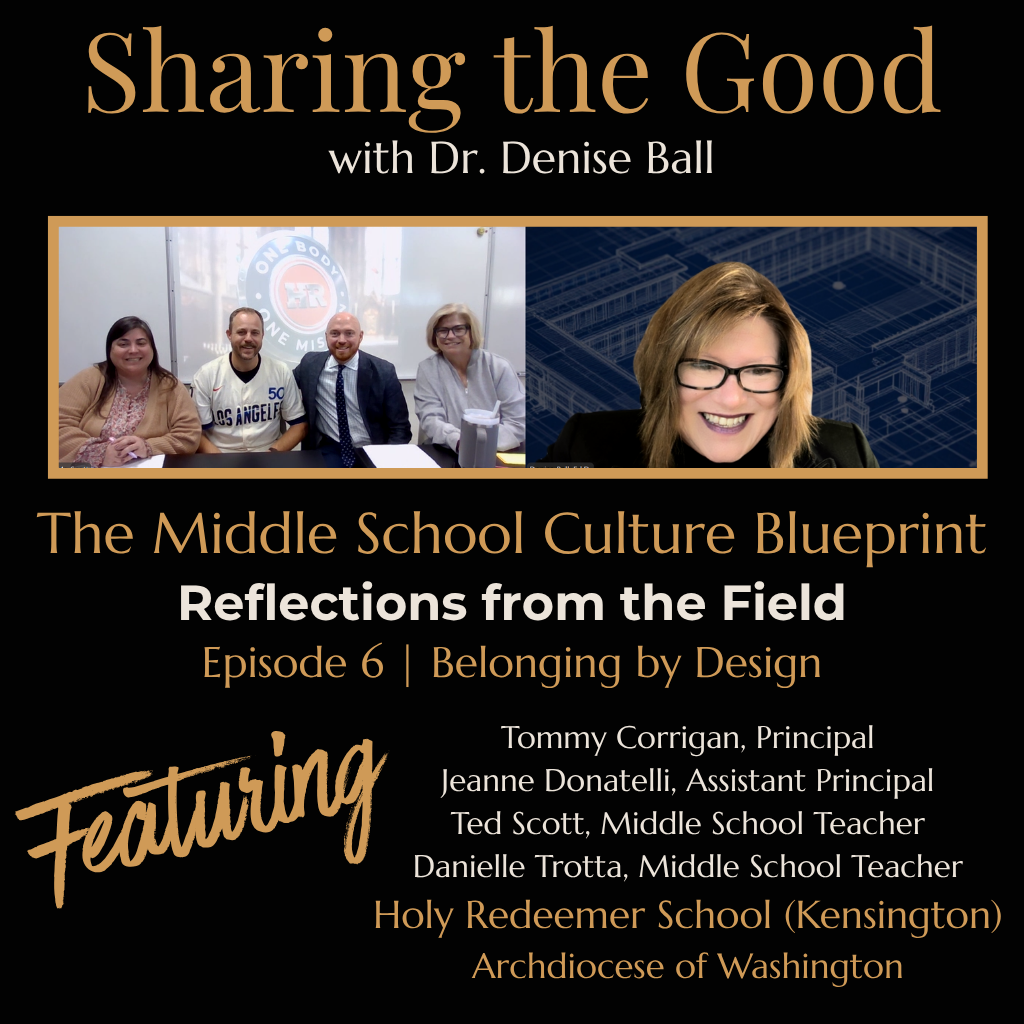
This question was at the heart of a wonderful conversation with the leadership and middle school team from Holy Redeemer Catholic School in Kensington, Maryland.

For Episode 6 of The Middle School Culture Blueprint: Reflections from the Field, I had the privilege of welcoming Principal Tommy Corrigan, Assistant Principal Jeanne Donatelli, and middle school teachers Ted Scott and Danielle Trotta to share how their school intentionally cultivates a culture where students are seen, known, and needed.

As Dr. LaTonya White and I continue developing The Middle School Culture Blueprint manuscript in collaboration with NCEA, we return often to a foundational principle, that a positive school culture does not happen by chance. It must be cultivated with intention.

Our conversation with the Holy Redeemer team offered a beautiful example of this principle in action.

From Belonging to Social Purpose

During our conversation, I shared the Thriving with Social Purpose model and research by Ford and Smith, highlighting the importance of helping students understand that they have a meaningful responsibility within their community. For middle school students, belonging is about more than being welcomed or included. It is also about understanding that their presence and contributions matter. I often think about the power of these three simple words and what it means for our students to be seen, known, and needed.

We want students to know that their teachers see them as individuals, recognize their gifts, and value the unique contributions they bring to the classroom. However, there is something especially powerful about helping students recognize that other people are counting on them. Ted and Danielle, both middle school teachers, brought this concept to life by describing the many “jobs” students have throughout the Holy Redeemer community.

These opportunities to contribute remind us that students are not simply recipients of an educational experience. They are active participants in building the community around them. What an important distinction! When we intentionally invite students to serve, lead, and assume responsibility, we help them recognize that they have a place and a purpose within the school.

Faith as the Foundation

Another meaningful thread throughout our conversation came from Tommy and Jeanne, who shared the importance of prayer in the daily life of Holy Redeemer. Prayer is not reserved for one moment of the school day. It is present throughout the day and serves as something the school community leans on. I found this particularly inspiring. In Catholic education, our shared faith provides the foundation upon which relationships, decisions, and community life are built. Prayer offers opportunities to pause, reconnect, express gratitude, and recognize that we are called to something greater than ourselves.

When prayer becomes part of the natural rhythm of a school, it reinforces a shared identity and purpose, and when students witness adults leaning on prayer, they experience an important lesson about the role of faith in everyday life.

Routines, Traditions, and Expectations Matter

One of my greatest takeaways from this conversation was the intentionality with which the Holy Redeemer team has created a framework of routines, traditions, and expectations. We sometimes think about school culture primarily in terms of relationships. While relationships are essential, they are strengthened by the structures that support them. Routines create predictability, traditions strengthen community identity, and clear expectations provide consistency. Together, these elements create the conditions in which students and adults can thrive. Dr. White and I speak to the four pillars of The Middle School Culture Blueprint being Belonging, Clarity, Coherence, and Formation.

Belonging helps students recognize that they are valued members of the community. Clarity establishes shared expectations. Coherence ensures that those expectations and practices are experienced consistently. Formation invites students to grow in character, responsibility, faith, and service to others. Each pillar strengthens the others.

The Holy Redeemer conversation reminded me that a thriving middle school culture is not built through one initiative or a particularly successful school event. It is cultivated through the daily decisions and shared commitments of an entire school team.

Celebrating Community Through Traditions

Speaking of traditions, I may have discovered another reason to visit Holy Redeemer! The team shared their Friday Night Lights flag football tradition, and I have already decided that I need to experience one of these games firsthand. What a wonderful opportunity for students and families to come together, celebrate their community, and strengthen the relationships that extend beyond the classroom. Traditions such as these create shared memories and help students connect their school experience to something larger than themselves. They become part of the story students carry with them long after they leave middle school.

A Reflection for Middle School Teams

As I reflect on this conversation, I am reminded that every student who walks through our school doors deserves to experience a community where their presence matters. Perhaps one of the simplest questions we can ask as educators is: Does every student have a meaningful opportunity to contribute to the life of our school?

Not every student will seek the spotlight. Not every student will participate in the same activities or demonstrate leadership in the same way, but every student has gifts to share.

Our responsibility is to create multiple pathways for those gifts to be recognized, nurtured, and celebrated.

Sharing the Good

A heartfelt thank you to Tommy, Jeanne, Ted, and Danielle for sharing their experiences and offering such meaningful reflections from the field. Your commitment to your students, families, and one another is evident in the intentional culture you continue to cultivate at Holy Redeemer Catholic School. It is a privilege to highlight the good happening within our Catholic schools and to learn alongside educators who so generously share their wisdom for the benefit of others.

As Dr. LaTonya White and I continue our work on The Middle School Culture Blueprint, conversations like this reaffirm why we believe the voices of practitioners must be part of the story. Research provides an important foundation, and the experiences of educators bring that research to life.

May we continue creating middle school communities where every student is seen, known, and needed because belonging is not simply about having a place in the school community. It is about knowing that we have a part to play in making that community stronger.

We can do so much more together.

Watch Episode 6 of The Middle School Culture Blueprint: Reflections from the Field on Sharing the Good with Dr. Denise Ball, available on YouTube and your favorite podcast platforms.

May we continue to seek knowledge in all things,

Denise

Denise M. Ball, Ed.D.

Retired Catholic Education Leader | Author | Researcher | Consultant
Assistant Professor | Marymount University

Join the conversation

LinkedIn: linkedin.com/in/deniseballedu 

Instagram: deniseball_edu

YouTube:www.youtube.com/@SharingTheGoodwithDrDeniseBall

Facebook: https://www.facebook.com/SharingTheGoodWithDrDeniseBall

Blog: www.unlocktheteacher.org

Leave a comment

Filed under The Middle School Culture-Reflections from the Field Series

Tuning In to the Middle School Student

Middle school students are standing at a unique crossroads. They are navigating growth, identity, friendship, independence, belonging, peer influence, and the desire to be seen and known. For educators and school leaders, this means the beginning of the school year is more than a calendar event. It is an opportunity to intentionally create a culture where students feel safe, supported, challenged, and connected.

In the work Dr. LaTonya White and I are developing through The Middle School Culture Blueprint, we continue to return to the importance of designing culture with purpose, not leaving it to chance. As noted in our framework, middle school culture is strengthened when belonging, clarity, coherence, and formation are intentionally supported across classrooms, teams, and schoolwide systems (Ball & White, 2026).

This work also connects deeply to my earlier research on teacher retention and school climate, which affirmed the importance of communication, collaboration, leadership support, and a positive school climate in helping teachers remain committed to their school communities (Ball, 2023). When middle school teachers feel supported, aligned, and prepared, they are better able to create classroom environments where students can flourish. That is why tuning in to middle school students must also include tuning in to the teachers and teams who serve them each day. How leaders welcome faculty and staff back matters. The rhythm leaders create before students arrive can shape the tone, trust, and energy of the entire school year.

One simple strategy school leaders can use is a Welcome Back Reflection Checklist before the first faculty meeting or middle school team gathering. Before launching into schedules, logistics, and tasks, pause and ask:

Have we created time for fellowship?

Have we provided space for teachers to reconnect as people before they plan as professionals?

Have we built in table talk around what our students need most this year?

Have we clarified the language, routines, and non-negotiables we want students to experience across classrooms?

Have we invited teachers to name what they need in order to begin well?

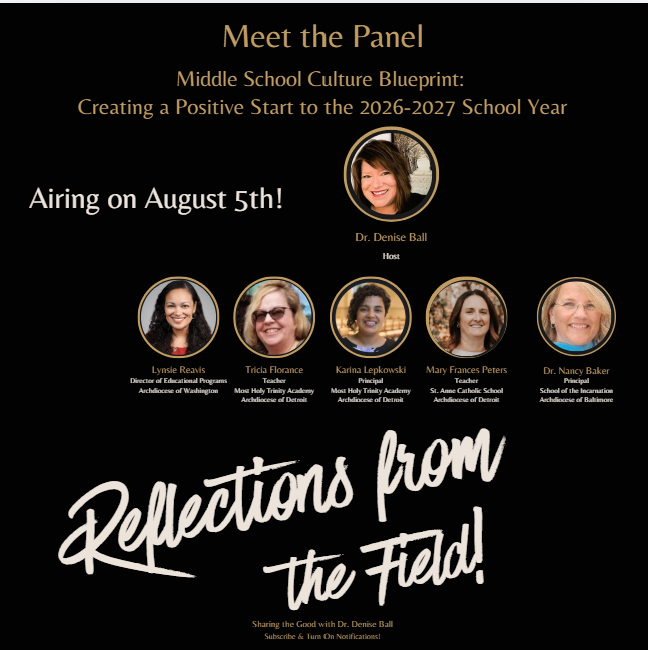
These questions can help leaders move from information-sharing to culture-building. I invite you to watch or listen on August 5 as I host Middle School Culture Blueprint: Reflections from the Field: Creating a Positive Start to the 2026–2027 School Year. I am honored to welcome Dr. Nancy Baker, Lynsie Reavis, Tricia Florance, Mary Peters, and Karina Lepkowski for a meaningful conversation on this important topic.

May we continue to seek knowledge in all things,

Denise

References
Ball, D. M. (2023). Improving teacher retention within Archdiocese of Washington schools [Doctoral dissertation, Liberty University]. Scholars Crossing. https://digitalcommons.liberty.edu/doctoral/5006/
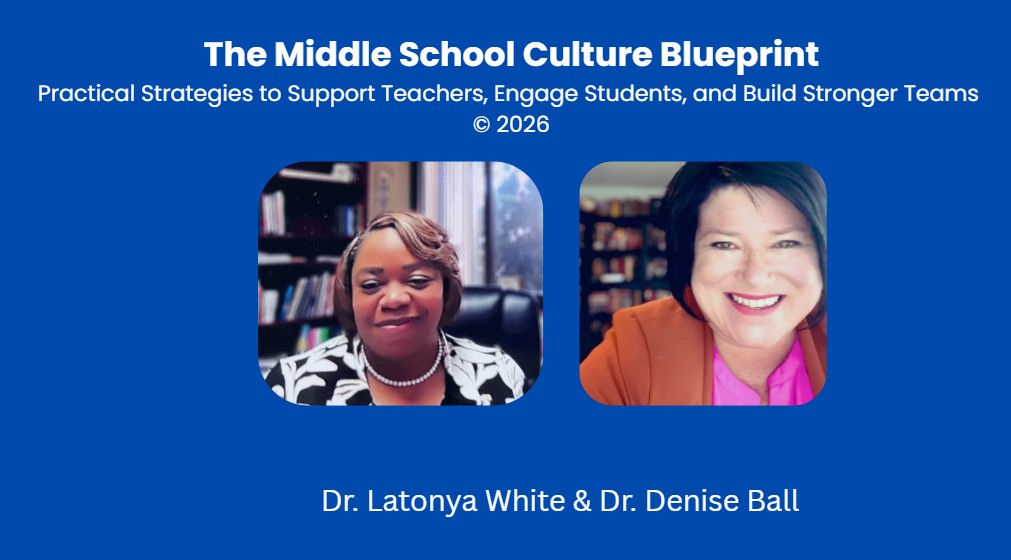
Ball, D. M., & White, L. (2026). The Middle School Culture Blueprint: Practical Strategies to Support Teachers, Engage Students, and Build Stronger Teams. Manuscript in development.

Leave a comment

Filed under Educational Resources

What We Build Together: The Power of Collaboration–A Middle School Mindset Initiative

There is a particular kind of energy that comes from meaningful collaboration. The kind that is grounded in shared mission, fueled by trust, and sustained by a deep belief in the work we are called to do.

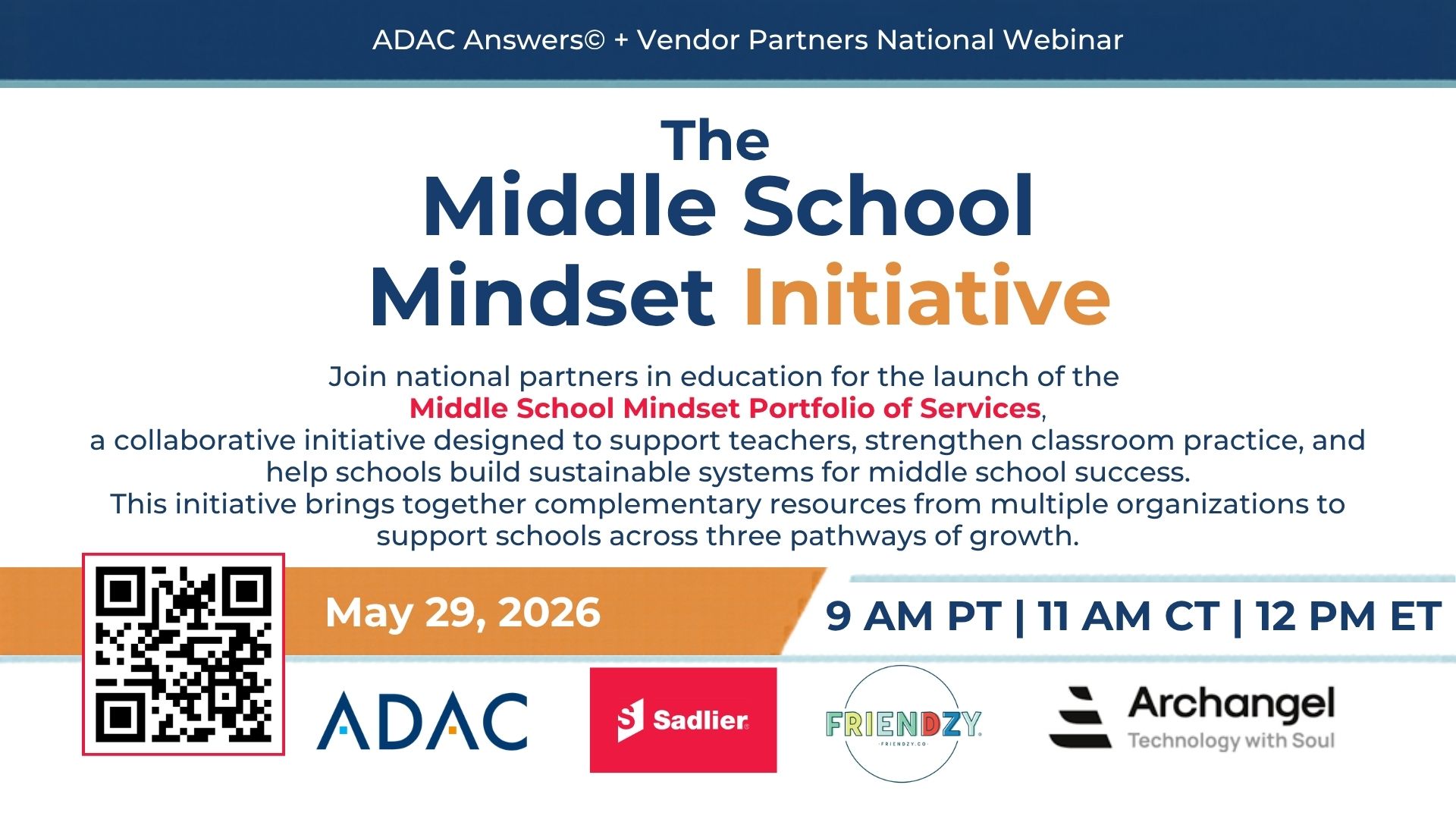
Over the past year, I have had the privilege of working alongside incredible partners to bring the Middle School Mindset Portfolio of Services to life. What began as an idea has grown into something far more powerful than any one organization could have accomplished alone. In just a few short weeks, we will launch this work nationally on May 29.

This moment feels significant, not simply because of the launch itself, but because of what it represents.

A Response to a Critical Moment

Middle school is a pivotal season of formation. It is a time when students are asking deeper questions about identity, belonging, and purpose. It is also a time when educators are navigating increasing complexity like academic recovery, student engagement, and social-emotional needs, all while striving to create classrooms where students feel known and valued.

We cannot meet this moment in isolation.

The Middle School Mindset Portfolio was built in response to that reality. It is not a single program or a one-size-fits-all solution. Rather, it is a collaborative ecosystem designed to support educators with practical strategies, meaningful resources, and a shared commitment to strengthening both instruction and culture.

The Gift of Partnership

One of the greatest joys in this work has been collaborating with mission-aligned partners who bring both expertise and heart to the table.

A special acknowledgment goes to Archangel Education and Technology, whose team is building an innovative digital ecosystem that will no doubt become a destination space for educators and system leaders. Their work reminds us that when technology is designed with purpose, it can truly amplify impact.

Equally inspiring has been our partnership with the Archdiocese of Miami pilot schools. On May 29th, during this complimentary webinar, we will hear directly from middle school teachers who have engaged in this work, educators who are thoughtfully applying strategies, reflecting on practice, and shaping what this portfolio will become at scale.

To visit these vendor partners supporting schools nationwide, please visit:

www.theadac.com | https://friendzy.co/ | https://www.sadlier.com/ | https://arch-te.com/

We can serve students and teachers more when we do it together!

From Research to Practice: Naming What Matters Most

This work has also deepened my ongoing collaboration with Dr. LaTonya White. Together, we are preparing to share our research in the forthcoming Middle School Culture Blueprint (Ball & White, 2026).

At the center of our work is a simple yet deeply impactful reminder: what we reinforce each day becomes the culture we experience, whether by intention or by default.

Middle school culture does not happen by accident. It is shaped in the small, consistent moments: in how we greet students, how we structure learning, how we respond to challenges, and how we create space for student voice. Belonging is not a program we implement. It is a condition we intentionally cultivate through every interaction, every structure, and every expectation (Ball & White, 2026).

When we are intentional, we create environments where students and teachers can thrive. When we are not, culture is still formed, but often in ways that do not serve our mission. The opportunity before us is to lead with clarity, purpose, and hope, and to build cultures where every student and educator knows they are seen, valued, and called to grow.

A Moment of Anticipation

As we look ahead to our national webinar launch on May 29, I am filled with gratitude for the partnerships, for the educators, and for the shared commitment to this work. This is more than a program launch. It is a reflection of what is possible when we come together, listen deeply, and build something that responds to the real needs of our schools. It is a reminder that we are not alone in this work. And… it is an invitation to continue to collaborate, to continue to learn, and to continue to see the good that is unfolding all around us.

The May 29th registration is live (scan the QR code above). Come and join the conversation!

What a privilege it is to serve!

Leave a comment

Filed under Middle School Strategies