Tag Archives: educational leadership

What We Build Together: The Power of Collaboration–A Middle School Mindset Initiative

There is a particular kind of energy that comes from meaningful collaboration. The kind that is grounded in shared mission, fueled by trust, and sustained by a deep belief in the work we are called to do.

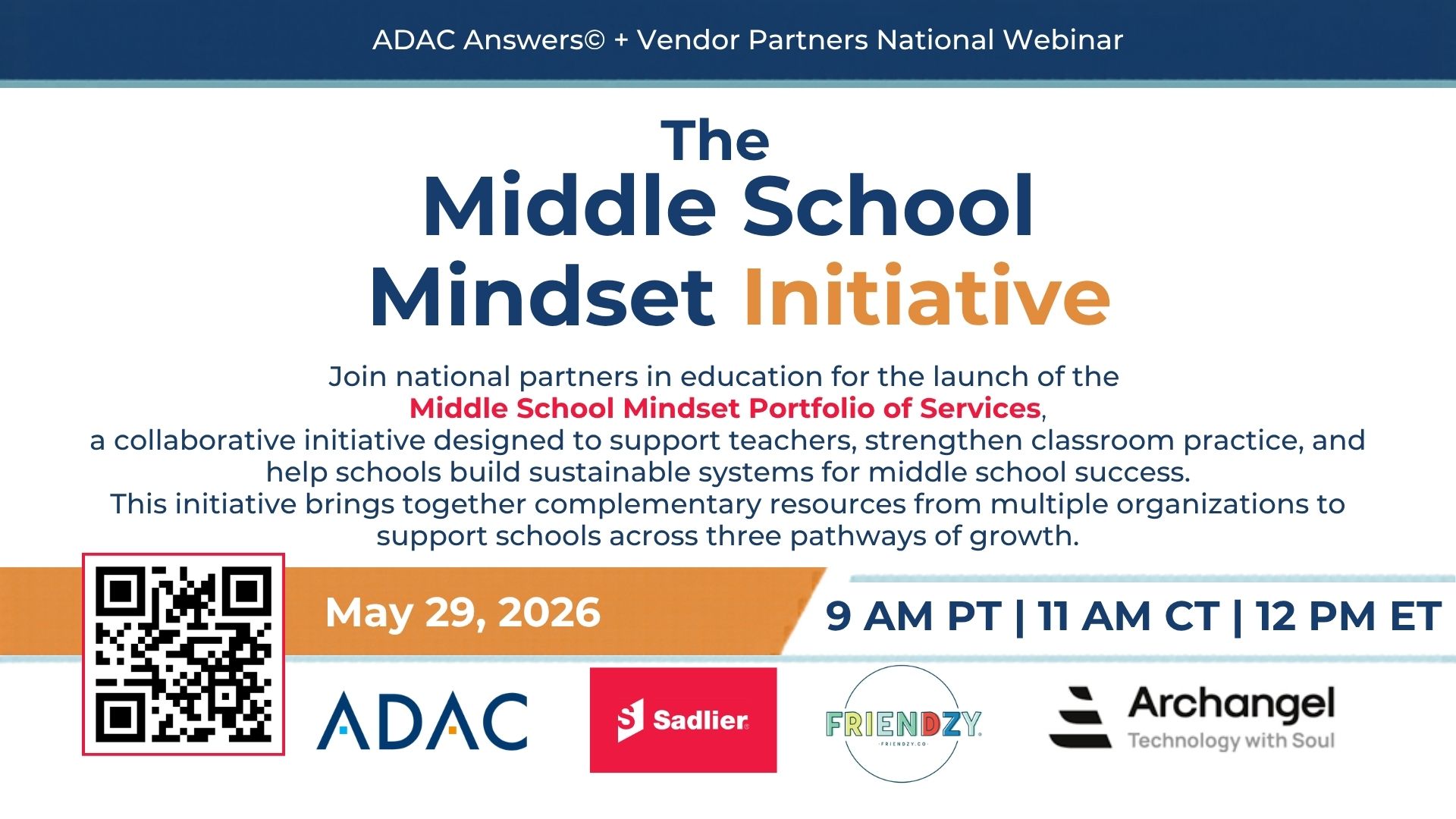
Over the past year, I have had the privilege of working alongside incredible partners to bring the Middle School Mindset Portfolio of Services to life. What began as an idea has grown into something far more powerful than any one organization could have accomplished alone. In just a few short weeks, we will launch this work nationally on May 29.

This moment feels significant, not simply because of the launch itself, but because of what it represents.

A Response to a Critical Moment

Middle school is a pivotal season of formation. It is a time when students are asking deeper questions about identity, belonging, and purpose. It is also a time when educators are navigating increasing complexity like academic recovery, student engagement, and social-emotional needs, all while striving to create classrooms where students feel known and valued.

We cannot meet this moment in isolation.

The Middle School Mindset Portfolio was built in response to that reality. It is not a single program or a one-size-fits-all solution. Rather, it is a collaborative ecosystem designed to support educators with practical strategies, meaningful resources, and a shared commitment to strengthening both instruction and culture.

The Gift of Partnership

One of the greatest joys in this work has been collaborating with mission-aligned partners who bring both expertise and heart to the table.

A special acknowledgment goes to Archangel Education and Technology, whose team is building an innovative digital ecosystem that will no doubt become a destination space for educators and system leaders. Their work reminds us that when technology is designed with purpose, it can truly amplify impact.

Equally inspiring has been our partnership with the Archdiocese of Miami pilot schools. On May 29th, during this complimentary webinar, we will hear directly from middle school teachers who have engaged in this work, educators who are thoughtfully applying strategies, reflecting on practice, and shaping what this portfolio will become at scale.

To visit these vendor partners supporting schools nationwide, please visit:

www.theadac.com | https://friendzy.co/ | https://www.sadlier.com/ | https://arch-te.com/

We can serve students and teachers more when we do it together!

From Research to Practice: Naming What Matters Most

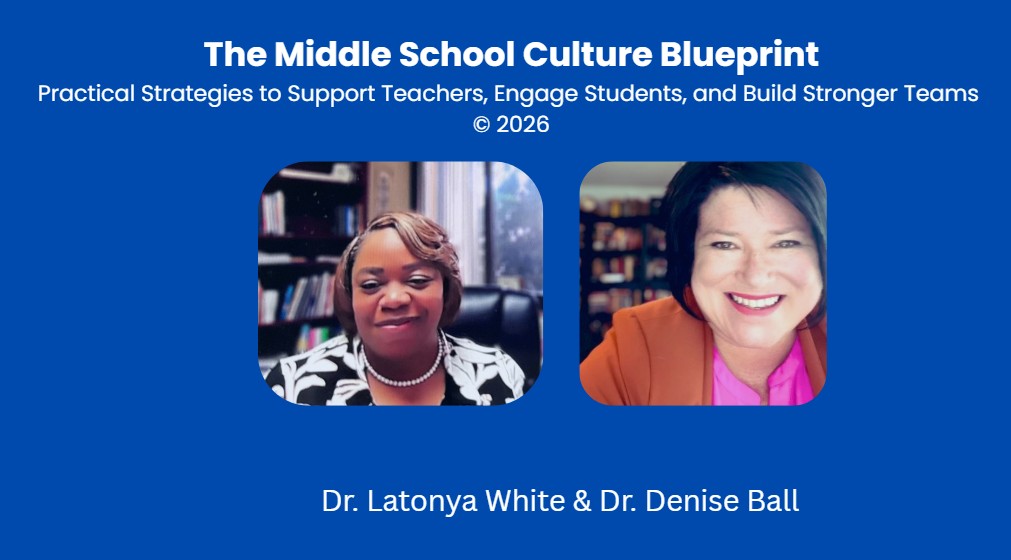
This work has also deepened my ongoing collaboration with Dr. LaTonya White. Together, we are preparing to share our research in the forthcoming Middle School Culture Blueprint (Ball & White, 2026).

At the center of our work is a simple yet deeply impactful reminder: what we reinforce each day becomes the culture we experience, whether by intention or by default.

Middle school culture does not happen by accident. It is shaped in the small, consistent moments: in how we greet students, how we structure learning, how we respond to challenges, and how we create space for student voice. Belonging is not a program we implement. It is a condition we intentionally cultivate through every interaction, every structure, and every expectation (Ball & White, 2026).

When we are intentional, we create environments where students and teachers can thrive. When we are not, culture is still formed, but often in ways that do not serve our mission. The opportunity before us is to lead with clarity, purpose, and hope, and to build cultures where every student and educator knows they are seen, valued, and called to grow.

A Moment of Anticipation

As we look ahead to our national webinar launch on May 29, I am filled with gratitude for the partnerships, for the educators, and for the shared commitment to this work. This is more than a program launch. It is a reflection of what is possible when we come together, listen deeply, and build something that responds to the real needs of our schools. It is a reminder that we are not alone in this work. And… it is an invitation to continue to collaborate, to continue to learn, and to continue to see the good that is unfolding all around us.

The May 29th registration is live (scan the QR code above). Come and join the conversation!

What a privilege it is to serve!

Leave a comment

Filed under Middle School Strategies

Marymount University Complimentary Virtual Leadership Retreat -October 2, 2025

I am grateful to Marymount University School of Education for the invitation to participate and provide tomorrow’s keynote address for this inaugural Leadership Retreat (virtual).

This inspiring day will focus on transformative leadership, with engaging sessions led by Marcia Baldanza, Ed.D., Jennifer Scully, Ed.D., Nicci Dowd, EdD, Tanya Salewski, Ed.D, Dr. Gina DiVincenzo, Dr. Allison Ross , and Travis Zimmerman, Ed. D.

Looking forward to a day of learning, reflection, and vision-casting with incredible colleagues who are shaping the future of education.

Marymount University School of Education serves 270+ aspiring doctoral students, current and future school leaders.

Scan the QR code to join the conversation! This complimentary virtual event begins tomorrow at 9AM.

It is easy to share the good!

Leave a comment

Filed under Conferences, Educational Conversations, Inspiration

Be a Distributor of Joy and Change the Teacher Attrition Rate

Blackaby (2015) reminds us that a positive school culture begins with a service-oriented mindset. Leaders must build a clear vision of the kind of school environment they want to cultivate for teachers, students, and families. Building a strong team and a positive school culture requires shared leadership, collaboration, and a focus on teacher well-being.

School leaders must be present and care enough to listen and enter the difficult conversation(s). Joy must be modeled by the school leader in both word and action…it is synergistic and transformative for a school team and a school campus/community. At the heart of teacher retention lies a simple but profound truth—joy!

As educational leaders, we must be builders and distributors of joy, creating school cultures where educators are not just sustained but inspired. Joy is not just an outcome of a thriving school environment, it is the very foundation upon which leadership, professional learning, culture, and a positive school team interconnect and strengthen one another.

When leaders cultivate environments where teachers feel valued, when professional learning is meaningful and collaborative, when school culture is intentionally shaped with positivity and respect, and when teams work together with a shared purpose, joy emerges.

The discussion on teacher retention was important pre-COVID and is essential post the pandemic when many teachers are still struggling. Teachers need to pause and take the time to reflect and acknowledge the work it took to walk through that period, celebrate the amazing things that occurred due to their hard work and service to others, so they can close the chapter and get back to the joy of education that attracted them to the profession in the first place.

The conversation on teacher retention and the importance of school leadership and a positive school culture continues…

May we continue to seek knowledge in all things,

Denise

1 Comment

Filed under Curriculum Resources, Teacher Retention and Recruitment

The Journey of Earning my Doctorate Degree in Education

The journey of earning my doctorate degree in education has been nothing short of an awe-inspiring experience. The countless hours of research, the rigorous academic challenges, and the camaraderie with fellow scholars have collectively shaped me into a more knowledgeable and resilient individual. The process of delving deep into the intricacies of educational theory and practice has not only expanded my intellectual horizons but has also instilled in me a profound passion for enhancing the educational landscape. I have served in education for the last 26 years, inspired by many teachers and school leaders. This has been a life-long goal and I am so grateful for all the support and words of encouragement along the way.

As I reflect on this transformative journey, I am filled with a sense of accomplishment and anticipation for the next phase of my academic endeavor. Armed with a wealth of knowledge and a heightened understanding of educational methodologies, I am excited to transition into the role of a contributor, researcher, and advocate for improved learning experiences. The prospect of engaging in meaningful research and writing to share innovative ways to enhance the educational journey for both students and teachers fuels my enthusiasm. This next phase represents an opportunity to bridge the gap between theory and practice, translating academic insights into actionable strategies that can positively impact classrooms and educational institutions.

My doctoral journey has equipped me not only with a scholarly mindset but also with a deep sense of responsibility to make a meaningful contribution to the field of education. I am eager to continue to collaborate with like-minded individuals, educators, and institutions to implement evidence-based practices that can foster a more enriching and effective learning environment. As I embark on this new chapter, I am motivated by the belief that education is a powerful catalyst for positive change, and I am committed to playing an active role in shaping a future where learning is an inspiring and transformative experience for all involved. If you are in that phase of discernment about whether to work towards earning a doctorate degree in education, be encouraged that you can make a difference and your voice is needed in education.

A special thank you to Liberty University for having a financially supportive program for veterans, allowing me to embark on this very fulfilling journey.

Improving Teacher Retention Within the Archdiocese of Washington Dissertation-https://digitalcommons.liberty.edu/doctoral/5006/

May we all continue to seek knowledge in all things,

Denise
2 Comments

Filed under Curriculum Resources

Thank You…Over 1 Million Views

As of June 2023, this blog has had over 1 million views, thank you! I am in the final stages of conducting my research for my dissertation and I appreciate the kind messages of inspiration sent. This platform was created in 2012 to share the good in education. Please feel free to share what inspired you this year. Sharing the good is synergistic and good for us all!

May we continue to seek knowledge in all things~

Denise

August 2020

Thank you to the 580K+ visitors to this blog. This blog is a creative way I use to share the good I see and find. Once I defend my dissertation and earn my doctorate, I hope to spend more time sharing the best practices that readers share with me. I appreciate the teachers and educational leaders that share tips and recommendations they find helpful in the classroom, school or district they serve. Thank you to the parents who leave comments and suggestions too.

When we train our eyes to see the good, we can do ANYTHING!

May we continue to seek knowledge in all things-

Denise

Leave a comment

Filed under Curriculum Resources, educational leadership, Educational Resources, Inspiration, Our Statistics, Sharing the Good, Sharing the Good in Education, Team Building/Positive Work Environments

6 Simple Reminders for Effective Leaders in Education

leadership-pic

The six simple rules provided by Dr. Ramsey, are simplistic in nature and effective if remembered by educational leaders when looking to develop and implement “in the name of children”. I believe that to be an effective leader in education, we must remember our customer is not only the child but our parents. Parents, who have a voice and could choose any school. Given the many varied school options  available today, what makes your school the best choice for their child? Parents are looking for a collaborator, not a dictator or an organization that isolates and creates feelings of inferiority.

From conducting a needs assessment, drafting a strategic plan or developing a backward designed  curriculum utilizing a Universal Design Learning mindset, we must always keep the child as center focus. Programs that lose sight of the child have failed before implementation has even begun.

As a principal, I know how “busy” and unexpected a school day can be. However, the reasons why there are so many blogs and books that share best practices and strategies for principals and educational leaders alike to get out of their offices and into the classrooms, is because we all at one point or another get stuck behind our desks attending necessary managerial tasks and we need to be reminded that the reason we chose to be a principal in the first place was to be change agents for children and a champion of teachers!

It is so important to remember the “why”! We cannot allow ourselves to get caught up in the tasks at hand but read and research that strategy that will work best for us  to spend that necessary time in the classroom seeing learning in action on the part of both student and teacher.

We cannot discount the importance placed on the positive development and cultivation of a healthy team of faculty and staff. A healthy and effective faculty and staff are crucial in the development of our future, so it is essential that we as educational leaders get up, get moving and motivate, lead and develop our teams.

As second semester begins for many of us around the world, I encourage you in 2017 to seek out new ways to tell your faculty and staff, “good job” or “this needs some attention for the sake of our children and all those placed in our care.”

Be the educational leader you wanted to be when you first said, “YES” to the opportunity.

Seek to be the difference in the lives of the children, parents, faculty and staff placed in your care. When we choose to be  and see the good, it is simply life changing.

6 RULES FOR PRINCIPALS

By  Robert Ramsey, Ed.D

  • Rule 1:  Listen to parents; the are the kid’s first teachers.
  • Rule 2:  If it’s good for kids, it’s good.
  • Rule 3:  If there’s NO fun, there’s not much lasting learning happening either.
  • Rule 4:  Kids are more important than teachers.
  • Rule 5:  Teachers are more important than principals.
  • Rule 6:  Principals are ONLY important if they HELP kids and teachers.

May we continue to seek knowledge in all things~

Denise

Leave a comment

Filed under Curriculum Resources, educational leadership, Educational Resources, Inspiration, Principals and Administrator Tools