Tag Archives: School Culture

When Shared Mission Becomes a Shared Walk

Why Fellowship is Essential with Karina Lepkowski, Principal, Most Holy Trinity

Fellowship is more than networking. It is more than collaboration around a project, committee, or a professional learning day. Fellowship is what happens when trust is built over time, shared mission becomes a shared walk, and colleagues become the trusted voices we return to because we know they will listen, encourage, challenge, and help us see more clearly.

Today, I had the joy of meeting with Karina Lepkowski, Principal at Most Holy Trinity Catholic Academy in the Archdiocese of Detroit. Karina and I have been collaborators for 14 years. She served on my team at St. Regis Catholic School, we have worked together on committees, and she has led sessions for professional learning days I developed for the Archdiocese of Baltimore. Over the years, our professional paths have crossed in many meaningful ways. But perhaps one of the most treasured parts of our story is this: Karina introduced my son to music and taught him how to play the alto saxophone. His love of jazz and the gift of having music in his heart will last him a lifetime. For that, I will always be grateful to this amazing educator, and I am honored to call her a friend now.

About Karina

Karina Lepkowski is a distinguished Catholic educator and graduate of the University of Notre Dame’s Alliance for Catholic Education (ACE) Mary Ann Remick Leadership Program. As a member of Cohort 18, she earned a Master of Arts in Educational Leadership and has continued to serve Catholic education with dedication, wisdom, and heart. Her leadership and service were also recognized by the Catholic Foundation of Michigan, which honored her with an Amazing Catholic Educator Award.

A Servant Leader

While these accomplishments speak beautifully to Karina’s professional impact, what I value most is the way she leads through relationships. She is the kind of educator and leader who listens deeply, shares generously, and reminds others that the work of Catholic education is strengthened when we walk alongside one another.

As Karina and I caught up and discussed projects we are working on, I was reminded of something important. Educational leaders need trusted voices. We need people who understand the work, who know the heart behind the work, and who can offer honest insight because the relationship is rooted in care. These are the colleagues who help us process ideas, sharpen our thinking, and stay grounded in mission. They remind us that leadership was never meant to be a lonely road.

Research continues to affirm what many of us have experienced in our own leadership journeys. Strong professional learning is collaborative, sustained, and grounded in reflection. Darling-Hammond, Hyler, and Gardner (2017) found that effective professional development creates opportunities for educators to share ideas, collaborate in job-embedded ways, and build communities that can positively influence the culture and instruction of a school or system. Similarly, research on collective teacher culture points to the importance of shared goals, supportive colleagues, collective efficacy, and belonging as important dimensions of a healthy school culture.

This is why fellowship matters. When leaders intentionally build relationships of trust and professional friendship, they strengthen the culture around them. Fellowship helps us become better listeners. It helps us ask better questions. It gives us space to pause, reflect, and renew. It also helps us remember that the work of education is deeply human. Behind every initiative, every professional learning session, every school improvement goal, and every strategic plan are people who need encouragement, connection, and belonging.

In my own research on teacher retention, school climate, leadership, collaboration, and culture emerged as important areas of focus in understanding how educators experience their work and what helps them remain committed to the mission (Ball, 2023). Positive school culture is not built by accident. It is formed through intentional relationships, shared purpose, and the daily decision to walk alongside one another.

As educational leaders, we often spend time developing strategic muscles: planning, decision-making, problem-solving, communication, and execution. These are important. However, I would share that research supports that we also need to be just as intentional about building the muscle of fellowship. Collective teacher culture is strengthened through shared goals and values, collective efficacy, supportive colleagues, belonging, and job satisfaction, all of which remind us that trusted professional relationships are central to healthy school communities (Skaalvik & Skaalvik, 2021). Who are the trusted voices we call when we need to think out loud? Who helps us see the good when the work feels heavy? Who reminds us of who we are and why this work matters?

The summer weeks offer a beautiful invitation to pause and reach out. Send the text, make the call, or schedule the coffee. Technology offers us the wonderful ability to connect via Zoom, Meet, FaceTime, etc. We really have no excuse not to engage with the technological tools at our fingertips today. I encourage you to reconnect with the colleague who has walked part of the journey with you. Take time to say thank you to the person who helped shape your leadership, your school community, or even your family in ways that will last a lifetime. Gratitude has a way of lowering our stress levels and refocusing our lens to see the good all around us.

When we make time to walk alongside one another, we build the kind of school culture where others can do the same.

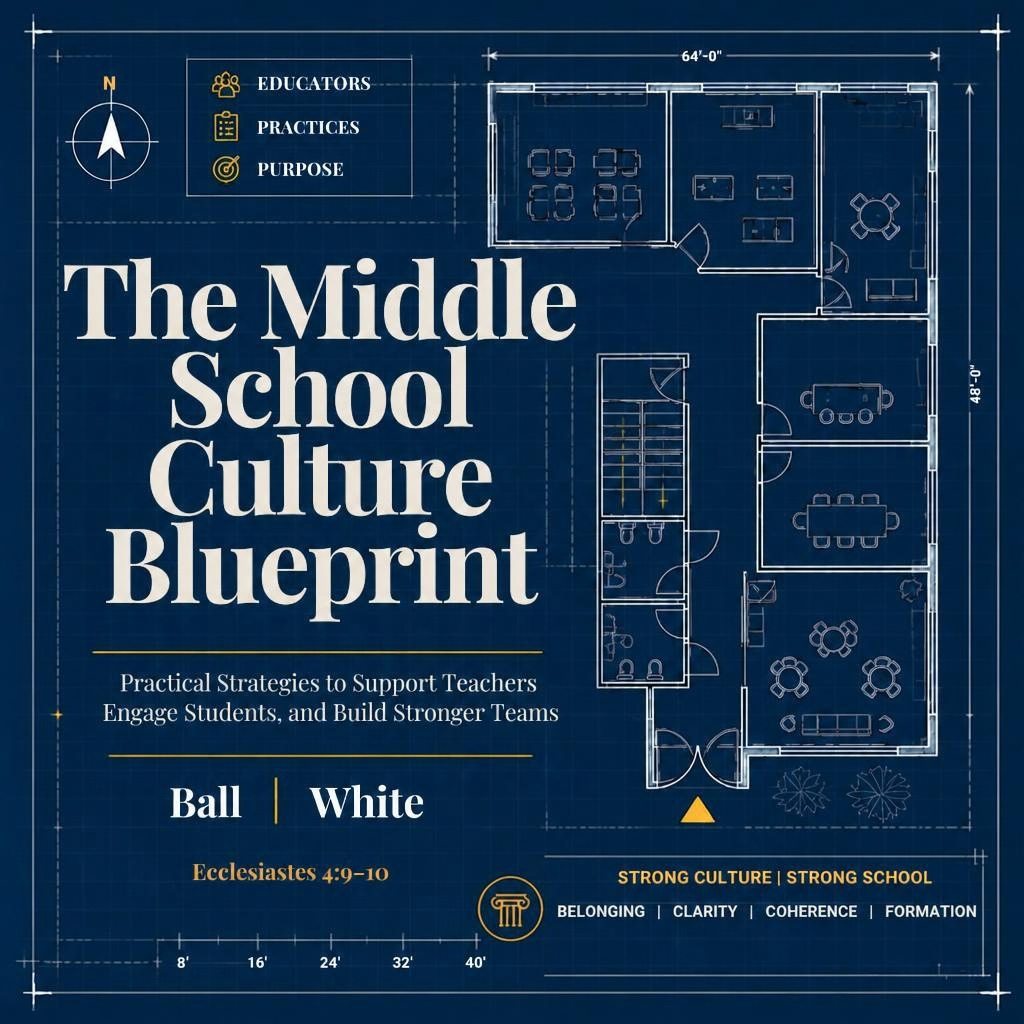
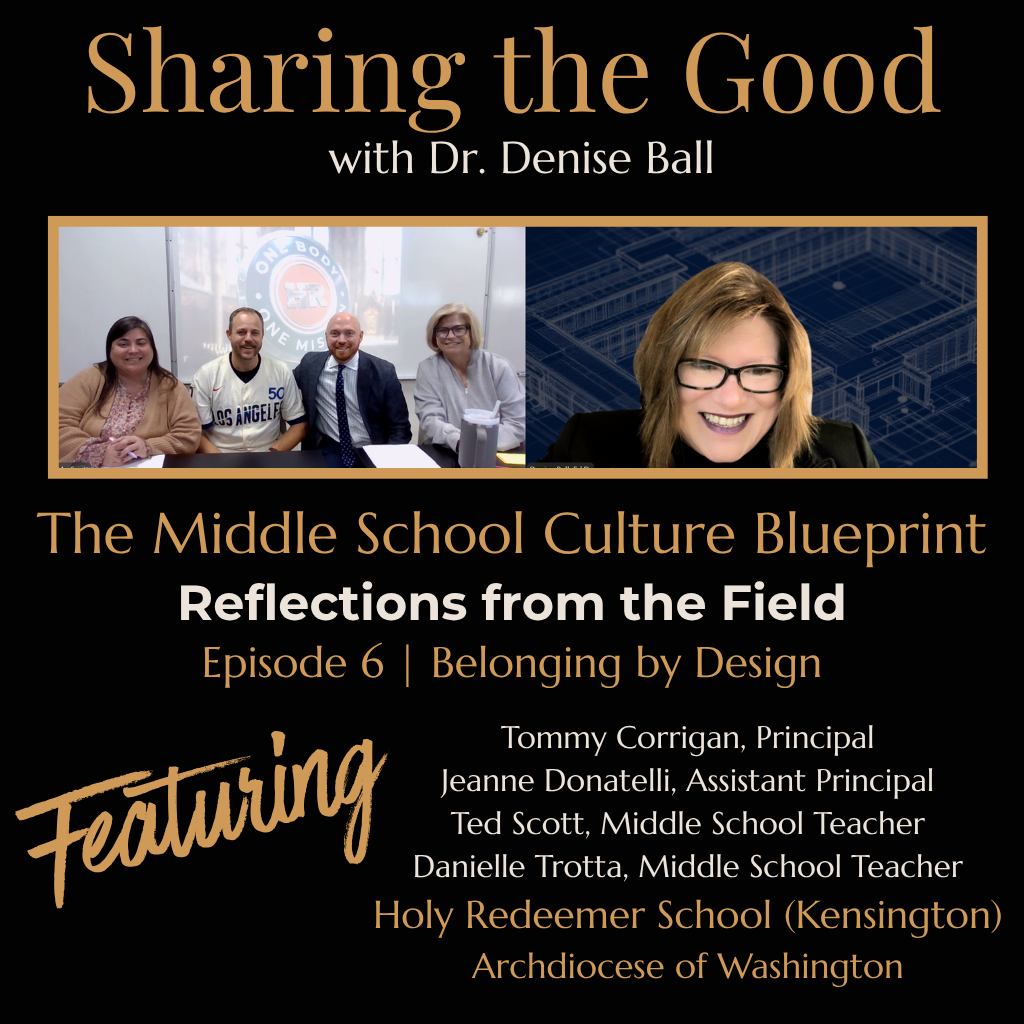
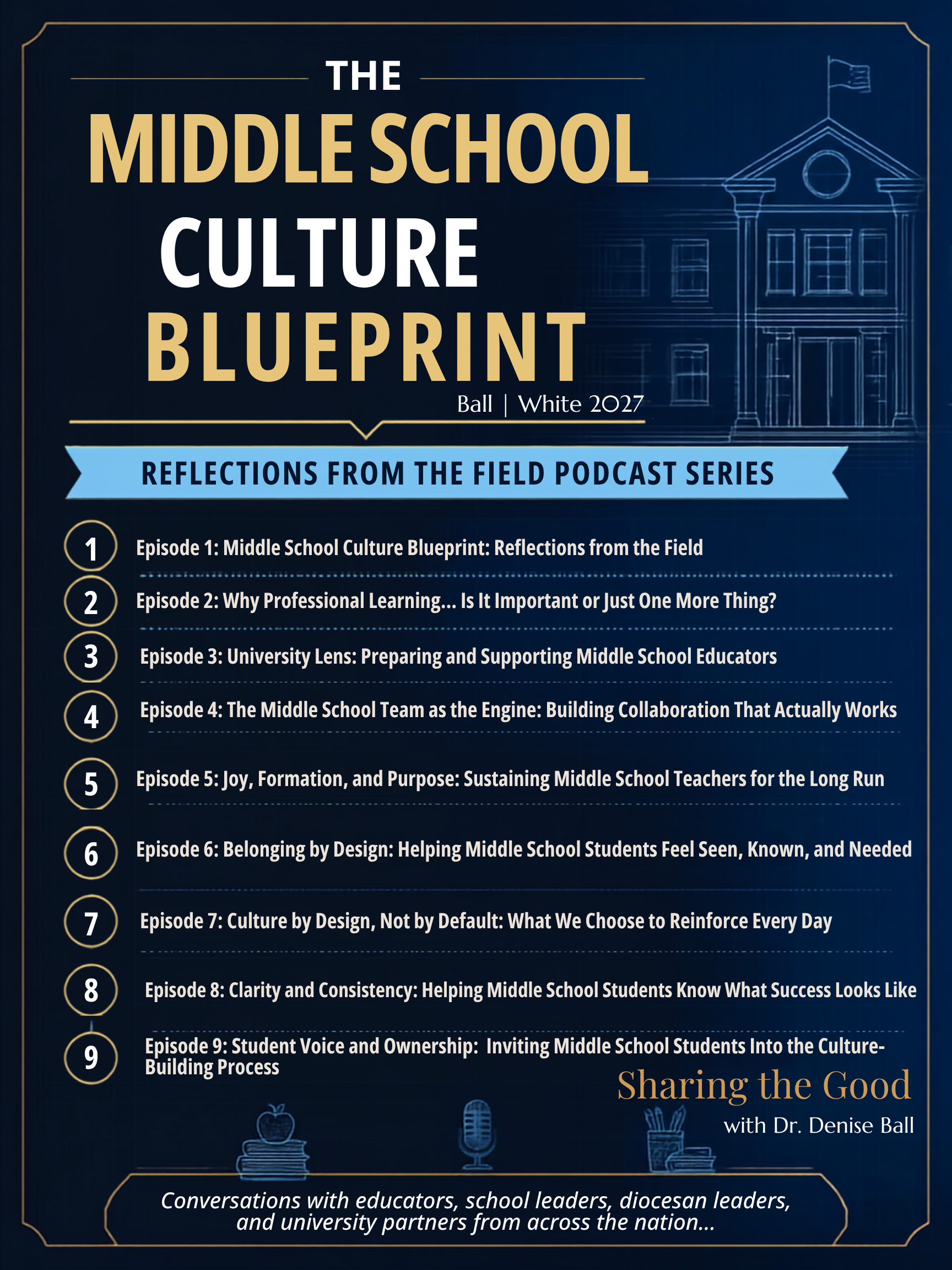
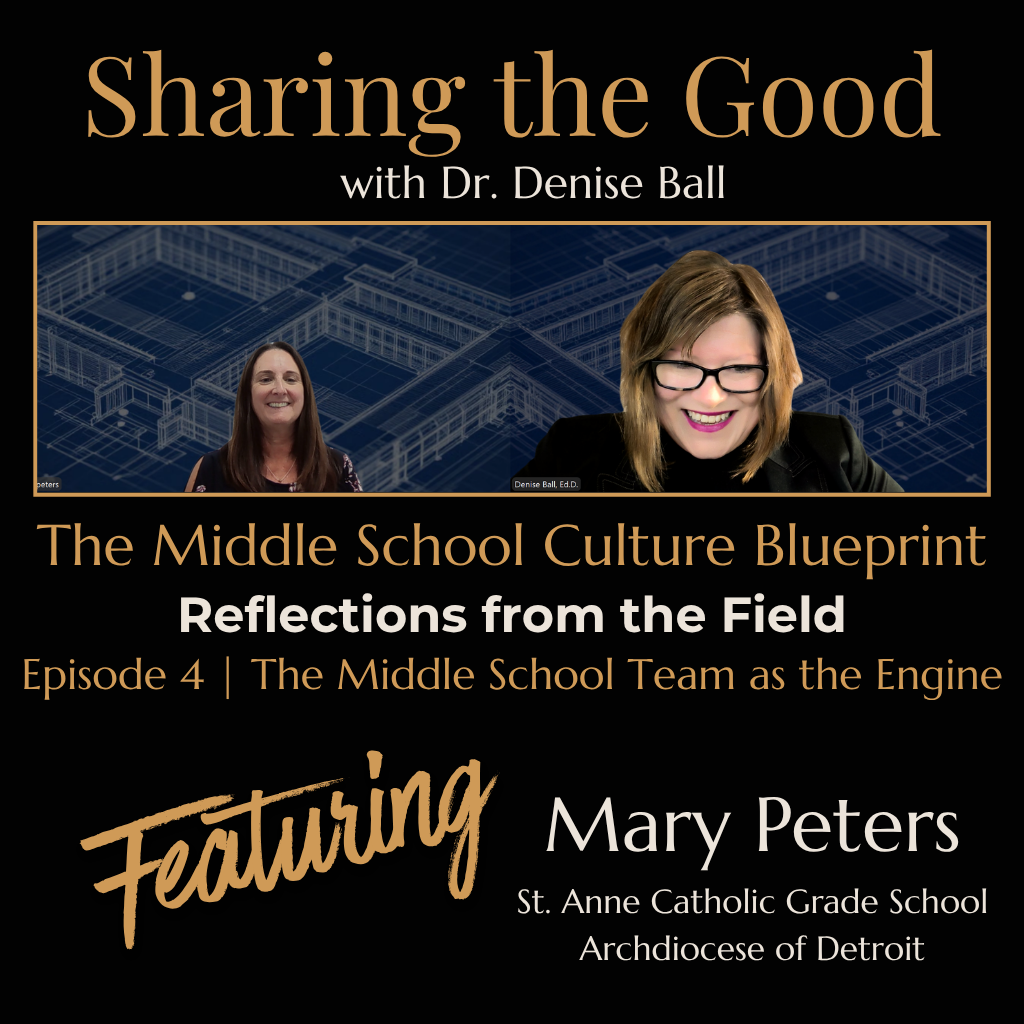
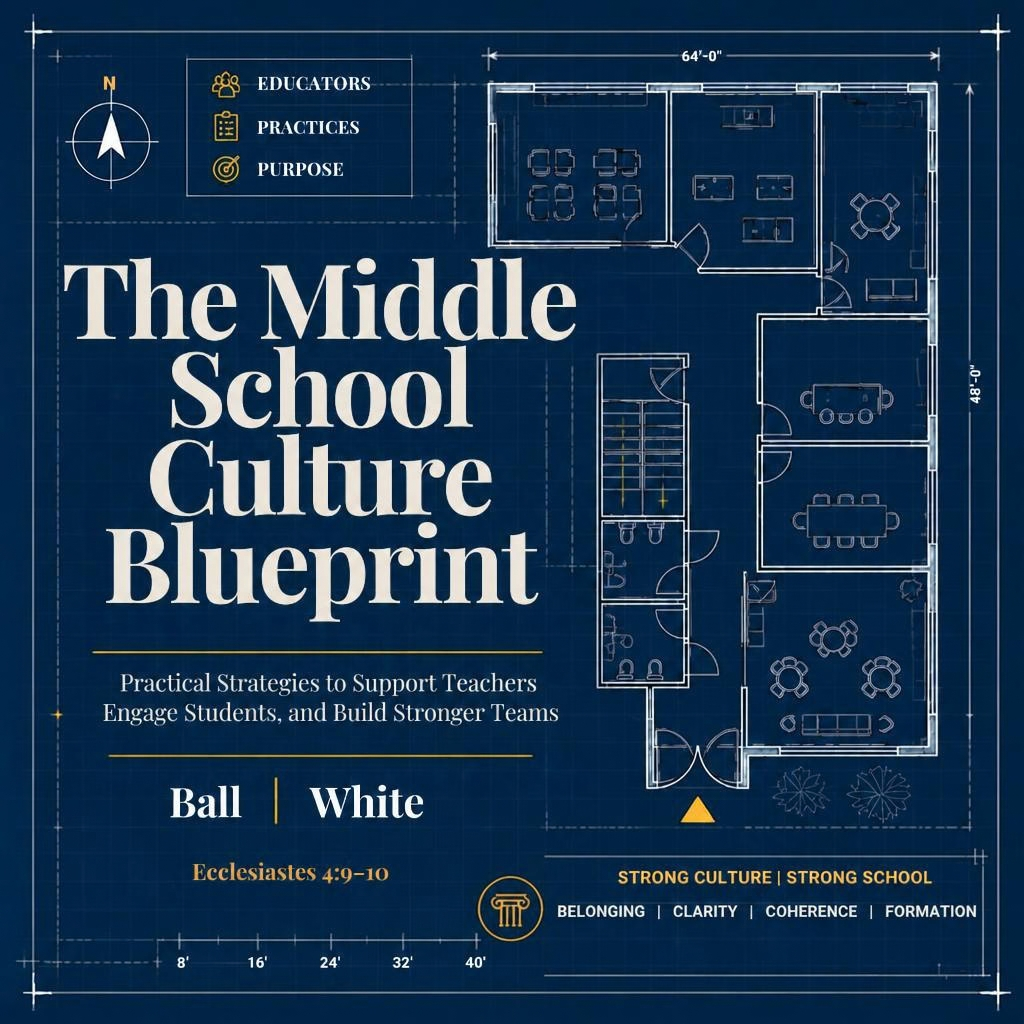
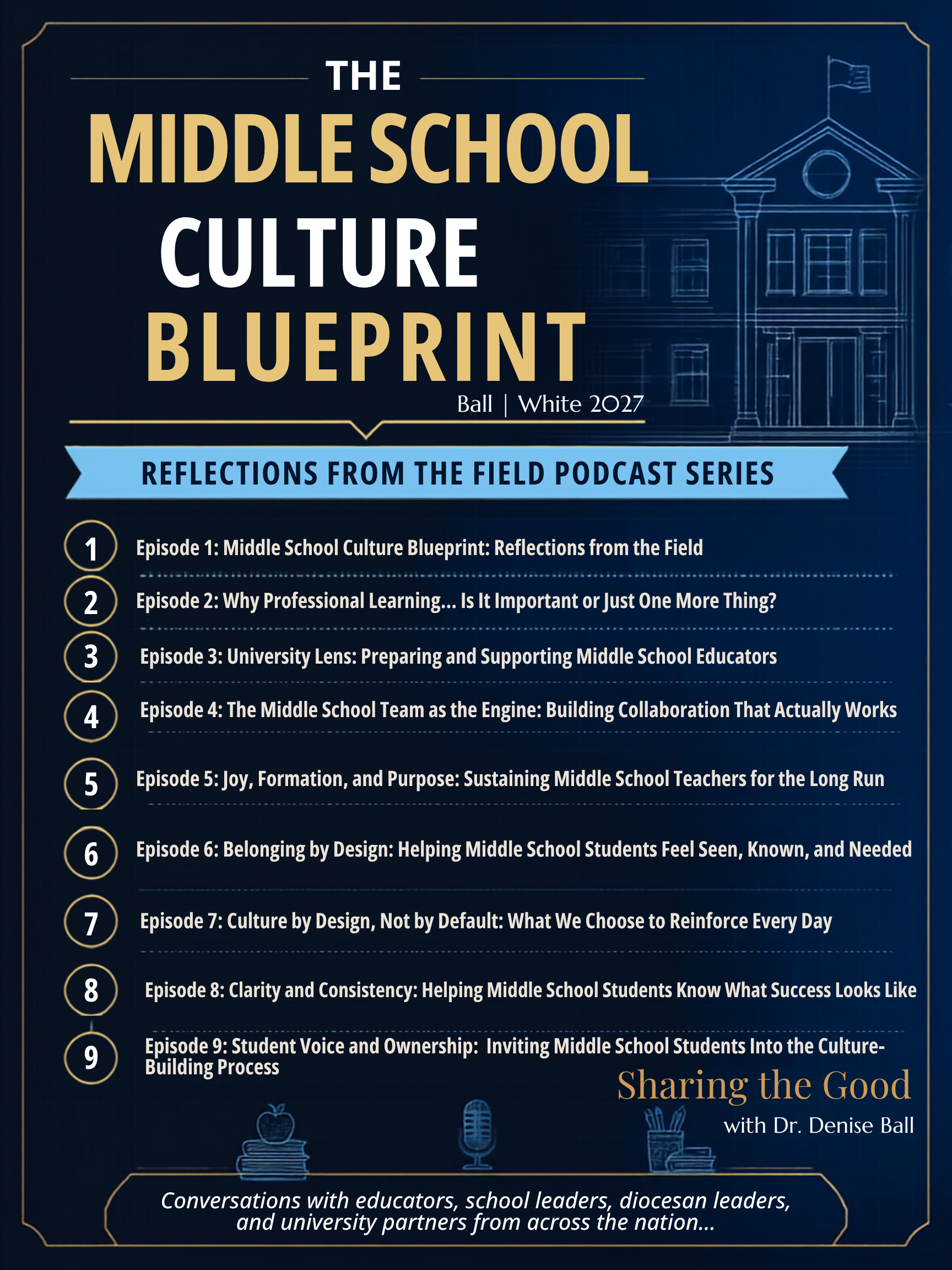
This year, my research has continued to center around school culture and team development. In my two latest projects, When We Train Our Eyes to See the Good, Amazing Things Happen and The Middle School Culture Blueprint, which I am co-authoring with Dr. LaTonya White, I have been reflecting deeply on the gift of fellowship and why it matters so much for educational leaders. If you would like to share your thoughts, please send me a message or leave a comment. I welcome the feedback and insights.

Dr. LaTonya White and Dr. Denise Ball, National Catholic Leadership Convention 2026

May we continue to seek knowledge in all things,
Denise

References

Ball, D. M. (2023). Improving teacher retention within Archdiocese of Washington schools [Doctoral dissertation, Liberty University]. Liberty University Scholars Crossing.

Darling-Hammond, L., Hyler, M. E., & Gardner, M. (2017). Effective teacher professional development. Learning Policy Institute.

Skaalvik, E. M., & Skaalvik, S. (2021). Collective teacher culture: Exploring an elusive construct and its relations with teacher autonomy, belonging, and job satisfaction. Social Psychology of Education, 24, 1389–1406.

United States Conference of Catholic Bishops. (2011). New American Bible, Revised Edition.

Leave a comment

Filed under Educational Resources

Summer Fellowship: A Time to Pause, Reflect, and Renew

There is something calming about the summer weeks in education. The pace shifts, the calendar breathes, and the noise of the school year begins to quiet just enough for leaders, teachers, and all those who serve school communities to pause and remember why the work matters. Why we CHOOSE to serve in education.

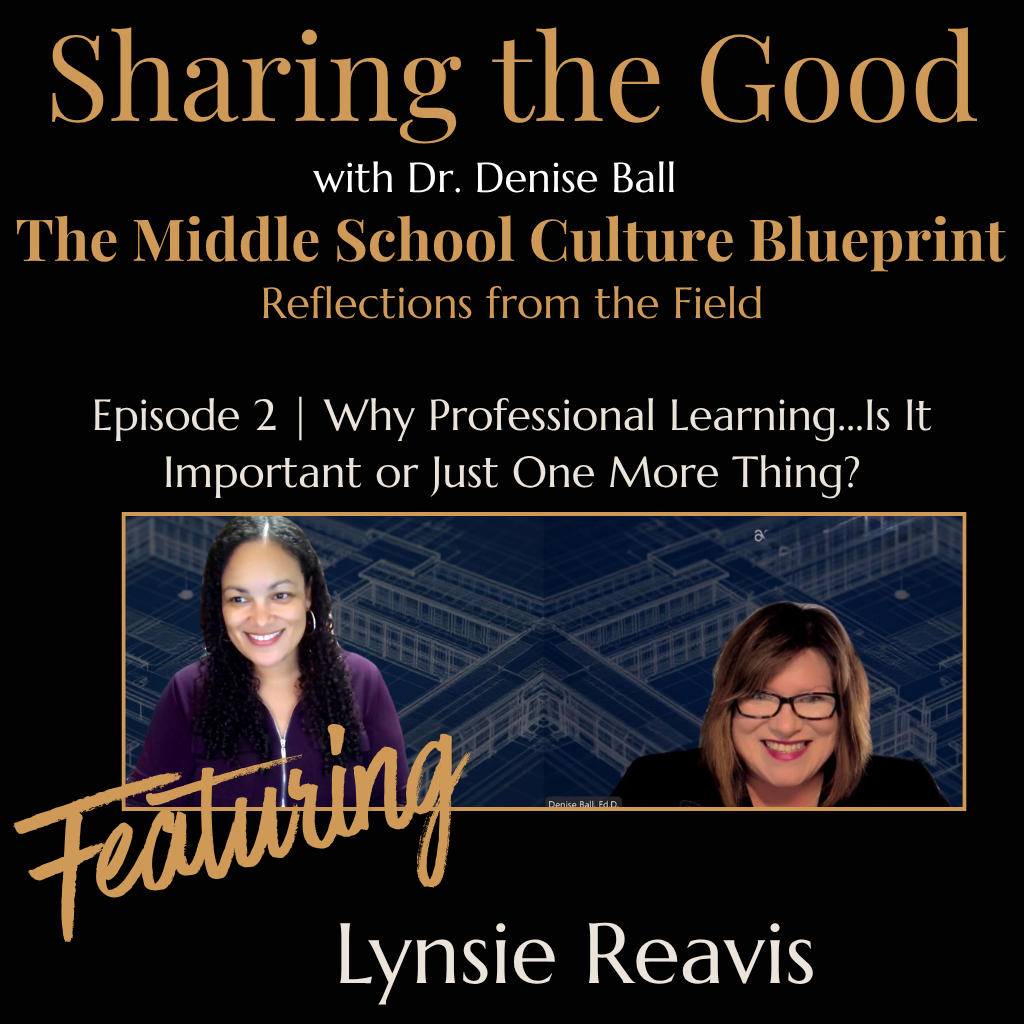
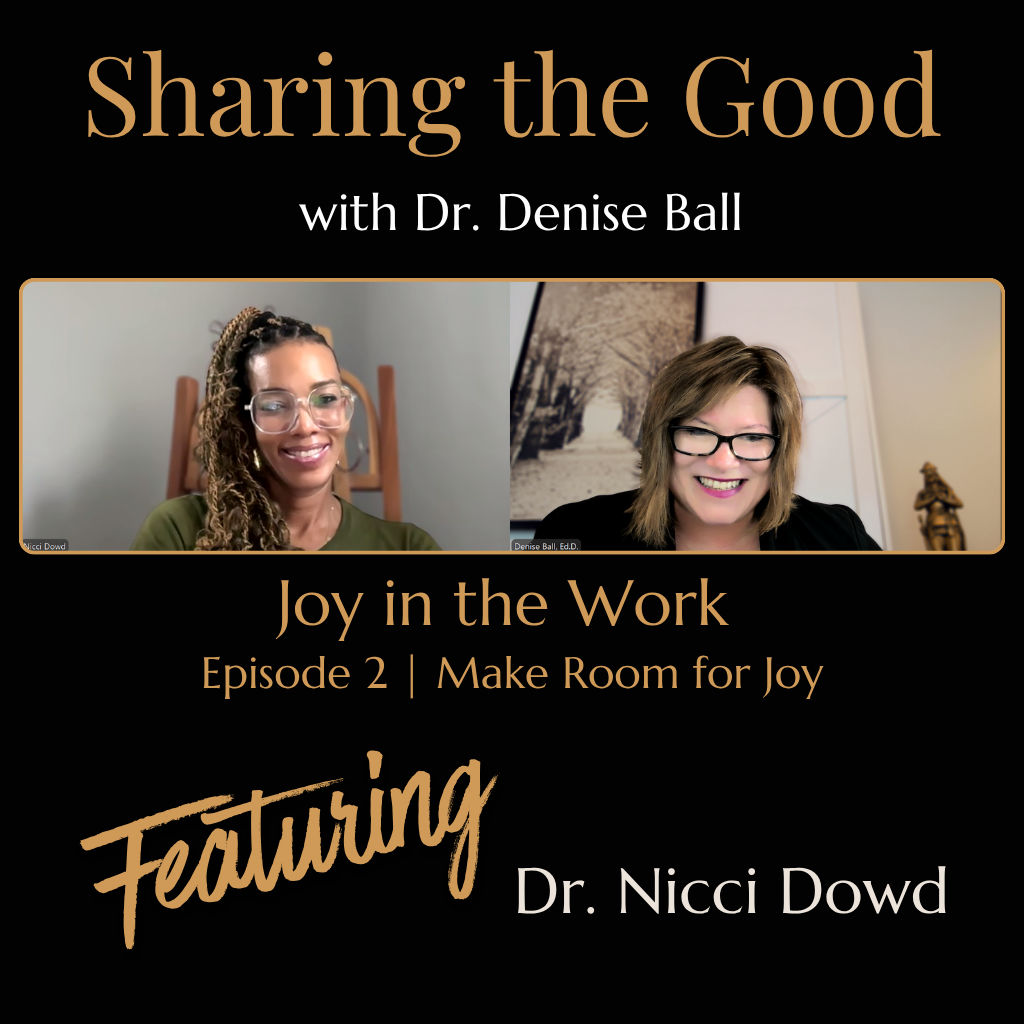
In my recent Sharing the Good with Dr. Denise Ball conversation, Dr. Nicci Dowd offered a beautiful reflection on the gift of fellowship and the importance of walking alongside others in faith, service, and community. Her words were a gentle reminder that fellowship is not simply about being with others. It is about being known, encouraged, strengthened, and reminded that we are not meant to do this work alone. Serving in education is a ministry (Dowd, 2026). [Dr. Nicci Dowd]

Educational leadership can be deeply meaningful, but it can also be lonely. Leaders are often called to hold the vision, solve the problems, support the team, manage the unexpected, and remain steady for others. Research on educational leaders’ well-being reminds us that positive relationships, purpose, engagement, health, and meaning are important dimensions of flourishing in leadership (Doyle Fosco, 2022). In other words, leaders do not thrive by carrying the work alone. They thrive when they are connected to people, purpose, and practices that restore them. Sometimes it might be easier to withdraw during these summer months, but I encourage you to reach out to a colleague or friend you have not talked with in a while and listen, share, and take joy from the fellowship.

Fellowship is one of those restoring gifts. It creates space for honest conversation, shared wisdom, prayerful encouragement, and the quiet reminder that someone else understands the road we are walking. For educational leaders, fellowship may come through a trusted colleague, a mentor, a faith-filled friend, a professional learning community, or a simple summer conversation over coffee. These moments may seem small, but they can become anchors of belonging. My quick and random chat with Nicci today was an instant bucket filler and reminded me of just how important these brief moments of fellowship are to spark inspiration and creativity.

Belonging matters because school communities are relational communities. Research continues to affirm that educator well-being is shaped not only by individual habits, but also by the relational and organizational conditions of the school community (Cann et al., 2022). When educators feel supported, respected, encouraged, and connected to a shared mission, the culture of the school is strengthened. When leaders model that same need for connection, they give others permission to seek support as well.

This is especially important for school leaders who are constantly pouring into others. Emotionally supportive leadership has been linked to educator well-being, especially during seasons of challenge and change (Floman et al., 2023). Leaders who listen, encourage, regulate their own emotions, and offer meaningful support help create healthier school environments. Yet leaders also need spaces where they can receive that same encouragement. Fellowship reminds us that the encourager also needs encouragement.

Summer offers a natural invitation to renew these connections. It is a time to step back from the constant urgency of the school year and ask a few important questions:

Who helped me carry the work this year?

Who might need to hear from me?

Who reminds me of the good?

Who helps me reconnect with faith, purpose, and joy?

Who can I encourage this week?

These questions are simple, but they are powerful. A text message, a phone call, a walk with a friend, a handwritten note, or an invitation to meet for coffee, jump on a quick Zoom (thank you, Nicci) can become a moment of grace. In a profession where so many people give so much of themselves, reaching out is not one more task but an act of caring for ourselves and others.

For those of us called to serve in education, fellowship also strengthens mission. Research on teacher retention highlights the importance of collegial support, trust, shared purpose, recognition, and leadership practices that build relationships within the school community (Ball, 2023 & Lochmiller et al., 2024). When leaders cultivate belonging, they help create communities where people are more likely to feel valued and more willing to remain committed to the work.

I encourage those who serve in education to view the summer not as a retreat from the mission but as preparation to return to it with a renewed heart. We pause so we can listen. We reflect so we can learn. We reconnect so we can remember that the work of education is not meant to be carried out in isolation.

Hebrews reminds us to “rouse one another to love and good works” and to encourage one another (Hebrews 10:24). That encouragement is not accidental but a muscle meant to be practiced. It is a choice and a service to others. It is part of building communities where faith, service, and joy can take root.

So, during these summer weeks, reach out. Call the colleague who lifted your spirit this year. Send a message to the friend who always helps you see the good. Thank the mentor who helped you keep going. Invite someone into conversation. Make room for fellowship. I jam every day on praise and worship. I try to share a link to a song at least once or twice a week with those who come to mind as I pray through song. Please be encouraged to share how you stay connected. This is a blog for learning!

We are better when we walk together…

When we train our eyes to see the good, amazing things happen.

May we continue to seek knowledge in all things,

Denise

References

Cann, R. F., Sinnema, C., Daly, A. J., Rodway, J., & Liou, Y.-H. (2022). The power of school conditions: Individual, relational, and organizational influences on educator wellbeing. Frontiers in Psychology, 13, Article 775614. https://doi.org/10.3389/fpsyg.2022.775614

Doyle Fosco, S. L. (2022). Educational leader wellbeing: A systematic review. Educational Research Review, 37, Article 100487. https://doi.org/10.1016/j.edurev.2022.100487

Floman, J. L., Ponnock, A., Jain, J., & Brackett, M. A. (2023). Emotionally intelligent school leadership predicts educator well-being before and during a crisis. Frontiers in Psychology, 14, Article 1159382. https://doi.org/10.3389/fpsyg.2023.1159382

Lochmiller, C. R., Perrone, F., & Finley, C. (2024). Understanding school leadership’s influence on teacher retention in high-poverty settings: An exploratory study in the U.S. Education Sciences, 14(5), Article 545. https://doi.org/10.3390/educsci140505

Leave a comment

Filed under Summer Strategies for Educational Leaders

When We Train Our Eyes to See the Good, Amazing Things Happen…An End-of-the-School-Year Message from Dr. Christina Mendez-Hall

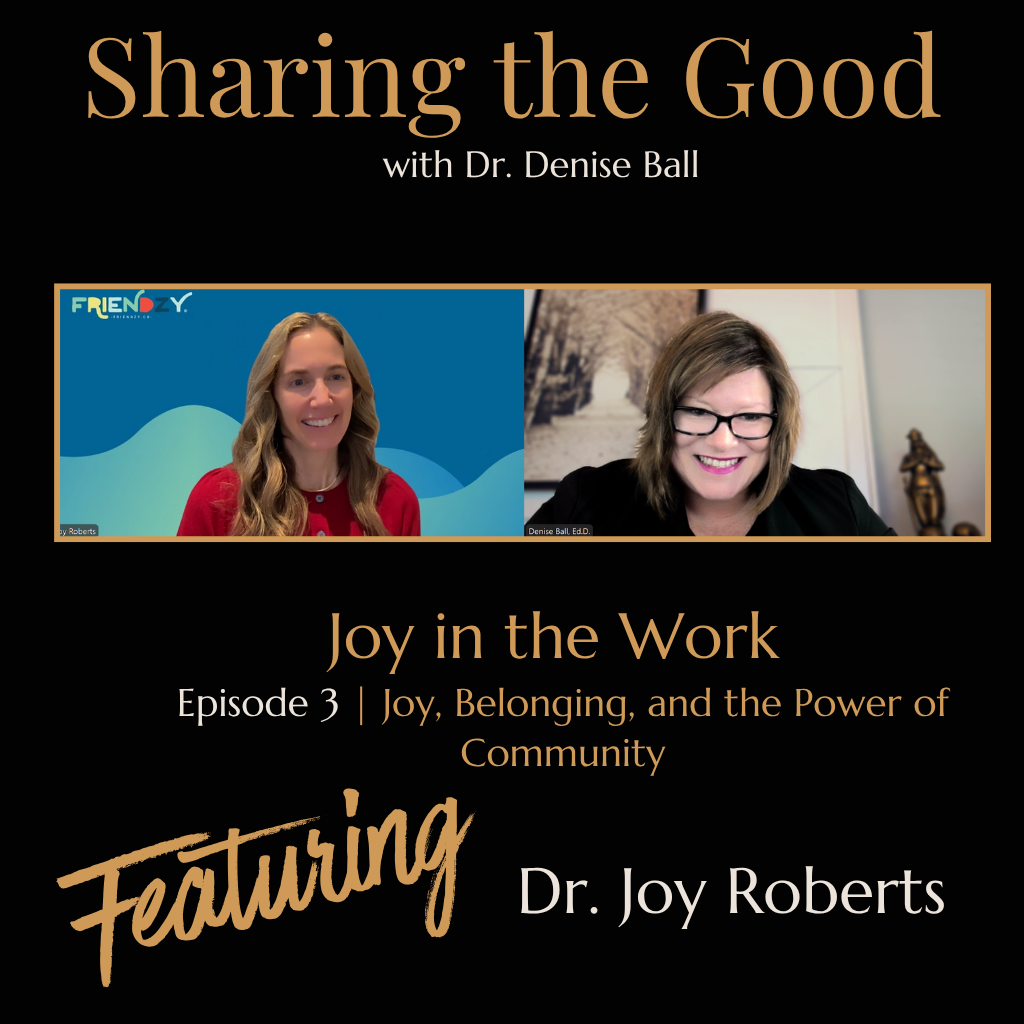
Last night, I officially posted the welcome message for my new YouTube channel, Sharing the Good with Dr. Denise Ball. This morning, as I met with Dr. Christina Mendez-Hall, Assistant Superintendent for the Diocese of Arlington, I was reminded again why this space matters. Dr. Mendez-Hall is so full of joy, and I invited her to share an end-of-the-school-year inspirational message for the channel. It was one of those simple, grace-filled moments that confirmed the “why” behind this new chapter.

For the last eight-plus years, I have been researching, writing, speaking, and working alongside school leaders and educators on team building, teacher retention, and the development of strong, healthy school cultures. Again and again, one simple truth continues to rise to the surface: educators and school leaders need to be seen, heard, encouraged, and reminded that their work matters.

When adults in a school community feel valued, supported, and connected to a shared mission, the entire campus is strengthened. Joy becomes more visible, trust grows, collaboration deepens, and students benefit. Schools become more stable, dynamic, and hope-filled places of learning.

That is the heart behind Sharing the Good with Dr. Denise Ball.

My goal is not to create a perfect YouTube channel. It is not to chase likes or pretend that life, leadership, education, or faith are without challenges. My hope is to create a real and authentic space where we collectively can share the good, notice the good, and perhaps inspire at least one person who needs encouragement on any given day.

I have been blessed throughout my life to be surrounded by amazing people who have encouraged me, challenged me, prayed for me, and helped me see the good even in difficult seasons. After retiring last June, following 27 years of service in education, I have found myself with more time to reflect, write, listen, and reconnect with many of you who have followed this blog since it was created 15 years ago.

The Unlock the Teacher blog has received more than 1.5 million views over the years and continues to average around 100 views a day. The feedback received on this blog humbles me deeply — thank you! Current research highlights the need for us to truly see and hear one another, and I would like to help make sure those placed on my path during this journey of life feel seen and heard.

So today, I want to personally invite you to continue the conversation with me in a new way.

Please visit Sharing the Good with Dr. Denise Ball on YouTube. Subscribe if the message speaks to you. Share it with an educator, leader, parent, or friend who may need a reminder that goodness is still unfolding.

Check out Christina’s inspirational minute message by clicking the link below. This is my first YouTube “short”…thank you for the grace!

An End-of-the-School-Year Inspirational Message from Dr. Christina Mendez-Hall

I am a novice in this space, and I am very much a lifelong learner. If you have a tip, suggestion, idea, or story to share, I would love to hear from you. Send me a message and share the good you are seeing. Tell me about the people who are carrying light in your school, family, parish, workplace, or community.

I believe this deeply, that when we train our eyes to see the good, amazing things happen.

We can do more for the world when we share the good together, one word, one story, and one action at a time.

May we continue to seek knowledge in all things!

Denise

Leave a comment

Filed under Educational Resources

What We Build Together: The Power of Collaboration–A Middle School Mindset Initiative

There is a particular kind of energy that comes from meaningful collaboration. The kind that is grounded in shared mission, fueled by trust, and sustained by a deep belief in the work we are called to do.

Over the past year, I have had the privilege of working alongside incredible partners to bring the Middle School Mindset Portfolio of Services to life. What began as an idea has grown into something far more powerful than any one organization could have accomplished alone. In just a few short weeks, we will launch this work nationally on May 29.

This moment feels significant, not simply because of the launch itself, but because of what it represents.

A Response to a Critical Moment

Middle school is a pivotal season of formation. It is a time when students are asking deeper questions about identity, belonging, and purpose. It is also a time when educators are navigating increasing complexity like academic recovery, student engagement, and social-emotional needs, all while striving to create classrooms where students feel known and valued.

We cannot meet this moment in isolation.

The Middle School Mindset Portfolio was built in response to that reality. It is not a single program or a one-size-fits-all solution. Rather, it is a collaborative ecosystem designed to support educators with practical strategies, meaningful resources, and a shared commitment to strengthening both instruction and culture.

The Gift of Partnership

One of the greatest joys in this work has been collaborating with mission-aligned partners who bring both expertise and heart to the table.

A special acknowledgment goes to Archangel Education and Technology, whose team is building an innovative digital ecosystem that will no doubt become a destination space for educators and system leaders. Their work reminds us that when technology is designed with purpose, it can truly amplify impact.

Equally inspiring has been our partnership with the Archdiocese of Miami pilot schools. On May 29th, during this complimentary webinar, we will hear directly from middle school teachers who have engaged in this work, educators who are thoughtfully applying strategies, reflecting on practice, and shaping what this portfolio will become at scale.

To visit these vendor partners supporting schools nationwide, please visit:

www.theadac.com | https://friendzy.co/ | https://www.sadlier.com/ | https://arch-te.com/

We can serve students and teachers more when we do it together!

From Research to Practice: Naming What Matters Most

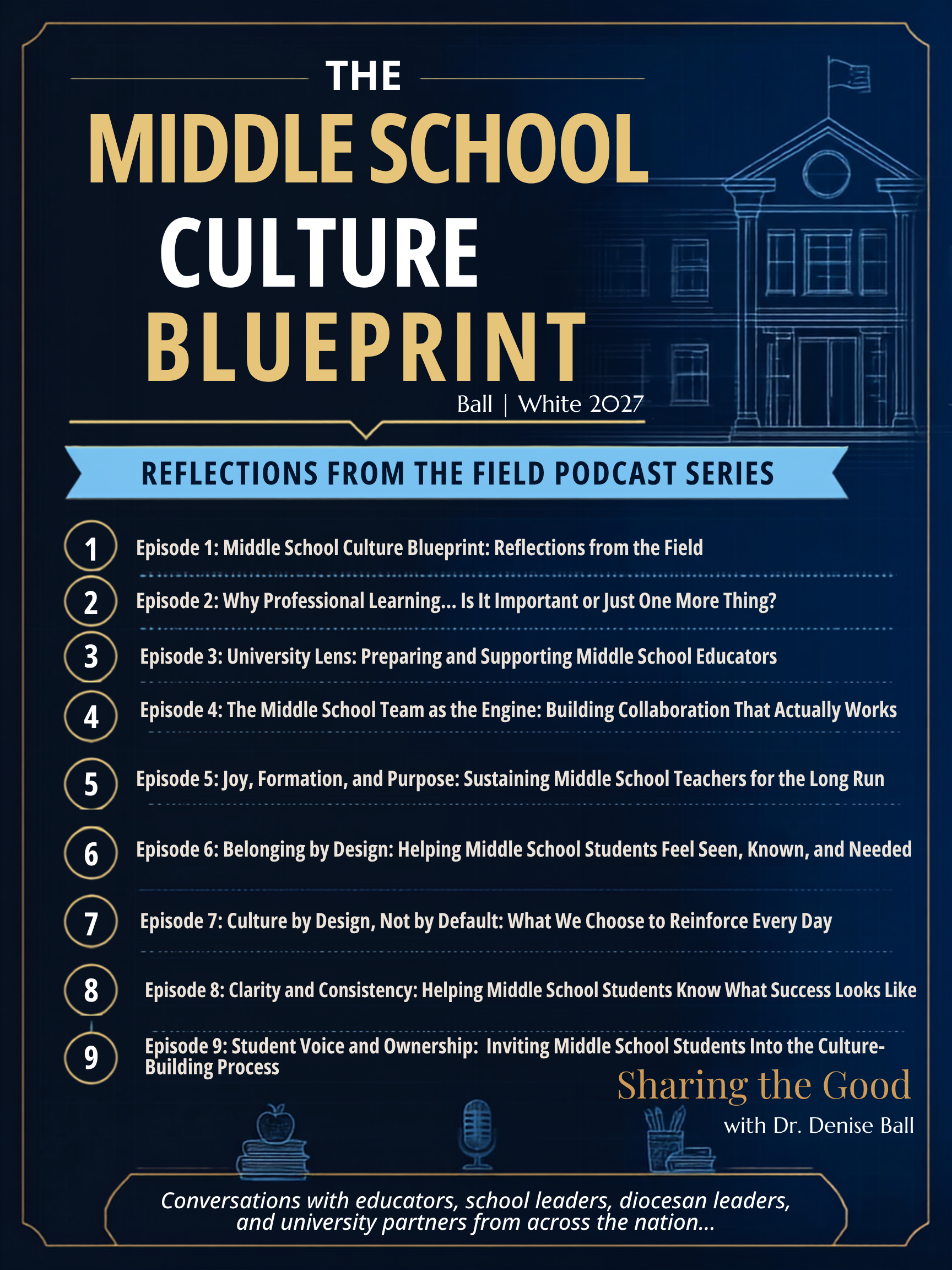
This work has also deepened my ongoing collaboration with Dr. LaTonya White. Together, we are preparing to share our research in the forthcoming Middle School Culture Blueprint (Ball & White, 2026).

At the center of our work is a simple yet deeply impactful reminder: what we reinforce each day becomes the culture we experience, whether by intention or by default.

Middle school culture does not happen by accident. It is shaped in the small, consistent moments: in how we greet students, how we structure learning, how we respond to challenges, and how we create space for student voice. Belonging is not a program we implement. It is a condition we intentionally cultivate through every interaction, every structure, and every expectation (Ball & White, 2026).

When we are intentional, we create environments where students and teachers can thrive. When we are not, culture is still formed, but often in ways that do not serve our mission. The opportunity before us is to lead with clarity, purpose, and hope, and to build cultures where every student and educator knows they are seen, valued, and called to grow.

A Moment of Anticipation

As we look ahead to our national webinar launch on May 29, I am filled with gratitude for the partnerships, for the educators, and for the shared commitment to this work. This is more than a program launch. It is a reflection of what is possible when we come together, listen deeply, and build something that responds to the real needs of our schools. It is a reminder that we are not alone in this work. And… it is an invitation to continue to collaborate, to continue to learn, and to continue to see the good that is unfolding all around us.

The May 29th registration is live (scan the QR code above). Come and join the conversation!

What a privilege it is to serve!

Leave a comment

Filed under Middle School Strategies

Strengthening Schools Through Partnership: The Role of Universities in Teacher Retention

Across the country, school leaders are navigating one of the most persistent challenges in education today: retaining talented, mission-driven educators. While much of the conversation centers on compensation, workload, and policy, one of the most underutilized and high-impact resources sits right beside our schools…our university partners.

I always enjoy hearing and sharing the good with Boston College Roche Center educational leaders.

Institutions like Marymount University, Boston College, and St. John’s University are not only preparing future educators, they are increasingly listening, adapting, and responding to the real-time needs of school leaders and teachers. When leveraged intentionally, these partnerships can become a cornerstone strategy in addressing the teacher retention challenge.

At their best, university-school partnerships move beyond transactional relationships and become transformational. They create shared responsibility for developing, supporting, and sustaining educators across the full arc of their careers.

St. John’s University edTech Summit—a think tank session!

What This Looks Like in Practice

Educational leaders can take intentional steps to deepen these partnerships in ways that directly impact teacher retention:

Enhancing School-Based Opportunities Through Strategic Partnership

Professional learning is most effective when it is grounded in the context of the school and led by those closest to the work. I find there is value in leaning on university partners as thought partners. These relationships bring research, frameworks, and support that strengthen intentionally designed opportunities (Desimone & Garet, 2015).

Marymount University Regional Catholic School Leadership Conference

Creating Leadership Pathways

Retention is closely tied to growth. Universities can partner with school systems to build leadership pipelines, offering graduate programs, certifications, and cohort models that empower teachers to see a future within the profession. When educators can envision their next step, they are more likely to stay (Ingersoll et al., 2018).

Embedding Research into Practice

Strong partnerships allow schools to serve as living laboratories where research informs practice and practice refines research. Whether through action research, dissertation collaboration, or pilot programs, teachers feel valued when their experiences contribute to broader learning and improvement (Coburn & Penuel, 2016).

Expanding the Teacher Pipeline with Purpose

Through intentional clinical experiences, residency models, and targeted recruitment efforts, universities can help schools attract candidates who are not only qualified but mission-aligned. This alignment is essential across all educational governance models, where purpose plays a central role in retention (Guha et al., 2016).

Supporting Educator Well-Being and Belonging

Teachers stay where they feel seen, supported, and connected. Universities can contribute by integrating social-emotional learning, reflective practice, and community-building strategies into both pre-service and in-service programming. Research consistently shows that school culture, trust, and collective efficacy are key drivers of teacher retention (Kraft et al., 2016). I am very passionate about this topic and my research highlights the central role of school climate, leadership, and relational trust in shaping teachers’ decisions to remain in the profession (Ball, 2023).

The most impactful university partnerships are grounded in a shared belief: that supporting teachers is not the responsibility of one institution, but a collective commitment.

When school systems and universities work together with intention, we begin to see action to impact. Professional learning becomes more meaningful, leadership becomes more distributed, and culture becomes more supportive. Most importantly, teachers begin to experience what so many are seeking: a sense of purpose, growth, and belonging within their schools.

For educational leaders, the invitation is clear: lean into these partnerships. Invite universities to the table not just as providers, but as collaborators. Share your challenges openly, co-create solutions, and build meaningful and impactful frameworks not one-time supports.

When we strengthen the bridge between universities and schools, we are not just preparing teachers, we are sustaining them.

At the heart of this work is a simple but powerful truth…we can do more for our teachers when we do it together. The challenges facing education today call us to think beyond traditional structures and lean into the strength of collective impact. By partnering with universities and trusted vendor partners, we open the door to innovative, responsive solutions that better meet the needs of our educators. More importantly, these partnerships allow us to visibly and authentically demonstrate our gratitude for teachers, thankful for their dedication, their resilience, and their daily commitment to shaping the lives of the students entrusted to their care.

When educators feel supported not just by their school, but by a broader community working on their behalf, we move closer to building the kind of sustainable, mission-driven environments where teachers choose to stay and thrive.

References 

Ball, D. M. (2023). Improving teacher retention within Archdiocese of Washington schools (Doctoral dissertation, Liberty University). https://digitalcommons.liberty.edu/doctoral/5006  

Coburn, C. E., & Penuel, W. R. (2016). Research–practice partnerships in education: Outcomes, dynamics, and open questions. Educational Researcher, 45(1), 48–54. https://doi.org/10.3102/0013189X16631750

Desimone, L. M., & Garet, M. S. (2015). Best practices in teachers’ professional development in the United States. Psychology, Society, & Education, 7(3), 252–263. https://doi.org/10.25115/psye.v7i3.515

Guha, R., Hyler, M. E., & Darling-Hammond, L. (2016). The teacher residency: An innovative model for preparing teachers. Learning Policy Institute.

Ingersoll, R. M., Merrill, L., Stuckey, D., & Collins, G. (2018). Seven trends: The transformation of the teaching force. Consortium for Policy Research in Education.

Ingersoll, R. M., & Strong, M. (2011). The impact of induction and mentoring programs for beginning teachers: A critical review of the research. Review of Educational Research, 81(2), 201–233. https://doi.org/10.3102/003465431140

Leave a comment

Filed under Educational Resources, Hot Topics in Education, Inspiration, Positive School Culture, Sharing the Good in Education, teacher retention, Teacher Retention and Recruitment, University Partners

The Power of Traditions in a 30-Second World at Home & in the Classroom

We are raising children in a world of scroll, swipe, and sound bites. Information arrives in 30-second clips, fragmented headlines, and algorithm-driven content streams. Research suggests that rapid, high-frequency digital consumption can shorten attention spans and contribute to cognitive overload (Carr, 2010; Ophir et al., 2009). Attention is divided. Moments are rushed. Noise is constant.

In this environment, parents and teachers are called to be architects of pause.

Traditions and routines are not small things. They are anchors. They slow the train. They invite us to stop long enough to see, truly see, the children in our classrooms and the people in our homes.

These pauses do something powerful to the human spirit…

They create predictability in an unpredictable world. They foster emotional safety. They promote a grounded sense of reality, a reminder that life is more than reaction and response; it is relationship and presence. Research consistently links predictable routines with improved emotional regulation, reduced anxiety, and stronger mental and physical health outcomes in children and adolescents (Fiese et al., 2002; Spagnola & Fiese, 2007).

A Situation We Recognize

Imagine a middle school classroom on a Monday morning.

Students arrive buzzing from weekend activity and digital stimulation. Some are anxious about assignments. Others are carrying silent burdens from home. The energy is scattered.

Instead of diving immediately into content, the teacher begins with “Monday Morning Light.” A candle is turned on (battery operated for safety). Soft instrumental music plays for two minutes. Students are invited to write one gratitude and one intention for the week.

The room shifts…

Breathing slows. Shoulders drop. Eye contact increases. Students are no longer fragmented individuals entering from separate worlds, they are a community beginning together!

Over time, this simple ritual becomes a stabilizing force. It lowers stress responses and supports emotional regulation, outcomes that research connects to consistent family and classroom routines (Spagnola & Fiese, 2007).

That two-minute tradition communicates:

You are safe here. You belong here. We begin together.

Traditions do not waste time. They redeem it.

Why Traditions Matter

Traditions:

-Provide emotional security in uncertain times

-Strengthen identity and belonging

-Reinforce shared values

-Reduce stress through predictable rhythms

-Build intergenerational memory and meaning

-Cultivate hope

Traditions remind us of good memories of what was and give us hope for what is to come.

Let us never underestimate the power of hope. Hope strengthens resilience. Hope sustains effort. Hope fuels joy!

Simple Traditions to Begin Today

In the Classroom

1. Gratitude Friday

End every Friday with students naming one win from the week: academic, personal, or relational.

2. “Light the Week” Ritual

Begin Mondays with a short reflection, Scripture, quote, or moment of silence.

3. Celebration Wall

Create a space where students post small victories: kindnesses, perseverance, improvement.

4. Monthly Service Spotlight

Each month highlight a virtue or service theme and celebrate students who model it.

5. Seasonal Reset Days

At the start of each quarter, pause for goal-setting and community-building before diving into content.

At Home

1. Sunday Supper Tradition

Phones away. One question around the table that invites storytelling.

2. Birthday Blessings

Each family member speaks a word of affirmation over the birthday child, regardless of age.

3. First-Day-of-School (First-Day-of Quarter) Breakfast Ritual

Same meal. Same prayer. Same photo spot. Every year/every quarter.

4. Advent or Lent Reflection Nights

Short candle-lit gatherings with reflection and shared intention.

5. Monthly Memory Night

Pull out old photos and tell stories. Children anchor their identity in narrative memory. (Note: my kids are in their twenties and Michael and I still lean in on this tradition a few times a year.)

Intentional Pauses are Essential

Traditions are not elaborate productions. They are intentional pauses.

In a world that accelerates, traditions decelerate.

In a culture that fragments, traditions gather.

In a society that overwhelms, traditions ground.

Children, young and old, do not simply need information. They need formation.

They need rhythms that say:

You belong. You are known. You are part of something lasting.

As parents and teachers, we are not just managing days.

We are shaping memories.

We are cultivating hope.

We are building anchors that will steady our children long after they leave our classrooms and homes.

Let us be people who pause, let us be people who build traditions, and let us be people who carry hope forward.

Stay tuned for more information on making a difference for children and in service to others. When We Train Our Eyes to See the Good—Amazing Things Happen (Ball, 2026) is in one of the final draft phases 😉.

I would love to hear the classroom and home traditions and routines being used—please leave a comment and share with those who follow this blog. This blog has surpassed over 1 million views…thank you for sharing the good!

May we continue to seek knowledge in all things~

Denise

References

Carr, N. (2010). The shallows: What the Internet is doing to our brains. W. W. Norton & Company.

Fiese, B. H., Tomcho, T. J., Douglas, M., Josephs, K., Poltrock, S., & Baker, T. (2002). A review of 50 years of research on naturally occurring family routines and rituals: Cause for celebration? Journal of Family Psychology, 16(4), 381–390. https://doi.org/10.1037/0893-3200.16.4.381

Ophir, E., Nass, C., & Wagner, A. D. (2009). Cognitive control in media multitaskers. Proceedings of the National Academy of Sciences, 106(37), 15583–15587. https://doi.org/10.1073/pnas.0903620106

Spagnola, M., & Fiese, B. H. (2007). Family routines and rituals: A context for development in the lives of young children. Infants & Young Children, 20(4), 284–299. https://doi.org/10.1097/01.IYC.0000290352.32170.5a

Leave a comment

Filed under Creating a Positive School Culture, Inspiration, Positive School Culture, Traditions for Home & the Classroom

A Reflection for Leaders this Season…the Gift of Being Present!

Denise Ball, Ed.D.

This time of year brings both joy and complexity for teams across all industries. Research consistently shows that workplace stress, emotional fatigue, and decreased attentional capacity tend to rise during the winter months, particularly during the holiday season when competing demands intensify for employees at all levels (American Psychological Association, 2024).

Given this, leaders play a uniquely important role in setting the emotional temperature of their organizations. When leaders intentionally “tune in” …listening deeply, being present in conversations, and noticing subtle shifts in team dynamics, they build trust and psychological safety. These conditions not only support employee well-being but also increase engagement and organizational resilience.

Presence Sets the Tone for Culture

Our words and actions create a cultural ripple effect. Decades of organizational research confirm that when leaders model behaviors such as pausing, unplugging, and expressing gratitude, teams experience boosts in creativity, problem-solving, and productivity (Fritz et al., 2011). A leader’s ability to slow down, notice the good, and encourage moments of reflection signals to employees that rest is not a reward…it is a strategic imperative for sustained excellence.

Encouraging teams to pause, breathe, and “see” the good around them begins at the top.

When leaders embrace presence, the positive emotional contagion can be transformational. It builds cultures where affirmation outpaces anxiety, where collaboration thrives, and where people feel supported, valued, and energized to contribute their best.

Training Our Eyes to See the Good

There is so much good in this world. When we train our eyes to see the good, amazing things happen (Ball, 2025). This simple but profound shift in perspective changes how we lead, how we treat others, and how we interpret the moments unfolding around us.

In seasons where work accelerates and expectations multiply, choosing to notice goodness requires intention. If leaders can tune in and be present, it pays dividends in hope, clarity, and renewed purpose for those they lead.

The Gift and Responsibility of Leadership

It is a gift to lead. It is essential to remember the profound impact we have on those we choose to serve. Leadership is not merely a set of tasks or strategies; it is embodied influence.

People feel our presence before they hear our message.

They notice our pace before they follow our direction.

As we enter this season, may we be reminded that our teams do not need perfection from us, they need presence. They need leaders who model steadiness, gratitude, and attention to what matters.

They need leaders who see the good and call it forth in others.

When leaders are present, cultures strengthen. When leaders slow down, teams rise…and when leaders choose to see the good, amazing things truly happen.

References

American Psychological Association. (2024). Psychological safety in the changing workplace: Work in America 2024 report. https://www.apa.org

Ball, D. (2025). Strengthening schools from within: The impact of leadership and culture on teacher retention [Conference presentation]. Oxford University Educational Research Symposium, Oxford, United Kingdom.

Fritz, C., Lam, C. F., & Spreitzer, G. M. (2011). It’s the little things that matter: An examination of knowledge workers’ recovery experiences. Academy of Management Journal, 54(4), 835–855. https://doi.org/10.5465/amj.2011.0486

Leave a comment

Filed under leadership

Be a Distributor of Joy and Change the Teacher Attrition Rate

Blackaby (2015) reminds us that a positive school culture begins with a service-oriented mindset. Leaders must build a clear vision of the kind of school environment they want to cultivate for teachers, students, and families. Building a strong team and a positive school culture requires shared leadership, collaboration, and a focus on teacher well-being.

School leaders must be present and care enough to listen and enter the difficult conversation(s). Joy must be modeled by the school leader in both word and action…it is synergistic and transformative for a school team and a school campus/community. At the heart of teacher retention lies a simple but profound truth—joy!

As educational leaders, we must be builders and distributors of joy, creating school cultures where educators are not just sustained but inspired. Joy is not just an outcome of a thriving school environment, it is the very foundation upon which leadership, professional learning, culture, and a positive school team interconnect and strengthen one another.

When leaders cultivate environments where teachers feel valued, when professional learning is meaningful and collaborative, when school culture is intentionally shaped with positivity and respect, and when teams work together with a shared purpose, joy emerges.

The discussion on teacher retention was important pre-COVID and is essential post the pandemic when many teachers are still struggling. Teachers need to pause and take the time to reflect and acknowledge the work it took to walk through that period, celebrate the amazing things that occurred due to their hard work and service to others, so they can close the chapter and get back to the joy of education that attracted them to the profession in the first place.

The conversation on teacher retention and the importance of school leadership and a positive school culture continues…

May we continue to seek knowledge in all things,

Denise

2 Comments

Filed under Curriculum Resources, Teacher Retention and Recruitment

Listening, Learning, and Leading: A Conversation on Teacher Retention


Teacher retention is not just a policy issue, it is  a deeply personal one. Behind every statistic is a teacher who has dedicated their time, energy, and heart to shaping the next generation. The reasons educators stay or leave are complex, intertwined with school culture, leadership, and professional fulfillment. The most effective way to address teacher retention is simple yet profound: we must listen.


As school leaders, we have an obligation to understand the realities our teachers face, to hear their challenges, and to amplify their successes. Listening is not just a courtesy, it is  a leadership strategy. When teachers feel valued, heard, and supported, they are more likely to stay and thrive.


It was an incredible honor to be invited to lead a discussion on teacher retention as part of the ADAC Answers series. With over 240 school leaders from 40 states and the District of Columbia, registered and representing public, private, faith-based, and international schools. These leaders represented approximately 34,000 teachers and 370,000 students. This conversation reflects a national and global commitment to addressing one of the most pressing challenges in education today.


Bringing together diverse voices across governance models allows us to see the common threads in teacher retention and explore meaningful, research-based solutions. Whether it is mentorship programs, school climate initiatives, or leadership development, the strategies we discussed are not just theories, they are actionable pathways to strengthening our schools from within.


I am grateful for the opportunity to engage in this dialogue and to learn from the experiences of so many dedicated leaders. The work of teacher retention is ongoing, but together, through thoughtful leadership and a commitment to listening, we can make a lasting impact.

If you were unable to join yesterday, you can watch the full recording on ADAC’s Video Resources page.


https://loom.ly/1yvAmBo

May we continue to seek knowledge in all things,

Denise

1 Comment

Filed under Curriculum Resources, teacher retention, Teacher Retention and Recruitment

Top Five Recommended “Musts” to Ensure Teachers Feel Valued Before the Summer Pause

It is an exciting time, but this season of transition can be chaotic and often stressful for faculty, staff, students, and parents. A little bit of grace this time of year goes a long way.

When I was a school leader, I used to tell my staff that the end of the year was a time for putting on the “red shoes”…making sure to leave home needs at home and embracing each day with purpose; we are called to be the difference. Retention data shows that it is important now more than ever to ensure that all stakeholders end the year on a high note.

A school climate affects teacher satisfaction, morale, and expectations about staying in the profession (Garcia & Weiss, 2019). A high percentage of teachers do not feel appreciated, and this feeling can have an impact on their choice of staying or leaving the classroom. It would be beneficial for society to remember that teaching remains an extraordinarily noble profession with intrinsic rewards that few other disciplines experience (Vocke & Foran, 2017). There are many ways to show teachers support. Below are my five recommended “musts” to finish the school year strong, ensuring teachers feel valued.

Top Five Recommended “Musts” to Ensure Teachers Feel Valued Before the Summer Pause

  1. Handwritten Thank-You Notes: Write personalized notes to each teacher, highlighting specific contributions and expressing sincere gratitude. Encourage faculty and staff to write anonymous notes to one another. Positive energy is synergistic!
  2. Public Acknowledgment: Use school newsletters, social media, and assemblies to publicly recognize and celebrate teachers’ achievements and dedication. Use these last few weeks of school to promote and share the good that has happened on your school campus. Sharing the good can change a school’s culture.
  3. Classroom Resources: Provide teachers with additional resources or gift cards for classroom supplies as a token of appreciation and to ease their financial burden as they begin to plan this summer for the upcoming school year.
  4. Professional Development Stipends: Offer a stipend or provide a gift card for summer professional development courses, or educational reading materials, indicating investment in their continued growth.
  5. End-of-Year Celebration: Host a celebratory event to honor teachers’ hard work and achievements throughout the year. Include awards or small gifts to show appreciation. Have a discussion on the theme for the upcoming school year to help give direction (which will reduce stress) in helping teachers plan over the summer.

Give your team permission to put an “out of office” message on their email for a period of time to spend with family and friends, recharging so they can be all they are called to be for the upcoming school year. Building in a “time to pause” into one’s daily schedule, will allow teachers to come back to campus more creative, energized, and ready to accomplish team initiatives for the new school year.

Photo Credit: Anna Quattrone, Director of Marketing and Enrollment

Ultimately, it is essential to never underestimate the importance on greeting your faculty and staff as they begin the school day, providing an encouraging word or smile, and making sure your team members feel seen and heard. Teachers choose to serve in schools where they feel welcomed and appreciated.

Regardless of the time of year, it is always a good idea to thank a teacher for choosing to teach!

May the last few weeks of school be filled with joy and peace!

Denise

Denise Ball, Ed.D.

Recommended Reading

Carver-Thomas, D., & Darling-Hammond, L. (2019). “The Trouble with Teacher Turnover: How Teacher Attrition Affects Students and Schools.” Education Policy Analysis Archives, 27(36).

Kraft, M. A., Papay, J. P., Charner-Laird, M., Johnson, S. M., Ng, M., & Reinhorn, S. K. (2020). “Educator Work Environments and Teacher Effectiveness: A Two-Year Longitudinal Study of Teaching Assignments.” Educational Evaluation and Policy Analysis, 42(3), 436-460.

Podolsky, A., Kini, T., Bishop, J., & Darling-Hammond, L. (2019). “Strategies for Attracting and Retaining Educators: What Does the Evidence Say?” Education Policy Analysis Archives, 27(38).

Leave a comment

Filed under Curriculum Resources, Teacher Retention and Recruitment