Category Archives: Positive School Culture

Strengthening Schools Through Partnership: The Role of Universities in Teacher Retention

Across the country, school leaders are navigating one of the most persistent challenges in education today: retaining talented, mission-driven educators. While much of the conversation centers on compensation, workload, and policy, one of the most underutilized and high-impact resources sits right beside our schools…our university partners.

I always enjoy hearing and sharing the good with Boston College Roche Center educational leaders.

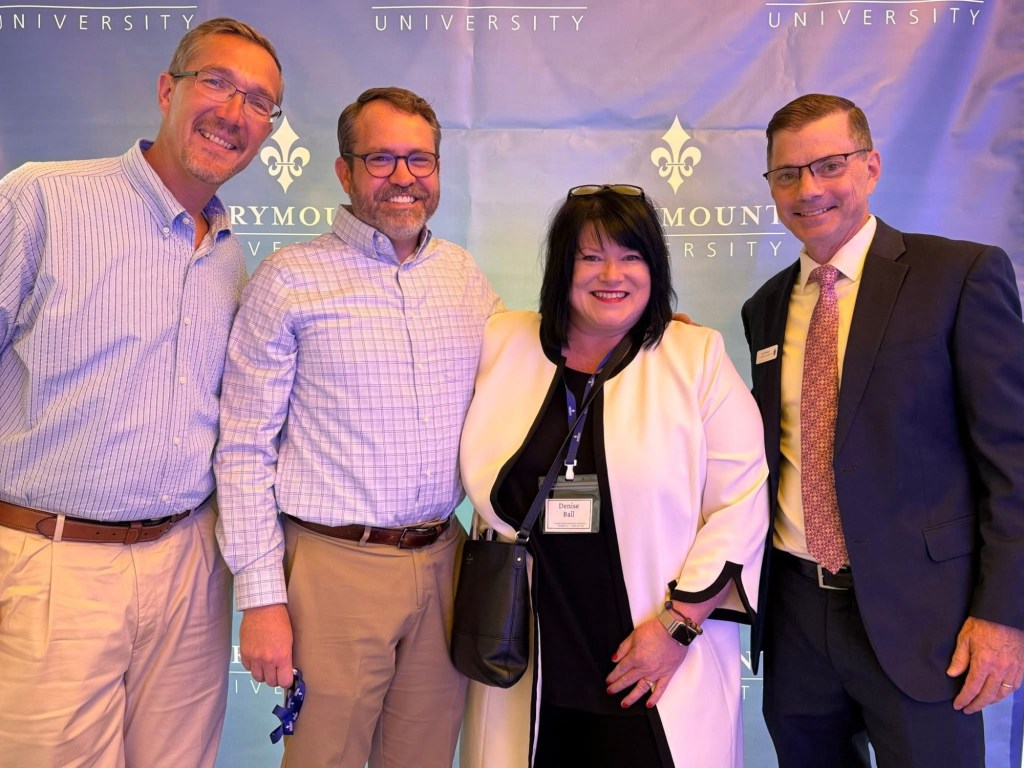
Institutions like Marymount University, Boston College, and St. John’s University are not only preparing future educators, they are increasingly listening, adapting, and responding to the real-time needs of school leaders and teachers. When leveraged intentionally, these partnerships can become a cornerstone strategy in addressing the teacher retention challenge.

At their best, university-school partnerships move beyond transactional relationships and become transformational. They create shared responsibility for developing, supporting, and sustaining educators across the full arc of their careers.

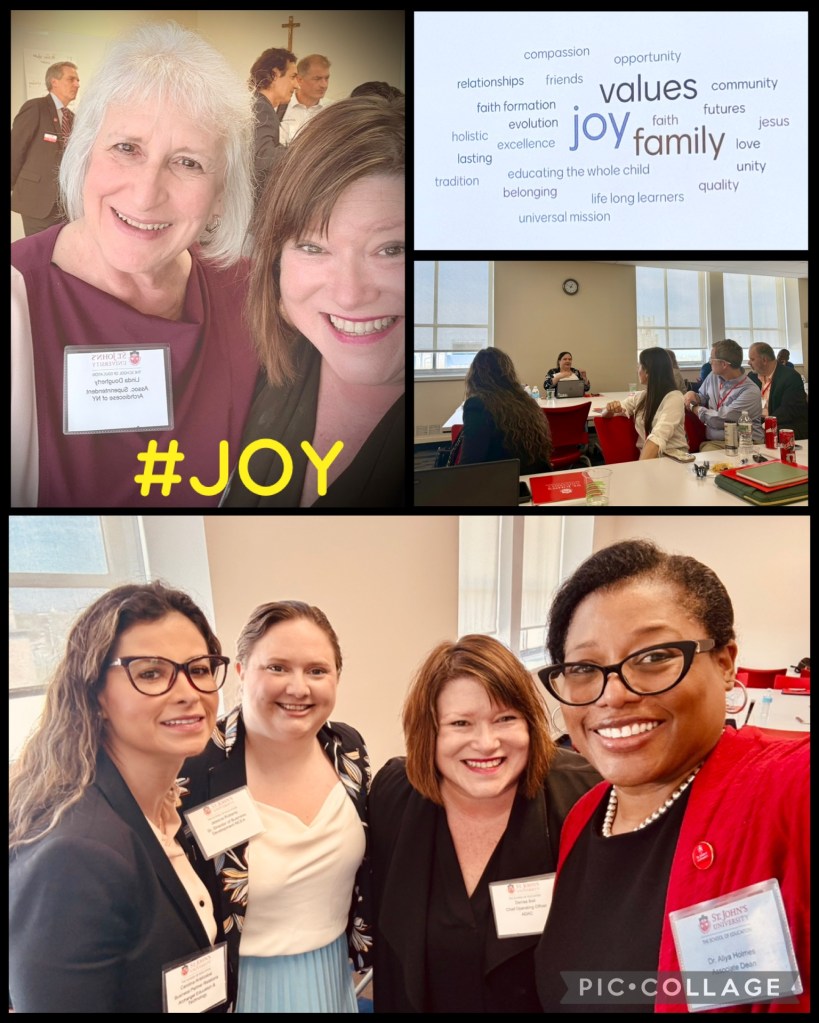
St. John’s University edTech Summit—a think tank session!

What This Looks Like in Practice

Educational leaders can take intentional steps to deepen these partnerships in ways that directly impact teacher retention:

Enhancing School-Based Opportunities Through Strategic Partnership

Professional learning is most effective when it is grounded in the context of the school and led by those closest to the work. I find there is value in leaning on university partners as thought partners. These relationships bring research, frameworks, and support that strengthen intentionally designed opportunities (Desimone & Garet, 2015).
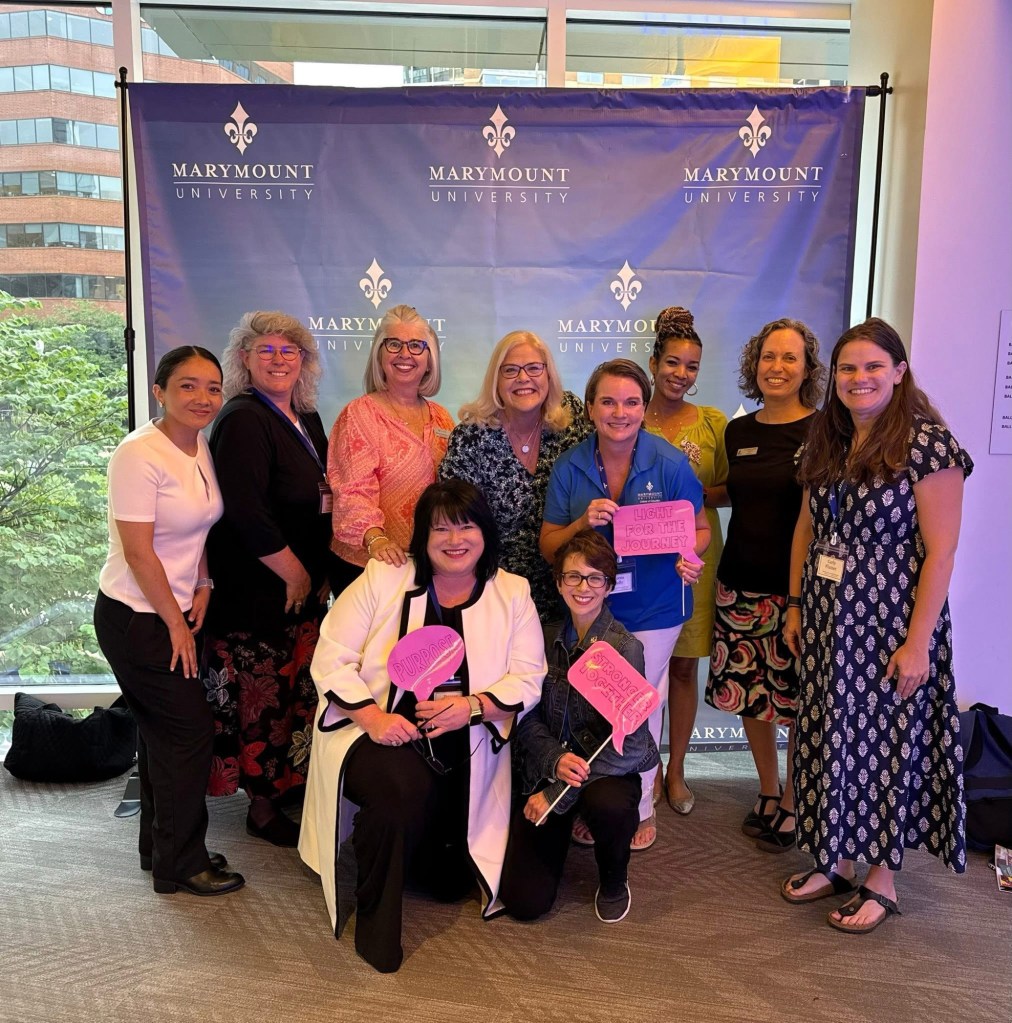

Marymount University Regional Catholic School Leadership Conference

Creating Leadership Pathways

Retention is closely tied to growth. Universities can partner with school systems to build leadership pipelines, offering graduate programs, certifications, and cohort models that empower teachers to see a future within the profession. When educators can envision their next step, they are more likely to stay (Ingersoll et al., 2018).

Embedding Research into Practice

Strong partnerships allow schools to serve as living laboratories where research informs practice and practice refines research. Whether through action research, dissertation collaboration, or pilot programs, teachers feel valued when their experiences contribute to broader learning and improvement (Coburn & Penuel, 2016).

Expanding the Teacher Pipeline with Purpose

Through intentional clinical experiences, residency models, and targeted recruitment efforts, universities can help schools attract candidates who are not only qualified but mission-aligned. This alignment is essential across all educational governance models, where purpose plays a central role in retention (Guha et al., 2016).

Supporting Educator Well-Being and Belonging

Teachers stay where they feel seen, supported, and connected. Universities can contribute by integrating social-emotional learning, reflective practice, and community-building strategies into both pre-service and in-service programming. Research consistently shows that school culture, trust, and collective efficacy are key drivers of teacher retention (Kraft et al., 2016). I am very passionate about this topic and my research highlights the central role of school climate, leadership, and relational trust in shaping teachers’ decisions to remain in the profession (Ball, 2023).

The most impactful university partnerships are grounded in a shared belief: that supporting teachers is not the responsibility of one institution, but a collective commitment.

When school systems and universities work together with intention, we begin to see action to impact. Professional learning becomes more meaningful, leadership becomes more distributed, and culture becomes more supportive. Most importantly, teachers begin to experience what so many are seeking: a sense of purpose, growth, and belonging within their schools.

For educational leaders, the invitation is clear: lean into these partnerships. Invite universities to the table not just as providers, but as collaborators. Share your challenges openly, co-create solutions, and build meaningful and impactful frameworks not one-time supports.

When we strengthen the bridge between universities and schools, we are not just preparing teachers, we are sustaining them.

At the heart of this work is a simple but powerful truth…we can do more for our teachers when we do it together. The challenges facing education today call us to think beyond traditional structures and lean into the strength of collective impact. By partnering with universities and trusted vendor partners, we open the door to innovative, responsive solutions that better meet the needs of our educators. More importantly, these partnerships allow us to visibly and authentically demonstrate our gratitude for teachers, thankful for their dedication, their resilience, and their daily commitment to shaping the lives of the students entrusted to their care.

When educators feel supported not just by their school, but by a broader community working on their behalf, we move closer to building the kind of sustainable, mission-driven environments where teachers choose to stay and thrive.

References 

Ball, D. M. (2023). Improving teacher retention within Archdiocese of Washington schools (Doctoral dissertation, Liberty University). https://digitalcommons.liberty.edu/doctoral/5006  

Coburn, C. E., & Penuel, W. R. (2016). Research–practice partnerships in education: Outcomes, dynamics, and open questions. Educational Researcher, 45(1), 48–54. https://doi.org/10.3102/0013189X16631750

Desimone, L. M., & Garet, M. S. (2015). Best practices in teachers’ professional development in the United States. Psychology, Society, & Education, 7(3), 252–263. https://doi.org/10.25115/psye.v7i3.515

Guha, R., Hyler, M. E., & Darling-Hammond, L. (2016). The teacher residency: An innovative model for preparing teachers. Learning Policy Institute.

Ingersoll, R. M., Merrill, L., Stuckey, D., & Collins, G. (2018). Seven trends: The transformation of the teaching force. Consortium for Policy Research in Education.

Ingersoll, R. M., & Strong, M. (2011). The impact of induction and mentoring programs for beginning teachers: A critical review of the research. Review of Educational Research, 81(2), 201–233. https://doi.org/10.3102/003465431140


Leave a comment

Filed under Educational Resources, Hot Topics in Education, Inspiration, Positive School Culture, Sharing the Good in Education, teacher retention, Teacher Retention and Recruitment, University Partners

The Power of Traditions in a 30-Second World at Home & in the Classroom

We are raising children in a world of scroll, swipe, and sound bites. Information arrives in 30-second clips, fragmented headlines, and algorithm-driven content streams. Research suggests that rapid, high-frequency digital consumption can shorten attention spans and contribute to cognitive overload (Carr, 2010; Ophir et al., 2009). Attention is divided. Moments are rushed. Noise is constant.

In this environment, parents and teachers are called to be architects of pause.

Traditions and routines are not small things. They are anchors. They slow the train. They invite us to stop long enough to see, truly see, the children in our classrooms and the people in our homes.

These pauses do something powerful to the human spirit…

They create predictability in an unpredictable world. They foster emotional safety. They promote a grounded sense of reality, a reminder that life is more than reaction and response; it is relationship and presence. Research consistently links predictable routines with improved emotional regulation, reduced anxiety, and stronger mental and physical health outcomes in children and adolescents (Fiese et al., 2002; Spagnola & Fiese, 2007).

A Situation We Recognize

Imagine a middle school classroom on a Monday morning.

Students arrive buzzing from weekend activity and digital stimulation. Some are anxious about assignments. Others are carrying silent burdens from home. The energy is scattered.

Instead of diving immediately into content, the teacher begins with “Monday Morning Light.” A candle is turned on (battery operated for safety). Soft instrumental music plays for two minutes. Students are invited to write one gratitude and one intention for the week.

The room shifts…

Breathing slows. Shoulders drop. Eye contact increases. Students are no longer fragmented individuals entering from separate worlds, they are a community beginning together!

Over time, this simple ritual becomes a stabilizing force. It lowers stress responses and supports emotional regulation, outcomes that research connects to consistent family and classroom routines (Spagnola & Fiese, 2007).

That two-minute tradition communicates:

You are safe here. You belong here. We begin together.

Traditions do not waste time. They redeem it.

Why Traditions Matter

Traditions:

-Provide emotional security in uncertain times

-Strengthen identity and belonging

-Reinforce shared values

-Reduce stress through predictable rhythms

-Build intergenerational memory and meaning

-Cultivate hope

Traditions remind us of good memories of what was and give us hope for what is to come.

Let us never underestimate the power of hope. Hope strengthens resilience. Hope sustains effort. Hope fuels joy!

Simple Traditions to Begin Today

In the Classroom

1. Gratitude Friday

End every Friday with students naming one win from the week: academic, personal, or relational.

2. “Light the Week” Ritual

Begin Mondays with a short reflection, Scripture, quote, or moment of silence.

3. Celebration Wall

Create a space where students post small victories: kindnesses, perseverance, improvement.

4. Monthly Service Spotlight

Each month highlight a virtue or service theme and celebrate students who model it.

5. Seasonal Reset Days

At the start of each quarter, pause for goal-setting and community-building before diving into content.

At Home

1. Sunday Supper Tradition

Phones away. One question around the table that invites storytelling.

2. Birthday Blessings

Each family member speaks a word of affirmation over the birthday child, regardless of age.

3. First-Day-of-School (First-Day-of Quarter) Breakfast Ritual

Same meal. Same prayer. Same photo spot. Every year/every quarter.

4. Advent or Lent Reflection Nights

Short candle-lit gatherings with reflection and shared intention.

5. Monthly Memory Night

Pull out old photos and tell stories. Children anchor their identity in narrative memory. (Note: my kids are in their twenties and Michael and I still lean in on this tradition a few times a year.)

Intentional Pauses are Essential

Traditions are not elaborate productions. They are intentional pauses.

In a world that accelerates, traditions decelerate.

In a culture that fragments, traditions gather.

In a society that overwhelms, traditions ground.

Children, young and old, do not simply need information. They need formation.

They need rhythms that say:

You belong. You are known. You are part of something lasting.

As parents and teachers, we are not just managing days.

We are shaping memories.

We are cultivating hope.

We are building anchors that will steady our children long after they leave our classrooms and homes.

Let us be people who pause, let us be people who build traditions, and let us be people who carry hope forward.

Stay tuned for more information on making a difference for children and in service to others. When We Train Our Eyes to See the Good—Amazing Things Happen (Ball, 2026) is in one of the final draft phases 😉.

I would love to hear the classroom and home traditions and routines being used—please leave a comment and share with those who follow this blog. This blog has surpassed over 1 million views…thank you for sharing the good!

May we continue to seek knowledge in all things~

Denise

References

Carr, N. (2010). The shallows: What the Internet is doing to our brains. W. W. Norton & Company.

Fiese, B. H., Tomcho, T. J., Douglas, M., Josephs, K., Poltrock, S., & Baker, T. (2002). A review of 50 years of research on naturally occurring family routines and rituals: Cause for celebration? Journal of Family Psychology, 16(4), 381–390. https://doi.org/10.1037/0893-3200.16.4.381

Ophir, E., Nass, C., & Wagner, A. D. (2009). Cognitive control in media multitaskers. Proceedings of the National Academy of Sciences, 106(37), 15583–15587. https://doi.org/10.1073/pnas.0903620106

Spagnola, M., & Fiese, B. H. (2007). Family routines and rituals: A context for development in the lives of young children. Infants & Young Children, 20(4), 284–299. https://doi.org/10.1097/01.IYC.0000290352.32170.5a

Leave a comment

Filed under Creating a Positive School Culture, Inspiration, Positive School Culture, Traditions for Home & the Classroom

Engage, Explore, Elect: Non-Partisan Classroom Activities on the Voting Process for K-8

Figure 1: Created by Denise Ball in Collaboration with Dall-E, 2024.

A positive learning environment contributes to improved academic performance, and greater student engagement (Aldridge & McChesney, 2018). It is an essential reminder that as K-12 educators, we are called to develop the minds of students, helping build a framework to embrace critical thinking and learn how to focus inquiry and imagination to solve problems that just one day might help the betterment of mankind. As educators, we develop classrooms to foster creative thought and model in word and action what it looks like to be kind, to show tolerance, compassion, forgiveness, and mercy. What an awesome responsibility we take on when we choose to make a difference in the classroom for the students placed in our care.

In a world that can often promote chaos, our classroom and school environments must be one of safety and peace. Classrooms that prioritize emotional safety and inclusion help students build resilience and improve their academic skills (Ryzin, Roseth, & Biglan, 2020). Classroom environments that are supportive and structured promote not only academic success but also social and emotional development in students Quinn, 2017). As we walk through the presidential voting season, we must remember that parents are the first teachers of their children. The political season can be one of intense emotion. However, as educators, we do not embrace the emotion or give in to the chaos of the world. Instead, we focus on creating and modeling positive learning environments for our students, parents, and co-workers. Teachers who create a positive classroom environment by fostering respect, collaboration, and support tend to see higher levels of student engagement and achievement (Havik & Westergard, 2020).

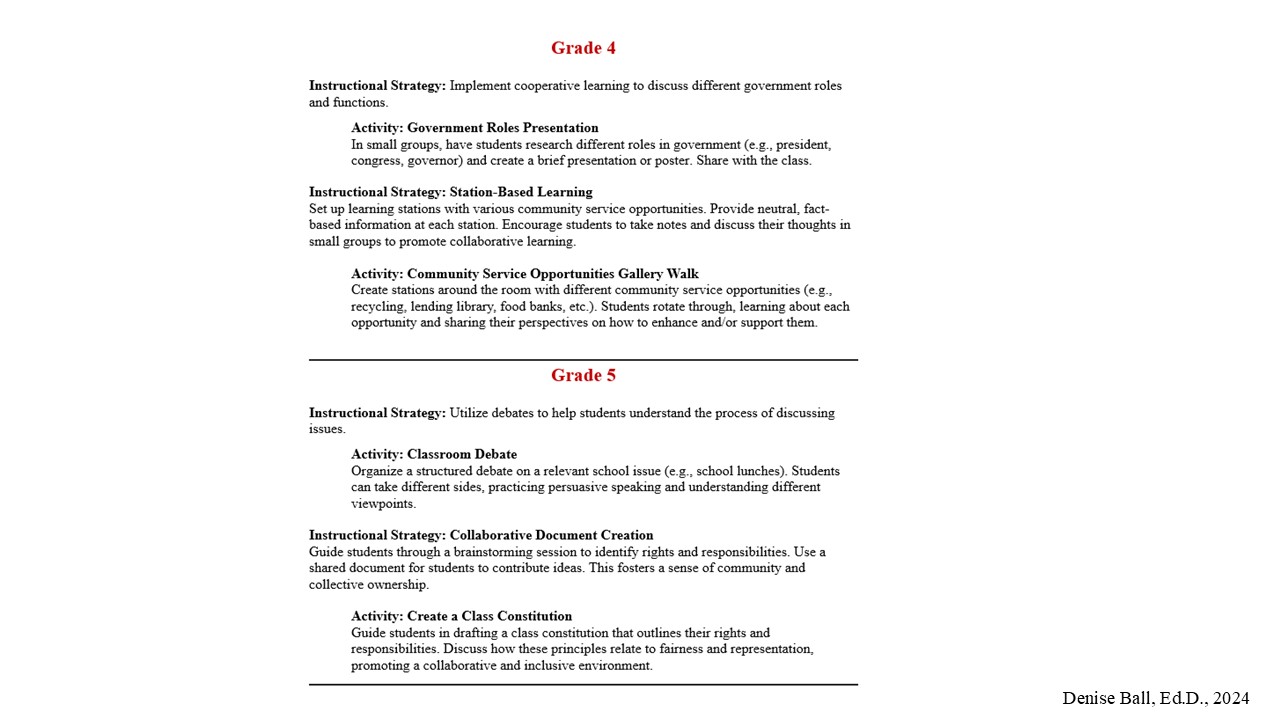
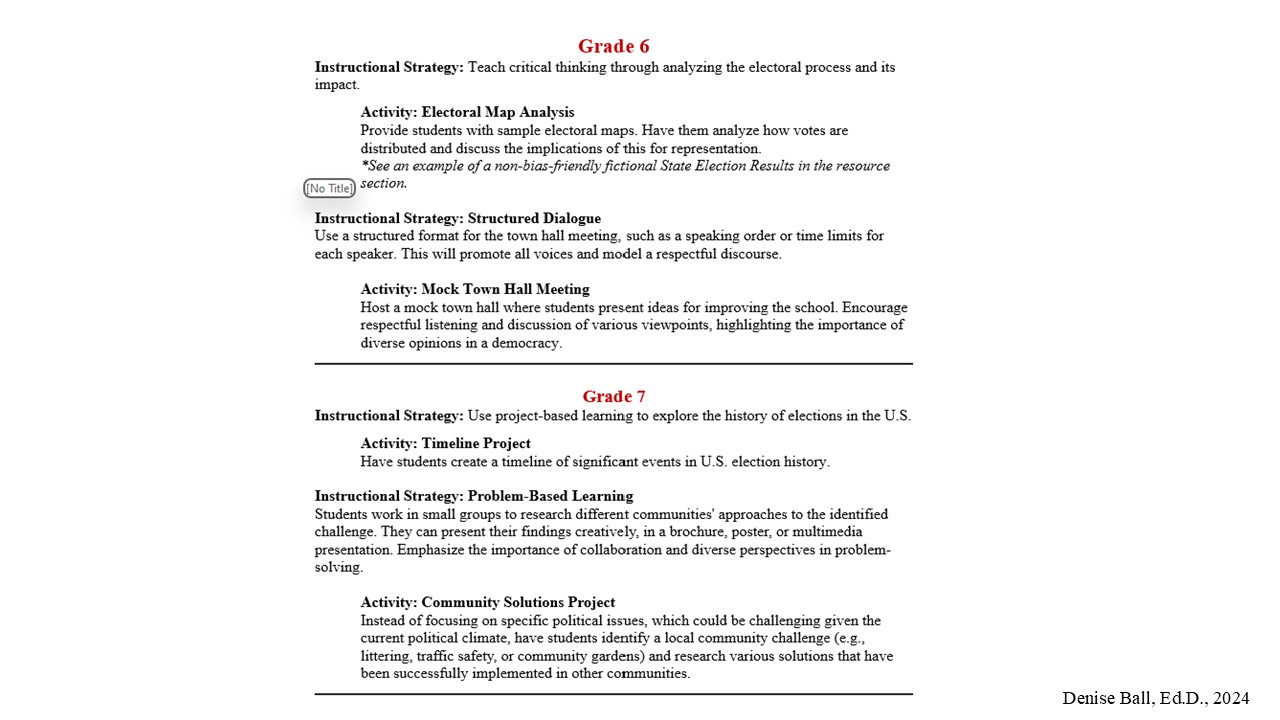
I have provided below some recommended non-partisan activities for students to help develop and promote critical thinking, and engage in learning about the electoral process while fostering a sense of civic responsibility without the emotional weight of real-world politics.

For all those who have chosen education as a career, thank you. You make a difference!

May we continue to seek knowledge in all things,

Denise

References

Aldridge, J. M., & McChesney, K. (2018). The relationships between school climate and adolescent mental health and wellbeing: A systematic literature review. International Journal of Educational Research, 88, 121-145.

Havik, T., & Westergard, E. (2020). Do teachers matter? students’ perceptions of classroom interactions and student engagement. Scandinavian Journal of Educational Research, 64(4), 488-507.

Quin, D. (2017). Longitudinal and contextual associations between teacher-student relationships and student engagement: A systematic review. Review of Educational Research, 87(2), 345-387.

Van Ryzin, M. J., Roseth, C. J., & Biglan, A. (2020). Mediators of effects of cooperative learning on prosocial behavior in middle school. Journal of Applied Developmental Psychology, 66, 101084.

Leave a comment

Filed under Creating a Positive School Culture, Curriculum Resources, Educational Resources, Educational Websites and Resources, Positive School Culture, Principals and Administrator Tools, Sharing the Good, Sharing the Good in Education

Renewal of the Educational Conference Experience: Inspiring Teachers and School Leaders

As I reflect on the 2022-23 school year, I am so proud of the school leaders and teachers I serve. This was a year of not getting back to normal but developing a new framework to meet the needs of students and school communities. In the midst of a society inundated with negativity and despair, teachers and school leaders are called to be beacons of hope. Recognizing the importance of professional development, I had the privilege of attending a conference that not only inspired and renewed educators but also provided invaluable strategies and best practices. The NCEA Conference held in Texas last April brought together teachers from all over the United States, fostering an environment of excitement and growth.

Building Hope and Inspiring Change

As teachers, we hold a remarkable responsibility in shaping the leaders of tomorrow and influencing the future of society. The conference was a testament to the commitment of educators who understand the importance of their role. It was truly inspiring to witness thousands of teachers gathering in one place, united by their passion for education. Laughter filled the air as teachers immersed themselves in sessions, eagerly absorbing new knowledge and revisiting proven strategies. The energy and enthusiasm that emanated from the event were a testament to the collective dedication of educators to their craft and the need for educators to have opportunities to come together to share ideas and collaborate.

Renewing Spirit and Cultivating Excellence

Professional development plays a vital role in empowering teachers to be the best versions of themselves in the classroom. The conference provided a platform for educators to reflect, rejuvenate, and gather the necessary tools to establish a positive school culture. It allowed school leaders to introspect and equip themselves with the skills required to support and uplift their teaching staff. By embracing this opportunity for growth and renewal, educators could enhance the educational experience for their students.

Noteworthy Vendors

Numerous vendors contributed to the success of the conference by offering their expertise and resources. Here are some vendors whose offerings caught my attention:

ADAC – Professional Development Specialists (www.theadac.com):

ADAC specializes in providing professional development services to educators. Their workshops and training sessions offer valuable insights and strategies that enhance teaching practices and student engagement. By investing in continuous professional development, teachers can evolve their instructional methods and inspire their students.

Little Linguist Art Academy (info@littlelinguistics.com):

Little Linguist Art Academy offers a unique approach to language learning through artistic expression. By combining language acquisition and creative activities, they provide an engaging and immersive learning experience for students. Their programs help foster a love for languages and encourage students to explore their creative talents.

Silent Auction Pro (www.SilentAuctionPro.com):

Silent Auction Pro offers comprehensive software solutions for organizing and managing fundraising events. With their user-friendly platform, schools can streamline the process of conducting silent auctions, thereby maximizing their fundraising potential. This resource can significantly benefit schools looking to generate funds for various educational initiatives.

Loyola Press (www.loyolapress.com):

Loyola Press is a renowned publisher specializing in educational materials, particularly in the field of Catholic education. Their resources include textbooks, teaching aids, and faith formation materials. By providing comprehensive and high-quality materials, Loyola Press supports educators in delivering an enriching and value-based education to their students.

  • Catholic Teachers’ Lounge-www.catholicteacherslounge.com
  • Archangel Education and Technology-www.arch-te.com
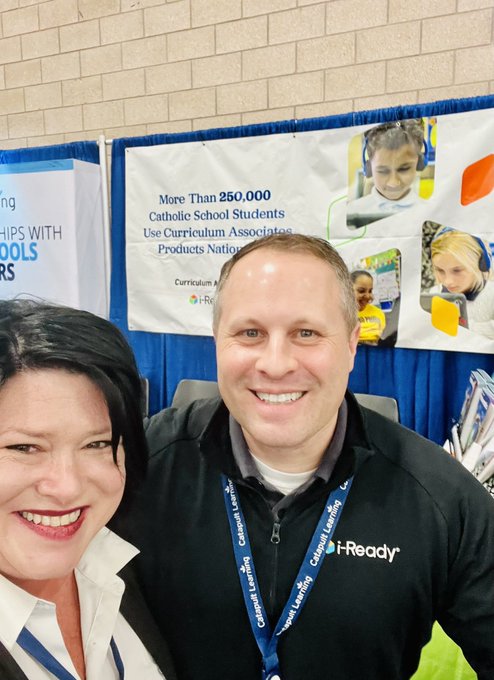
  • Curriculum Associates-i-Ready Classroom (Mathematics) -www.curriculumassociates.com
  • Simple Solutions Learning, Inc. (Yearlong and Summer Academic Workbooks) -www.simplesolutions.org
  • RISE Education– (Providing Teachers to Enhance Educational Programs)-www.riseeducation.com
  • McGraw Hill Education– (Number Worlds)-www.mheducation.com
  • Hallow-www.hallow.com
  • HSPT Prep Student Achievement Associates-www.hsptprepprograms.com
  • Lenovo Education-www.lenovo.com
  • National Catholic Education Association (NCEA)-www.ncea.org
  • COGNIA-www.cognia.org
  • Sadlier-www.sadlier.com (Vocabulary and Writing Resources for K-12)

Attending the NCEA Conference was a truly transformative experience. Witnessing the dedication and passion of educators from across the nation served as a powerful reminder of the profound impact we can have on our students and society as a whole. The conference provided an opportunity to learn from industry experts, exchange ideas with fellow educators, and explore innovative resources offered by exceptional vendors.

As we approach the summer break, let us be inspired to build a framework for the upcoming school year that plants seeds of hope and fosters a love for learning among our students. May school leaders also reflect and renew their commitment to supporting their teachers in establishing a positive school culture and establish routines and traditions to help establish a dynamic team, thereby enhancing the educational experience for all students.

May we continue to seek knowledge in all things~

Denise

McGraw Hill Education
Wonderful teachers I met at the conference who traveled from Belize.
Curriculum Associates
Fr. John Belomonte, S.J. (Diocese of Venice)
ADW School Leaders-Principal Erin Meunier was a presenter.

Leave a comment

Filed under Curriculum Resources, Educational Resources, Inspiration, Math Resources Online for Grades K-12, Positive School Culture, Principals and Administrator Tools

Calling all Educational Leaders…Preparing your School Team for the 2021-22 School Year

Educational leaders, as you prepare to bring your teams back together, now more than ever, we need to work with our school teams to develop a sense of collective responsibility to contribute to a positive school environment (Towers & Maguire, 2017).

Our teachers desire a sense of belonging (Kelchtermans, 2017). We need to seek to hear teacher voice, allowing our educators to take an active role in developing, implementing and engaging in professional development that will enhance the educational experience for all stakeholders holders and increase job motivation amongst team members.

Regardless if the role we serve is teacher, janitor, secretary or principal, we all teach in word and action. However, collectively, a school team needs to be of one mind, one unified team to serve the students and parents placed in their care. A positive school climate is synergistic. It takes having intentional discussions as a school team and developing a framework, a road map to team success now before the students return.

The school year can be a road with many challenges (COVID) and obstacles. However, a unified team, determined to create and maintain a positive school culture can do ANYTHING!

May this upcoming school year be filled with new discoveries and developments for your school team…

May we continue to seek knowledge in all things-

Denise

Leave a comment

Filed under Curriculum Resources, educational leadership, Inspiration, Positive School Culture, Team building