The Power of Traditions in a 30-Second World at Home & in the Classroom

We are raising children in a world of scroll, swipe, and sound bites. Information arrives in 30-second clips, fragmented headlines, and algorithm-driven content streams. Research suggests that rapid, high-frequency digital consumption can shorten attention spans and contribute to cognitive overload (Carr, 2010; Ophir et al., 2009). Attention is divided. Moments are rushed. Noise is constant.

In this environment, parents and teachers are called to be architects of pause.

Traditions and routines are not small things. They are anchors. They slow the train. They invite us to stop long enough to see, truly see, the children in our classrooms and the people in our homes.

These pauses do something powerful to the human spirit…

They create predictability in an unpredictable world. They foster emotional safety. They promote a grounded sense of reality, a reminder that life is more than reaction and response; it is relationship and presence. Research consistently links predictable routines with improved emotional regulation, reduced anxiety, and stronger mental and physical health outcomes in children and adolescents (Fiese et al., 2002; Spagnola & Fiese, 2007).

A Situation We Recognize

Imagine a middle school classroom on a Monday morning.

Students arrive buzzing from weekend activity and digital stimulation. Some are anxious about assignments. Others are carrying silent burdens from home. The energy is scattered.

Instead of diving immediately into content, the teacher begins with “Monday Morning Light.” A candle is turned on (battery operated for safety). Soft instrumental music plays for two minutes. Students are invited to write one gratitude and one intention for the week.

The room shifts…

Breathing slows. Shoulders drop. Eye contact increases. Students are no longer fragmented individuals entering from separate worlds, they are a community beginning together!

Over time, this simple ritual becomes a stabilizing force. It lowers stress responses and supports emotional regulation, outcomes that research connects to consistent family and classroom routines (Spagnola & Fiese, 2007).

That two-minute tradition communicates:

You are safe here. You belong here. We begin together.

Traditions do not waste time. They redeem it.

Why Traditions Matter

Traditions:

-Provide emotional security in uncertain times

-Strengthen identity and belonging

-Reinforce shared values

-Reduce stress through predictable rhythms

-Build intergenerational memory and meaning

-Cultivate hope

Traditions remind us of good memories of what was and give us hope for what is to come.

Let us never underestimate the power of hope. Hope strengthens resilience. Hope sustains effort. Hope fuels joy!

Simple Traditions to Begin Today

In the Classroom

1. Gratitude Friday

End every Friday with students naming one win from the week: academic, personal, or relational.

2. “Light the Week” Ritual

Begin Mondays with a short reflection, Scripture, quote, or moment of silence.

3. Celebration Wall

Create a space where students post small victories: kindnesses, perseverance, improvement.

4. Monthly Service Spotlight

Each month highlight a virtue or service theme and celebrate students who model it.

5. Seasonal Reset Days

At the start of each quarter, pause for goal-setting and community-building before diving into content.

At Home

1. Sunday Supper Tradition

Phones away. One question around the table that invites storytelling.

2. Birthday Blessings

Each family member speaks a word of affirmation over the birthday child, regardless of age.

3. First-Day-of-School (First-Day-of Quarter) Breakfast Ritual

Same meal. Same prayer. Same photo spot. Every year/every quarter.

4. Advent or Lent Reflection Nights

Short candle-lit gatherings with reflection and shared intention.

5. Monthly Memory Night

Pull out old photos and tell stories. Children anchor their identity in narrative memory. (Note: my kids are in their twenties and Michael and I still lean in on this tradition a few times a year.)

Intentional Pauses are Essential

Traditions are not elaborate productions. They are intentional pauses.

In a world that accelerates, traditions decelerate.

In a culture that fragments, traditions gather.

In a society that overwhelms, traditions ground.

Children, young and old, do not simply need information. They need formation.

They need rhythms that say:

You belong. You are known. You are part of something lasting.

As parents and teachers, we are not just managing days.

We are shaping memories.

We are cultivating hope.

We are building anchors that will steady our children long after they leave our classrooms and homes.

Let us be people who pause, let us be people who build traditions, and let us be people who carry hope forward.

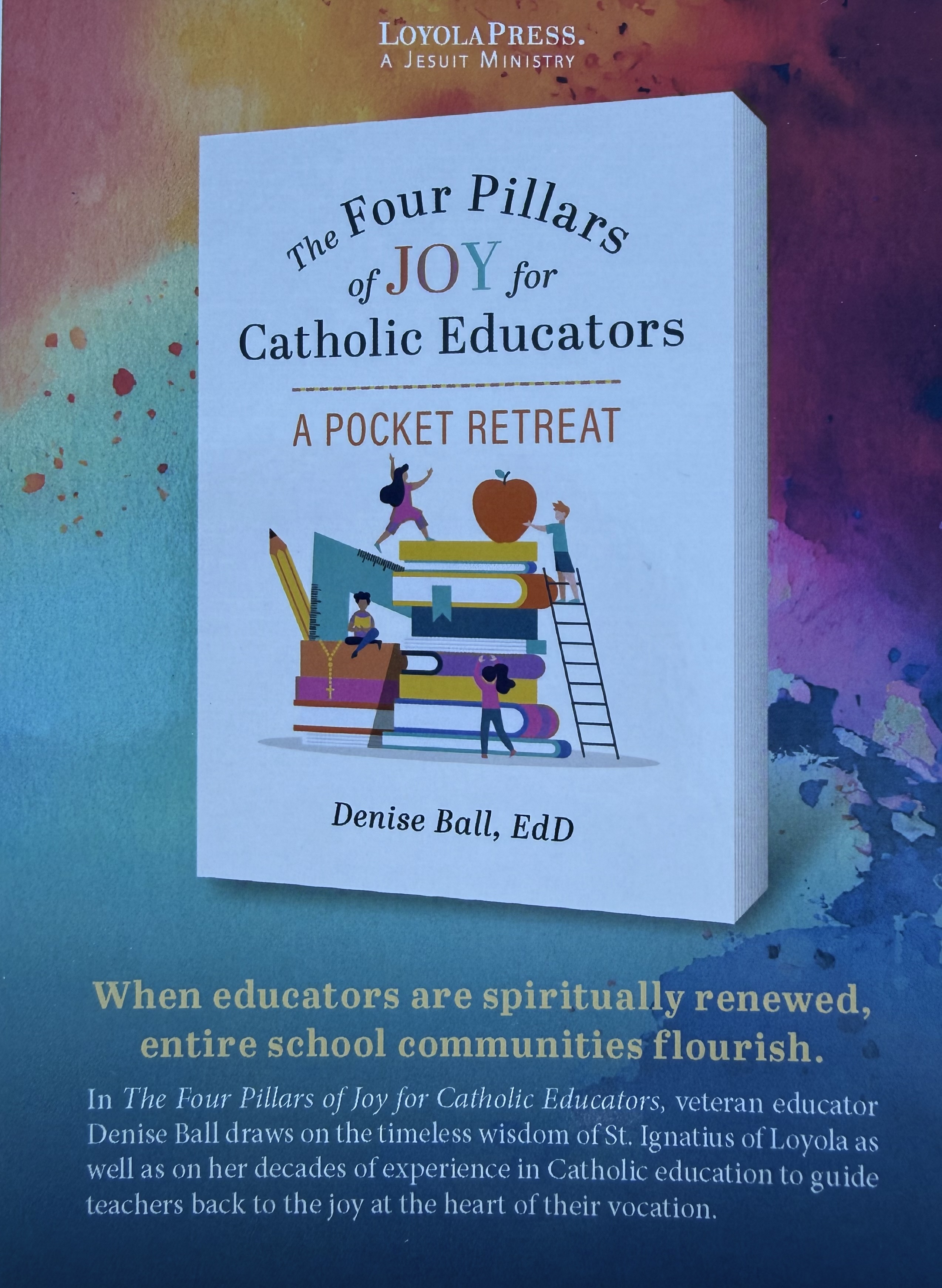
Stay tuned for more information on making a difference for children and in service to others. When We Train Our Eyes to See the Good—Amazing Things Happen (Ball, 2026) is in one of the final draft phases 😉.

I would love to hear the classroom and home traditions and routines being used—please leave a comment and share with those who follow this blog. This blog has surpassed over 1 million views…thank you for sharing the good!

May we continue to seek knowledge in all things~

Denise

References

Carr, N. (2010). The shallows: What the Internet is doing to our brains. W. W. Norton & Company.

Fiese, B. H., Tomcho, T. J., Douglas, M., Josephs, K., Poltrock, S., & Baker, T. (2002). A review of 50 years of research on naturally occurring family routines and rituals: Cause for celebration? Journal of Family Psychology, 16(4), 381–390. https://doi.org/10.1037/0893-3200.16.4.381

Ophir, E., Nass, C., & Wagner, A. D. (2009). Cognitive control in media multitaskers. Proceedings of the National Academy of Sciences, 106(37), 15583–15587. https://doi.org/10.1073/pnas.0903620106

Spagnola, M., & Fiese, B. H. (2007). Family routines and rituals: A context for development in the lives of young children. Infants & Young Children, 20(4), 284–299. https://doi.org/10.1097/01.IYC.0000290352.32170.5a

Leave a comment

Filed under Creating a Positive School Culture, Inspiration, Positive School Culture, Traditions for Home & the Classroom

A Reflection for Leaders this Season…the Gift of Being Present!

Denise Ball, Ed.D.

This time of year brings both joy and complexity for teams across all industries. Research consistently shows that workplace stress, emotional fatigue, and decreased attentional capacity tend to rise during the winter months, particularly during the holiday season when competing demands intensify for employees at all levels (American Psychological Association, 2024).

Given this, leaders play a uniquely important role in setting the emotional temperature of their organizations. When leaders intentionally “tune in” …listening deeply, being present in conversations, and noticing subtle shifts in team dynamics, they build trust and psychological safety. These conditions not only support employee well-being but also increase engagement and organizational resilience.

Presence Sets the Tone for Culture

Our words and actions create a cultural ripple effect. Decades of organizational research confirm that when leaders model behaviors such as pausing, unplugging, and expressing gratitude, teams experience boosts in creativity, problem-solving, and productivity (Fritz et al., 2011). A leader’s ability to slow down, notice the good, and encourage moments of reflection signals to employees that rest is not a reward…it is a strategic imperative for sustained excellence.

Encouraging teams to pause, breathe, and “see” the good around them begins at the top.

When leaders embrace presence, the positive emotional contagion can be transformational. It builds cultures where affirmation outpaces anxiety, where collaboration thrives, and where people feel supported, valued, and energized to contribute their best.

Training Our Eyes to See the Good

There is so much good in this world. When we train our eyes to see the good, amazing things happen (Ball, 2025). This simple but profound shift in perspective changes how we lead, how we treat others, and how we interpret the moments unfolding around us.

In seasons where work accelerates and expectations multiply, choosing to notice goodness requires intention. If leaders can tune in and be present, it pays dividends in hope, clarity, and renewed purpose for those they lead.

The Gift and Responsibility of Leadership

It is a gift to lead. It is essential to remember the profound impact we have on those we choose to serve. Leadership is not merely a set of tasks or strategies; it is embodied influence.

People feel our presence before they hear our message.

They notice our pace before they follow our direction.

As we enter this season, may we be reminded that our teams do not need perfection from us, they need presence. They need leaders who model steadiness, gratitude, and attention to what matters.

They need leaders who see the good and call it forth in others.

When leaders are present, cultures strengthen. When leaders slow down, teams rise…and when leaders choose to see the good, amazing things truly happen.

References

American Psychological Association. (2024). Psychological safety in the changing workplace: Work in America 2024 report. https://www.apa.org

Ball, D. (2025). Strengthening schools from within: The impact of leadership and culture on teacher retention [Conference presentation]. Oxford University Educational Research Symposium, Oxford, United Kingdom.

Fritz, C., Lam, C. F., & Spreitzer, G. M. (2011). It’s the little things that matter: An examination of knowledge workers’ recovery experiences. Academy of Management Journal, 54(4), 835–855. https://doi.org/10.5465/amj.2011.0486

Leave a comment

Filed under leadership

Marymount University Complimentary Virtual Leadership Retreat -October 2, 2025

I am grateful to Marymount University School of Education for the invitation to participate and provide tomorrow’s keynote address for this inaugural Leadership Retreat (virtual).

This inspiring day will focus on transformative leadership, with engaging sessions led by Marcia Baldanza, Ed.D., Jennifer Scully, Ed.D., Nicci Dowd, EdD, Tanya Salewski, Ed.D, Dr. Gina DiVincenzo, Dr. Allison Ross , and Travis Zimmerman, Ed. D.

Looking forward to a day of learning, reflection, and vision-casting with incredible colleagues who are shaping the future of education.

Marymount University School of Education serves 270+ aspiring doctoral students, current and future school leaders.

Scan the QR code to join the conversation! This complimentary virtual event begins tomorrow at 9AM.

It is easy to share the good!

Leave a comment

Filed under Conferences, Educational Conversations, Inspiration

Setting the Tone: How School Culture and Leadership Shape a Positive School Year

A thriving school culture is the foundation of any successful educational community. Described as “the quality and character of school life,” it is the heart and soul that encourages students, staff, and administrators alike to love being at school every single day. A positive climate, where people feel emotionally and physically safe, is strongly linked to better academic outcomes, mental health, attendance, and a sense of belonging.

School culture is not built in a single day, but there are moments that have a disproportionate impact, and the first welcome back meeting for faculty and staff is one of them. This meeting is more than an opportunity to review calendars and procedures; it is a chance to inspire, reconnect, and re-establish the shared mission that binds the community together. A well-planned opening meeting can set expectations, build trust, and create a sense of excitement that carries through the year.

Five Strategies to Set a Positive Tone at the Welcome Back Meeting

As a school leader, your first faculty gathering is pivotal. Here is how to make it meaningful:

Offer a genuine welcome with gratitude Start by sincerely thanking your educators for choosing to serve your school. This fosters belonging, affirms their mission, and builds a team ethos rooted in appreciation.

Structured beginnings breed success. Provide an organized opening and introduce a professional learning calendar while leaving room for teacher input. This collaboration builds investment and shared ownership.

Align Vision with Mission and Invite Input

Use the opportunity to present your vision or theme for the year. Then revisit your school’s mission and guide educators in brainstorming how that mission lives in their classrooms. When teachers connect their daily practice to a broader purpose, engagement deepens. Clarify instructional priorities; be transparent about instructional expectations and schoolwide learning focuses. Whether it is boosting literacy, embedding inquiry-based learning, or expanding social emotional learning, clear priorities help teachers plan and succeed.

Cultivate Stronger Parent Partnerships

Activating the parent community is vital. Invite parents into the educational process with workshops, monthly coffees, or a “parent voice” segment in your weekly newsletter. Research underscores that happy homes have a huge impact on student well-being, which in turn is critical for flourishing school cultures.

Why This Matters All Year Long

The first meeting of the school year should inspire, not simply inform. When teachers leave feeling seen, organized, and aligned with the mission, and knowing they have a voice, they are more likely to remain invested through the school year. A thriving school culture is built moment by moment, and it begins with leadership that values people as much as plans.

References

Ball, D. (2023). Improving teacher retention within Archdiocese of Washington schools: The impact of school climate on a teacher’s decision to stay or leave the classroom (Publication No. 5006) [Doctoral dissertation, Liberty University]. Digital Commons @ Liberty University. https://digitalcommons.liberty.edu/doctoral/5006/

Lochmiller, C. R. (2024). The impact of school leadership support on teacher retention. Education Sciences, 14(5), 545. https://doi.org/10.3390/educsci14050545

Pant, Y., & Shiwakoti, R. (2025). Dynamics of school culture and leadership in educational institutions. NPRC Journal of Multidisciplinary Research, 2(5), 11–125. https://www.researchgate.net/publication/393559175

Plaku, A. K. (2025). The role of leaders in shaping school culture. Frontiers in Education. https://doi.org/10.3389/feduc.2025.1541525

Leave a comment

Filed under Curriculum Resources, Welcoming Back Faculty & Staff

Be a Distributor of Joy and Change the Teacher Attrition Rate

Blackaby (2015) reminds us that a positive school culture begins with a service-oriented mindset. Leaders must build a clear vision of the kind of school environment they want to cultivate for teachers, students, and families. Building a strong team and a positive school culture requires shared leadership, collaboration, and a focus on teacher well-being.

School leaders must be present and care enough to listen and enter the difficult conversation(s). Joy must be modeled by the school leader in both word and action…it is synergistic and transformative for a school team and a school campus/community. At the heart of teacher retention lies a simple but profound truth—joy!

As educational leaders, we must be builders and distributors of joy, creating school cultures where educators are not just sustained but inspired. Joy is not just an outcome of a thriving school environment, it is the very foundation upon which leadership, professional learning, culture, and a positive school team interconnect and strengthen one another.

When leaders cultivate environments where teachers feel valued, when professional learning is meaningful and collaborative, when school culture is intentionally shaped with positivity and respect, and when teams work together with a shared purpose, joy emerges.

The discussion on teacher retention was important pre-COVID and is essential post the pandemic when many teachers are still struggling. Teachers need to pause and take the time to reflect and acknowledge the work it took to walk through that period, celebrate the amazing things that occurred due to their hard work and service to others, so they can close the chapter and get back to the joy of education that attracted them to the profession in the first place.

The conversation on teacher retention and the importance of school leadership and a positive school culture continues…

May we continue to seek knowledge in all things,

Denise

1 Comment

Filed under Curriculum Resources, Teacher Retention and Recruitment

Cherish the Moments, No Matter the Distance

Life moves fast, and our children grow even faster. But no matter how busy our schedules get or how far apart we are, there’s always time to be present for them.

This morning FaceTime call with my sweet Claire is a reminder that love isn’t bound by location—it thrives in the little moments, the shared smiles, and the simple “I love yous.”

So, take the call. Send the text. Be there. Life is a short journey—choose to live it!

Leave a comment

Filed under Curriculum Resources

Listening, Learning, and Leading: A Conversation on Teacher Retention


Teacher retention is not just a policy issue, it is  a deeply personal one. Behind every statistic is a teacher who has dedicated their time, energy, and heart to shaping the next generation. The reasons educators stay or leave are complex, intertwined with school culture, leadership, and professional fulfillment. The most effective way to address teacher retention is simple yet profound: we must listen.


As school leaders, we have an obligation to understand the realities our teachers face, to hear their challenges, and to amplify their successes. Listening is not just a courtesy, it is  a leadership strategy. When teachers feel valued, heard, and supported, they are more likely to stay and thrive.


It was an incredible honor to be invited to lead a discussion on teacher retention as part of the ADAC Answers series. With over 240 school leaders from 40 states and the District of Columbia, registered and representing public, private, faith-based, and international schools. These leaders represented approximately 34,000 teachers and 370,000 students. This conversation reflects a national and global commitment to addressing one of the most pressing challenges in education today.


Bringing together diverse voices across governance models allows us to see the common threads in teacher retention and explore meaningful, research-based solutions. Whether it is mentorship programs, school climate initiatives, or leadership development, the strategies we discussed are not just theories, they are actionable pathways to strengthening our schools from within.


I am grateful for the opportunity to engage in this dialogue and to learn from the experiences of so many dedicated leaders. The work of teacher retention is ongoing, but together, through thoughtful leadership and a commitment to listening, we can make a lasting impact.

If you were unable to join yesterday, you can watch the full recording on ADAC’s Video Resources page.


https://loom.ly/1yvAmBo

May we continue to seek knowledge in all things,

Denise

Leave a comment

Filed under Curriculum Resources, teacher retention, Teacher Retention and Recruitment

Engage, Explore, Elect: Non-Partisan Classroom Activities on the Voting Process for K-8

Figure 1: Created by Denise Ball in Collaboration with Dall-E, 2024.

A positive learning environment contributes to improved academic performance, and greater student engagement (Aldridge & McChesney, 2018). It is an essential reminder that as K-12 educators, we are called to develop the minds of students, helping build a framework to embrace critical thinking and learn how to focus inquiry and imagination to solve problems that just one day might help the betterment of mankind. As educators, we develop classrooms to foster creative thought and model in word and action what it looks like to be kind, to show tolerance, compassion, forgiveness, and mercy. What an awesome responsibility we take on when we choose to make a difference in the classroom for the students placed in our care.

In a world that can often promote chaos, our classroom and school environments must be one of safety and peace. Classrooms that prioritize emotional safety and inclusion help students build resilience and improve their academic skills (Ryzin, Roseth, & Biglan, 2020). Classroom environments that are supportive and structured promote not only academic success but also social and emotional development in students Quinn, 2017). As we walk through the presidential voting season, we must remember that parents are the first teachers of their children. The political season can be one of intense emotion. However, as educators, we do not embrace the emotion or give in to the chaos of the world. Instead, we focus on creating and modeling positive learning environments for our students, parents, and co-workers. Teachers who create a positive classroom environment by fostering respect, collaboration, and support tend to see higher levels of student engagement and achievement (Havik & Westergard, 2020).

I have provided below some recommended non-partisan activities for students to help develop and promote critical thinking, and engage in learning about the electoral process while fostering a sense of civic responsibility without the emotional weight of real-world politics.

For all those who have chosen education as a career, thank you. You make a difference!

May we continue to seek knowledge in all things,

Denise

References

Aldridge, J. M., & McChesney, K. (2018). The relationships between school climate and adolescent mental health and wellbeing: A systematic literature review. International Journal of Educational Research, 88, 121-145.

Havik, T., & Westergard, E. (2020). Do teachers matter? students’ perceptions of classroom interactions and student engagement. Scandinavian Journal of Educational Research, 64(4), 488-507.

Quin, D. (2017). Longitudinal and contextual associations between teacher-student relationships and student engagement: A systematic review. Review of Educational Research, 87(2), 345-387.

Van Ryzin, M. J., Roseth, C. J., & Biglan, A. (2020). Mediators of effects of cooperative learning on prosocial behavior in middle school. Journal of Applied Developmental Psychology, 66, 101084.

Leave a comment

Filed under Creating a Positive School Culture, Curriculum Resources, Educational Resources, Educational Websites and Resources, Positive School Culture, Principals and Administrator Tools, Sharing the Good, Sharing the Good in Education

Engaging with Data: Key Takeaways from Thought-Provoking Sessions at the 5th Annual Ferguson Institute

I believe in sharing the good; words have power. There were so many words of wisdom shared over the last few days, I took pen to paper to capture a few words that spoke to me. I hope they inspire you or encourage reflection as you wrap up the 2023-24 school year. Please refer to the recommended resources for the names of some of the speakers who lit my fuse of curiosity this week. Never forget that to teach is a choice. To lead in education is a choice. The work you choose to do matters! Thank you for saying yes to the call to serve in education…

I found this week so engaging that I needed to pause and reflect to process the many data insights supported by research shared this week. There was such a dynamic cadre of national educational leaders that gathered in Dallas for this well planned and executed event. Many opportunities were provided to listen and discuss data and how to use data to inform decisions that effect student learning outcomes. I have a notebook of takeaways that I will spend some time with over the summer to unpack from attending the Curriculum Associates 5th Annual Ferguson Institute.

Denise Ball, Assistant Superintendent for Teaching and Learning/Lori Chaney, Curriculum Associates, Director of Sales, Mid-Atlantic/Kelly Branaman, Secretary for Catholic Schools and Superintendent of Schools

Key Takeaways:

1. It is important to come together; educating students takes a community.

The power of collaboration in education was a resounding theme at the Ferguson Institute. The diverse perspectives and experiences shared among those present served as a powerful reminder that the education of our students is a collective endeavor, not an individual one.

2. As educational leaders, we need to ensure we are providing teachers with opportunities to create environments where students feel “invited” to learn and that we are embracing and using data across all grade levels.

Creating inviting learning environments is crucial. By leveraging data, we can tailor these environments to meet the needs of every student, fostering an inclusive and supportive atmosphere that encourages engagement and learning.

Hattie, John. “Foster a Learning Culture.” 2024. What Brings You Joy. 5th Annual Ferguson Institute.

3. Remember never to underestimate a student’s potential and that every child is a capable mathematical thinker. Wouldn’t it be amazing if all students believed they were capable mathematical thinkers? Expecting excellence will transform a school culture!

At the heart of our educational mission is the belief in the untapped potential of every student. By fostering a culture of high expectations and support, we can empower our students to see themselves as capable mathematical thinkers, thereby transforming the overall school culture. Embracing this thought process might also require some professional development to ensure your faculty sees a capable mathematical thinker in every student. Let us enter the conversation…

4. Continue to seek to be inspired, encourage one another and the students placed in your care. Do not edit out the innovation; create environments for students and teachers that promote curiosity and inquiry.

Innovation should be at the heart of our educational practices. By nurturing curiosity and inquiry, we can create dynamic learning environments that inspire both teachers and students to explore, experiment, and grow.

Hattie, John. “Students are Engaged in their Learning.” 2024. What Brings You Joy. 5th Annual Ferguson Institute.

5. Building capacity through teaching inference and evaluating the impact is essential.

Teaching inference is essential for developing critical thinking skills. Evaluating the impact of our teaching practices ensures that we are effectively building these capacities in our students and continually improving our methods.

6. Hearing school districts share their data story was inspirational and provided opportunities for rich data dialogue. Hearing that achievement is up half a grade level equivalent in one year was simply a testament that the i-Ready curriculum and assessment resources make a difference!

The success stories shared by various school districts were both inspiring and affirming. The significant improvements in student achievement underscore the effectiveness of the i-Ready curriculum and assessment resources in enhancing educational outcomes.

Sullivan, Mark. Birmingham City Schools. 2024.

7. Curriculum Associates stimulates inquiry…always growing and improving through research and collaboration where speech recognition, Algebra I, and i-Ready Pro initiatives will be student game changers.

Curriculum Associates’ commitment to continuous growth and improvement through research and collaboration is evident in their innovative initiatives. These advancements promise to be transformative for students, particularly in areas like speech recognition and Algebra I.

8. One gold nugget that is life-affirming is to embrace the errors. No one says no to better!

Embracing errors as opportunities for growth is a powerful mindset. It reminds us that continuous improvement is always possible, and every mistake is a step towards betterment.

The world is chaotic, and we are called to be a positive light for the students and parents in our care. We must have courage, and as reflective practitioners, we must remember to reflect often on what brings us joy. Nothing great happens in the absence of enthusiasm. Build that playlist this summer, sing aloud and dance. Get energized to develop a personal and professional framework for greatness for the 2024-25 school year.

I am leaving Dallas and headed back to D.C. with the clear understanding that Curriculum Associates is an organization where everyone believes that every child deserves to be on grade level. It has been an exceptional week, enriched with data discussions with passionate school and district leaders committed to making a difference in a child’s life. I look forward to continuing to unpack all that I learned with my team and the school leaders I serve, strengthening the relationships developed and lessons learned while engaging with data at the 5th Annual Ferguson Institute.

Whitepaper: Culturally Responsive Mathematics Teaching (curriculumassociates.com)

School Readiness for Young Students Post-Pandemic (curriculumassociates.com)

Rethinking Middle School Math Acceleration (curriculumassociates.com)

Student-Focused AI Capabilities

Leave a comment

Filed under Blogs that Inspire Us, Curriculum Resources, Education Leadership Conferences, Educational Websites and Resources, Inspiration, Interesting Topics, Sharing the Good, Sharing the Good in Education

Top Five Recommended “Musts” to Ensure Teachers Feel Valued Before the Summer Pause

It is an exciting time, but this season of transition can be chaotic and often stressful for faculty, staff, students, and parents. A little bit of grace this time of year goes a long way.

When I was a school leader, I used to tell my staff that the end of the year was a time for putting on the “red shoes”…making sure to leave home needs at home and embracing each day with purpose; we are called to be the difference. Retention data shows that it is important now more than ever to ensure that all stakeholders end the year on a high note.

A school climate affects teacher satisfaction, morale, and expectations about staying in the profession (Garcia & Weiss, 2019). A high percentage of teachers do not feel appreciated, and this feeling can have an impact on their choice of staying or leaving the classroom. It would be beneficial for society to remember that teaching remains an extraordinarily noble profession with intrinsic rewards that few other disciplines experience (Vocke & Foran, 2017). There are many ways to show teachers support. Below are my five recommended “musts” to finish the school year strong, ensuring teachers feel valued.

Top Five Recommended “Musts” to Ensure Teachers Feel Valued Before the Summer Pause

  1. Handwritten Thank-You Notes: Write personalized notes to each teacher, highlighting specific contributions and expressing sincere gratitude. Encourage faculty and staff to write anonymous notes to one another. Positive energy is synergistic!
  2. Public Acknowledgment: Use school newsletters, social media, and assemblies to publicly recognize and celebrate teachers’ achievements and dedication. Use these last few weeks of school to promote and share the good that has happened on your school campus. Sharing the good can change a school’s culture.
  3. Classroom Resources: Provide teachers with additional resources or gift cards for classroom supplies as a token of appreciation and to ease their financial burden as they begin to plan this summer for the upcoming school year.
  4. Professional Development Stipends: Offer a stipend or provide a gift card for summer professional development courses, or educational reading materials, indicating investment in their continued growth.
  5. End-of-Year Celebration: Host a celebratory event to honor teachers’ hard work and achievements throughout the year. Include awards or small gifts to show appreciation. Have a discussion on the theme for the upcoming school year to help give direction (which will reduce stress) in helping teachers plan over the summer.

Give your team permission to put an “out of office” message on their email for a period of time to spend with family and friends, recharging so they can be all they are called to be for the upcoming school year. Building in a “time to pause” into one’s daily schedule, will allow teachers to come back to campus more creative, energized, and ready to accomplish team initiatives for the new school year.

Photo Credit: Anna Quattrone, Director of Marketing and Enrollment

Ultimately, it is essential to never underestimate the importance on greeting your faculty and staff as they begin the school day, providing an encouraging word or smile, and making sure your team members feel seen and heard. Teachers choose to serve in schools where they feel welcomed and appreciated.

Regardless of the time of year, it is always a good idea to thank a teacher for choosing to teach!

May the last few weeks of school be filled with joy and peace!

Denise

Denise Ball, Ed.D.

Recommended Reading

Carver-Thomas, D., & Darling-Hammond, L. (2019). “The Trouble with Teacher Turnover: How Teacher Attrition Affects Students and Schools.” Education Policy Analysis Archives, 27(36).

Kraft, M. A., Papay, J. P., Charner-Laird, M., Johnson, S. M., Ng, M., & Reinhorn, S. K. (2020). “Educator Work Environments and Teacher Effectiveness: A Two-Year Longitudinal Study of Teaching Assignments.” Educational Evaluation and Policy Analysis, 42(3), 436-460.

Podolsky, A., Kini, T., Bishop, J., & Darling-Hammond, L. (2019). “Strategies for Attracting and Retaining Educators: What Does the Evidence Say?” Education Policy Analysis Archives, 27(38).

Leave a comment

Filed under Curriculum Resources, Teacher Retention and Recruitment