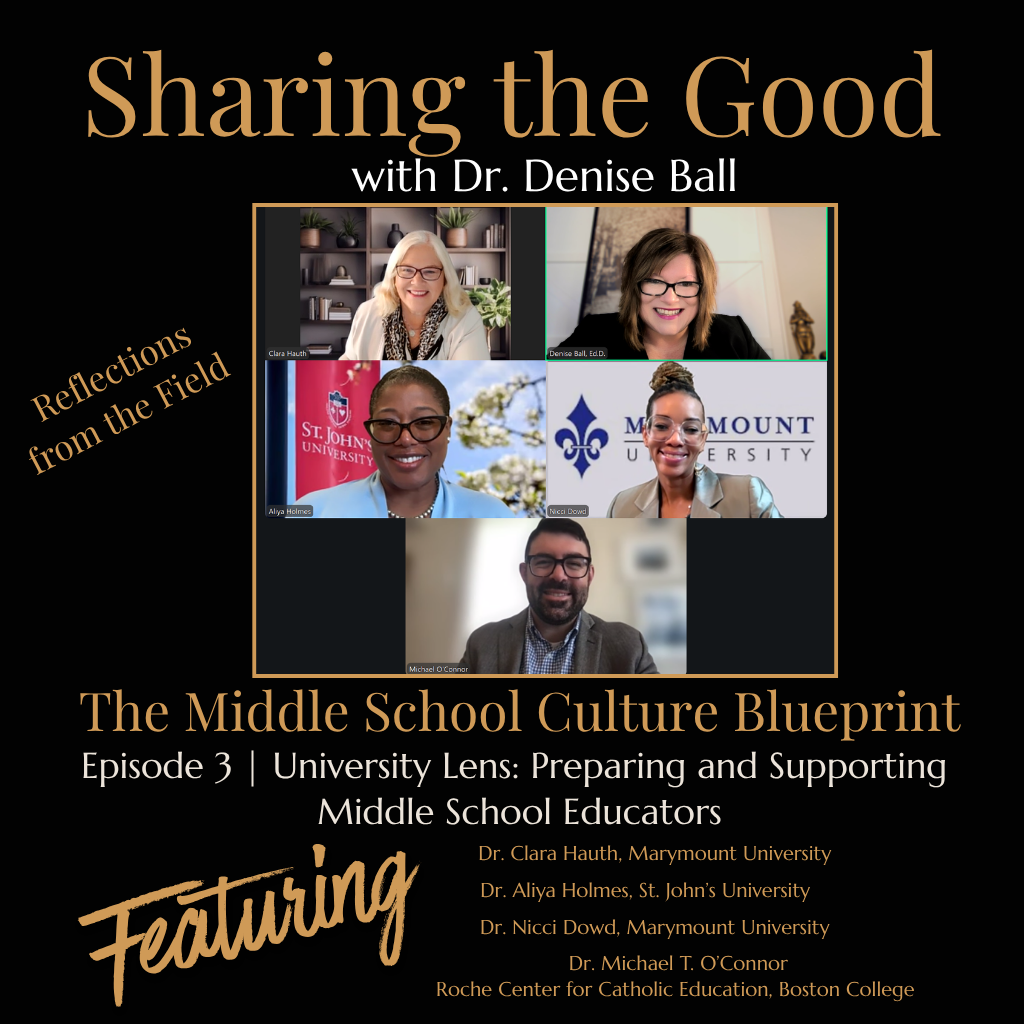
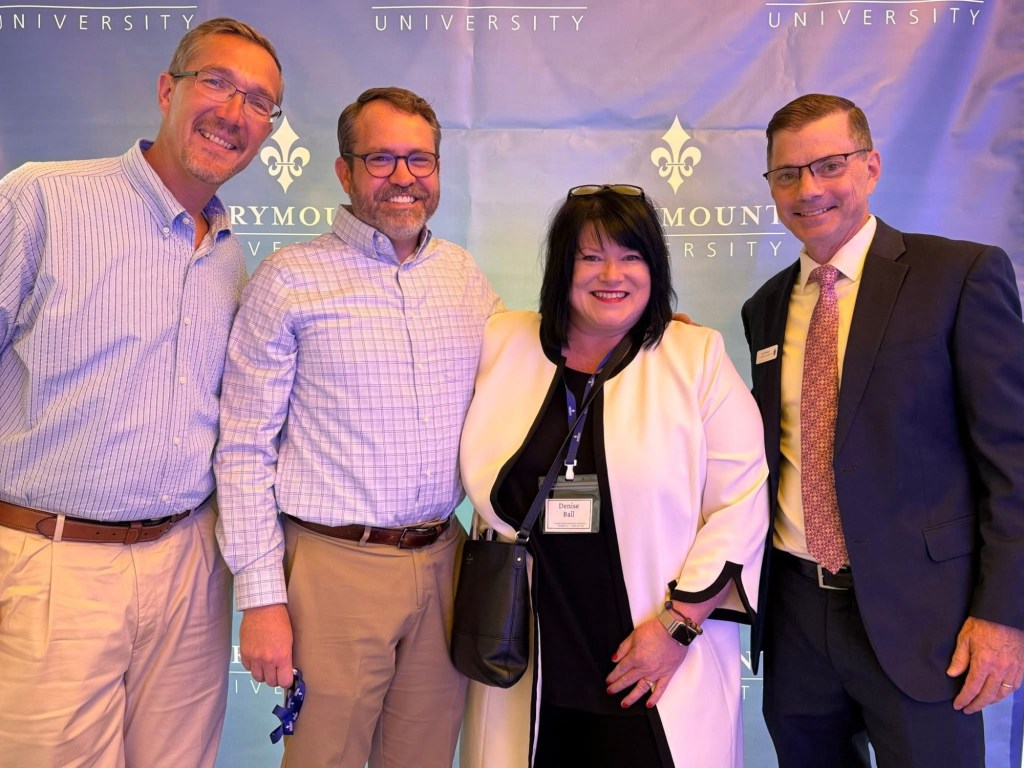
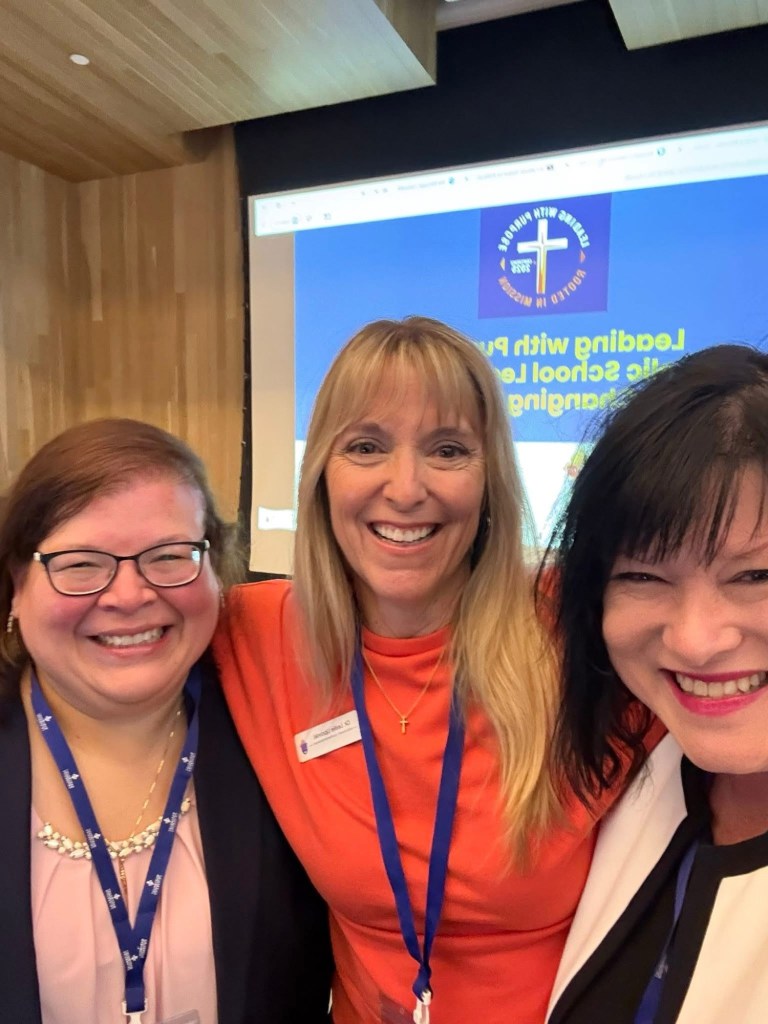
How can universities better prepare, support, and walk alongside the educators and leaders serving our Catholic schools?
Dr. Michael O’Connor, Dr. Nicci Dowd, Dr. Aliya Holmes, and Dr. Clara Hauth each brought a different lens to the conversation, including professional learning, teacher preparation, innovation and partnership, and educational leadership. Yet throughout the discussion, a common message emerged. Higher education has an important opportunity not simply to prepare people before they enter schools, but to remain connected to the field, listen to its needs, and continue learning alongside the educators doing the work each day.
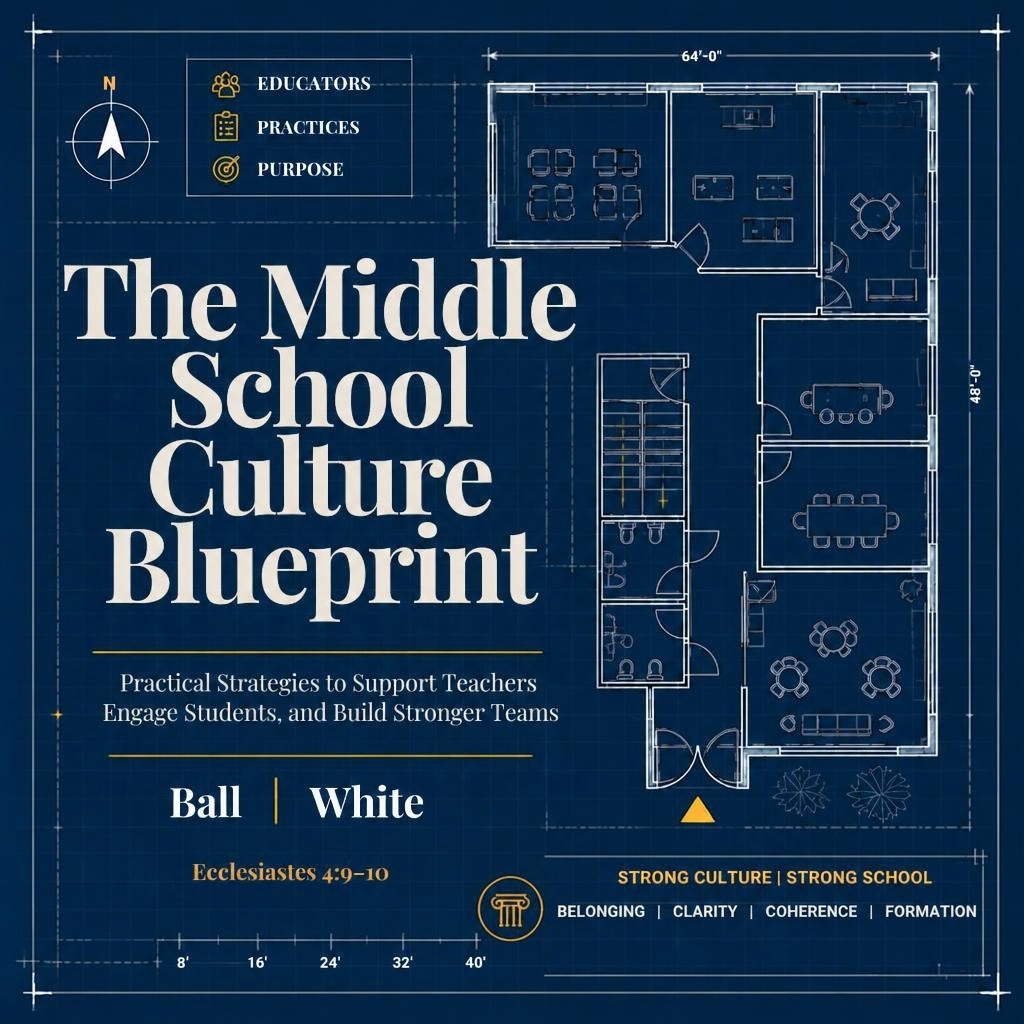
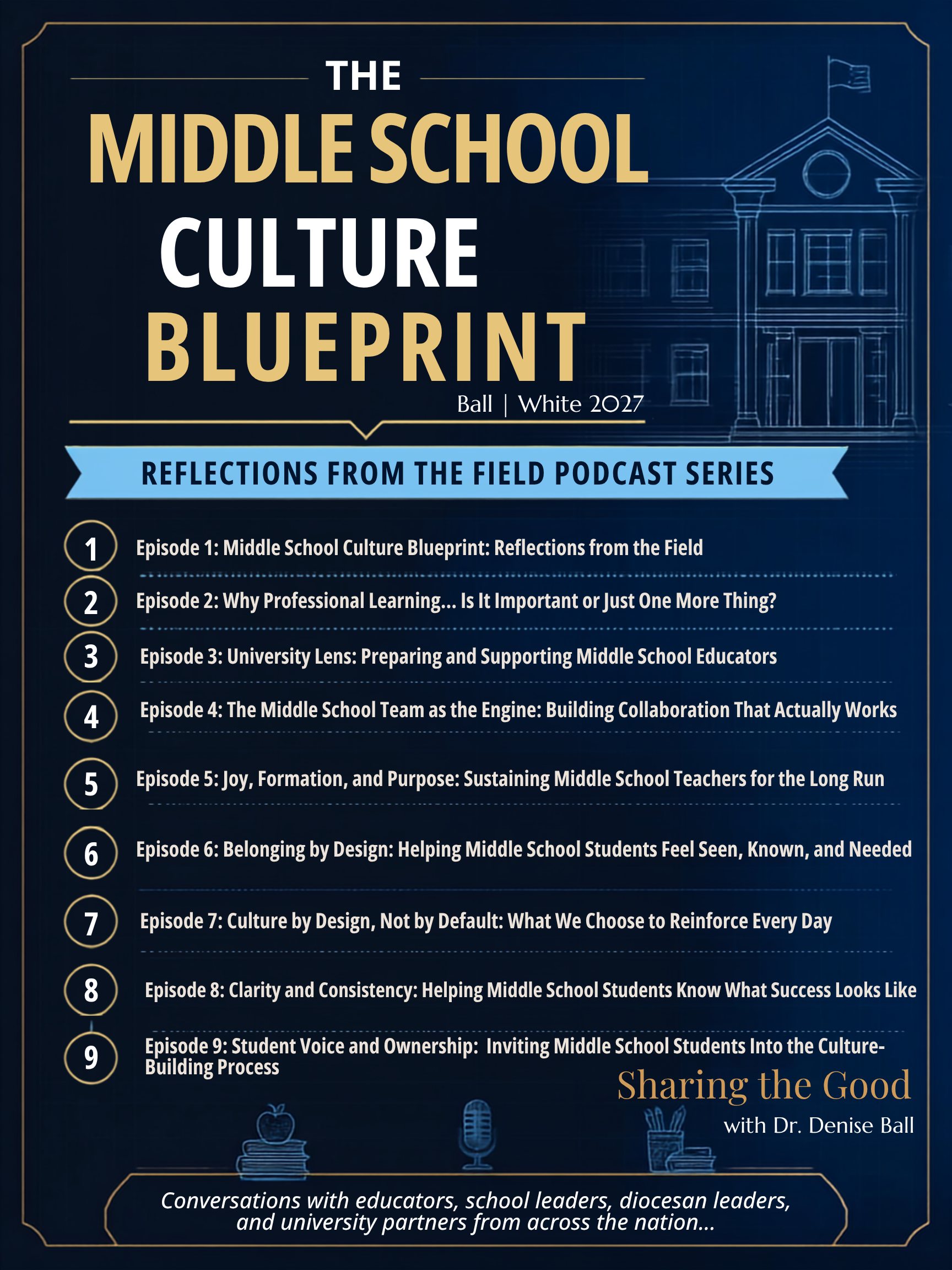
The Middle School Culture Blueprint: Reflections from the Field
That spirit of partnership matters! Our teachers and school leaders are navigating increasingly complex responsibilities while remaining focused on the students and families entrusted to their care. Universities can be important partners in that work through relevant professional learning, leadership development, research, teacher preparation, and meaningful school-university partnerships. The strongest partnerships, however, are not built around universities deciding what schools need. They begin with listening. They invite practitioners into the conversation, connect research with classroom realities, and recognize that knowledge flows in both directions. Universities have much to offer schools, but schools also have much to teach universities.
Perhaps the most powerful moment came as each panelist offered a final word of encouragement to educators. Dr. Michael O’Connor reminded them, “You are not alone. Lean on Christ and those in your orbit.” Dr. Nicci Dowd encouraged educators to “Design for possibilities, not limitations.” Dr. Aliya Holmes reminded us to lean on God and community and to recognize the importance of the small things. Dr. Clara Hauth encouraged educators to “Give yourself grace, and ask questions…advocate for yourself and others.” Different words, yet a common thread that community, relationships, and formation all essential, and that none of us was meant to do this important work alone.
As Dr. LaTonya White and I continue preparing The Middle School Culture Blueprint for publication with the National Catholic Educational Association in spring 2027, I am increasingly grateful for the voices entering these Reflections from the Field conversations. Teachers, principals, diocesan leaders, pastors, and university colleagues are reminding us that strong middle school cultures are built when people are willing to listen, share what they have learned, and contribute their gifts for the good of others.
Michael, Nicci, Aliya, and Clara are blessings to the universities they serve, and their willingness to invest in the formation and support of educators is a beautiful example of educational community in action. This is what it looks like when we stop thinking in silos and begin asking what we can accomplish together!
Please be encouraged to listen, engage, and join the conversation.
We can do more–together!
May we continue to seek knowledge in all things,
Denise
Denise Ball, Ed.D.
Retired Catholic Education Leader | Author | Researcher | Consultant Marymount University | Assistant Professor
What if one of the greatest gifts we can give the people with whom we work is permission?
Permission to ask a question. Permission to say, “I don’t know yet.” Permission to try something new. Permission to make a mistake. Permission to learn from one another, and perhaps, permission to experience JOY along the way.
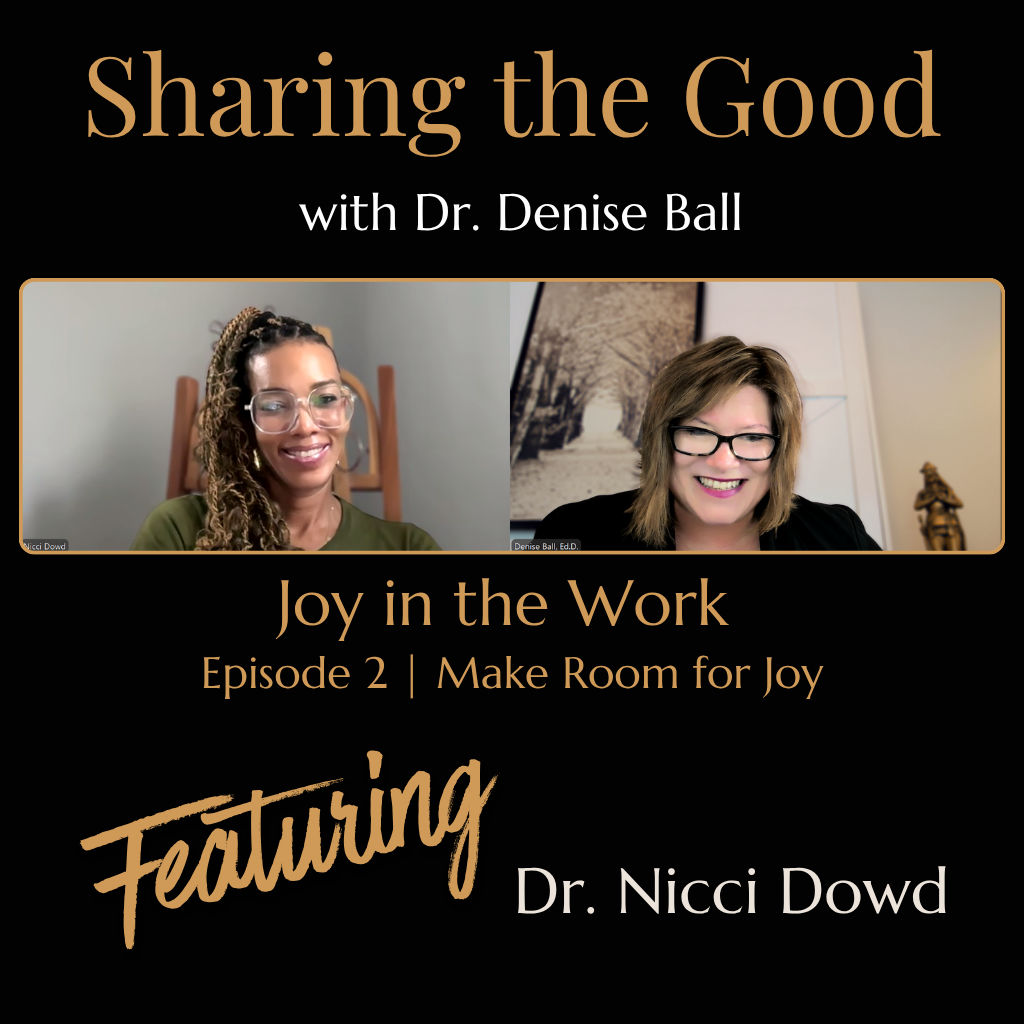
After a wonderful conversation with my friend and colleague, Dr. Nicci Dowd, for Episode 2 of the Joy in the Work series on Sharing the Good with Dr. Denise Ball, these are the questions that came to mind.
Our episode is titled Make Room for Joy, but our conversation reminded me that making room for joy may begin by making room for people to be learners.
We Are All Still Learning
Nicci shared an idea during our conversation that has stayed with me: academic humility.
There is something freeing about recognizing that none of us has all the answers. Teachers do not. School leaders do not. Professors do not. Researchers do not, and that is okay.
We can bring years of education, research, leadership experience, and expertise into a room and still remain open to the possibility that someone sitting beside us may see something we have missed. That is one of the reasons I value collaboration so deeply. Many voices create the best outcomes.
When we create environments where people feel safe enough to ask questions, offer ideas, respectfully disagree, try something new, make a mistake, and begin again, we are doing more than supporting professional learning. We are helping create a culture in which people can grow; I believe there can be tremendous joy in that growth.
Making Room for Joy Means Making Room for Mistakes
As educators, we frequently tell students that mistakes are part of learning. But do the adults in our schools believe the same is true for them? That question is worth considering. If a teacher tries a new instructional strategy and it does not work as planned, what happens next? If a new school leader admits that they do not know the answer, how is that received? If someone offers a different perspective during a faculty meeting or professional learning session, do we become curious or defensive? If a colleague needs help, have we created an environment where asking for it feels safe?
The answers to those questions tell us something about culture. School culture is not created only through mission statements, strategic plans, programs, or initiatives. It is experienced in the everyday interactions between people: how we listen, how we respond, how we encourage, how we handle mistakes, how we celebrate growth, and whether the people around us believe they are valued members of the community. Sometimes the smallest interactions communicate the biggest messages.
UDL, Joy, and Creating Space for Every Learner
Nicci also shared how Universal Design for Learning, or UDL, has shaped the way she approaches her courses at Marymount University and the professional learning she facilitates with educators as an adjunct consultant for ADAC, Inc.
I loved hearing her connect the Universal Design for Learning to this conversation because at its heart, UDL asks us to think intentionally about the learners in front of us. Who is in the room? What might help them engage? What barriers might we remove? How might we provide different pathways for people to learn, participate, demonstrate understanding, and grow? Those questions matter whether the learners sitting before us are children, graduate students, teachers, or school leaders, and perhaps there is a connection to joy here too.
When people know they do not have to learn exactly like everyone else, when their questions are welcomed, when they have opportunities to contribute their gifts, and when mistakes are treated as part of learning rather than evidence that they do not belong, we make room for something important to happen.
We make room for growth, for belonging, and for joy.
The Joy of Learning Alongside One Another
One of the gifts of this season of my own work is the opportunity to keep learning alongside thoughtful people.
Nicci and I have the privilege of serving together on the Marymount University faculty, collaborating as adjunct consultants with ADAC, Inc., and beginning a second year of research with an amazing team focused on school culture and developing practical tools to help school leaders create environments where educators thrive.
Different settings, roles, and conversations, but there is a common thread running through all of them:
We can do more for the educators, school leaders, students, and families we serve when we learn and work together.
That is one of the reasons these Joy in the Work conversations are bringing me so much joy themselves. They are not intended to suggest that education is easy or that choosing joy somehow removes the very real challenges educators face. Instead, I hope they create a little space for us to stop, listen to one another, share what we are learning, ask good questions, and remember the good that continues to happen every day in classrooms, schools, universities, dioceses, and communities.
A Question for the New School Year
As another school year begins, perhaps there is a question each of us can carry into the environments we help create:
Do the people around me have permission to still be learners, and to experience joy while doing it?
Imagine what could happen in our classrooms, faculty meetings, professional learning communities, and leadership teams if the answer increasingly became yes. Perhaps making room for joy begins by making room for one another.
Join the Conversation
I am grateful to Dr. Nicci Dowd for sharing her wisdom, experience, and joy in Episode 2 of the Joy in the Work series, Make Room for Joy.
Join the conversation on YouTube: [https://youtu.be/ZeFiwsHr9hg] or listen wherever you enjoy your favorite podcasts.
As you begin another week of this important work, I invite you to consider:
Where are you finding joy in the work?
AND perhaps just as importantly:
How are you making room for someone else to find it too?
When we train our eyes to see the good, amazing things happen.
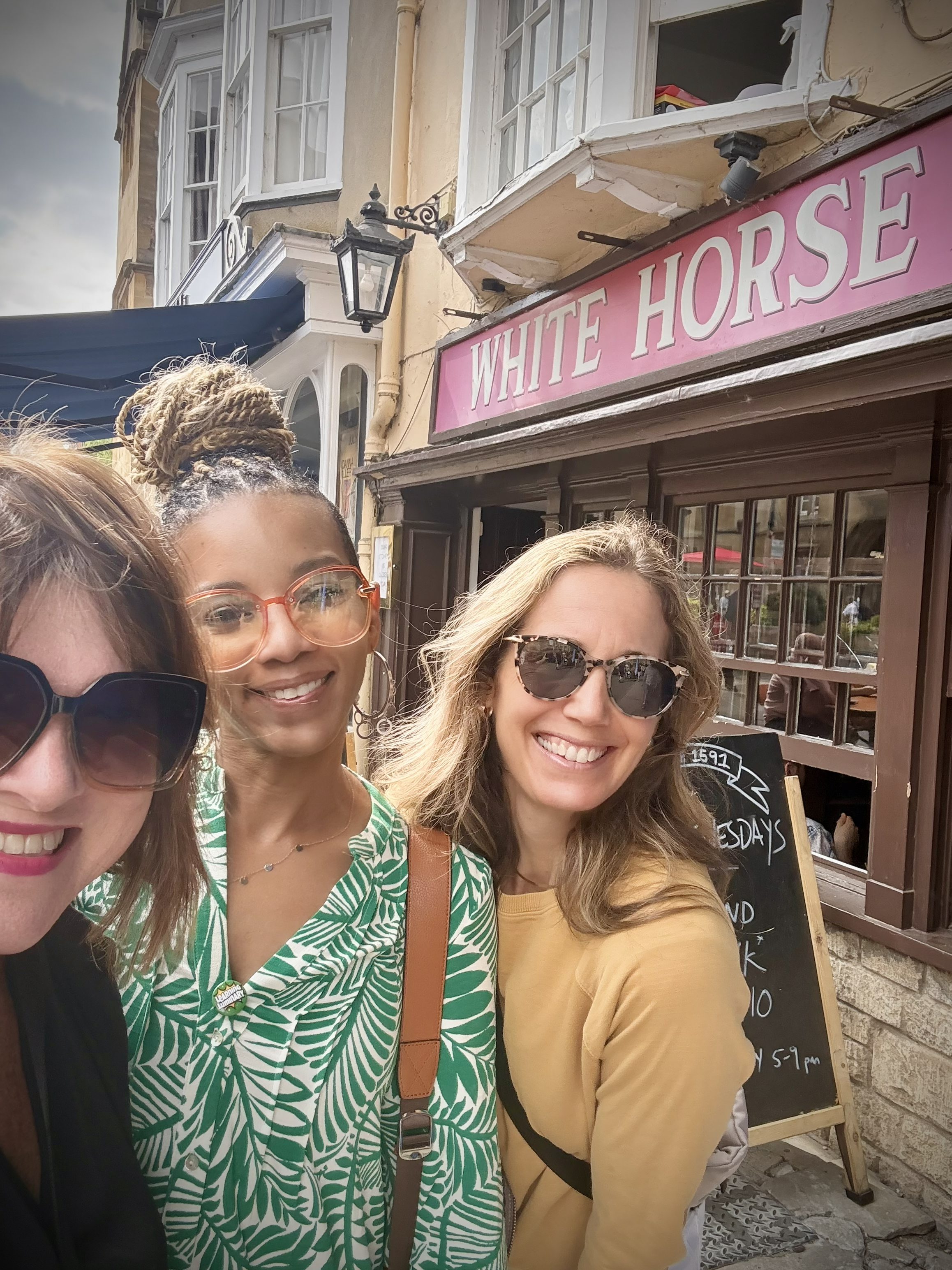
From the top of the Oxford Castle mound, I paused to take in the view and reflect on the extraordinary gift of the week.
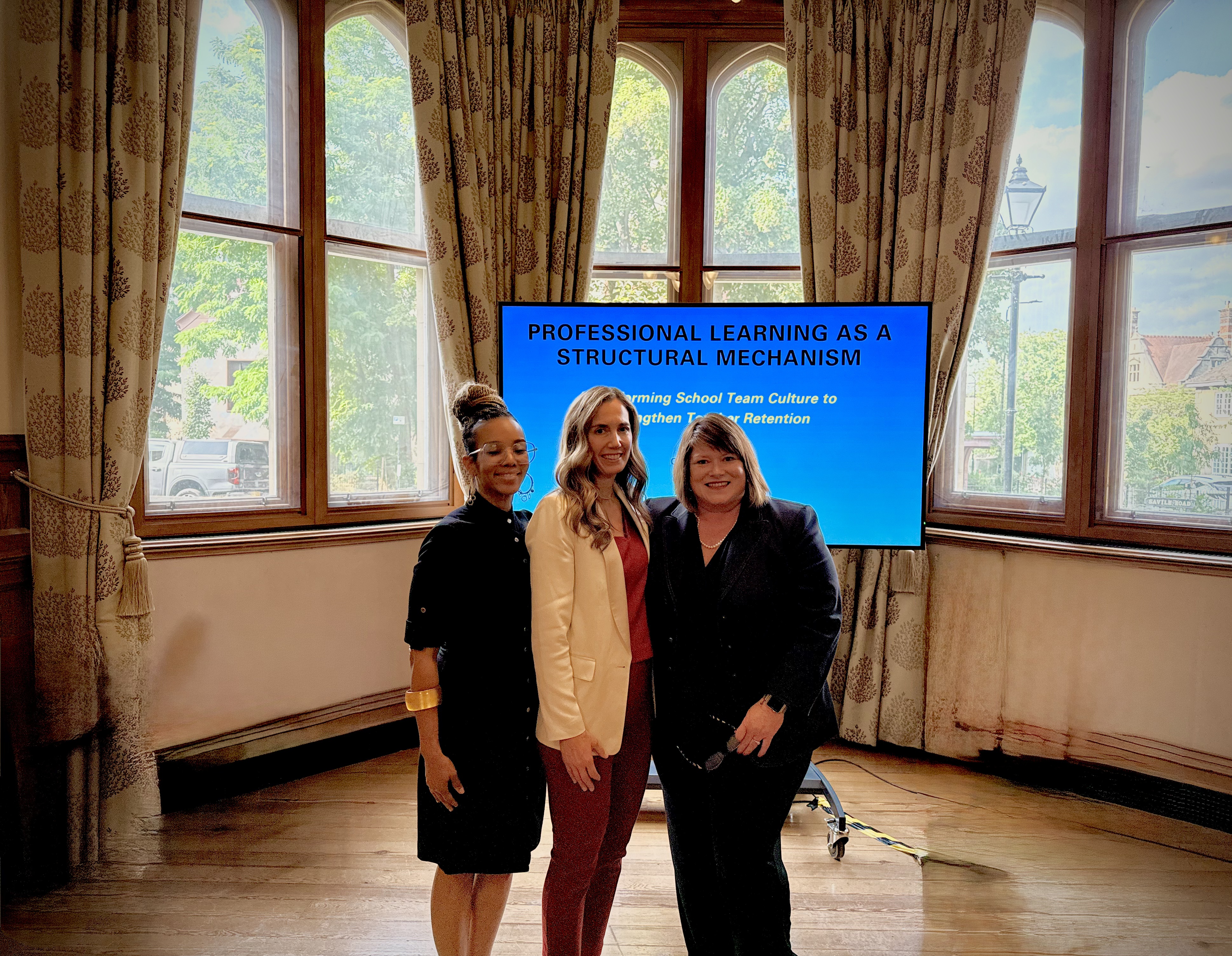
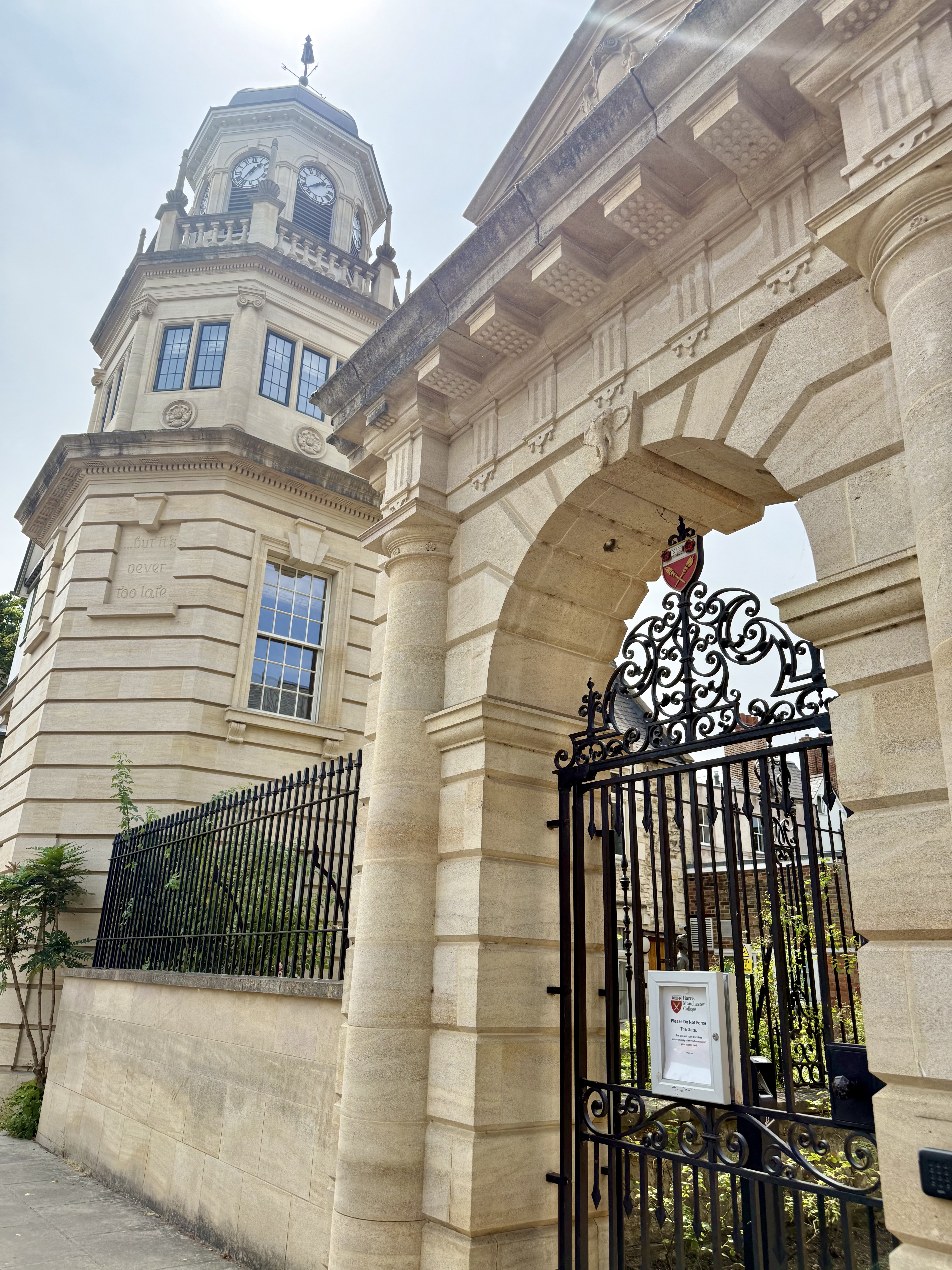
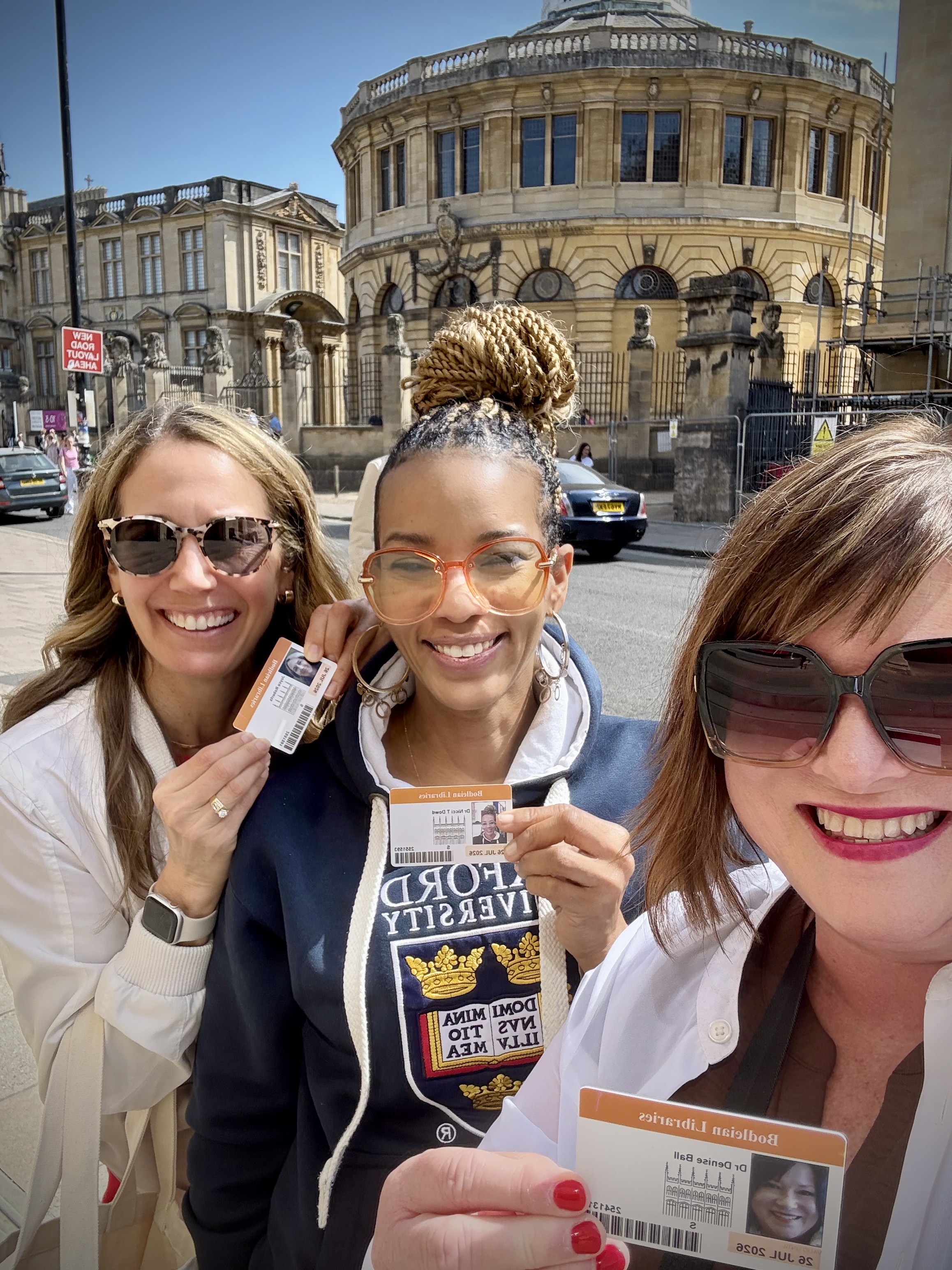
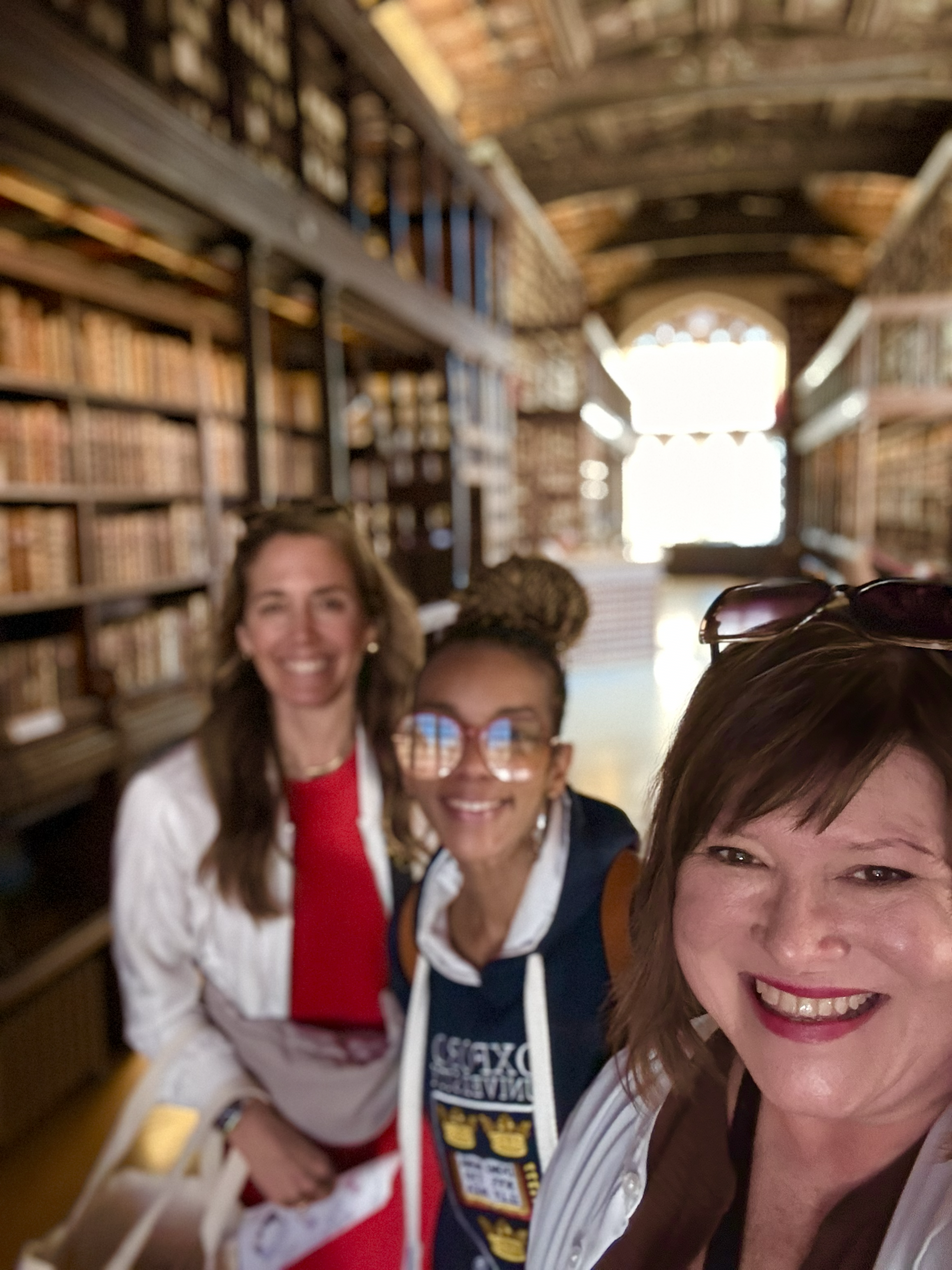
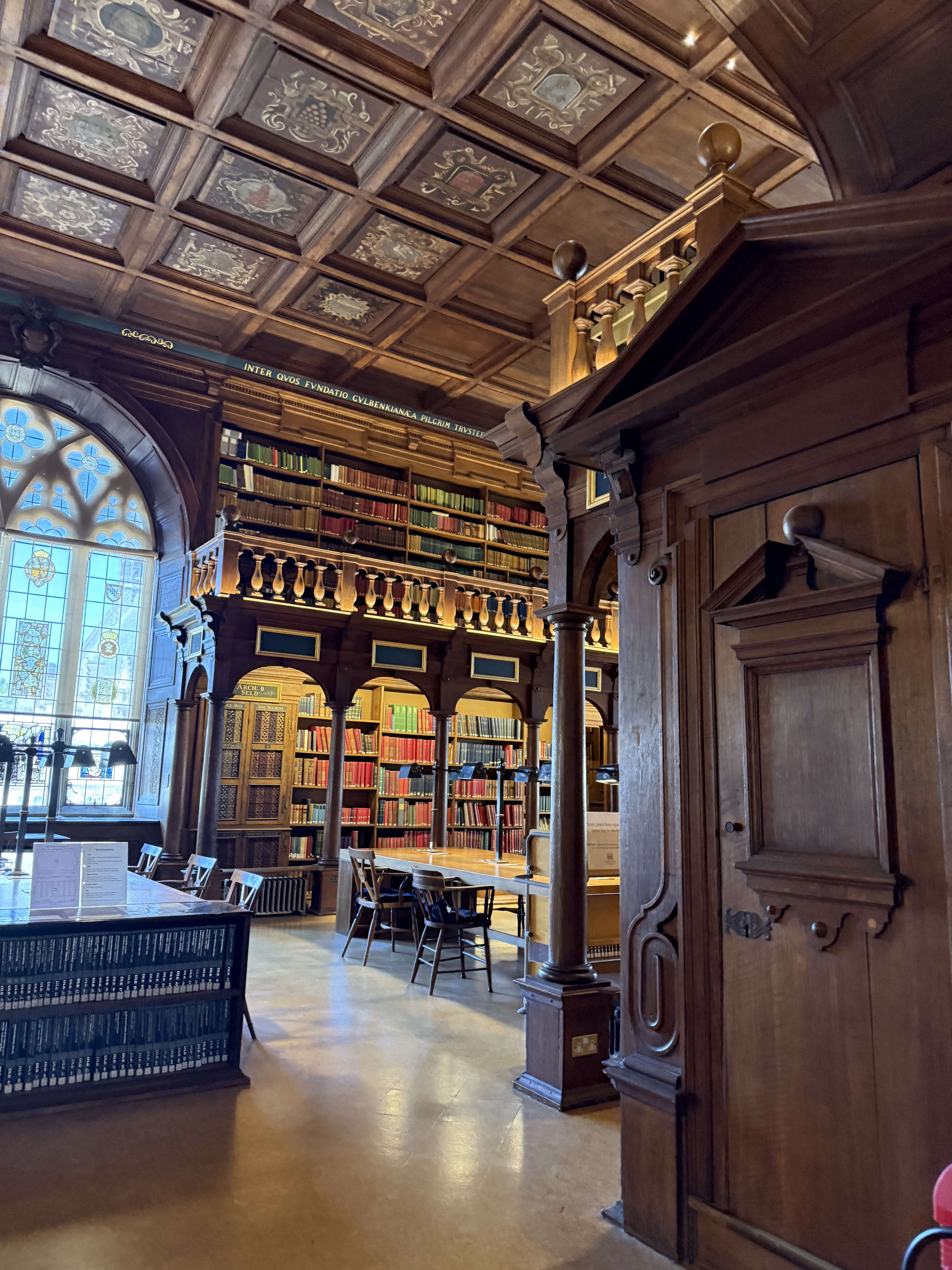
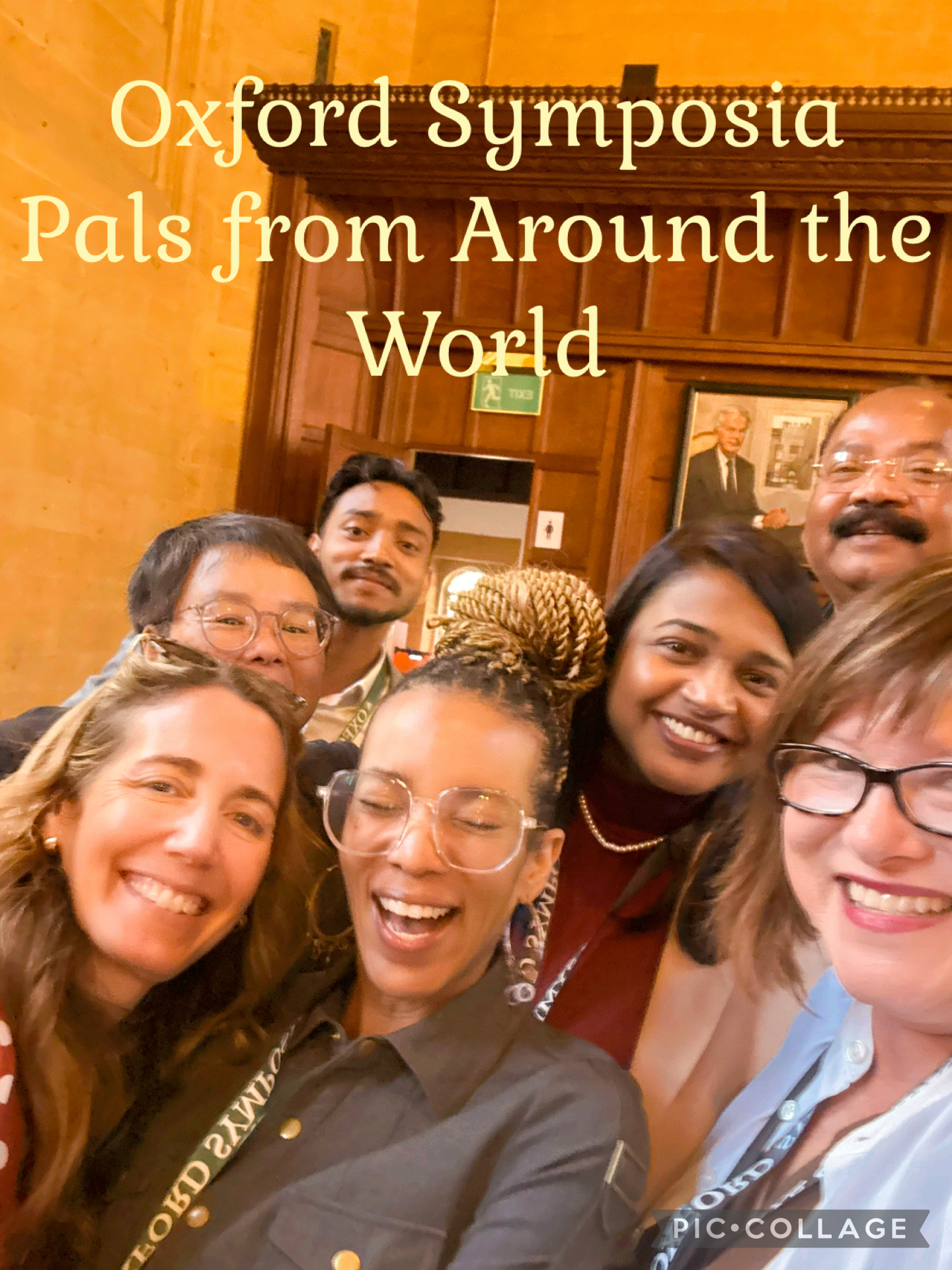
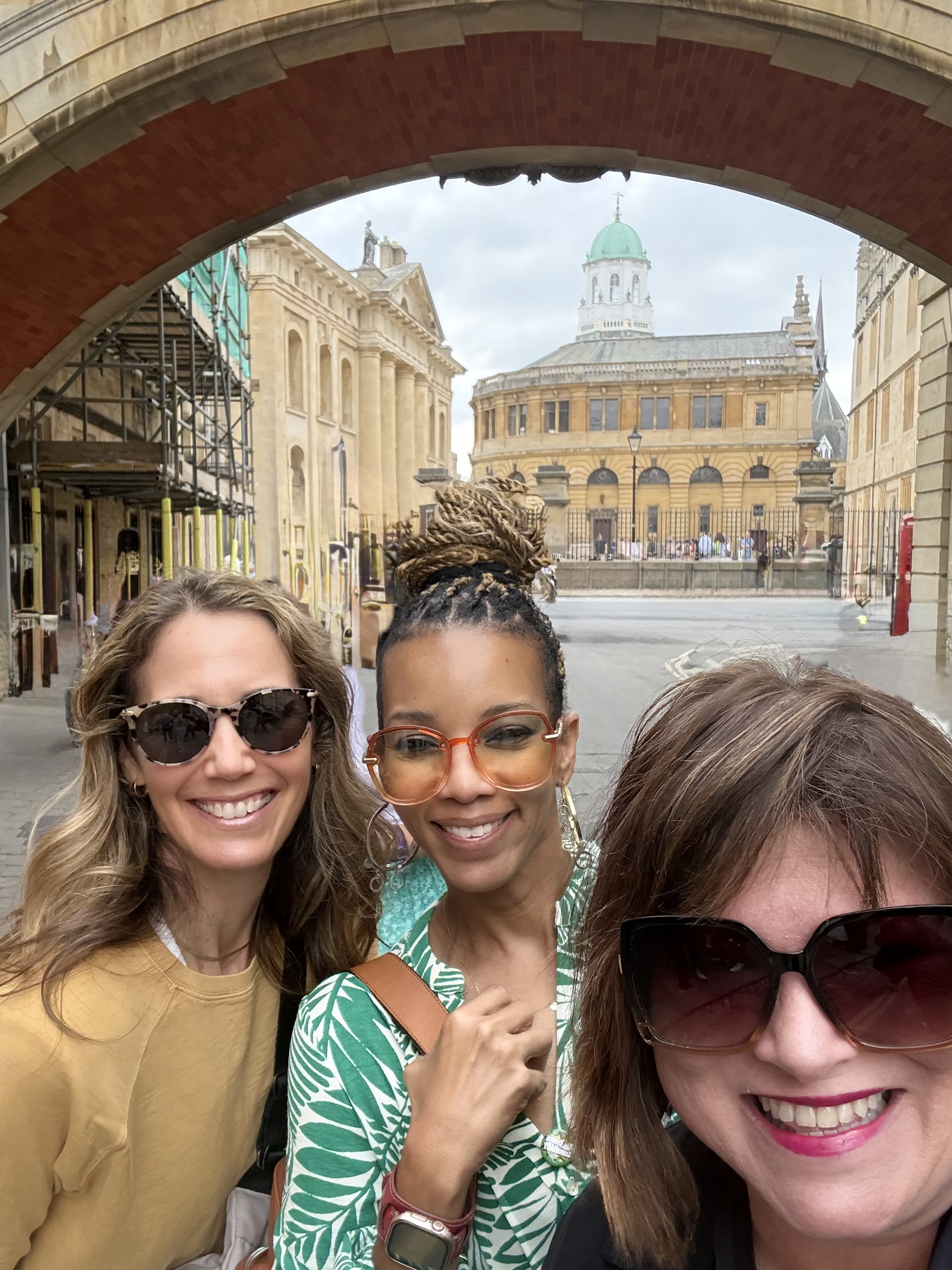
Once again, I had been given the privilege of presenting research at the Oxford Education Research Symposium, surrounded by scholars from across the United States and around the world. To be welcomed into that community as a researcher remains deeply humbling.
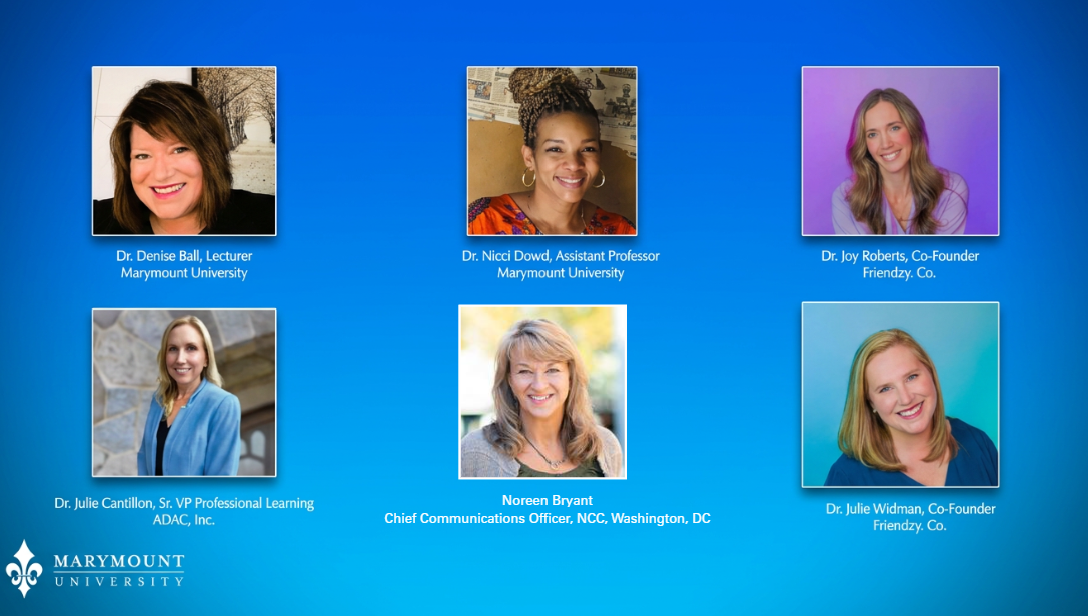
Thank you to the Oxford Research 2026 Team who said, “yes” to join me on this journey this year:
Dr. Nicci Dowd, Marymount University;
Dr. Joy Roberts, Co-founder of Friendzy. Co;
Dr. Julie Cantillon, Senior Vice President of Professional Learning, ADAC, Inc.;
Noreen Bryan, Chief Communications Officer, NCC, Washington, D.C.; and
Dr. Julie Widman, Co-Founder of Friendzy. Co.
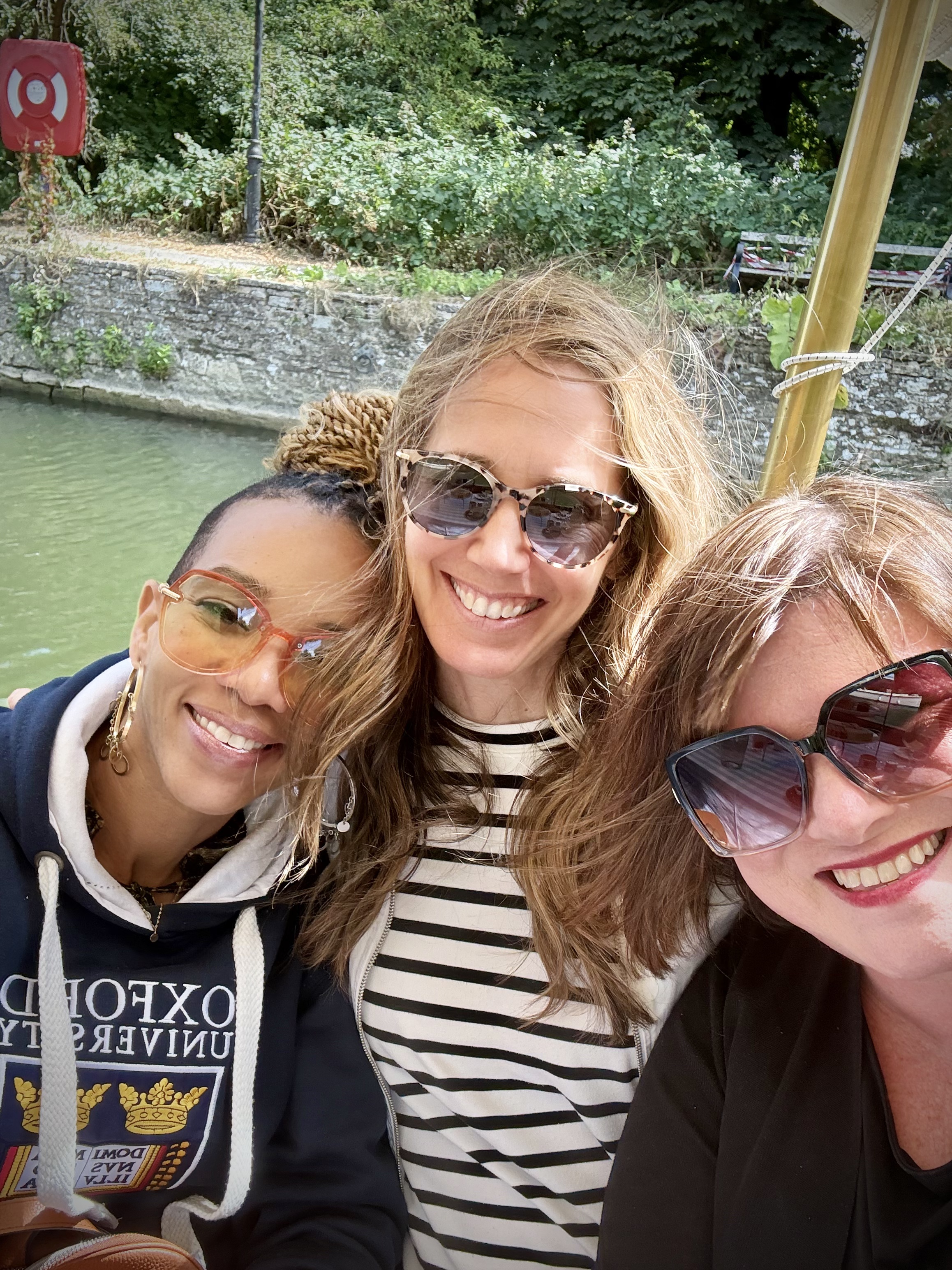
I found myself thinking about the questions that had been raised, the wisdom nuggets I had gathered, and the many scholars whose work challenged me to remain curious. I also reflected on the relationships that had formed through meals, presentations, walks through Oxford, and conversations that continued long after each formal session ended.
We Are Always Learning
Before leaving Oxford, I recorded a short reflection from the Castle mound. I then invited three remarkable scholars to share what they were taking away from the week:
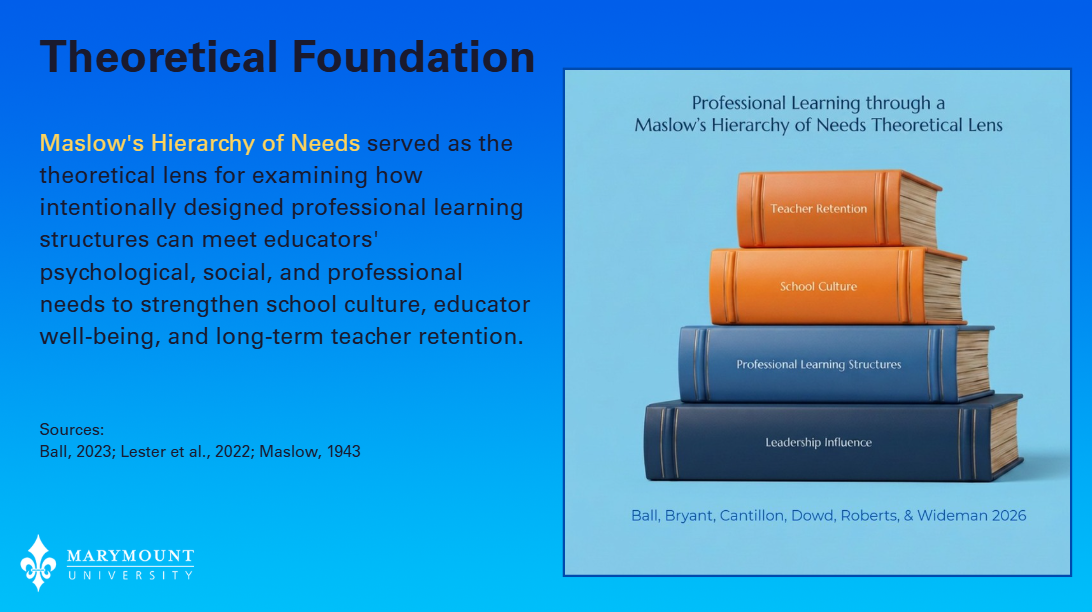
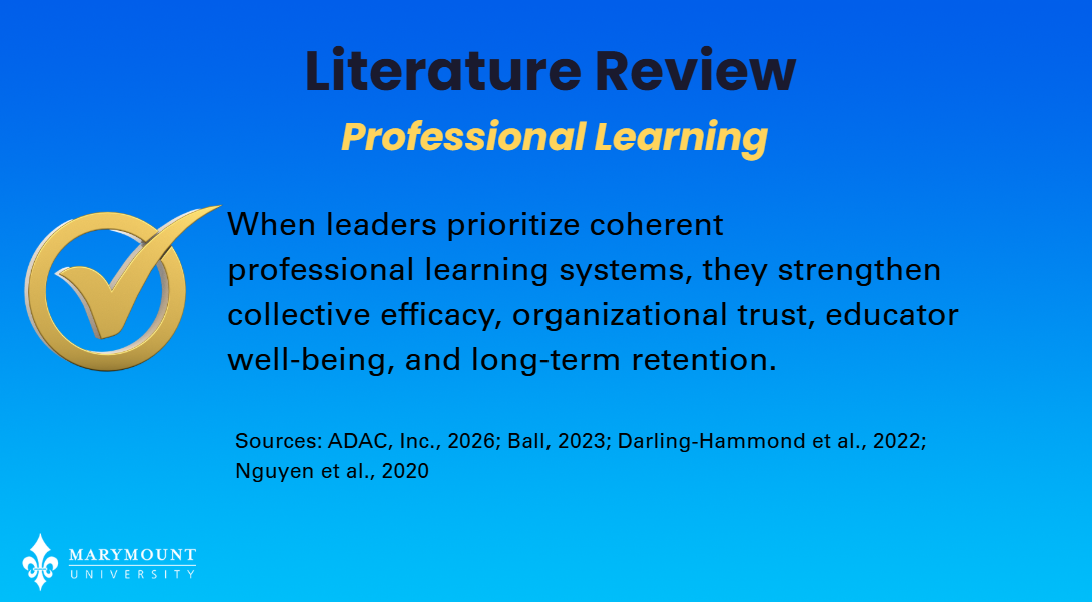
Nicci, Joy, and I presented our research on professional learning as an infrastructure mechanism to support teacher retention. Ali presented her work on the intersection of literacy and nature place-based learning as a transformative pedagogical approach to K-12 education.
I wanted to bring their reflections together in one video, which presented another opportunity for me to learn.
With some very helpful guidance, I learned how to use Google video editing to splice two recordings together. There will always be something else to learn. Perhaps that is part of the message I am carrying home from Oxford., to never lose the gift of curiosity. Learning is just SO much fun!
The Oxford Education Research Symposium brings together scholars, educators, researchers, practitioners, and leaders who are committed to advancing the theory and practice of education. The breadth of scholarship shared during the 2026 Symposium was extraordinary. Each presenter brought a different perspective, research interest, institutional context, and lived experience into the room.
I was inspired by every researcher who had the courage to stand before colleagues and share work that mattered deeply to them. Although I could never capture every presentation in one reflection, I made special note of several scholars whose work, questions, and presence gave me something to continue thinking about:
Dr. Michael G. MacDonald, Associate Dean of Graduate Studies and Research in the Faculty of Education at the University of Windsor, Canada
Dr. Anne Moll, Dean; Dr. Chris Harnden, Director of Human Services; and Sarah Fedishen, Human Services Internship Coordinator, from Colorado Mountain College, USA
Meri Nasilyan, Course Director in the Carnegie School of Education at Leeds Beckett University, United Kingdom
Dr. Michael Gerard Mason, Staff Psychotherapist at the University of Virginia, USA
Dr. Abigail O. Akande, Associate Professor of Rehabilitation and Human Services at Penn State Abington, USA
Dr. Jamon Flowers and Dr. Juanita Johnson-Bailey from the University of Georgia, USA
Dr. Rosalinda Larios, Associate Professor of Special Education at California State University, Fullerton, USA
Dr. Jocelyn L. N. Wong, Associate Professor and Assistant Dean for Student Affairs in the Faculty of Education at The Chinese University of Hong Kong
Dr. Alvera H. McMillan, Education Specialist with the Louisiana Sea Grant College Program at Louisiana State University, USA
Dr. Claude Hutto, Dean and Assistant Vice Provost for the Division of Professional and Continuing Studies at Morehouse College, USA
Dr. Cara Chang, Associate Professor of English at Leeward Community College within the University of Hawaiʻi System, USA
Irodakhon Gulamova, Senior Lecturer in the Department of English at New Uzbekistan University, Uzbekistan
This is not an exhaustive list, nor is it intended as a ranking of the presentations. It is simply a small window into the range of scholars, institutions, countries, disciplines, and perspectives represented during the week. Each name in my notes represents a person who was willing to ask a question, examine an issue, gather evidence, and contribute to our collective understanding of education.
Research Becomes More Powerful Through Relationships
The formal presentations were central to the Symposium, but some of the most meaningful learning also occurred around the presentations.
It happened when someone asked a thoughtful question, when a scholar approached another presenter to continue a conversation, and during meals, walks, and informal moments when professional titles became less important, and people began sharing the stories behind their research.
These encounters are reminders that research is not meant to remain isolated within a presentation, paper, or institution. Research becomes more powerful when it creates conversation. It becomes more meaningful when it connects people. It becomes transformational when it is translated into practices that serve others.
This is especially important for those of us studying schools, educators, leadership, belonging, professional learning, and school culture. Behind every data point is a person, behind every finding is a story, and behind every recommendation is an opportunity to improve the experience of an educator, student, family, school, or community.
What Am I Carrying Home? I am carrying home renewed curiosity. As educators and leaders, may we never take curiosity for granted. Curiosity keeps us asking better questions. It invites us to listen before assuming. It opens us to perspectives that may be different from our own.
I am carrying home gratitude…
I remain grateful for my Oxford Symposia 2026 Research Team and the JOY of working alongside scholars who are committed to using research in service to the profession. I am grateful for every person who shared an idea, asked a question, offered encouragement, or helped me see an issue through a different lens.
I am carrying home a deeper responsibility.
Presenting research is an honor, but the presentation itself cannot be the final destination. The greater responsibility is to consider what we will do with what we have learned.
How will this research support educators?
How might it strengthen leadership?
How can it help schools become places where people experience trust, belonging, purpose, and joy?
How will we translate scholarship into action?
An Invitation to Listen
Rather than interpret the reflections shared by Nicci, Joy, and Ali, I invite you to hear their wisdom in their own words.
You can watch our Oxford Symposia 2026 reflection on the Sharing the Good with Dr. Denise Ball YouTube channel and listen anywhere you find your favorite podcasts.
Please feel welcome to visit my YouTube channel and explore other conversations and reflections on belonging, school culture, leadership, faith, gratitude, and the joy of the work.
I am still learning how to navigate this new platform. I am learning how to record, edit, splice videos, correct captions, and share messages in new ways. I will undoubtedly make mistakes along the way. I appreciate the grace and any feedback or words of wisdom you would like to share.
Carrying the Learning Forward: The Middle School Culture Blueprint
One of the gifts of gathering with researchers from around the world is the opportunity to return to our own work with renewed curiosity, clarity, and purpose. As I leave Oxford, one project at the forefront of my mind is The Middle School Culture Blueprint, a manuscript Dr. LaTonya White and I are developing to support middle school educators and leaders as they intentionally create cultures where both students and adults can thrive.
The project is grounded in research, literature, feedback from the field, and the lived experiences of educators who understand the unique joys and challenges of serving middle school students. Our hope is to offer more than a collection of ideas. We are working to develop a practical, research-informed framework that can help school communities establish shared expectations, strengthen relationships, build belonging, and create a positive rhythm for the school year.
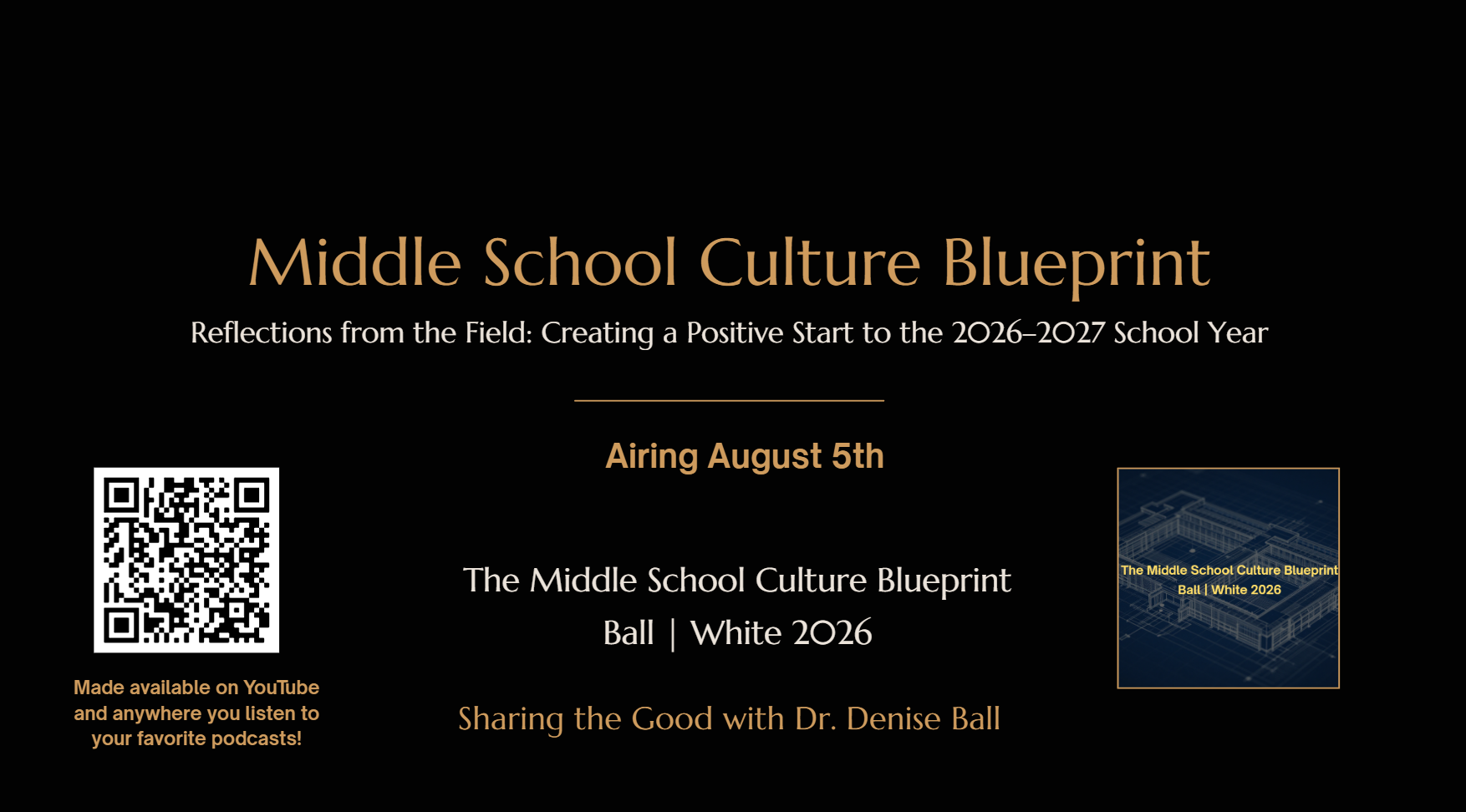
On August 5th, tune in to listen to Middle School Culture Blueprint: Creating a Positive Start to the 2026-2027 School Year with reflections from the field.
Reflections from the Field
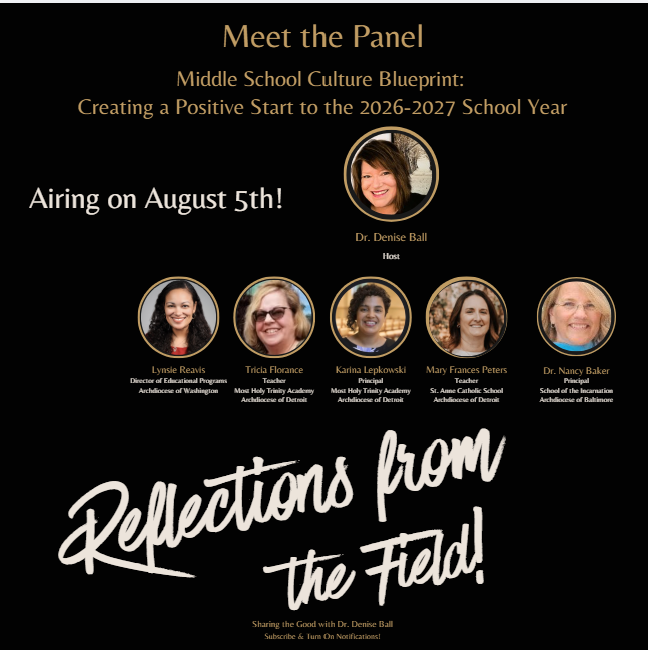
On August 5, the Sharing the Good with Dr. Denise Ball channel will feature a special conversation:
Middle School Culture Blueprint: Reflections from the Field, Creating a Positive Start to the 2026-2027 School Year.
I will be joined by an outstanding panel of Catholic school educators and leaders who bring wisdom from the classroom, school leadership, diocesan service, and professional formation:
Lynsie Reavis, Director for Educational Programs, Catholic Schools Office, Archdiocese of Washington
Tricia Florance, Teacher, Most Holy Trinity Academy, Archdiocese of Detroit
Karina Lepkowski, Principal, Most Holy Trinity, Archdiocese of Detroit
Mary Frances Peters, Teacher, St. Anne’s Catholic School, Archdiocese of Detroit
Dr. Nancy Baker, Principal, School of the Incarnation, Archdiocese of Baltimore
Their voices are essential to this work!
Research and literature can provide important foundations, but educators working directly with students, teachers, and families help us understand how ideas are experienced in actual school communities. Their reflections will help us explore what teachers and leaders can do before students arrive, during the opening weeks of school, and throughout the year to intentionally cultivate a healthy middle school culture.
This conversation also represents what I hope the Sharing the Good platform can become: a bridge between scholarship and practice. The purpose is not simply to create and post content. It is to make research accessible, invite practitioners into the conversation, and provide encouragement and practical support to those serving in schools each day.
Oxford reminded me of the importance of continuing to ask questions.
The Middle School Culture Blueprint reminds me of the importance of listening carefully to those closest to the work. Dr. White and I are very excited about this work as we continue to finalize our manuscript draft in the hope of preparing it for publication.
Together, research, reflection, and the wisdom of the field can help us develop resources that genuinely serve educators and the students entrusted to their care.
What wisdom are you carrying forward, and how will you use it in service to others?
May we always seek knowledge in all things,
Denise
Join me in conversation or listen to the chats I am having with educators and school leaders. They inspire me and I hope they will inspire you, too!
There is something calming about the summer weeks in education. The pace shifts, the calendar breathes, and the noise of the school year begins to quiet just enough for leaders, teachers, and all those who serve school communities to pause and remember why the work matters. Why we CHOOSE to serve in education.
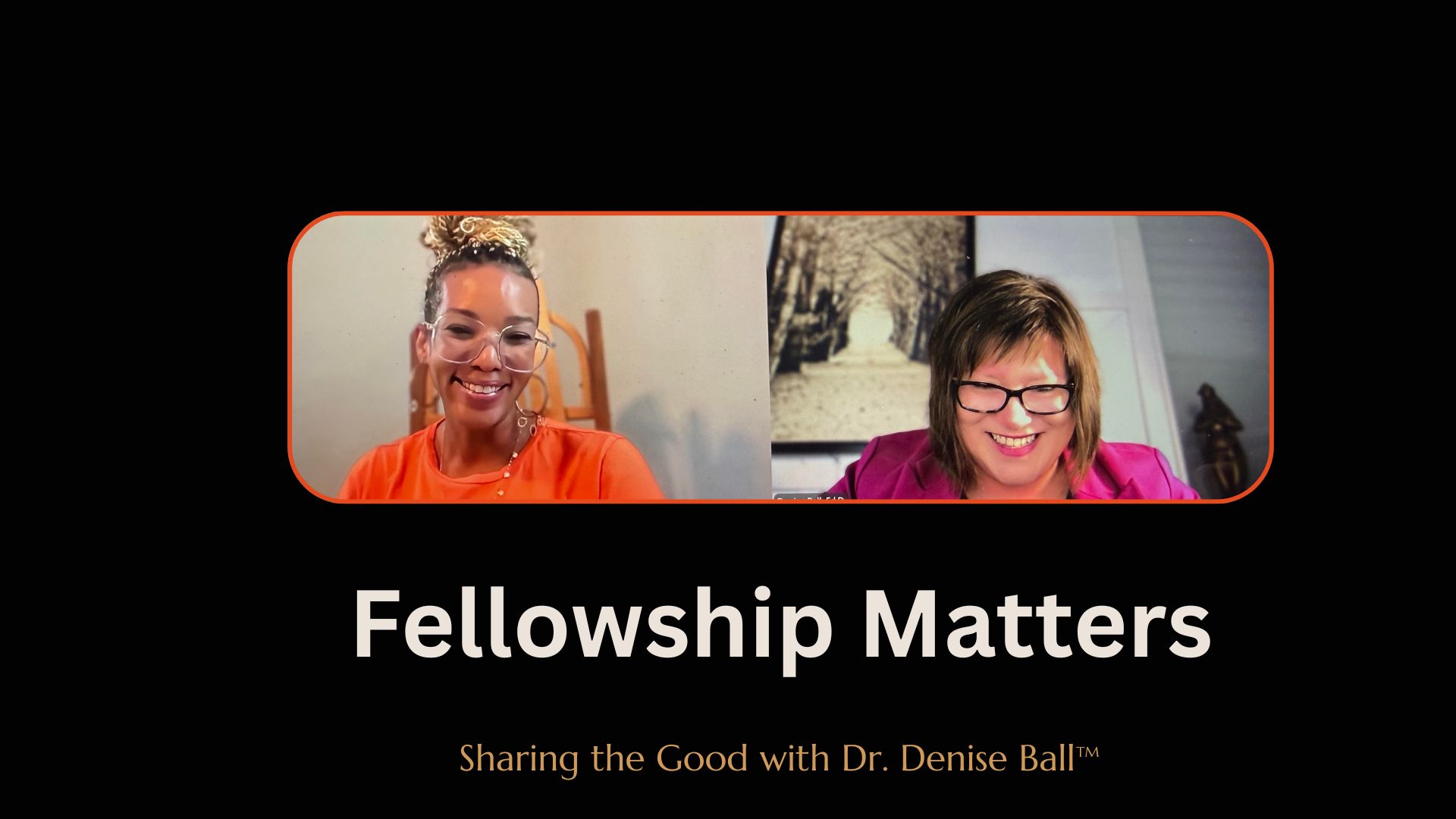
In my recent Sharing the Good with Dr. Denise Ball conversation, Dr. Nicci Dowd offered a beautiful reflection on the gift of fellowship and the importance of walking alongside others in faith, service, and community. Her words were a gentle reminder that fellowship is not simply about being with others. It is about being known, encouraged, strengthened, and reminded that we are not meant to do this work alone. Serving in education is a ministry (Dowd, 2026). [Dr. Nicci Dowd]
Educational leadership can be deeply meaningful, but it can also be lonely. Leaders are often called to hold the vision, solve the problems, support the team, manage the unexpected, and remain steady for others. Research on educational leaders’ well-being reminds us that positive relationships, purpose, engagement, health, and meaning are important dimensions of flourishing in leadership (Doyle Fosco, 2022). In other words, leaders do not thrive by carrying the work alone. They thrive when they are connected to people, purpose, and practices that restore them. Sometimes it might be easier to withdraw during these summer months, but I encourage you to reach out to a colleague or friend you have not talked with in a while and listen, share, and take joy from the fellowship.
Fellowship is one of those restoring gifts. It creates space for honest conversation, shared wisdom, prayerful encouragement, and the quiet reminder that someone else understands the road we are walking. For educational leaders, fellowship may come through a trusted colleague, a mentor, a faith-filled friend, a professional learning community, or a simple summer conversation over coffee. These moments may seem small, but they can become anchors of belonging. My quick and random chat with Nicci today was an instant bucket filler and reminded me of just how important these brief moments of fellowship are to spark inspiration and creativity.
Belonging matters because school communities are relational communities. Research continues to affirm that educator well-being is shaped not only by individual habits, but also by the relational and organizational conditions of the school community (Cann et al., 2022). When educators feel supported, respected, encouraged, and connected to a shared mission, the culture of the school is strengthened. When leaders model that same need for connection, they give others permission to seek support as well.
This is especially important for school leaders who are constantly pouring into others. Emotionally supportive leadership has been linked to educator well-being, especially during seasons of challenge and change (Floman et al., 2023). Leaders who listen, encourage, regulate their own emotions, and offer meaningful support help create healthier school environments. Yet leaders also need spaces where they can receive that same encouragement. Fellowship reminds us that the encourager also needs encouragement.
Summer offers a natural invitation to renew these connections. It is a time to step back from the constant urgency of the school year and ask a few important questions:
Who helped me carry the work this year?
Who might need to hear from me?
Who reminds me of the good?
Who helps me reconnect with faith, purpose, and joy?
Who can I encourage this week?
These questions are simple, but they are powerful. A text message, a phone call, a walk with a friend, a handwritten note, or an invitation to meet for coffee, jump on a quick Zoom (thank you, Nicci) can become a moment of grace. In a profession where so many people give so much of themselves, reaching out is not one more task but an act of caring for ourselves and others.
For those of us called to serve in education, fellowship also strengthens mission. Research on teacher retention highlights the importance of collegial support, trust, shared purpose, recognition, and leadership practices that build relationships within the school community (Ball, 2023 & Lochmiller et al., 2024). When leaders cultivate belonging, they help create communities where people are more likely to feel valued and more willing to remain committed to the work.
I encourage those who serve in education to view the summer not as a retreat from the mission but as preparation to return to it with a renewed heart. We pause so we can listen. We reflect so we can learn. We reconnect so we can remember that the work of education is not meant to be carried out in isolation.
Hebrews reminds us to “rouse one another to love and good works” and to encourage one another (Hebrews 10:24). That encouragement is not accidental but a muscle meant to be practiced. It is a choice and a service to others. It is part of building communities where faith, service, and joy can take root.
So, during these summer weeks, reach out. Call the colleague who lifted your spirit this year. Send a message to the friend who always helps you see the good. Thank the mentor who helped you keep going. Invite someone into conversation. Make room for fellowship. I jam every day on praise and worship. I try to share a link to a song at least once or twice a week with those who come to mind as I pray through song. Please be encouraged to share how you stay connected. This is a blog for learning!
We are better when we walk together…
When we train our eyes to see the good, amazing things happen.
May we continue to seek knowledge in all things,
Denise
References
Cann, R. F., Sinnema, C., Daly, A. J., Rodway, J., & Liou, Y.-H. (2022). The power of school conditions: Individual, relational, and organizational influences on educator wellbeing. Frontiers in Psychology, 13, Article 775614. https://doi.org/10.3389/fpsyg.2022.775614
Floman, J. L., Ponnock, A., Jain, J., & Brackett, M. A. (2023). Emotionally intelligent school leadership predicts educator well-being before and during a crisis. Frontiers in Psychology, 14, Article 1159382. https://doi.org/10.3389/fpsyg.2023.1159382
Lochmiller, C. R., Perrone, F., & Finley, C. (2024). Understanding school leadership’s influence on teacher retention in high-poverty settings: An exploratory study in the U.S. Education Sciences, 14(5), Article 545. https://doi.org/10.3390/educsci140505
Last night, I officially posted the welcome message for my new YouTube channel, Sharing the Good with Dr. Denise Ball. This morning, as I met with Dr. Christina Mendez-Hall, Assistant Superintendent for the Diocese of Arlington, I was reminded again why this space matters. Dr. Mendez-Hall is so full of joy, and I invited her to share an end-of-the-school-year inspirational message for the channel. It was one of those simple, grace-filled moments that confirmed the “why” behind this new chapter.
For the last eight-plus years, I have been researching, writing, speaking, and working alongside school leaders and educators on team building, teacher retention, and the development of strong, healthy school cultures. Again and again, one simple truth continues to rise to the surface: educators and school leaders need to be seen, heard, encouraged, and reminded that their work matters.
When adults in a school community feel valued, supported, and connected to a shared mission, the entire campus is strengthened. Joy becomes more visible, trust grows, collaboration deepens, and students benefit. Schools become more stable, dynamic, and hope-filled places of learning.
My goal is not to create a perfect YouTube channel. It is not to chase likes or pretend that life, leadership, education, or faith are without challenges. My hope is to create a real and authentic space where we collectively can share the good, notice the good, and perhaps inspire at least one person who needs encouragement on any given day.
I have been blessed throughout my life to be surrounded by amazing people who have encouraged me, challenged me, prayed for me, and helped me see the good even in difficult seasons. After retiring last June, following 27 years of service in education, I have found myself with more time to reflect, write, listen, and reconnect with many of you who have followed this blog since it was created 15 years ago.
The Unlock the Teacher blog has received more than 1.5 million views over the years and continues to average around 100 views a day. The feedback received on this blog humbles me deeply — thank you! Current research highlights the need for us to truly see and hear one another, and I would like to help make sure those placed on my path during this journey of life feel seen and heard.
So today, I want to personally invite you to continue the conversation with me in a new way.
Please visit Sharing the Good with Dr. Denise Ball on YouTube. Subscribe if the message speaks to you. Share it with an educator, leader, parent, or friend who may need a reminder that goodness is still unfolding.
Check out Christina’s inspirational minute message by clicking the link below. This is my first YouTube “short”…thank you for the grace!
I am a novice in this space, and I am very much a lifelong learner. If you have a tip, suggestion, idea, or story to share, I would love to hear from you. Send me a message and share the good you are seeing. Tell me about the people who are carrying light in your school, family, parish, workplace, or community.
I believe this deeply, that when we train our eyes to see the good, amazing things happen.
We can do more for the world when we share the good together, one word, one story, and one action at a time.
Across the country, school leaders are navigating one of the most persistent challenges in education today: retaining talented, mission-driven educators. While much of the conversation centers on compensation, workload, and policy, one of the most underutilized and high-impact resources sits right beside our schools…our university partners.
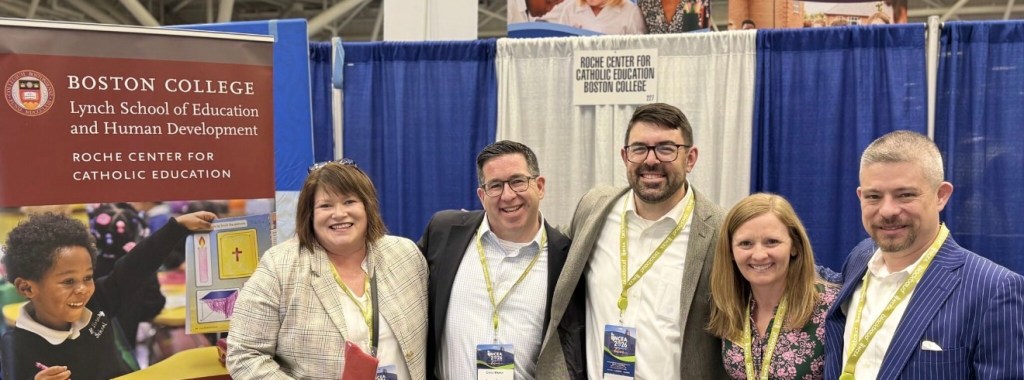
I always enjoy hearing and sharing the good with Boston College Roche Center educational leaders.
Institutions like Marymount University, Boston College, and St. John’s University are not only preparing future educators, they are increasingly listening, adapting, and responding to the real-time needs of school leaders and teachers. When leveraged intentionally, these partnerships can become a cornerstone strategy in addressing the teacher retention challenge.
At their best, university-school partnerships move beyond transactional relationships and become transformational. They create shared responsibility for developing, supporting, and sustaining educators across the full arc of their careers.
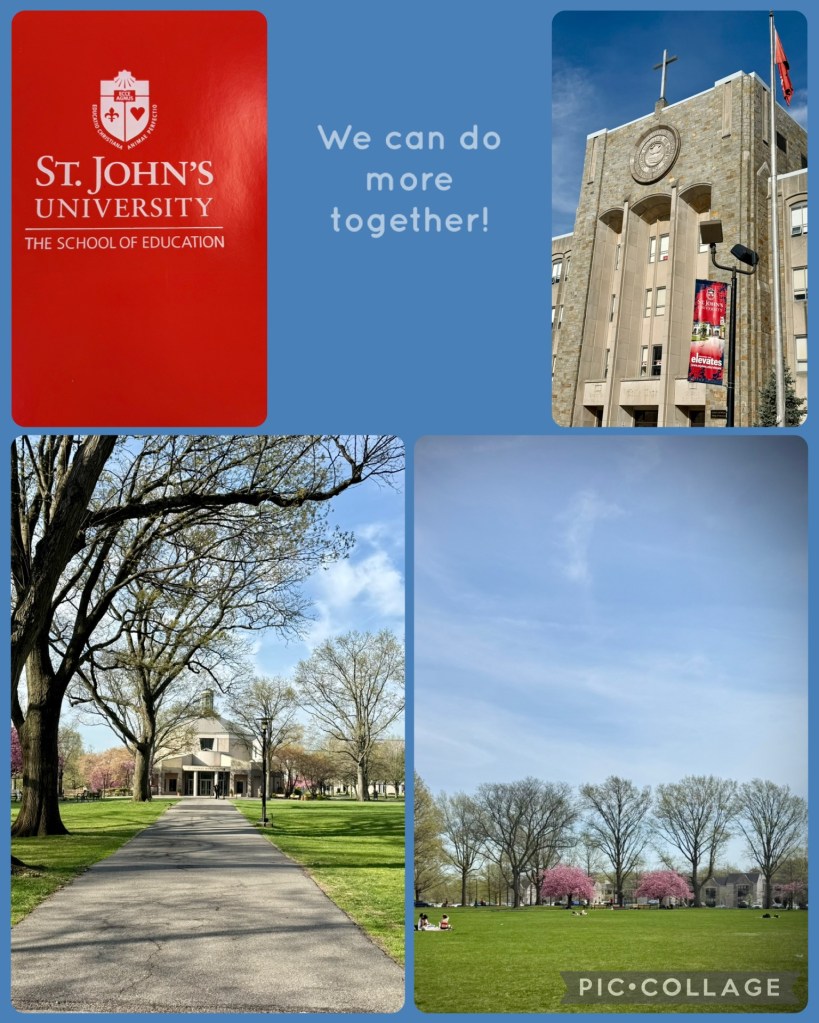
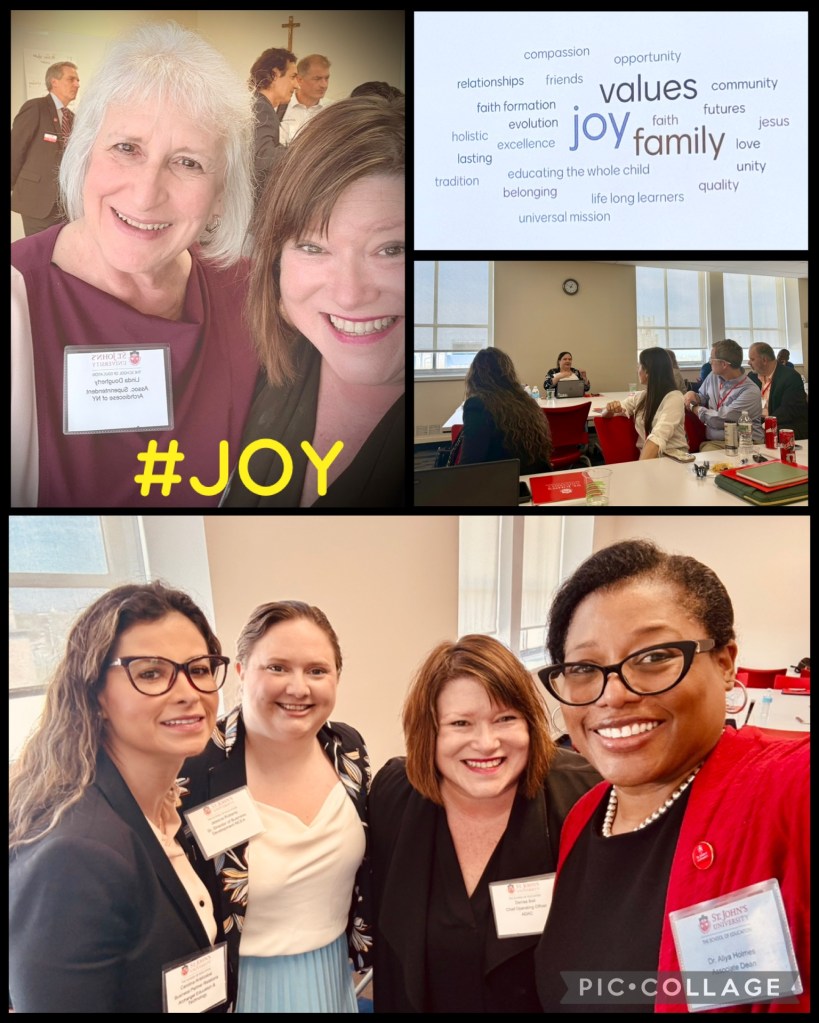
St. John’s University edTech Summit—a think tank session!
What This Looks Like in Practice
Educational leaders can take intentional steps to deepen these partnerships in ways that directly impact teacher retention:
Enhancing School-Based Opportunities Through Strategic Partnership
Professional learning is most effective when it is grounded in the context of the school and led by those closest to the work. I find there is value in leaning on university partners as thought partners. These relationships bring research, frameworks, and support that strengthen intentionally designed opportunities (Desimone & Garet, 2015).
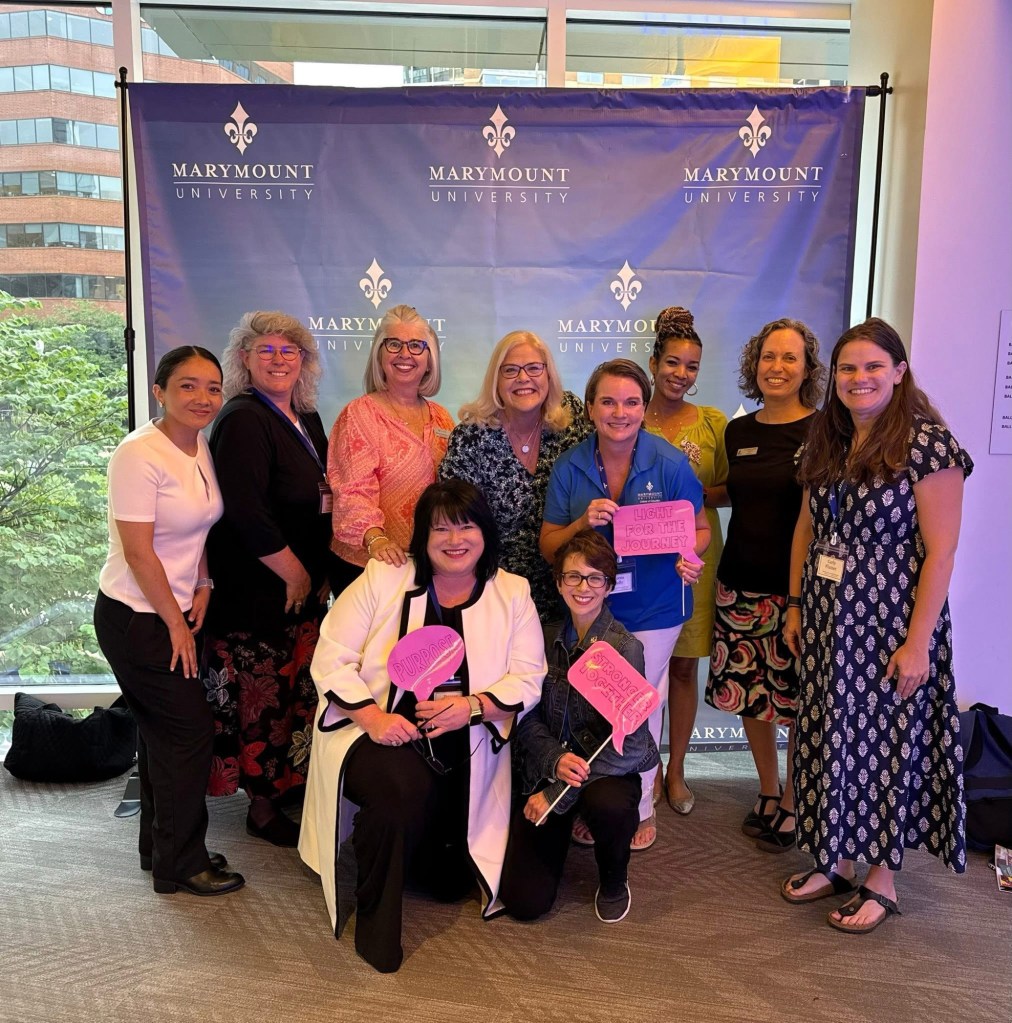
Marymount University Regional Catholic School Leadership Conference
Creating Leadership Pathways
Retention is closely tied to growth. Universities can partner with school systems to build leadership pipelines, offering graduate programs, certifications, and cohort models that empower teachers to see a future within the profession. When educators can envision their next step, they are more likely to stay (Ingersoll et al., 2018).
Embedding Research into Practice
Strong partnerships allow schools to serve as living laboratories where research informs practice and practice refines research. Whether through action research, dissertation collaboration, or pilot programs, teachers feel valued when their experiences contribute to broader learning and improvement (Coburn & Penuel, 2016).
Expanding the Teacher Pipeline with Purpose
Through intentional clinical experiences, residency models, and targeted recruitment efforts, universities can help schools attract candidates who are not only qualified but mission-aligned. This alignment is essential across all educational governance models, where purpose plays a central role in retention (Guha et al., 2016).
Supporting Educator Well-Being and Belonging
Teachers stay where they feel seen, supported, and connected. Universities can contribute by integrating social-emotional learning, reflective practice, and community-building strategies into both pre-service and in-service programming. Research consistently shows that school culture, trust, and collective efficacy are key drivers of teacher retention (Kraft et al., 2016). I am very passionate about this topic and my research highlights the central role of school climate, leadership, and relational trust in shaping teachers’ decisions to remain in the profession (Ball, 2023).
The most impactful university partnerships are grounded in a shared belief: that supporting teachers is not the responsibility of one institution, but a collective commitment.
When school systems and universities work together with intention, we begin to see action to impact. Professional learning becomes more meaningful, leadership becomes more distributed, and culture becomes more supportive. Most importantly, teachers begin to experience what so many are seeking: a sense of purpose, growth, and belonging within their schools.
For educational leaders, the invitation is clear: lean into these partnerships. Invite universities to the table not just as providers, but as collaborators. Share your challenges openly, co-create solutions, and build meaningful and impactful frameworks not one-time supports.
When we strengthen the bridge between universities and schools, we are not just preparing teachers, we are sustaining them.
At the heart of this work is a simple but powerful truth…we can do more for our teachers when we do it together. The challenges facing education today call us to think beyond traditional structures and lean into the strength of collective impact. By partnering with universities and trusted vendor partners, we open the door to innovative, responsive solutions that better meet the needs of our educators. More importantly, these partnerships allow us to visibly and authentically demonstrate our gratitude for teachers, thankful for their dedication, their resilience, and their daily commitment to shaping the lives of the students entrusted to their care.
When educators feel supported not just by their school, but by a broader community working on their behalf, we move closer to building the kind of sustainable, mission-driven environments where teachers choose to stay and thrive.
Coburn, C. E., & Penuel, W. R. (2016). Research–practice partnerships in education: Outcomes, dynamics, and open questions. Educational Researcher, 45(1), 48–54. https://doi.org/10.3102/0013189X16631750
Desimone, L. M., & Garet, M. S. (2015). Best practices in teachers’ professional development in the United States. Psychology, Society, & Education, 7(3), 252–263. https://doi.org/10.25115/psye.v7i3.515
Guha, R., Hyler, M. E., & Darling-Hammond, L. (2016). The teacher residency: An innovative model for preparing teachers. Learning Policy Institute.
Ingersoll, R. M., Merrill, L., Stuckey, D., & Collins, G. (2018). Seven trends: The transformation of the teaching force. Consortium for Policy Research in Education.
Ingersoll, R. M., & Strong, M. (2011). The impact of induction and mentoring programs for beginning teachers: A critical review of the research. Review of Educational Research, 81(2), 201–233. https://doi.org/10.3102/003465431140
I am grateful to Marymount University School of Education for the invitation to participate and provide tomorrow’s keynote address for this inaugural Leadership Retreat (virtual).
This inspiring day will focus on transformative leadership, with engaging sessions led by Marcia Baldanza, Ed.D., Jennifer Scully, Ed.D., Nicci Dowd, EdD, Tanya Salewski, Ed.D, Dr. Gina DiVincenzo, Dr. Allison Ross , and Travis Zimmerman, Ed. D.
Looking forward to a day of learning, reflection, and vision-casting with incredible colleagues who are shaping the future of education.
Marymount University School of Education serves 270+ aspiring doctoral students, current and future school leaders.
Scan the QR code to join the conversation! This complimentary virtual event begins tomorrow at 9AM.
Vendor Partner Middle School Mindset Portfolio of Services
The Middle School Mindset Portfolio of Services represents a unique national collaboration between: ADAC | William H. Sadlier | Friendzy | Archangel Education & Technology. An à la carte portfolio of resources.
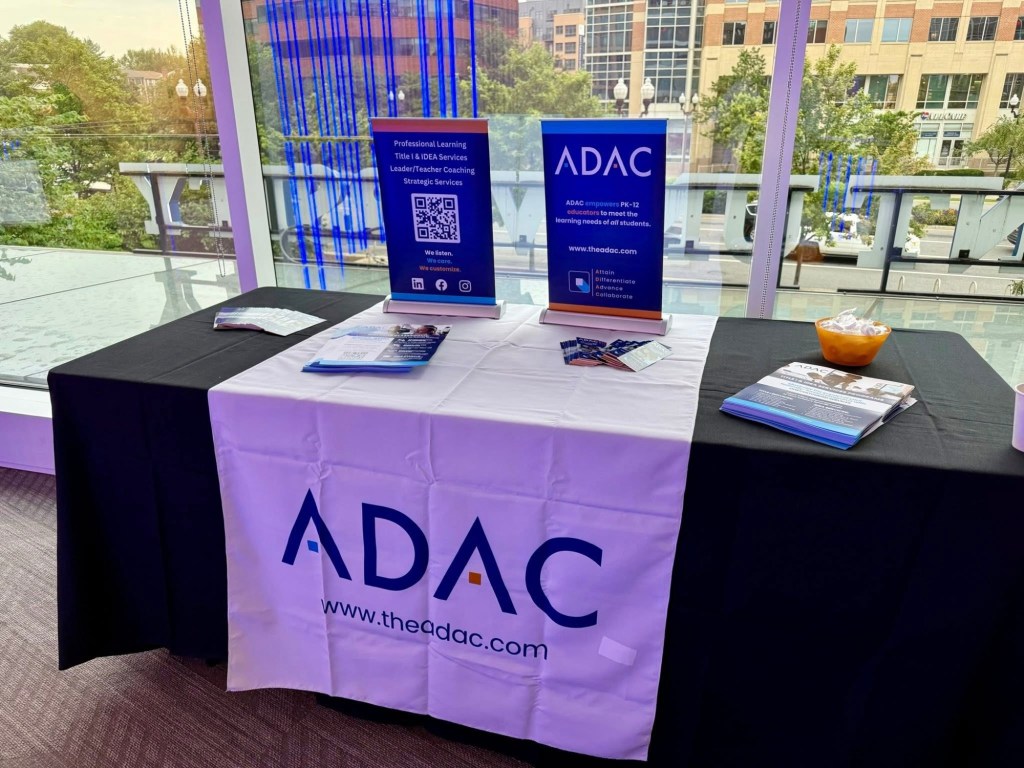
ADAC, Inc.
ADAC partners with PK–12 schools, systems, and networks nationwide to help educators and leaders confidently meet the needs of every student.
Friendzy, Co.
An effective curriculum that teaches a new generation of students character development skills.
Curriculum Associates
Together with one million educators, we’re connecting every part of learning—from assessment to instruction, data to discovery—to empower classrooms and communities to thrive.
Archangel Education & Technology
Archangel brings a human touch to technology, blending passion, deep expertise, and a strong community focus to enrich educational experiences.
William H. Sadlier
Core and supplemental math programs teach the essentials students will use the rest of their academic and professional lives.
National Standards in Gifted and Talented Education
Standards provide a foundation for the policies, rules, and procedures necessary to deliver high-quality, systematic programs and services for high-ability students. Guidance and framework resources.
Standards and Assessments
Raising academic standards for all students and measuring student achievement to hold schools accountable for educational progress are central strategies for promoting educational excellence and equity in our Nation’s schools.
Odyssey of the Mind
An international educational program that provides creative problem-solving opportunities for students from kindergarten through college.
Math Chimps
Great online math games aligned to the Common Core State Standards~for ages 4-16
Team Building and Problem-Solving Strategies for the Classroom
Odyssey of the Mind
An international educational program that provides creative problem-solving opportunities for students from kindergarten through college.
Websites with Games and Activities Created by Authors
Oceanhouse Media
Great educational book apps and so much more. Check out often for FREE downloads to help your child learn letters, phonics & math!