Tag Archives: Servant Leadership

Joy in the Partnership: The Pastor-Principal Relationship and the Culture We Create

Joy in the Work | Episode 4 | A Conversation with Father Pawel Sass, M.A., S.T.L.
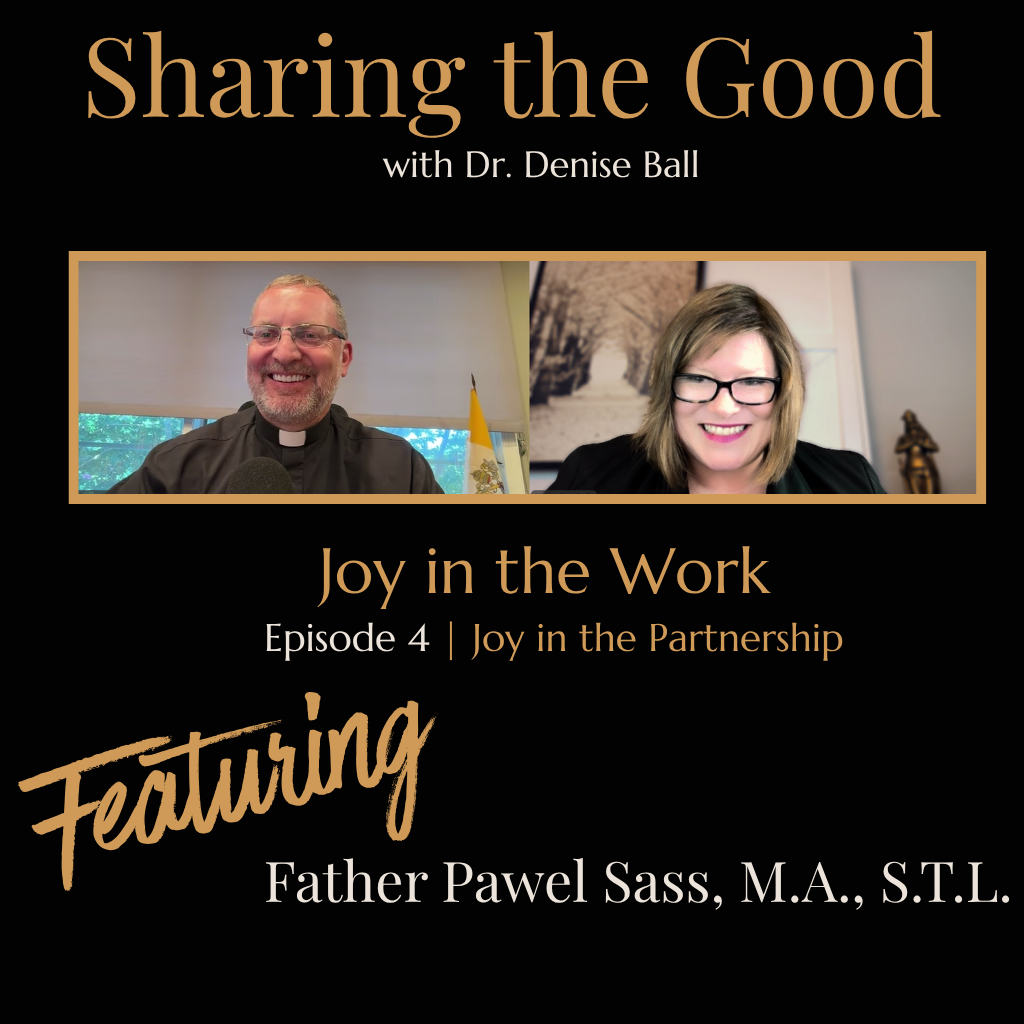
What becomes possible in our Catholic schools when pastors and principals see their partnership not simply as a responsibility, but as a gift?

That is the question I have been carrying with me since my recent conversation with Father Pawel Sass, Pastor of the Shrine of Saint Jude in Rockville, Maryland, for Episode 4 of the Joy in the Work series.

When we talk about strengthening Catholic schools, we rightfully talk about teachers, principals, students, families, curriculum, instruction, faith formation, and school culture. However, there is another relationship that I believe deserves much more of our attention: The pastor-principal partnership.

The pastor and principal have distinct roles and responsibilities, but they share something extraordinary: responsibility for advancing the mission of a Catholic school community. When that partnership is healthy, collaborative, prayerful, and rooted in mutual respect, the effects can extend far beyond the two people involved.

Teachers and students notice and experience it, and the school families and parishioners take notice and experience it. This partnership has a huge impact on a Catholic school culture. 

Partnership Has Shaped My Own Leadership Lens

Throughout my years serving Catholic education, I have been blessed to work alongside wonderful priests and to learn from spiritual leaders who modeled a positive approach to Catholic schools. Msgr. Chuck Kosanke in the Archdiocese of Detroit and Father John Williamson in the Archdiocese of Baltimore are two priests whose mentorship and example helped shape my own understanding of partnership.

They helped me see that the relationship between pastor and principal does not need to be defined by hierarchy, territoriality, or uncertainty about who controls what.

At its best, it can be characterized by trust, communication, shared mission, respect for one another’s expertise, prayer, laughter, and a genuine belief that we are better when we serve together.
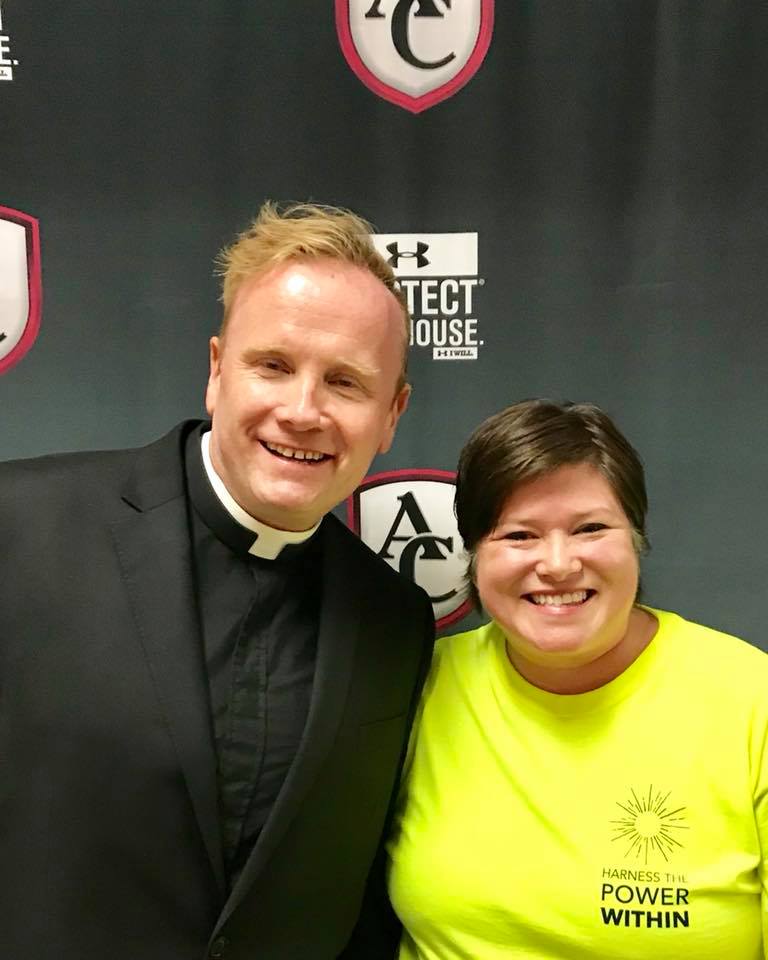
At one point in our conversation, Father Pawel offered a wonderfully simple reminder:

“We are too blessed to be stressed.” (Sass, 2026)

It made me smile. Of course, leadership can be stressful. Catholic school leaders and pastors carry real responsibilities, difficult decisions, competing priorities, and the needs of many people. Father Pawel was not suggesting otherwise. What I heard in his words was an invitation to remember the blessings while carrying the burdens.
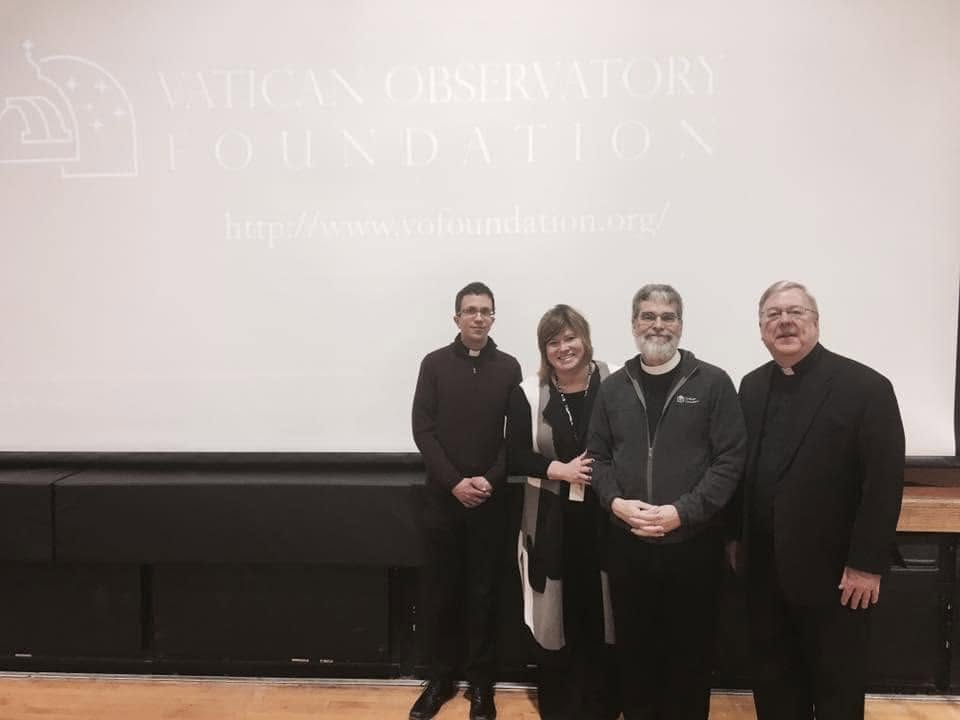
Leadership can become so consumed by what needs fixing that we forget to notice what is flourishing:

The student who finally understands. The teacher who stayed a few extra minutes to help. The family who expresses gratitude. The colleague who makes us laugh or put up a bulletin board. The parishioner who quietly supports the school. The opportunity to celebrate Mass together. The privilege of accompanying children as they grow in faith and knowledge, and the people God has placed beside us.

There will always be another problem to solve, but there will also always be something for which to give thanks. Perhaps part of sustaining joy in the work is learning to hold both realities at once.

Another image Father Pawel shared has stayed with me.

“Clean the cup.”

His reflection was that we need to clean the cup so we can be filled by the Holy Spirit and then empty ourselves again in service to others (Sass, 2026).

What a beautiful image for leadership. Those of us who serve others spend much of our lives pouring out. We give attention. We give encouragement, time, we solve problems and we listen. We teach, lead and we accompany others on this journey of life. But we cannot continually pour from a cup we never allow God to refill.

Prayer, reflection, rest, gratitude, community, and time with God are not distractions from leadership. They help prepare us for it.

Perhaps the question is not simply, “How much more can I give?”

Perhaps sometimes the better question is:

“What do I need to release so there is room for the Spirit to fill me again?”…Clean the cup, be filled, be poured out in service, return, and allow God to fill it again! There is a rhythm of vocation in that image that I find beautiful.

One of the most practical parts of my conversation with Father Pawel centered on conflict. Healthy partnerships are not partnerships without disagreement. Pastors and principals will disagree. Teachers and administrators will disagree. Colleagues will misunderstand one another. We are human beings doing important work together, so conflict will happen.

The question is not whether disagreement will occur. The question is what we do when it does.

Father Pawel offered three practices that are beautifully simple and profoundly useful.

1. Begin With Quiet, Personal Prayer

Before responding, reacting, emailing, calling, or entering the difficult conversation: Pray.

Not necessarily publicly, not performatively, but quietly and personally. Bring the situation to God before bringing it back to the other person. Prayer creates space between the emotion we are experiencing and the response we choose to make.

It invites us to ask: Am I listening? Am I seeking understanding? Is pride influencing my response? What might I be missing? Holy Spirit, how are You asking me to enter this conversation?

For Catholic leaders, perhaps prayer should not simply open our meetings. Perhaps it should also precede our disagreements.

2. Practice “Table Fellowship”

Father Pawel’s second recommendation may be my favorite:

Enjoy table fellowship. (Sass, 2026)

Sit down together, share a meal, have coffee, break bread, and just talk.

Father Pawel reminds us that there is something deeply human, and deeply Christian, about gathering around a table. The person across from us can become very easy to misunderstand when our interaction is reduced to an email, a disagreement, a meeting agenda, or a problem that needs solving. The table changes the posture. At the table, we remember the person. We listen differently. We tell stories. We laugh. We learn about one another, and we discover what we have in common.

I think sometimes the disagreement that seemed enormous becomes easier to navigate once the relationship returns to the center. There is wisdom in table fellowship that extends far beyond the pastor-principal relationship. What might change in our leadership teams, faculties, departments, and school communities if we spent a little more time breaking bread together?

3. Assume the Good

Father Pawel’s third piece of wisdom may be the most challenging:

Assume the good.

When someone says something that frustrates us, assume the good. When a decision surprises us, assume the good. When communication is imperfect, assume the good. When we disagree about the path forward, begin with the belief that the other person also cares about the mission.

Assuming the good does not mean avoiding accountability or pretending harmful behavior is acceptable. It means resisting the temptation to assign negative motives before we have taken the time to understand.

Imagine beginning a difficult pastor-principal conversation from this posture:

“I know you care about our school and our mission. Help me understand how you are seeing this.”

That is very different from beginning with:

“Why would you do this?”

One posture opens a door and the other may close it before the conversation even begins.

I keep returning to Father Pawel’s three practices:

  • Pray
  • Table Fellowship
  • Assume the good

They require no new program, no strategic plan, no committee, or budget. They require intentionality. I think this is one of the lessons emerging throughout this entire Joy in the Work series. Positive culture is often built through seemingly small, repeated relational practices.

How we enter the room, how we listen, how we choose to respond to mistakes, how we welcome people, how we handle a disagreement is important to the partnership. 

How we recognize another person’s gifts, how we repair a relationship, and how we choose to begin again can build trust and a strong foundation for the partnership. 

As shared in earlier episodes, small moments, repeated consistently, have a way of becoming culture.

A healthy pastor-principal partnership does not require the pastor to become the principal or the principal to become the pastor. Their roles are distinct, their gifts are different, and areas of expertise vary. That is not a weakness in the partnership, and it may be one of its greatest strengths.

Partnership asks us to recognize: You bring something to this mission that I cannot bring alone. In Catholic education, that recognition carries particular significance. The pastor brings spiritual leadership, sacramental life, theological formation, and pastoral care. The principal brings educational leadership, instructional expertise, organizational leadership, and the daily stewardship of the school community. Together, they can help ensure that Catholic identity is not simply something written in a mission statement, but becomes something people experience.

As the Joy in the Work series continues, another piece of the larger picture is becoming clearer to me.

  • Dr. Christina Mendez-Hall invited us to Lead with Joy,
  • Dr. Nicci Dowd encouraged us to Make Room for Joy,
  • Dr. Joy Roberts helped us explore Joy, Belonging, and the Power of Community, and 
  • Father Pawel Sass reminds us that there can also be Joy in the Partnership.
We do not have to carry the mission alone, and that in itself is a source of joy. There is someone beside us. Someone with different gifts. Someone who sees things we may not see. Someone with whom we can pray, and can break bread together. Someone with whom we can disagree and begin again. Someone who can remind us, on the difficult days, why we said yes to this work in the first place.

I left my conversation with Father Pawel inspired and grateful.

The Shrine of Saint Jude and St. Jude Catholic School in Rockville, Maryland, are blessed to have a pastor who so clearly values Catholic education and recognizes the importance of collaboration.

Our conversation has me reflecting on…

What becomes possible in our Catholic schools when pastors and principals see their partnership not simply as a responsibility, but as a gift?

Perhaps we create stronger relationships, and we navigate conflict with greater grace. Perhaps our teachers feel more supported, and families experience greater unity. Perhaps students encounter a more authentic witness of Christian community, and perhaps we make a little more room for joy.

I am grateful to Father Pawel Sass for sharing his faith, wisdom, humor, and JOY in Episode 4 of the Joy in the Work series:

Joy in the Partnership: The Pastor-Principal Relationship and the Culture We Create

Join the conversation on YouTube: https://youtu.be/BqIdg4uuwCU or listen wherever you enjoy your favorite podcasts.

Maybe the next time conflict finds its way into our work, we can remember Father Pawel’s simple wisdom:

Pray, enjoy table fellowship, and assume the good! Maybe, every once in a while, remind ourselves: “We are too blessed to be stressed.” (Sass, 2026)

When we train our eyes to see the good, amazing things happen!

Reference

Ball, D. M. (2026). Joy in the partnership: The pastor-principal relationship and the culture we create [https://youtu.be/BqIdg4uuwCU]. Sharing the Good with Dr. Denise Ball.
Leave a comment

Filed under Joy in the Work Series, Sharing the Good with Dr. Denise Ball

Joy in the Work | Episode 3

Joy, Belonging, and the Power of Community

A Conversation with Dr. Joy Roberts

What if one of the greatest sources of joy in our work is knowing that we belong to something larger than ourselves?

That is the question I have been carrying with me since my recent conversation with Dr. Joy Roberts for Episode 3 of the Joy in the Work series.

What a joy it was to welcome Joy to Sharing the Good with Dr. Denise Ball for a wonderful conversation about joy, belonging, relationships, and the power of community.

Joy is the co-founder and president of Friendzy, an organization that partners with schools across the nation and across governance models to help create classroom and school cultures where students and educators experience a strong sense of belonging.

Throughout our conversation, Joy reminded us that strong communities do not happen by accident. They are built through relationships and through the everyday ways we help people know they are seen, valued, and connected.

Belonging Matters

Belonging is a word we hear frequently in education, but I wonder if we sometimes underestimate just how important it is.

At its heart, belonging communicates something profoundly human (Roberts, 2026), conveying I am known here, I am valued here, my presence matters here, and there is a place for me here.

Research gives us good reason to pay attention to these experiences. The Institute of Education Sciences has studied school belonging as part of the social, emotional, and behavioral context for teaching and learning, examining its connections with student engagement, well-being, behavior, and academic outcomes. In one rigorous middle school study involving more than 1,000 students, an intervention designed in part to address students’ concerns about belonging produced a statistically significant improvement in students’ reported social belonging and fewer behavioral referrals overall (Borman et al., 2019).

At the same time, the larger research base reminds us to be thoughtful about our claims. The What Works Clearinghouse’s review of social-belonging interventions found mixed effects on academic achievement. Belonging is not a magic program that guarantees an academic outcome. Rather, it is part of the relational and cultural environment in which learning takes place.

I think the distinction matters. Belonging is not another initiative to add to the school calendar, but is something people experience.

Culture Answers the Question: Do I Belong Here?

Think for a moment about the messages people receive throughout an ordinary school day.

A principal stands at the door and knows a student’s name. A veteran teacher checks on a new colleague. A student is invited into a group. A teacher’s idea is genuinely considered during a faculty meeting. A parent walks into the office and is warmly greeted. Someone notices when a colleague is having a difficult day. A student makes a mistake and discovers that the mistake does not diminish their value within the community.

None of these moments requires a new program, which Dr. Roberts reminds us that educators do not need, yet together, these moments communicate: You are seen, you are valued, you are connected, and you belong! That is culture.

Research on school marginalization offers another important lens. The Institute of Education Sciences has supported research examining how experiences of marginalization relate to student social relationships, engagement, well-being, behavior, and achievement. Importantly, student-teacher and student-peer relationships are among the factors researchers examine when trying to understand these connections.

In other words, relationships are not peripheral to the educational experience, but are part of it.

Belonging Is for the Adults Too

One of my favorite parts of my conversation with Joy was that we did not limit our discussion of belonging to students.

Students absolutely need to know that they belong, but so do teachers, and so do principals. We also cannot forget the importance of belonging is for our instructional assistants, counselors, administrative assistants, maintenance teams, professors, diocesan and system leaders, and everyone else who contributes to the life of a learning community. As someone who has spent much of my research and professional work thinking about school culture and teacher retention, I continue to come back to the importance of the environment in which educators are asked to do their work. We cannot continually ask educators to create communities of belonging for children while paying little attention to whether the adults themselves experience connection, trust, collaboration, and belonging.

Imagine the difference between a teacher thinking: “This is where I work.” and believing: “These are my people. My contribution matters here. We are doing something important together.”

That is a very different experience of work, and perhaps that is where belonging and joy begin to intersect.

We Were Never Meant to Do This Work Alone

Education is deeply relational work. There will always be difficult days. There will be students whose needs challenge us, lessons that do not unfold as planned, difficult conversations, competing priorities, and problems without immediate solutions.

Belonging does not eliminate any of those things. Community does, however, change how we carry them.

There is a profound difference between thinking: “I have to figure this out.” and knowing: “We will figure this out together.” That is the power of community; we learn from one another. In a healthy school culture we encourage, challenge, and celebrate one another! We sometimes carry one another, and need to remind each other why the work matters.

A Thread Through the Joy in the Work Series

As this series continues, I am beginning to see a beautiful thread emerging through these conversations. Dr. Christina Mendez-Hall invited us to Lead with Joy and consider how we choose to enter the work. Dr. Nicci Dowd encouraged us to Make Room for Joy by creating environments where people have permission to learn, make mistakes, collaborate, and grow. This week, Dr. Joy Roberts has invited us to think about joy, belonging, relationships, and the power of community.

Perhaps these ideas are not separate at all. We choose how we show up, and we choose to make room for one another. We build relationships, and through this we create belonging. We discover that we are part of something larger than ourselves, and together, we shape culture!

Belonging Is Built in the Small Moments

Perhaps one of the most encouraging things about belonging is that strengthening it does not always require a large-scale initiative.

It can begin today:

*Learn someone’s name,

*Pull up another chair,

*Ask a colleague what they think…and then LISTEN,

*Invite someone into the conversation,

*Notice who has become quiet,

*Celebrate someone’s contribution,

*Check on the new teacher,

*Listen to the student who needs a few extra minutes,

*Thank the person whose work frequently goes unnoticed, and/or,

*Remind someone that they matter.

These actions may seem small, but small moments, repeated consistently, have a way of becoming culture, and culture has the power to communicate something transformative: You do not have to earn your place here. You are part of us.

A Question I Am Carrying With Me

I am grateful to Joy for generously sharing her wisdom, research, experiences, and JOY.

As I reflect on our conversation, I continue to carry this question: What if one of the greatest sources of joy in our work is knowing that we belong to something larger than ourselves?

To take it one step further, perhaps the question for each of us is: What can I do today to help someone else know that they belong too?

Join the Conversation

Learn more about Friendzy and explore its impact reports by visiting Friendzy.co, including the Competency and Belonging Impact Report.

Join the conversation on YouTube:
https://youtu.be/OfkNJkom_rY

Or listen wherever you enjoy your favorite podcasts.

When we train our eyes to see the good, amazing things happen!

May we continue to seek knowledge in all things,

Denise

#SharingTheGood #JoyInTheWork #Belonging #SchoolCulture #SchoolLeadership #CatholicEducation #EducatorJoy #Community #Friendzy

Research and Resources

Borman, G. D., Rozek, C. S., Pyne, J., & Hanselman, P. (2019). Reappraising academic and social adversity improves middle school students’ academic achievement, behavior, and well-being. Proceedings of the National Academy of Sciences, 116(33), 16286–16291.

Institute of Education Sciences, What Works Clearinghouse. (2021). Social Belonging Interventions: Intervention Report. U.S. Department of Education.

Institute of Education Sciences. School-Based Marginalization, Social Behavioral Competencies, and Achievement: A Meta-Analysis. National Center for Education Research.

Leave a comment

Filed under Sharing the Good with Dr. Denise Ball

The Leader’s Role in Creating Belonging

Summer Series 2026: Belonging, School Culture, and the Joy of the Work

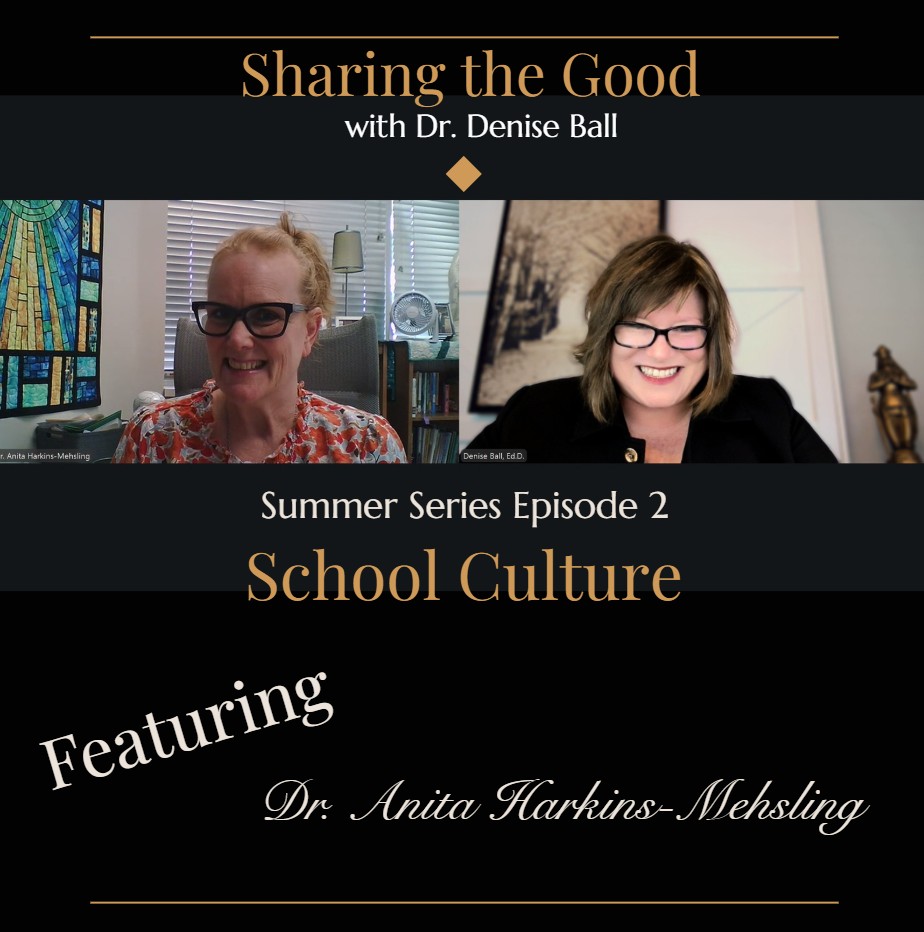
Episode 2 Featuring Dr. Anita Harkins-Mehsling

In Episode 2 of Summer Series 2026: Belonging, School Culture, and the Joy of the Work, I am grateful to continue the conversation with Dr. Anita Harkins-Mehsling, Associate Superintendent for the Archdiocese of Omaha.

In Episode 1, Anita and I reflected on why belonging matters and why summer is such a meaningful time for school leaders to pause, exhale, and consider the culture they hope to build and maintain for the 2026–27 school year.

In Episode 2, we turn our attention to the leader’s role in creating belonging and shaping a positive school culture.

A positive school culture does not happen by accident. It is nurtured through the rhythms, routines, relationships, words, and actions that help a school community stay connected to its mission. Culture is not created by a mission statement alone. Culture is experienced in the daily life of a school, in the way people are welcomed, supported, heard, encouraged, and invited to contribute to something greater than themselves.

Belonging is shaped through intentional relationships, communication, trust, presence, and the daily choices leaders make. The school leader sets the tone and helps create the conditions where people feel seen, valued, welcomed, and connected to the mission.

One of the important reminders Anita shared in this episode is that leaders should be intentional in how they welcome faculty and staff back to campus. The beginning of the school year is often filled with tasks, meetings, checklists, schedules, and classroom preparation. All of those things matter. Yet Anita reminds us that leaders also need to create space for people to reconnect, get to know one another, and remember that they are part of a shared mission.

That balance is so important. Teachers need time to prepare their classrooms. They need time to organize, plan, and feel ready to welcome students. They also need time to breathe, reconnect, laugh, share, pray, and remember that they do not carry the work alone.

The way a school year begins matters. People remember how they were welcomed (Ball, 2026). They remember whether the opening days were only about tasks or whether there was also time to reconnect with purpose, community, and joy.

As I listened to Anita, I found myself reflecting on my own leadership experiences and my research on school culture and teacher retention. I have spent much of the past decade studying and working in this area, and I continue to believe that school culture is created in ordinary moments. It is shaped in how a leader greets people, follows up, listens, remembers, encourages, and makes space for others to contribute.

One example from my own leadership practice was something I called Thankful Thursday. A couple of times a month, before the team arrived, I would leave notes of gratitude or encouragement. Sometimes the note was connected to something I noticed in a classroom. Sometimes it was simply a word of encouragement. They were not long or complicated, but they were intentional. These sticky notes were one more way of saying, “I see you. I notice the good work you are doing. Your presence and contribution matter here.” Gratitude helps shape culture and it sets a tone. It helps people know that their work is not invisible. 

Another practical way leaders can strengthen culture is by creating intentional opportunities for table talk during faculty and staff meetings. Meetings do not have to be used only for announcements, updates, and logistics…in fact they shouldn’t be. These are school culture prime opportunities to build trust and distribute joy!. They can also become spaces where people reflect together, listen to one another, and contribute to the shared mission of the school.

For example, after sharing a schoolwide focus or initiative, a school leader might ask each table to discuss: “Where are we already seeing this lived well in our school?” or “What is one next step we can take together?” Then each table can share one insight with the larger group. That kind of routine communicates something important: every voice matters, perspectives matter, and we are building and maintaining this positive school culture together.

In this episode, Anita and I break open the importance of helping faculty and staff feel seen and valued in specific ways. A general “thank you” is always appreciated, but specific gratitude has a different kind of impact. When a leader says, “I noticed the way you helped that student,” or “I saw how you supported your colleague,” it communicates that the person and the work are truly seen.

Again, this does not need to be complicated. Leaders might begin the year with handwritten notes, ask each staff member what helps them feel supported, highlight quiet acts of service during faculty meetings, check in with new faculty after the first two weeks, or intentionally thank office staff, aides, maintenance staff, cafeteria staff, and all who help the school function each day. Create a school environment where gratitude is the norm. If the adults model it, the students will follow. 

Culture is strengthened when leaders create a rhythm of noticing and naming the good.

Presence matters deeply, and in the life of a school, presence is not about hovering or checking up on people. It is about walking with people. It is about being close enough to the life of the school to understand where joy is visible, where support is needed, and where people may be carrying things quietly.

Dr. Harkins- Mehsling reminds us that sometimes the most powerful thing a leader can do is show up, listen, and remain steady. Presence builds trust over time, and is at the heart of belonging. In school culture work, trust is often the bridge between intention and impact. I call trust the glue for a strong positive school culture. Trust does not mean everything is easy. It means people believe they are being led with honesty, care, and purpose.

Leaders may intend to create belonging, but people experience belonging through communication, listening, relationships, and follow-through. Anita shared that she kept a notebook on her at all times, so she could jot down notes that would allow her to be intentional and follow-up with team members. 

Listening does not mean leaders can do everything requested. It does mean people are treated with dignity. Communication should help people understand not only the “what,” but also the “why.” When people understand the why behind decisions, they are more likely to stay connected to the mission, even when decisions are difficult.

One of the most helpful ideas in this conversation is that belonging does not have to become one more program, one more initiative, or one more thing added to everyone’s plate. Belonging can and should be woven into the rhythms that already exist. It can be built into faculty meetings, prayer, mentoring, communication, classroom visits, welcome-back days, celebrations, and leadership team conversations.

It is a way of asking: How will this decision, meeting, message, or practice help people feel seen, valued, and connected?

As leaders prepare for the 2026–27 school year, Episode 2 offers a simple but meaningful invitation: start small and be intentional. Create space for preparation and connection. Know or get to know your people and listen before acting. Build trust through follow-through, and create rhythms that help your community notice and share the good.

Belonging does not require perfection, but it does require intention, consistency, and love for the people we are called to serve.

I am grateful to continue this summer conversation with Dr. Anita Harkins-Mehsling and hope Episode 2 encourages school leaders to reflect on the culture they are creating, the welcome they are preparing, and the daily habits that help people feel seen, valued, and connected to the joy of the work.

Pause. Exhale. Reflect.

Join us for Episode 3 of Summer Series 2026: Belonging, School Culture, and the Joy of the Work on Sharing the Good with Dr. Denise Ball on July 14th.

Until next time, keep sharing the good.

When we train our eyes to see the good, amazing things happen.

May we continue to seek knowledge in all things,

Denise

Leave a comment

Filed under Episode 2 of Summer Series 2026: Belonging, School Culture, and the Joy of the Work

When We Train Our Eyes to See the Good, Amazing Things Happen…An End-of-the-School-Year Message from Dr. Christina Mendez-Hall

Last night, I officially posted the welcome message for my new YouTube channel, Sharing the Good with Dr. Denise Ball. This morning, as I met with Dr. Christina Mendez-Hall, Assistant Superintendent for the Diocese of Arlington, I was reminded again why this space matters. Dr. Mendez-Hall is so full of joy, and I invited her to share an end-of-the-school-year inspirational message for the channel. It was one of those simple, grace-filled moments that confirmed the “why” behind this new chapter.

For the last eight-plus years, I have been researching, writing, speaking, and working alongside school leaders and educators on team building, teacher retention, and the development of strong, healthy school cultures. Again and again, one simple truth continues to rise to the surface: educators and school leaders need to be seen, heard, encouraged, and reminded that their work matters.

When adults in a school community feel valued, supported, and connected to a shared mission, the entire campus is strengthened. Joy becomes more visible, trust grows, collaboration deepens, and students benefit. Schools become more stable, dynamic, and hope-filled places of learning.

That is the heart behind Sharing the Good with Dr. Denise Ball.
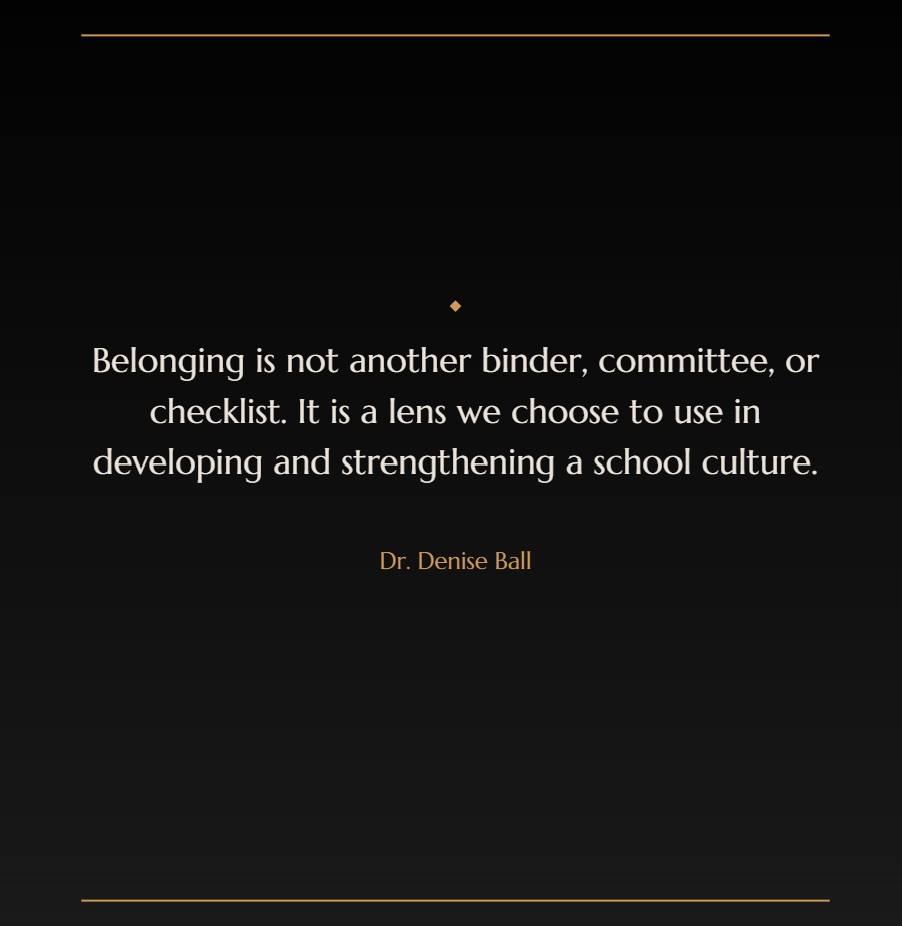
My goal is not to create a perfect YouTube channel. It is not to chase likes or pretend that life, leadership, education, or faith are without challenges. My hope is to create a real and authentic space where we collectively can share the good, notice the good, and perhaps inspire at least one person who needs encouragement on any given day.

I have been blessed throughout my life to be surrounded by amazing people who have encouraged me, challenged me, prayed for me, and helped me see the good even in difficult seasons. After retiring last June, following 27 years of service in education, I have found myself with more time to reflect, write, listen, and reconnect with many of you who have followed this blog since it was created 15 years ago.

The Unlock the Teacher blog has received more than 1.5 million views over the years and continues to average around 100 views a day. The feedback received on this blog humbles me deeply — thank you! Current research highlights the need for us to truly see and hear one another, and I would like to help make sure those placed on my path during this journey of life feel seen and heard.

So today, I want to personally invite you to continue the conversation with me in a new way.

Please visit Sharing the Good with Dr. Denise Ball on YouTube. Subscribe if the message speaks to you. Share it with an educator, leader, parent, or friend who may need a reminder that goodness is still unfolding.

Check out Christina’s inspirational minute message by clicking the link below. This is my first YouTube “short”…thank you for the grace!

An End-of-the-School-Year Inspirational Message from Dr. Christina Mendez-Hall

I am a novice in this space, and I am very much a lifelong learner. If you have a tip, suggestion, idea, or story to share, I would love to hear from you. Send me a message and share the good you are seeing. Tell me about the people who are carrying light in your school, family, parish, workplace, or community.

I believe this deeply, that when we train our eyes to see the good, amazing things happen.

We can do more for the world when we share the good together, one word, one story, and one action at a time.

May we continue to seek knowledge in all things!

Denise

Leave a comment

Filed under Educational Resources

What We Build Together: The Power of Collaboration–A Middle School Mindset Initiative

There is a particular kind of energy that comes from meaningful collaboration. The kind that is grounded in shared mission, fueled by trust, and sustained by a deep belief in the work we are called to do.

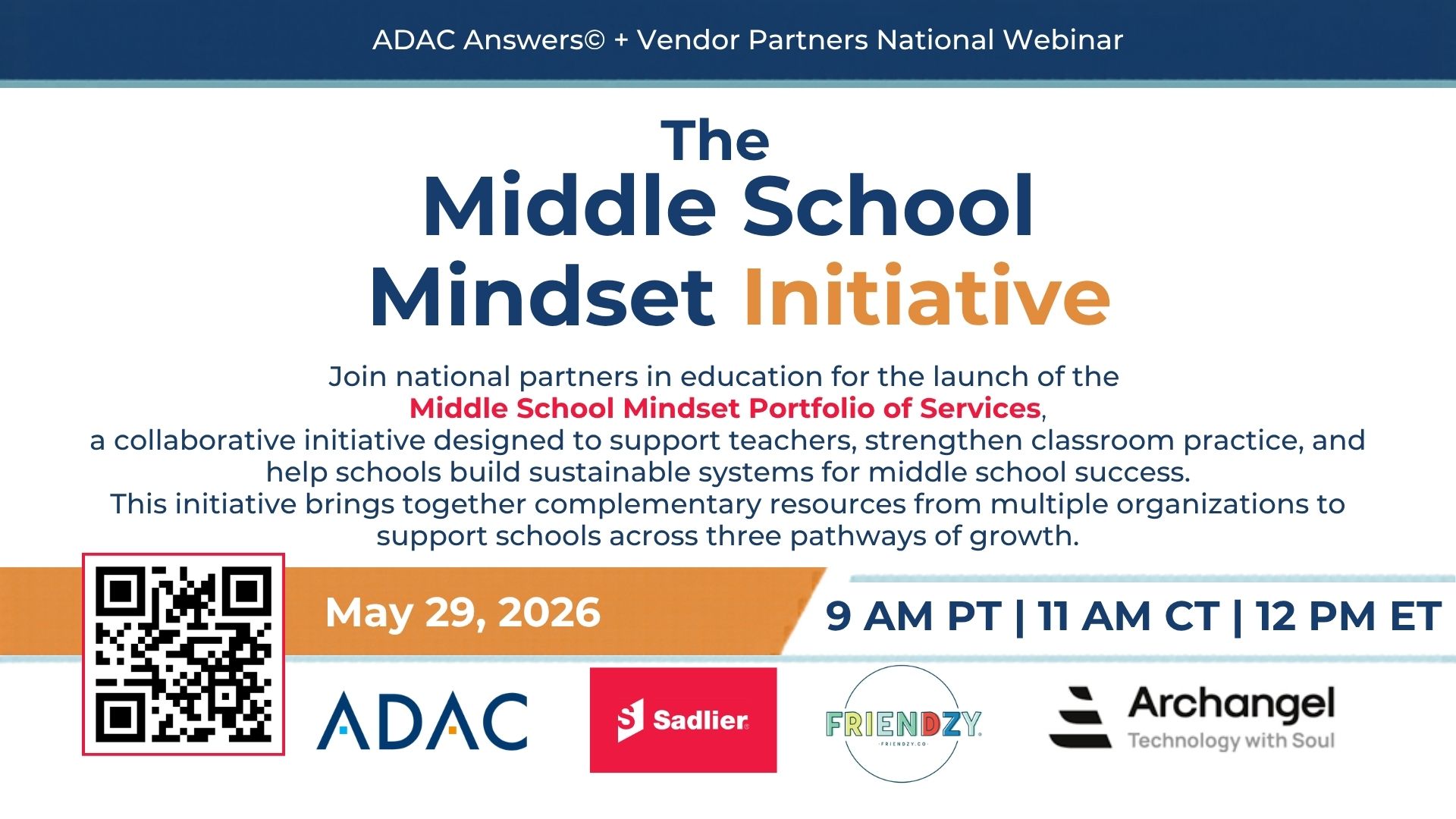
Over the past year, I have had the privilege of working alongside incredible partners to bring the Middle School Mindset Portfolio of Services to life. What began as an idea has grown into something far more powerful than any one organization could have accomplished alone. In just a few short weeks, we will launch this work nationally on May 29.

This moment feels significant, not simply because of the launch itself, but because of what it represents.

A Response to a Critical Moment

Middle school is a pivotal season of formation. It is a time when students are asking deeper questions about identity, belonging, and purpose. It is also a time when educators are navigating increasing complexity like academic recovery, student engagement, and social-emotional needs, all while striving to create classrooms where students feel known and valued.

We cannot meet this moment in isolation.

The Middle School Mindset Portfolio was built in response to that reality. It is not a single program or a one-size-fits-all solution. Rather, it is a collaborative ecosystem designed to support educators with practical strategies, meaningful resources, and a shared commitment to strengthening both instruction and culture.

The Gift of Partnership

One of the greatest joys in this work has been collaborating with mission-aligned partners who bring both expertise and heart to the table.

A special acknowledgment goes to Archangel Education and Technology, whose team is building an innovative digital ecosystem that will no doubt become a destination space for educators and system leaders. Their work reminds us that when technology is designed with purpose, it can truly amplify impact.

Equally inspiring has been our partnership with the Archdiocese of Miami pilot schools. On May 29th, during this complimentary webinar, we will hear directly from middle school teachers who have engaged in this work, educators who are thoughtfully applying strategies, reflecting on practice, and shaping what this portfolio will become at scale.

To visit these vendor partners supporting schools nationwide, please visit:

www.theadac.com | https://friendzy.co/ | https://www.sadlier.com/ | https://arch-te.com/

We can serve students and teachers more when we do it together!

From Research to Practice: Naming What Matters Most

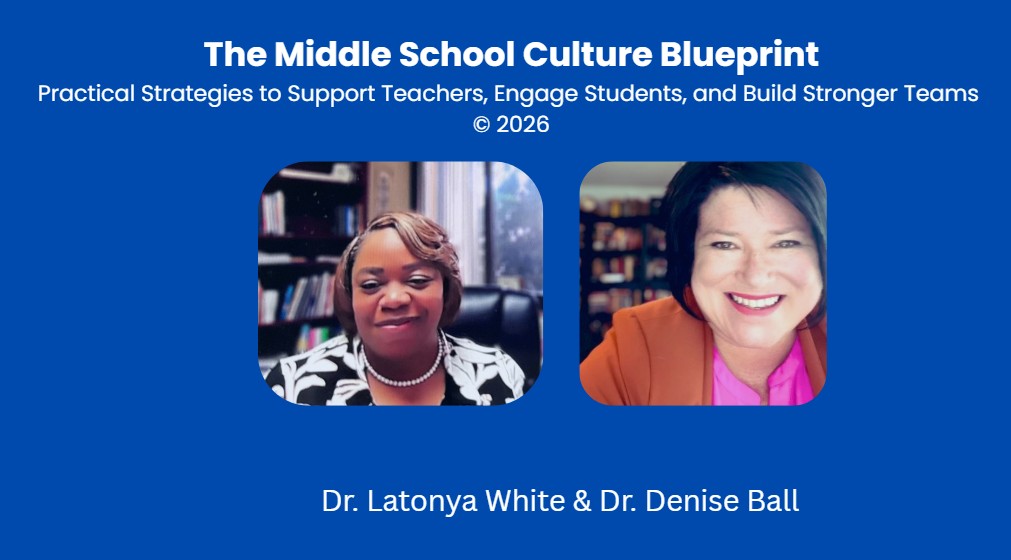
This work has also deepened my ongoing collaboration with Dr. LaTonya White. Together, we are preparing to share our research in the forthcoming Middle School Culture Blueprint (Ball & White, 2026).

At the center of our work is a simple yet deeply impactful reminder: what we reinforce each day becomes the culture we experience, whether by intention or by default.

Middle school culture does not happen by accident. It is shaped in the small, consistent moments: in how we greet students, how we structure learning, how we respond to challenges, and how we create space for student voice. Belonging is not a program we implement. It is a condition we intentionally cultivate through every interaction, every structure, and every expectation (Ball & White, 2026).

When we are intentional, we create environments where students and teachers can thrive. When we are not, culture is still formed, but often in ways that do not serve our mission. The opportunity before us is to lead with clarity, purpose, and hope, and to build cultures where every student and educator knows they are seen, valued, and called to grow.

A Moment of Anticipation

As we look ahead to our national webinar launch on May 29, I am filled with gratitude for the partnerships, for the educators, and for the shared commitment to this work. This is more than a program launch. It is a reflection of what is possible when we come together, listen deeply, and build something that responds to the real needs of our schools. It is a reminder that we are not alone in this work. And… it is an invitation to continue to collaborate, to continue to learn, and to continue to see the good that is unfolding all around us.

The May 29th registration is live (scan the QR code above). Come and join the conversation!

What a privilege it is to serve!

Leave a comment

Filed under Middle School Strategies