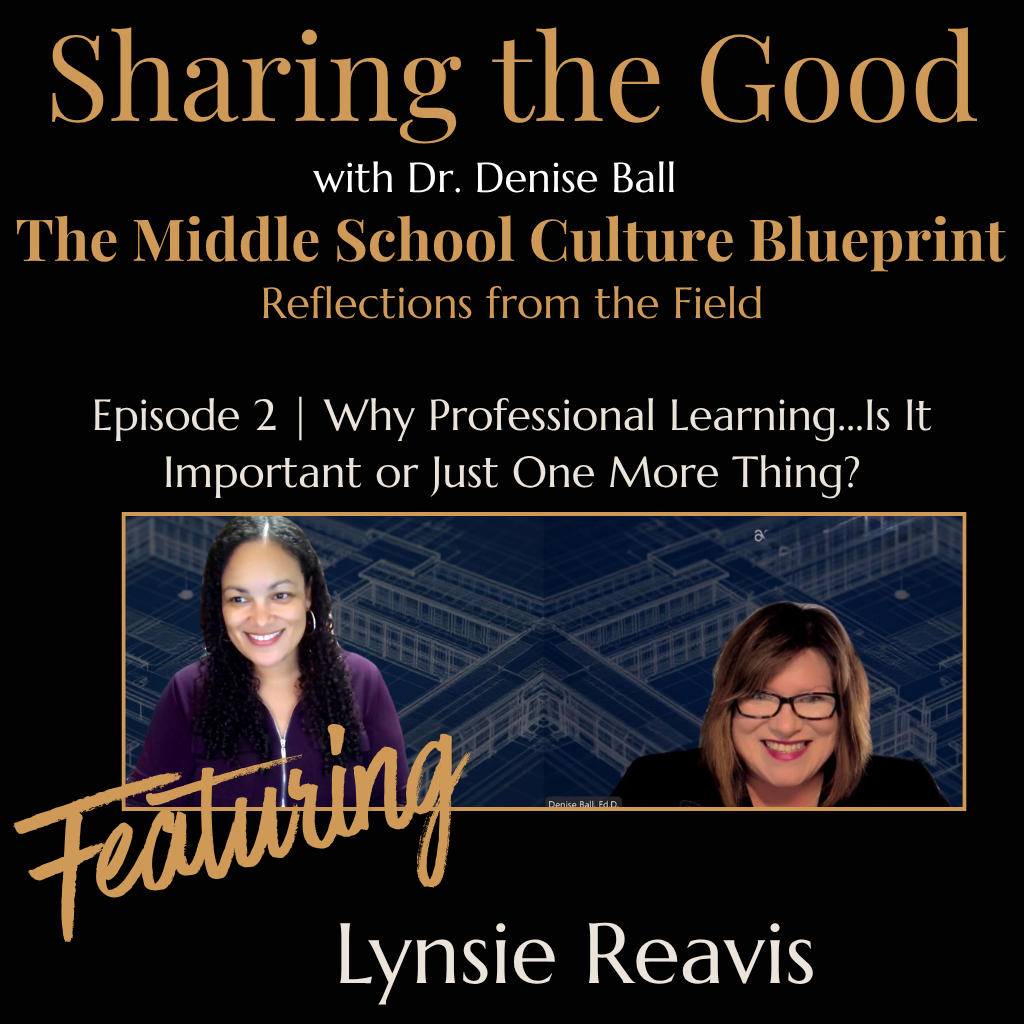
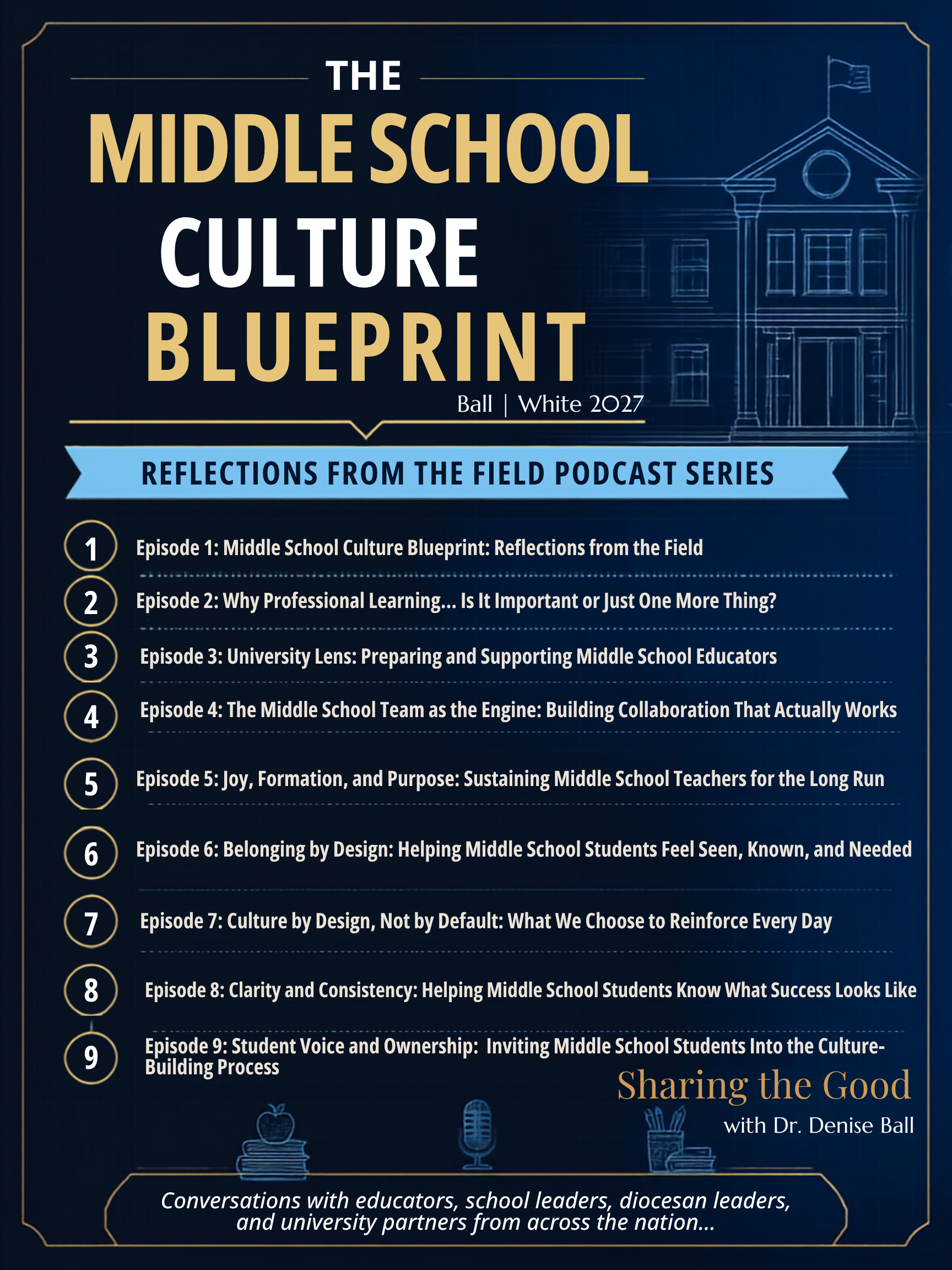
Professional learning is intended to help educators grow, strengthen their practice, and ultimately better serve students. Yet for teachers carrying increasingly full plates, even well-intentioned professional learning can sometimes feel like “one morething.” That tension became the starting point for Episode 2 of The Middle School Culture Blueprint: Reflections from the Field, where I had the opportunity to talk with Lynsie Reavis, Director for Educational Programs for the Archdiocese of Washington. Our conversation offered an important reminder for those of us who lead and design professional learning: honoring teachers’ time, capacity, and experience must be part of the planning process.
One of Lynsie’s recommendations was beautifully practical…to choose one or two meaningful initiatives each year and avoid exceeding three. Teachers wear many hats, and meaningful implementation requires time. Rather than expecting every educator to embrace a new initiative at the same pace, Lynsie encouraged leaders to begin with those who are ready and willing. These educators can become “initiative ambassadors,” sharing authentically with colleagues how a new practice is influencing teaching and learning. Growth can often spread more effectively through trusted relationships and visible impact than through another mandate. That same relational approach shaped Lynsie’s own middle school teaching. She spoke about creating challenges and friendly competition to make learning collaborative and enjoyable and reflected on the familiar instructional progression of “I do, we do, you do.”
Our conversation also reinforced how professional learning can strengthen the culture of an entire middle school. Lynsie emphasized giving teams time to develop shared expectations around practices such as weekly assessment schedules, bell work, and family communication. These conversations require compromise, openness, and time, but the resulting coherence matters. Middle school students move among multiple teachers and classrooms each day, and, as Lynsie reminded us, they are always watching the dynamics and structures around them. Greater consistency among adults can create greater clarity and security for students. Professional learning, then, becomes more than the transfer of information. It becomes an opportunity to strengthen relationships, shared language, teamwork, and culture.
Click HERE to listen to episode 2 and available anywhere podcasts are enjoyed.
For educators interested in exploring this area further, Deans for Impact’s free The Science of Learning resource offers an accessible, research-informed look at how cognitive science can inform everyday instructional decisions.
Perhaps one of the most important themes of our discussion was reflection. Lynsie highlighted brain-based teaching and learning and reminded us that the instructional decisions educators make influence how students experience and process learning. That makes reflection essential, not optional. As Dr. LaTonya White and I continue our work on The Middle School Culture Blueprint (NCEA, 2027), these conversations continue to reinforce the interconnected nature of Belonging, Clarity, Coherence, and Formation, our middle school culture blueprint. Professional learning can contribute to each of these pillars when it is thoughtful, relevant, and connected to the actual work of teachers. And through all of the strategies, structures, initiatives, and demands of education, Lynsie left us with a simple reminder worth carrying with us, “Always remember your why!”
What if one of the greatest gifts we can give the people with whom we work is permission?
Permission to ask a question. Permission to say, “I don’t know yet.” Permission to try something new. Permission to make a mistake. Permission to learn from one another, and perhaps, permission to experience JOY along the way.
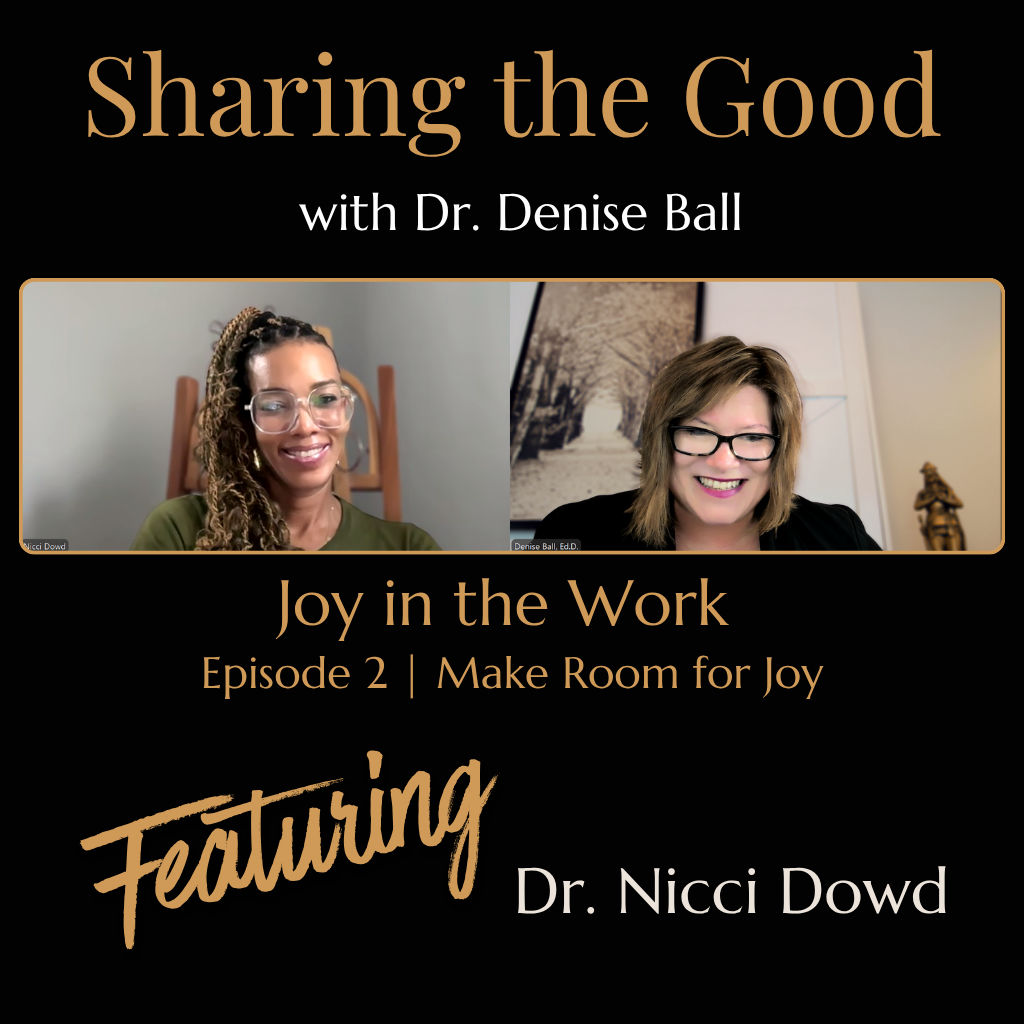
After a wonderful conversation with my friend and colleague, Dr. Nicci Dowd, for Episode 2 of the Joy in the Work series on Sharing the Good with Dr. Denise Ball, these are the questions that came to mind.
Our episode is titled Make Room for Joy, but our conversation reminded me that making room for joy may begin by making room for people to be learners.
We Are All Still Learning
Nicci shared an idea during our conversation that has stayed with me: academic humility.
There is something freeing about recognizing that none of us has all the answers. Teachers do not. School leaders do not. Professors do not. Researchers do not, and that is okay.
We can bring years of education, research, leadership experience, and expertise into a room and still remain open to the possibility that someone sitting beside us may see something we have missed. That is one of the reasons I value collaboration so deeply. Many voices create the best outcomes.
When we create environments where people feel safe enough to ask questions, offer ideas, respectfully disagree, try something new, make a mistake, and begin again, we are doing more than supporting professional learning. We are helping create a culture in which people can grow; I believe there can be tremendous joy in that growth.
Making Room for Joy Means Making Room for Mistakes
As educators, we frequently tell students that mistakes are part of learning. But do the adults in our schools believe the same is true for them? That question is worth considering. If a teacher tries a new instructional strategy and it does not work as planned, what happens next? If a new school leader admits that they do not know the answer, how is that received? If someone offers a different perspective during a faculty meeting or professional learning session, do we become curious or defensive? If a colleague needs help, have we created an environment where asking for it feels safe?
The answers to those questions tell us something about culture. School culture is not created only through mission statements, strategic plans, programs, or initiatives. It is experienced in the everyday interactions between people: how we listen, how we respond, how we encourage, how we handle mistakes, how we celebrate growth, and whether the people around us believe they are valued members of the community. Sometimes the smallest interactions communicate the biggest messages.
UDL, Joy, and Creating Space for Every Learner
Nicci also shared how Universal Design for Learning, or UDL, has shaped the way she approaches her courses at Marymount University and the professional learning she facilitates with educators as an adjunct consultant for ADAC, Inc.
I loved hearing her connect the Universal Design for Learning to this conversation because at its heart, UDL asks us to think intentionally about the learners in front of us. Who is in the room? What might help them engage? What barriers might we remove? How might we provide different pathways for people to learn, participate, demonstrate understanding, and grow? Those questions matter whether the learners sitting before us are children, graduate students, teachers, or school leaders, and perhaps there is a connection to joy here too.
When people know they do not have to learn exactly like everyone else, when their questions are welcomed, when they have opportunities to contribute their gifts, and when mistakes are treated as part of learning rather than evidence that they do not belong, we make room for something important to happen.
We make room for growth, for belonging, and for joy.
The Joy of Learning Alongside One Another
One of the gifts of this season of my own work is the opportunity to keep learning alongside thoughtful people.
Nicci and I have the privilege of serving together on the Marymount University faculty, collaborating as adjunct consultants with ADAC, Inc., and beginning a second year of research with an amazing team focused on school culture and developing practical tools to help school leaders create environments where educators thrive.
Different settings, roles, and conversations, but there is a common thread running through all of them:
We can do more for the educators, school leaders, students, and families we serve when we learn and work together.
That is one of the reasons these Joy in the Work conversations are bringing me so much joy themselves. They are not intended to suggest that education is easy or that choosing joy somehow removes the very real challenges educators face. Instead, I hope they create a little space for us to stop, listen to one another, share what we are learning, ask good questions, and remember the good that continues to happen every day in classrooms, schools, universities, dioceses, and communities.
A Question for the New School Year
As another school year begins, perhaps there is a question each of us can carry into the environments we help create:
Do the people around me have permission to still be learners, and to experience joy while doing it?
Imagine what could happen in our classrooms, faculty meetings, professional learning communities, and leadership teams if the answer increasingly became yes. Perhaps making room for joy begins by making room for one another.
Join the Conversation
I am grateful to Dr. Nicci Dowd for sharing her wisdom, experience, and joy in Episode 2 of the Joy in the Work series, Make Room for Joy.
Join the conversation on YouTube: [https://youtu.be/ZeFiwsHr9hg] or listen wherever you enjoy your favorite podcasts.
As you begin another week of this important work, I invite you to consider:
Where are you finding joy in the work?
AND perhaps just as importantly:
How are you making room for someone else to find it too?
When we train our eyes to see the good, amazing things happen.
There are moments in life when we are given the gift of seeing something familiar through a different lens.
This week has been one of those gifts for me.
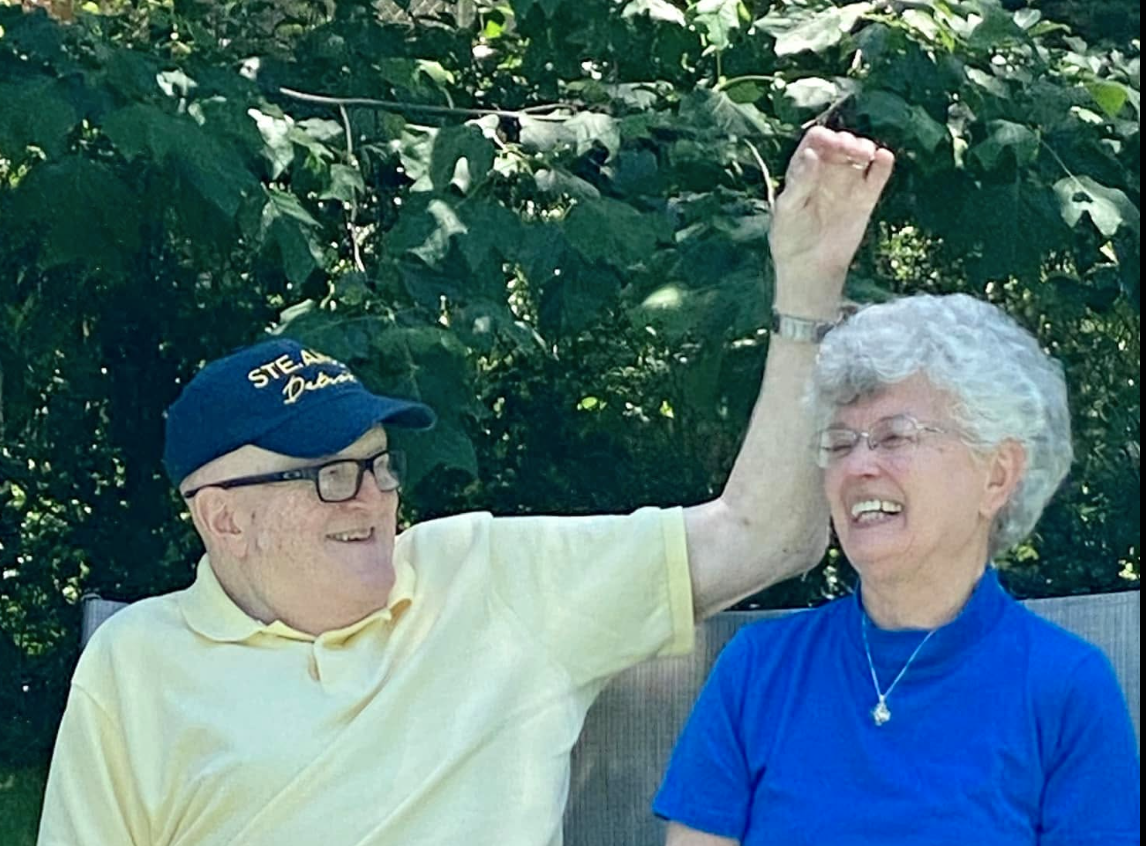
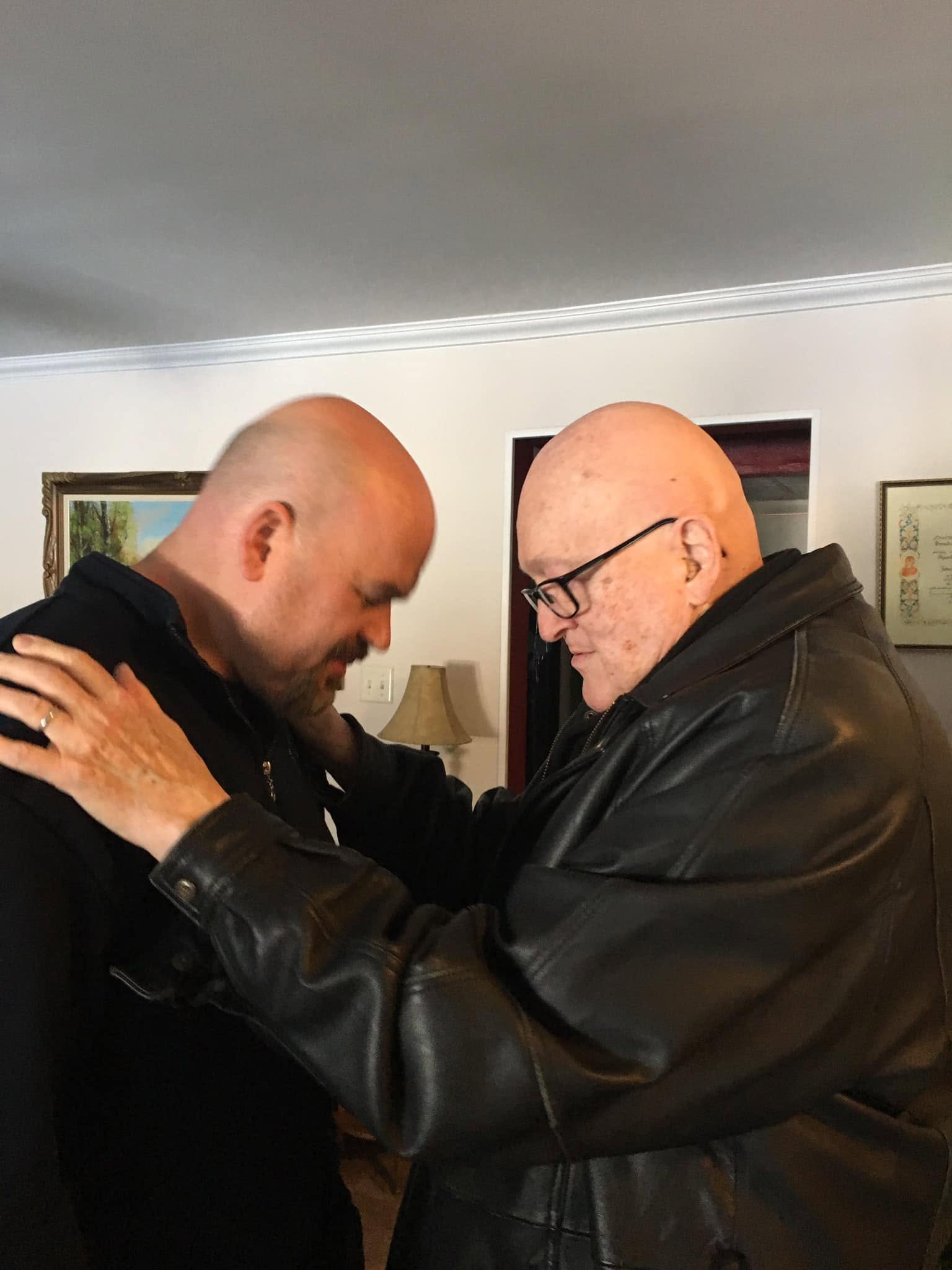
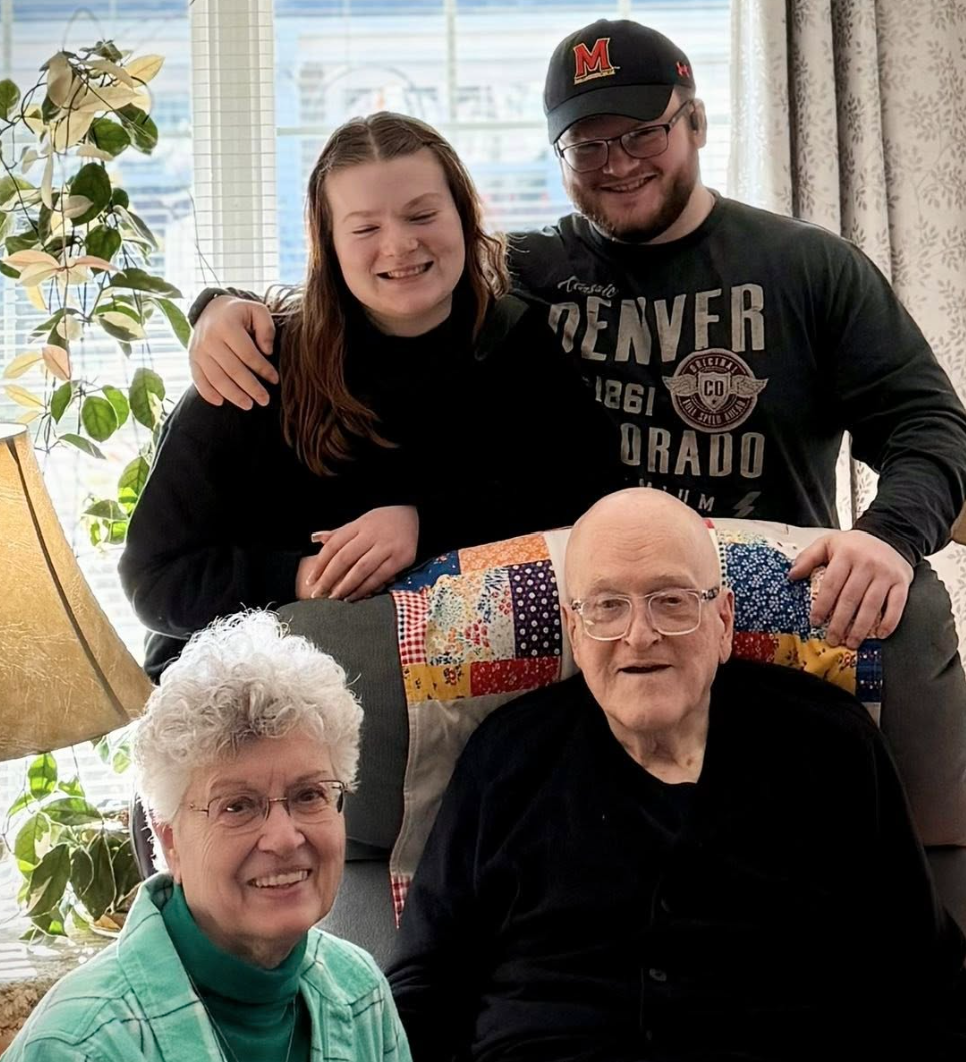
I have had the privilege of spending several days with my mother- and father-in-law, who have been married for 65 years. I came into this week simply hoping to lend a helping hand. Instead, I have found myself deeply moved by what I have been allowed to witness. Sixty-five years of marriage…sixty-five years of building a life together.
Children, grandchildren, great-grandchildren, joy and disappointment, laughter and probably a few tears, seasons of abundance and seasons of uncertainty. There has been sacrifice, moments of forgiveness, examples of faith. They have walked through moments of illness, celebration, and ordinary days that, when woven together, become an extraordinary life…and through it all, words.
Words spoken across kitchen tables and during long car rides. Words exchanged while raising 7 children and navigating the challenges of life. Words of encouragement during difficult seasons. Words of forgiveness, words of prayer, and words that communicated, in countless ways, I am here. I love you. We are in this together and let us share our joys and sorrows as grandpa taught us.
This week, I have had the honor of hearing some of those words.
I have listened as prayers were offered for children, their spouses, grandchildren, and great-grandchildren by name. I have heard gratitude expressed for the men and women their children have become. I have witnessed love and devotion that have been cultivated over more than six decades. Somewhere along the way, I realized that I wasn’t simply listening to words.
I was witnessing their legacy. That realization has stayed with me.
It has caused me to look at my own words differently and to ask a question I have not been able to shake: What will be the legacy of my words?
The Words We Leave Behind
When we hear the word legacy, we may think about accomplishments, careers, possessions, awards, organizations built, books written, or things passed from one generation to another.
However, perhaps some of the most important parts of our legacy will never appear on a résumé or hang on a wall. Perhaps our legacy also lives in the words other people carry because of us. Think for a moment about the people who have shaped your life.
Can you still hear some of their words? Maybe a parent told you, I’m proud of you. Maybe a teacher saw something in you before you could see it in yourself. Maybe a coach said, Try again. You’ve got this.
Maybe a friend sat beside you during a difficult season and reminded you that you did not have to walk through it alone. Sometimes a sentence spoken in seconds lives within another person for decades. Unfortunately, the opposite can also be true.
Words can discourage, words can diminish, words can divide, and words spoken carelessly in a moment can remain in someone’s heart long after the person who spoke them has forgotten the conversation entirely.
We don’t have to look far to see examples of words being used to tear down rather than build up. Our public discourse, social media feeds, workplaces, schools, communities, and sometimes even our homes can become filled with language that wounds rather than heals.
We may not be able to control all the words filling the world around us.
BUT we can decide what words enter the world through us!
For Educators: What Will Our Students Carry With Them?
As another school year begins, this question feels particularly important for educators.
Soon, classrooms will once again be filled with young people bringing their gifts, questions, hopes, insecurities, experiences, and possibilities through our doors.
They will learn countless lessons this year. They will solve equations, read stories, conduct experiments, study history, create art, collaborate, make mistakes, ask questions, and discover new things about themselves and the world around them.
They will forget some of what we teach, but what words might they carry with them?
What words will my students carry after they leave my classroom?
Did I tell them they were capable?
Did I cultivate curiosity rather than a fear of being wrong?
Did I encourage their sense of wonder?
Did my words communicate, I see something in you?
Did I help a young person recognize a gift or talent they had not yet discovered for themselves?
Educators are entrusted with an extraordinary opportunity. Sometimes a sentence that takes us five seconds to speak becomes part of the internal voice a young person carries for years.
What an incredible privilege, and what an incredible responsibility!
For Leaders: What Do People Experience in Our Presence?
The same reflection applies to leadership. Leadership inevitably involves words. We encourage, redirect, question, challenge, explain, listen, coach, correct, celebrate, and sometimes enter conversations we would rather avoid.
So I have been reflecting:
What words do people associate with being in my presence?
Did my words invite collaboration?
Did they make difficult conversations safer and more productive?
Did I listen with a genuine desire to understand?
Did I ask questions before making assumptions?
Have my words preserved another person’s dignity, even when disagreement was necessary?
Positive words do not require us to avoid difficult truths.
We can disagree without diminishing. We can correct without humiliating. We can hold someone accountable while still honoring their dignity. We can speak truth and remain kind. Sometimes the legacy of our leadership may be found not in the decisions we made, but in how people experienced themselves while making those decisions alongside us.
For Families: What Are We Handing to the Next Generation?
Perhaps this is the question that has touched me most deeply this week.
What language are we handing from one generation to the next through the words we choose today?
After 65 years of marriage, my mother- and father-in-law have created far more than a shared history. They have created a vocabulary of family…
Words of faith,
Words of prayer,
Words of gratitude, and
Words spoken over children who eventually became adults, spouses, parents, and grandparents themselves.
Some of those words are being carried forward into another generation.
It makes me think about the words I choose with my own husband, my adult children, family members, and friends. What language am I helping to make part of our family’s story? What will they remember when I am no longer in the room? What will they repeat? What will they pass along? What words of mine might someday come back to them when they need encouragement, peace, courage, or hope?
Sometimes the Legacy Is in the Words We Choose Not to Say
This week has also reminded me that the legacy of our words isn’t only about what we say. Sometimes it is about the words we choose not to say:
The angry response we decide not to send,
The criticism that serves no constructive purpose, or
The last word we decide we don’t need to have.
Sometimes our legacy is found in the words we finally find the courage to say.
I was wrong,
I am sorry,
Please forgive me,
Help me understand,
I forgive you, and
Let’s begin again!
There is tremendous power in an apology finally offered, a difficult conversation courageously entered, or grace extended when someone else’s words have hurt us.
Forgiveness has a language, too. So does humility, and so does GRACE.
The Language of Our Lives
As I have reflected this week, I have also thought about phrases that have become part of my own vocabulary over the years:
Calm your spirit,
Thankful Thursday,
Sharing the Good, and
When we train our eyes to see the good, amazing things happen.
They are simple words, but over time, repeated words can become invitations to a way of seeing.
This relfection led me to another question that reached my heart:
What phrases have I repeated so often that the people I love might someday hear them even when I am no longer in the room?
Perhaps that is one measure of a life well lived. Not simply: What did I accomplish? But: How did people feel after being in my presence?
Did my words give others courage?
Did they spark inquiry and curiosity?
Did they strengthen someone’s sense of belonging?
Did they bring peace into a difficult moment?
Did they point toward hope?
Did they help another person recognize the good within themselves?
If These Words Were Remembered…
I began this week hoping to be helpful. Instead, I feel as though I have been given a gift.
I have been given the opportunity to slow down, to listen, to observe, and to look through a different lens at a life and marriage built over 65 years.
There has been something sacred about witnessing love expressed not through grand gestures, but through presence, care, prayer, devotion, and words spoken faithfully over a lifetime.
I am grateful to have walked through this week looking through this lens, and perhaps that is why this reflection feels so important to share, because someone will carry something we say today:
A child,
A spouse,
A colleague,
A friend,
A student,
A family member, or
Perhaps even a stranger.
We may never know which sentence stays with them.
So as we begin a new school year and step into another day filled with opportunities to encounter one another, perhaps we can pause before we speak, teach, correct, post, email, lead, or respond and ask:
If these words were remembered, would I be grateful they were mine?
Maybe we can ask one another another reflection question, too:
What words have stayed with you because someone believed in you, encouraged you, or helped you see something in yourself that you couldn’t yet see?
Those remembered words remind us that what we say today can become part of someone else’s tomorrow.
Choose words that encourage,
Choose words that invite wonder,
Choose words that heal,
Choose words that forgive,
Choose words that strengthen,
Choose words that preserve dignity,
Choose words that remind another person of their worth, and
Choose words that help us see the good.
Because long after a conversation ends, our words may continue living in another person’s heart.
So, I leave you with the question that has accompanied me throughout this extraordinary week:
The Middle School Culture Blueprint series-Episode 1
One of the unexpected gifts of this season has been the opportunity to gather Catholic educators and leaders from across the nation in meaningful conversation. As Dr. LaTonya White and I continue our work on The Middle School Culture Blueprint, I have been provided a good opportunity to reflect on and be reminded that some of the most powerful professional learning happens when educators come together in fellowship, share what they are seeing in the field, and reflect honestly on what students and teachers need most. There is something deeply hopeful about bringing people together who serve in different schools and dioceses, yet carry the same commitment to helping students feel seen, supported, and loved.
The middle school years are so unique. Students are navigating understanding themselves, belonging, friendship, independence, emotion, peer pressure, and academic growth, often all in the same day. Those who serve middle school students understand that this work requires patience, humor, flexibility, structure, compassion, and joy. It also requires intentionality. What we do at the school level is so important. How we welcome teachers back, how we build routines, how we create opportunities for student voice, how we communicate with families, and how we support one another as teams all help shape the culture students experience.
This is why I am so grateful for the educators and leaders who have said yes to engaging in this conversation. They are not coming together to offer perfect answers. They are coming together to share reflections from the field, practical strategies, lived experience, and wisdom rooted in service. These conversations are supported by the literature that school culture is not built only through programs or plans. It is built in the daily interactions, team meetings, hallway moments, classroom routines, and faithful decisions made by educators who care deeply about the students placed before them.
Pulling educators together to share ideas is, quite honestly, fun. It is also cultivating joy in my own life. To listen to teachers and leaders speak with such love for their students, their colleagues, and Catholic education is a reminder that good is happening every day in our schools.
When we create space for fellowship and conversation, we strengthen one another.
Fellowship reminds us that we are not doing this work alone. It is also a wonderful way to see how much wisdom already exists within the people serving on our campuses and in our diocesan communities.
I hope this work encourages school leaders to create similar spaces on their own campuses. Before the year begins, make time not only for logistics, but also for fellowship and table talk.
Invite teachers to reflect on what students need most. Ask teams what they want students to experience consistently across classrooms. Create room for laughter, honest conversation, prayer, and planning. When educators are given time to connect as people before they plan as professionals, the culture of the school is already being strengthened.
I am grateful to host this important conversation in Episode 1 of Middle School Culture Blueprint: Reflections from the Field: Creating a Positive Start to the 2026–2027 School Year. It is a privilege to welcome Dr. Nancy Baker, Mary Peters, Lynsie Reavis, Karina Lepkowski, and Tricia Florance as we reflect together on practical ways to support middle school teachers, students, families, and leaders. May these conversations continue to help us notice, name, and share the good happening in Catholic education.
You can also listen to these conversations anywhere you enjoy your podcasts.
Since 2012, I have shared resources via this Unlock the Teacher blog focusing on positive comments, praise, and how to create positive classroom environments with a reminder that words matter! Since that time, these posts have received more than 1.3 million views. This continued reach has reinforced something I have believed throughout my years in education, that teachers and school leaders are searching for practical language that helps them recognize the good in students.
Positive words can encourage students and strengthen relationships. Yet, as our understanding of school culture continues to grow, we are also invited to think more deeply about the messages our words communicate.
Our comments can do more than acknowledge appropriate behavior, completed work, or academic performance. They can communicate:
I see you.
I value your ideas.
Your voice matters.
You are capable of growth.
You are an important member of this community.
You belong here.
School connectedness exists when students believe that the adults and peers in their school care about them as individuals and care about their learning. This sense of being valued, supported, and included is associated with stronger engagement, attendance, academic outcomes, and overall well-being.
Relationships are not built only through large programs or special events. They are shaped through daily interactions: the greeting at the classroom door, the response to a student’s question, the note written on an assignment, the conversation following a mistake, and the words chosen when a student takes a risk.
Research on relationship-centered classrooms emphasizes the importance of authentic affirmation, active listening, student agency, and opportunities for young people to know that their voices are taken seriously.
Student voice is more than allowing students to speak. It includes providing meaningful opportunities for them to influence their learning, make choices, offer feedback, participate in decisions, and see that their contributions can lead to action.
This updated educator toolkit offers 90 positive comments organized around nine dimensions of belonging. The statements can be adapted for:
Daily classroom conversations
Written feedback
Student conferences
Report cards and progress reports
Notes or messages sent home
Family conferences
Advisory periods
Morning meetings
Restorative conversations
Celebrations of student growth
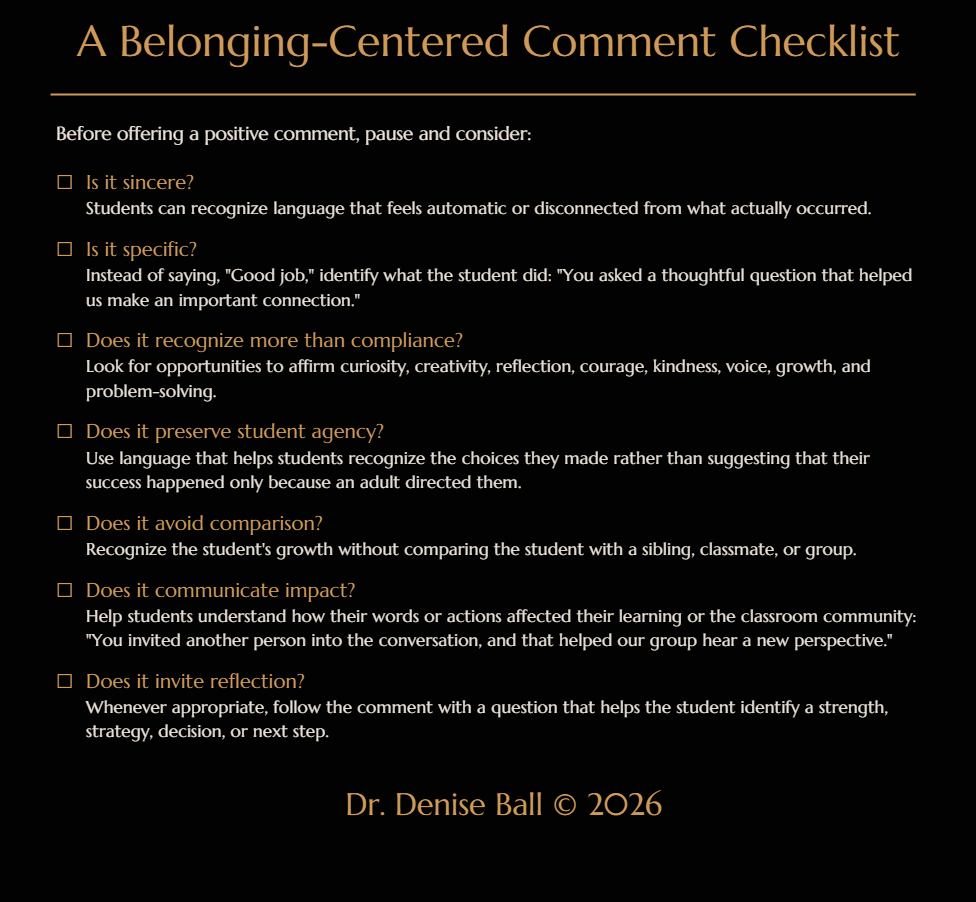
These comments are not intended to become generic scripts or empty praise. They are starting points. The most powerful affirmations are sincere, specific, timely, and connected to something an educator has genuinely noticed.
1. Welcoming Every Student
I am glad you are here today.
Your presence adds something important to our classroom.
You are an important member of this learning community.
There is a place for your ideas in this classroom.
I appreciate the energy you brought into the room today.
I noticed that you came in ready to participate and contribute.
Your experiences help our class learn and grow.
You do not have to know every answer to belong in this classroom.
Thank you for bringing your ideas, interests, and questions with you.
Our classroom community is stronger because you are part of it.
2. Recognizing Identity and Voice
Your perspective helped us see this topic differently.
Thank you for sharing an idea that was important to you.
You expressed your thinking with honesty and confidence.
Your experiences give you insights that can help others learn.
I appreciate how clearly you explained the reasoning behind your opinion.
You asked us to consider something we had not discussed before.
Your voice helped shape the direction of our conversation.
You found a meaningful way to communicate your ideas.
You advocated for yourself respectfully and clearly.
Your contribution showed that there can be more than one valuable way to understand a topic.
3. Encouraging Effort and Growth
I can see the growth you have made since you began this work.
You used feedback to strengthen your thinking.
You tried a new strategy when your first approach did not work.
You asked for the support you needed to move forward.
You stayed engaged even when the work became challenging.
You set a goal and took meaningful steps toward reaching it.
You are learning how to recognize which strategies work best for you.
You took ownership of your learning today.
You made a thoughtful choice about how to improve your work.
Your progress shows what can happen when you remain open to learning.
4. Affirming Curiosity and Courage
Your question helped deepen our learning.
You were willing to say that you did not understand, and that took courage.
You respectfully challenged an idea and encouraged us to think more carefully.
You took an academic risk by sharing your thinking before you were certain that you for trusting our class.
You followed your curiosity and discovered something new.
You explored more than one possible answer.
You made a connection that helped bring this concept to life.
You were open to revising your thinking when you encountered new information.
You asked for evidence instead of simply accepting an answer.
Your curiosity helped make today’s learning more meaningful for everyone.
5. Strengthening Collaboration
You made room for another person’s voice.
You listened to understand, not simply to respond.
You built upon a classmate’s idea in a respectful way.
You helped your group identify a path forward.
You disagreed respectfully while remaining open to another perspective.
You asked a question that encouraged someone else to participate.
You used your strengths to support the work of the group.
You accepted responsibility for your part of the team’s work.
You noticed when the group needed encouragement and offered it.
You helped your team move forward without taking over the work.
6. Recognizing Kindness and Care
You noticed that someone needed support and chose to help.
The care you showed helped another person feel valued.
You included someone who might otherwise have felt left out.
You treated another person’s ideas with dignity and respect.
You chose kindness even when the situation was difficult.
You helped create a space where someone felt comfortable asking a question.
You offered a sincere apology and worked to repair the relationship.
You celebrated someone else’s success without taking attention away from them.
Your words helped another person feel encouraged.
You showed empathy by trying to understand how someone else might be feeling.
7. Building Responsibility and Trust
I can depend on you to follow through on your commitments.
You completed the responsibility you accepted.
You made a responsible choice, even when no one was reminding you.
You used your time in a way that supported your learning.
You took care of our shared space and materials.
You were honest about what happened and helped us find a solution.
You recognized when you needed assistance and asked for it.
You accepted responsibility for your choice without blaming someone else.
You came prepared and ready to contribute.
You used your independence while also knowing when to seek guidance.
8. Supporting Resilience and Reflection
You paused to think before deciding what to do next.
You did not allow one difficult moment to define the rest of your day.
You changed your approach when you realized something was not working.
You identified what you needed in order to begin again.
You recognized a challenge and made a plan for addressing it.
You gave yourself time to learn instead of expecting immediate perfection.
You used a mistake as information for your next step.
You returned to the work after feeling frustrated.
You were patient with yourself while learning something new.
You reflected honestly on your choices and identified how you would respond differently next time.
9. Creating Classroom Community
Your actions helped make our classroom more welcoming.
You helped create a space where others felt comfortable participating.
You contributed an idea that improved our classroom community.
You invited others to help make a decision.
You reminded us of the expectations we created together.
You helped our class solve a problem in a fair and respectful way.
You shared a strength or talent that enriched our learning.
You helped us recognize and celebrate someone else’s growth.
You made a choice that supported both your learning and the learning of others.
You showed through your actions that everyone has something meaningful to contribute.
Moving From Praise to Partnership
Positive comments become even more powerful when they invite students to recognize their own growth. Instead of ending the interaction after an affirmation, educators can add a reflective question.
For example:
You stayed engaged even when the assignment became difficult. What helped you keep going?
You made room for another person’s voice. What did you notice about the group after you did that?
You tried a new strategy when the first one did not work. How did you decide what to try next?
Your perspective helped us see the topic differently. What gave you the confidence to share it?
You advocated for yourself respectfully. How might you use that skill in another situation?
These questions move the conversation from adult approval to student reflection. As an educator, you are identifing something meaningful, and the student is invited to name the choices, strategies, and strengths that contributed to the outcome.
Over time, this approach can help students develop the language to say:
I know how I learn.
I can make thoughtful choices.
I can ask for what I need.
I can contribute to my community.
I can grow.
A Belonging-Centered Comment Checklist
Words Help Shape Culture
Positive language does not mean ignoring mistakes, avoiding difficult conversations, or removing accountability. Belonging-centered classrooms maintain clear expectations while communicating that a student’s mistake does not remove the student from the community.
Students need to hear more than what they should stop doing. They also need language that helps them understand what they are doing well, how they are growing, how their choices affect others, and how they can contribute.
There will always be a need to redirect behavior, offer correction, and establish boundaries. The question is whether students also hear:
-I believe you can make a different choice.
-You are still an important member of this community.
-Let us think together about what happened.
-What do you need to move forward?
-How can you help repair the situation?
-I am here to help you begin again.
The language educators use becomes part of the environment students experience each day. A carefully chosen comment may appear to be a small gesture, but to a student, it can communicate something much larger:
My teacher sees me.
My ideas matter.
I am capable.
I have choices.
I can make a difference.
I belong here.
As educators prepare classrooms, develop lessons, establish routines, and welcome students into a new year of learning, may we also prepare the language we will use.
Belonging is strengthened one interaction at a time.
When we train our eyes to see the good, amazing things happen.
May we continue to seek knowledge in all things,
Denise
References and Additional Resources
Ball, D. M. (2012, July 22). 100 positive comments to utilize when referencing student behavior. Unlock the Teacher.
Summer Series 2026: Belonging, School Culture, and the Joy of the Work
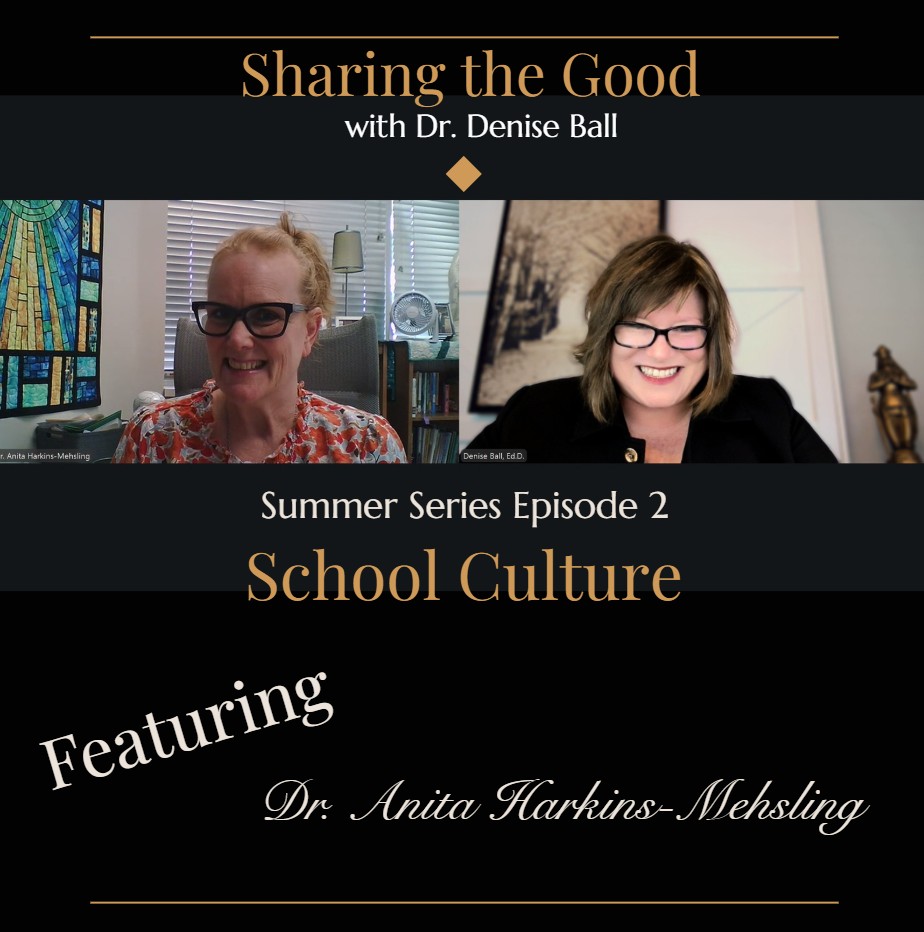
Episode 2 Featuring Dr. Anita Harkins-Mehsling
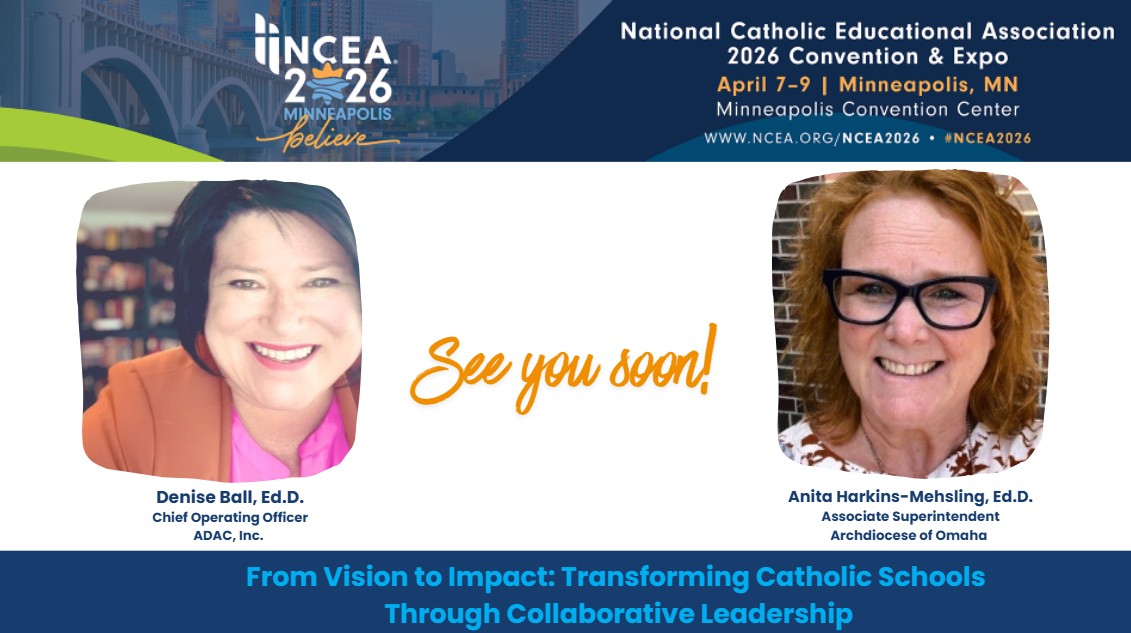
In Episode 2 of Summer Series 2026: Belonging, School Culture, and the Joy of the Work, I am grateful to continue the conversation with Dr. Anita Harkins-Mehsling, Associate Superintendent for the Archdiocese of Omaha.
In Episode 1, Anita and I reflected on why belonging matters and why summer is such a meaningful time for school leaders to pause, exhale, and consider the culture they hope to build and maintain for the 2026–27 school year.
In Episode 2, we turn our attention to the leader’s role in creating belonging and shaping a positive school culture.
A positive school culture does not happen by accident. It is nurtured through the rhythms, routines, relationships, words, and actions that help a school community stay connected to its mission. Culture is not created by a mission statement alone. Culture is experienced in the daily life of a school, in the way people are welcomed, supported, heard, encouraged, and invited to contribute to something greater than themselves.
Belonging is shaped through intentional relationships, communication, trust, presence, and the daily choices leaders make. The school leader sets the tone and helps create the conditions where people feel seen, valued, welcomed, and connected to the mission.
One of the important reminders Anita shared in this episode is that leaders should be intentional in how they welcome faculty and staff back to campus. The beginning of the school year is often filled with tasks, meetings, checklists, schedules, and classroom preparation. All of those things matter. Yet Anita reminds us that leaders also need to create space for people to reconnect, get to know one another, and remember that they are part of a shared mission.
That balance is so important. Teachers need time to prepare their classrooms. They need time to organize, plan, and feel ready to welcome students. They also need time to breathe, reconnect, laugh, share, pray, and remember that they do not carry the work alone.
The way a school year begins matters. People remember how they were welcomed (Ball, 2026). They remember whether the opening days were only about tasks or whether there was also time to reconnect with purpose, community, and joy.
As I listened to Anita, I found myself reflecting on my own leadership experiences and my research on school culture and teacher retention. I have spent much of the past decade studying and working in this area, and I continue to believe that school culture is created in ordinary moments. It is shaped in how a leader greets people, follows up, listens, remembers, encourages, and makes space for others to contribute.
One example from my own leadership practice was something I called Thankful Thursday. A couple of times a month, before the team arrived, I would leave notes of gratitude or encouragement. Sometimes the note was connected to something I noticed in a classroom. Sometimes it was simply a word of encouragement. They were not long or complicated, but they were intentional. These sticky notes were one more way of saying, “I see you. I notice the good work you are doing. Your presence and contribution matter here.” Gratitude helps shape culture and it sets a tone. It helps people know that their work is not invisible.
Another practical way leaders can strengthen culture is by creating intentional opportunities for table talk during faculty and staff meetings. Meetings do not have to be used only for announcements, updates, and logistics…in fact they shouldn’t be. These are school culture prime opportunities to build trust and distribute joy!. They can also become spaces where people reflect together, listen to one another, and contribute to the shared mission of the school.
For example, after sharing a schoolwide focus or initiative, a school leader might ask each table to discuss: “Where are we already seeing this lived well in our school?” or “What is one next step we can take together?” Then each table can share one insight with the larger group. That kind of routine communicates something important: every voice matters, perspectives matter, and we are building and maintaining this positive school culture together.
In this episode, Anita and I break open the importance of helping faculty and staff feel seen and valued in specific ways. A general “thank you” is always appreciated, but specific gratitude has a different kind of impact. When a leader says, “I noticed the way you helped that student,” or “I saw how you supported your colleague,” it communicates that the person and the work are truly seen.
Again, this does not need to be complicated. Leaders might begin the year with handwritten notes, ask each staff member what helps them feel supported, highlight quiet acts of service during faculty meetings, check in with new faculty after the first two weeks, or intentionally thank office staff, aides, maintenance staff, cafeteria staff, and all who help the school function each day. Create a school environment where gratitude is the norm. If the adults model it, the students will follow.
Culture is strengthened when leaders create a rhythm of noticing and naming the good.
Presence matters deeply, and in the life of a school, presence is not about hovering or checking up on people. It is about walking with people. It is about being close enough to the life of the school to understand where joy is visible, where support is needed, and where people may be carrying things quietly.
Dr. Harkins- Mehsling reminds us that sometimes the most powerful thing a leader can do is show up, listen, and remain steady. Presence builds trust over time, and is at the heart of belonging. In school culture work, trust is often the bridge between intention and impact. I call trust the glue for a strong positive school culture. Trust does not mean everything is easy. It means people believe they are being led with honesty, care, and purpose.
Leaders may intend to create belonging, but people experience belonging through communication, listening, relationships, and follow-through. Anita shared that she kept a notebook on her at all times, so she could jot down notes that would allow her to be intentional and follow-up with team members.
Listening does not mean leaders can do everything requested. It does mean people are treated with dignity. Communication should help people understand not only the “what,” but also the “why.” When people understand the why behind decisions, they are more likely to stay connected to the mission, even when decisions are difficult.
One of the most helpful ideas in this conversation is that belonging does not have to become one more program, one more initiative, or one more thing added to everyone’s plate. Belonging can and should be woven into the rhythms that already exist. It can be built into faculty meetings, prayer, mentoring, communication, classroom visits, welcome-back days, celebrations, and leadership team conversations.
It is a way of asking: How will this decision, meeting, message, or practice help people feel seen, valued, and connected?
As leaders prepare for the 2026–27 school year, Episode 2 offers a simple but meaningful invitation: start small and be intentional. Create space for preparation and connection. Know or get to know your people and listen before acting. Build trust through follow-through, and create rhythms that help your community notice and share the good.
Belonging does not require perfection, but it does require intention, consistency, and love for the people we are called to serve.
I am grateful to continue this summer conversation with Dr. Anita Harkins-Mehsling and hope Episode 2 encourages school leaders to reflect on the culture they are creating, the welcome they are preparing, and the daily habits that help people feel seen, valued, and connected to the joy of the work.
Pause. Exhale. Reflect.
Join us for Episode 3 of Summer Series 2026: Belonging, School Culture, and the Joy of the Workon Sharing the Good with Dr. Denise Ball on July 14th.
Until next time, keep sharing the good.
When we train our eyes to see the good, amazing things happen.
As school leaders enter the summer months, there is a sacred opportunity to pause, exhale, and reflect on the culture they hope to build and maintain for the 2026-27 school year.
I am grateful to share that Sharing the Good with Dr. Denise Ball will launch a three-part summer series on July 1st focused on Belonging, School Culture, and the Joy of the Work.
This series will feature Dr. Anita Harkins-Mehsling, Associate Superintendent for the Archdiocese of Omaha. Dr. Harkins-Mehsling brings more than 30 years of experience serving in education, and her recent research has focused on helping school leaders create a stronger sense of belonging within their school communities. She earned her doctorate from Doane University and continues to support Catholic school leaders in building healthy, mission-centered, and joy-filled school cultures.
The purpose of this series is to invite school leaders to reflect on belonging as a foundation for strong school culture. When people feel they belong, they are more likely to feel seen, known, valued, connected, and committed to the shared mission of the school.
Belonging is not an extra. It is part of the daily work of building a school community where students, teachers, staff, families, and leaders can flourish.
In episode 1, Dr. Harkins-Mehsling and I will discuss why belonging matters and why summer is such a meaningful time for school leaders to reflect on the culture they hope to create. We will explore what belonging means, how it is experienced by adults and students, and why feeling seen, known, and valued matters so deeply in the life of a school community.
In episode 2, we will focus on the leader’s role in creating belonging. Belonging is shaped through intentional relationships, communication, trust, presence, and the daily choices leaders make. We will talk about how school leaders can help faculty and staff feel seen and valued, how a leader’s presence shapes culture, and how belonging can be woven into the rhythm of the school year without becoming “one more program.”
In episode 3, we will connect belonging, joy, and the 2026-27 school year. This final conversation will invite leaders to consider how belonging can become part of the language, rhythm, and lived experience of the school. We will also reflect on how belonging contributes to joy, teacher retention, school stability, and the overall health of a school community.
Joy is not meant to be held alone. Joy is synergistic! When joy is shared among a school team, it strengthens culture, builds connection, and reminds us that the work we do matters. A joyful school community does not mean a perfect school community. It means a community where people are willing to see the good, name the good, and carry the good forward together.
For decades, I have found great joy in encouraging my family, teachers, students, schools, and school communities to notice and share the good. I have seen how transformative it can be when we pause long enough to name what is good, celebrate one another, and remind people that their work and their presence matter.
The Thankful Thursday shout-out this week is for the joy distributors… You know who you are!
Summer gives us space to breathe. It gives us space to ask important questions:
Who in our school community needs to feel more seen?
How do we help new faculty, staff, students, and families feel welcomed?
What practices help people feel connected to the mission?
Where did we see joy this year?
How can we carry that joy forward?
My hope is that this series offers school leaders a gentle but meaningful invitation to pause, exhale, and reflect before the next school year begins. Belonging matters, joy matters, and developing and maintaining a positive school culture matters.
The faculty, staff, students, and school communities we serve matter, and they deserve nothing less than our best!
Why Fellowship is Essential with Karina Lepkowski, Principal, Most Holy Trinity
Fellowship is more than networking. It is more than collaboration around a project, committee, or a professional learning day. Fellowship is what happens when trust is built over time, shared mission becomes a shared walk, and colleagues become the trusted voices we return to because we know they will listen, encourage, challenge, and help us see more clearly.
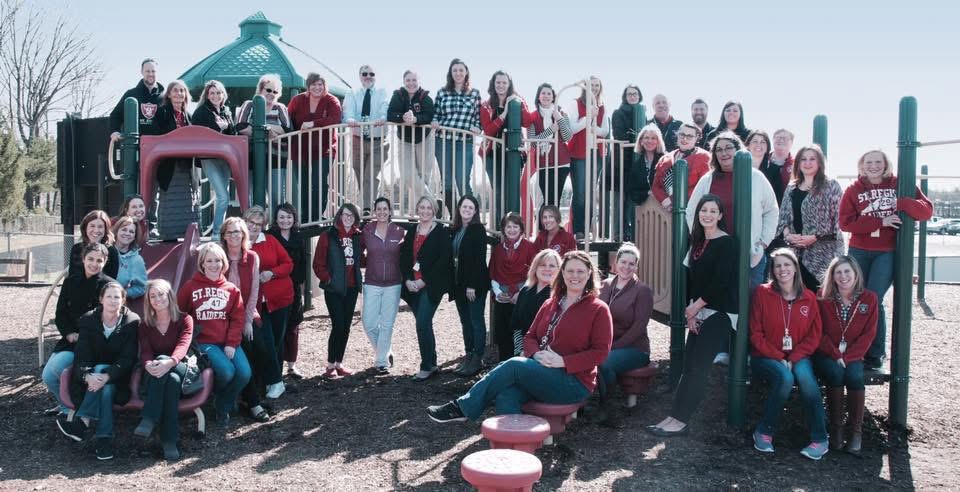
Today, I had the joy of meeting with Karina Lepkowski, Principal at Most Holy Trinity Catholic Academy in the Archdiocese of Detroit. Karina and I have been collaborators for 14 years. She served on my team at St. Regis Catholic School, we have worked together on committees, and she has led sessions for professional learning days I developed for the Archdiocese of Baltimore. Over the years, our professional paths have crossed in many meaningful ways. But perhaps one of the most treasured parts of our story is this: Karina introduced my son to music and taught him how to play the alto saxophone. His love of jazz and the gift of having music in his heart will last him a lifetime. For that, I will always be grateful to this amazing educator, and I am honored to call her a friend now.
While these accomplishments speak beautifully to Karina’s professional impact, what I value most is the way she leads through relationships. She is the kind of educator and leader who listens deeply, shares generously, and reminds others that the work of Catholic education is strengthened when we walk alongside one another.
As Karina and I caught up and discussed projects we are working on, I was reminded of something important. Educational leaders need trusted voices. We need people who understand the work, who know the heart behind the work, and who can offer honest insight because the relationship is rooted in care. These are the colleagues who help us process ideas, sharpen our thinking, and stay grounded in mission. They remind us that leadership was never meant to be a lonely road.
Research continues to affirm what many of us have experienced in our own leadership journeys. Strong professional learning is collaborative, sustained, and grounded in reflection. Darling-Hammond, Hyler, and Gardner (2017) found that effective professional development creates opportunities for educators to share ideas, collaborate in job-embedded ways, and build communities that can positively influence the culture and instruction of a school or system. Similarly, research on collective teacher culture points to the importance of shared goals, supportive colleagues, collective efficacy, and belonging as important dimensions of a healthy school culture.
This is why fellowship matters. When leaders intentionally build relationships of trust and professional friendship, they strengthen the culture around them. Fellowship helps us become better listeners. It helps us ask better questions. It gives us space to pause, reflect, and renew. It also helps us remember that the work of education is deeply human. Behind every initiative, every professional learning session, every school improvement goal, and every strategic plan are people who need encouragement, connection, and belonging.
In my own research on teacher retention, school climate, leadership, collaboration, and culture emerged as important areas of focus in understanding how educators experience their work and what helps them remain committed to the mission (Ball, 2023). Positive school culture is not built by accident. It is formed through intentional relationships, shared purpose, and the daily decision to walk alongside one another.
As educational leaders, we often spend time developing strategic muscles: planning, decision-making, problem-solving, communication, and execution. These are important. However, I would share that research supports that we also need to be just as intentional about building the muscle of fellowship. Collective teacher culture is strengthened through shared goals and values, collective efficacy, supportive colleagues, belonging, and job satisfaction, all of which remind us that trusted professional relationships are central to healthy school communities (Skaalvik & Skaalvik, 2021). Who are the trusted voices we call when we need to think out loud? Who helps us see the good when the work feels heavy? Who reminds us of who we are and why this work matters?
The summer weeks offer a beautiful invitation to pause and reach out. Send the text, make the call, or schedule the coffee. Technology offers us the wonderful ability to connect via Zoom, Meet, FaceTime, etc. We really have no excuse not to engage with the technological tools at our fingertips today. I encourage you to reconnect with the colleague who has walked part of the journey with you. Take time to say thank you to the person who helped shape your leadership, your school community, or even your family in ways that will last a lifetime. Gratitude has a way of lowering our stress levels and refocusing our lens to see the good all around us.
When we make time to walk alongside one another, we build the kind of school culture where others can do the same.
This year, my research has continued to center around school culture and team development. In my two latest projects, When We Train Our Eyes to See the Good, Amazing Things Happen and The Middle School Culture Blueprint, which I am co-authoring with Dr. LaTonya White, I have been reflecting deeply on the gift of fellowship and why it matters so much for educational leaders. If you would like to share your thoughts, please send me a message or leave a comment. I welcome the feedback and insights.
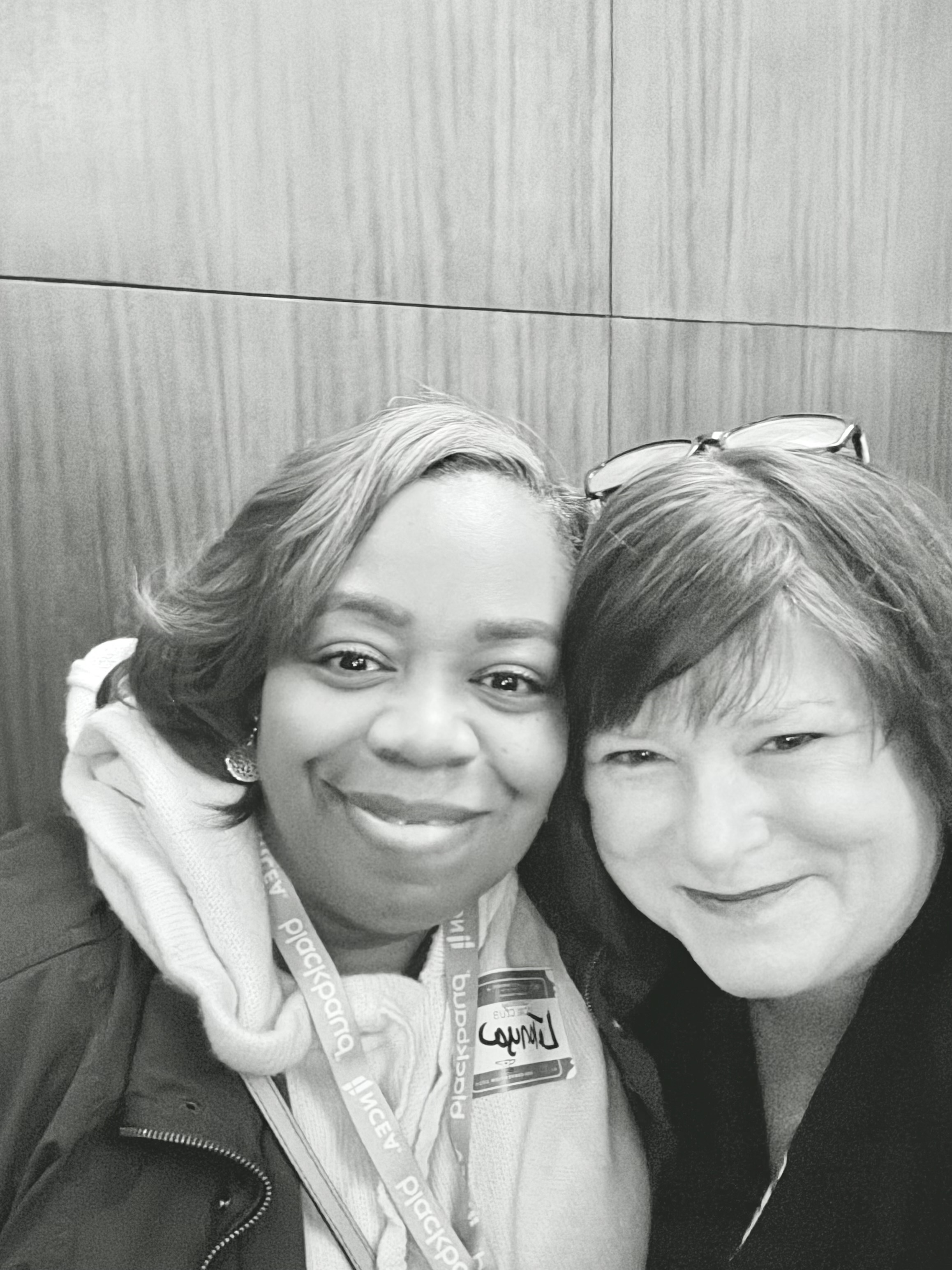
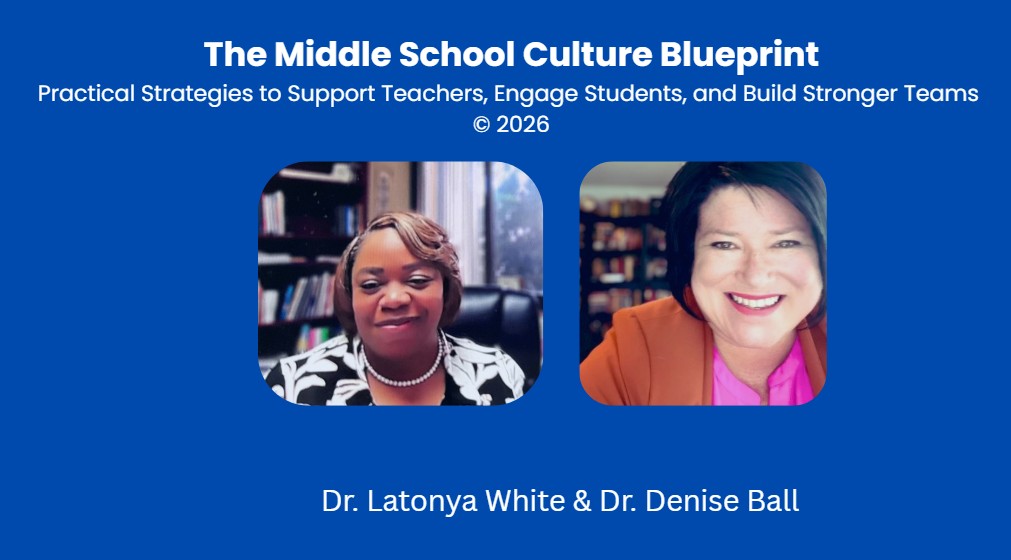
Dr. LaTonya White and Dr. Denise Ball, National Catholic Leadership Convention 2026
May we continue to seek knowledge in all things, Denise
References
Ball, D. M. (2023). Improving teacher retention within Archdiocese of Washington schools [Doctoral dissertation, Liberty University]. Liberty University Scholars Crossing.
Darling-Hammond, L., Hyler, M. E., & Gardner, M. (2017). Effective teacher professional development. Learning Policy Institute.
Skaalvik, E. M., & Skaalvik, S. (2021). Collective teacher culture: Exploring an elusive construct and its relations with teacher autonomy, belonging, and job satisfaction. Social Psychology of Education, 24, 1389–1406.
United States Conference of Catholic Bishops. (2011). New American Bible, Revised Edition.
It is a time to pause, breathe, rest, reconnect, and allow children, parents, and teachers to experience learning through a different lens. Learning does not need to stop when the school year ends. In fact, some of the most meaningful learning happens during the slower moments of summer…in the backyard, at the kitchen table, on a family walk, at the library, while traveling, while serving others, while reading together, or simply by asking good questions and making the act of inquiry fun!
For teachers, summer can be a time to renew creativity and gather meaningful resources for the year ahead. For parents and caregivers, summer can be a time to nurture curiosity without recreating the structure of the school day. Children need rest, play, imagination, and connection. They also benefit from small, intentional moments that keep their minds active and their love of learning alive.
The goal is not to overschedule summer
Photo credit: Denise Ball, Ed.D. (c) 2025
A Few Gentle Summer Learning Reminders
Read something every day. It does not always need to be a chapter book. It can be a recipe, a poem, a comic, a prayer, a field guide, a sign at a museum, a letter from a grandparent, or a book read together before bed.
Practice math in real life. Double a recipe. Estimate the grocery total. Track the weather. Compare sports statistics. Build something. Measure something. Let children see that math lives all around them.
Make space for creativity. Sidewalk chalk, journaling, drawing, building, storytelling, music, nature walks, and family traditions all support learning. Children are forming memories while they are forming skills.
Use technology with purpose. Online resources can be wonderful when used intentionally. A short learning activity, a virtual museum visit, a math review, a science video, or a writing prompt can be helpful, especially when paired with conversation.
Protect time for rest and relationships. Children do not simply need information; they need formation. They need adults who see them, listen to them, encourage them, and help them notice the good. I encourage you to help them see and share the good. It will be good for them and your entire family unit!
Photo credit: Denise Ball, Ed.D. (c) 2025
Recommended Summer Resources for Teachers and Parents
Khan Academy remains a helpful free resource for students, parents, and teachers. It offers lessons, practice exercises, videos, and learning dashboards across math, science, reading, computing, history, economics, financial literacy, test preparation, and more. It can be especially helpful for families looking for short, focused skill practice over the summer.
Khan Academy Kids also offers free printable activities for parents and teachers, including off-screen options in English and Spanish. This is a helpful reminder that summer learning does not always need to happen on a device.
ReadWriteThink is a strong literacy resource for teachers, parents, and afterschool professionals. It includes classroom resources, student interactives, writing tools, lesson plans, and printables across grade levels. It is a wonderful place to explore reading and writing activities that can be adapted for summer learning.
The Smithsonian Learning Lab offers digital images, videos, texts, recordings, and collections that teachers and families can use to explore history, art, culture, science, and more. This is a beautiful resource for curiosity-driven learning and project-based exploration.
NASA Learning Resources provide STEM activities, videos, student opportunities, educator resources, and family-friendly ways to explore science, space, engineering, and discovery. For children who love to ask “why” and “how,” NASA can help turn curiosity into deeper learning.
The National Park Service offers teacher-created lesson plans and outdoor learning resources connected to nature, science, history, and exploration. These resources can help families and teachers connect learning to the world beyond the classroom walls.
Photo credit: Denise Ball, Ed.D. (c) 2023
Simple Summer Learning Ideas for Home
Create a family reading basket. Place books, magazines, devotionals, field guides, library books, and journals in one shared space. Invite children to choose something to read each day.
Start a “wonder journal.” Ask children to write or draw one thing they noticed, wondered about, or learned each day.
Plan one curiosity outing each week.Visit a library, park, museum, garden, historical site, farmer’s market, or local landmark. Before going, ask: What do we already know? What do we want to learn?
Use the 20-minute rule. Twenty minutes of reading, math practice, writing, or creative learning a few times a week can help keep skills active without overwhelming the gift of summer. As adults, we call this “time boxing”…
Build a family tradition. Summer traditions do not need to be complicated. A weekly library visit, Sunday evening walk, family game night, prayer before a trip, or “tell me one good thing” dinner conversation can become an anchor children remember for years.
A Note to Teachers
Teachers, I hope summer gives you space to rest.
You have poured out so much this year. You have taught lessons, managed transitions, encouraged children, supported families, adjusted plans, solved problems, and carried more than many people will ever see. Please give yourself permission to pause.
When you are ready, perhaps choose one or two resources that inspire you for the year ahead. Not twenty. Not fifty. Just one or two that help you imagine what is possible.
Summer is not only for planning but for renewing the heart.
Photo credit: Denise Ball, Ed.D. (c) 2026
A Note to Parents and Caregivers
Parents are the first teachers of their children. The small moments really do matter.
Reading together matters, asking questions matters, and taking the time to pause, look children in the eye, and listening to them matters.
Putting aside the demands of our time that the chaos of life often places on our schedules and taking a walk matters.
Telling family stories matters, and helping children see that learning is not limited to a classroom matters.
Summer gives families a beautiful opportunity to slow down and remind children that learning is part of life, not just part of school. Life is a gift, and helping our children train their eyes to see this good is meaningful and essential!
Photo credit: Denise Ball, Ed.D. (c) 2006
As we move through the summer months, may we remember that learning is not meant to be heavy. It is meant to awaken curiosity, deepen connection, strengthen confidence, and help children see the beauty of the world around them.
Let us use this summer to rest well, read often, explore joyfully, ask good questions, and share the good.
When we train our eyes to see the good, amazing things happen.
There is a particular kind of energy that comes from meaningful collaboration. The kind that is grounded in shared mission, fueled by trust, and sustained by a deep belief in the work we are called to do.
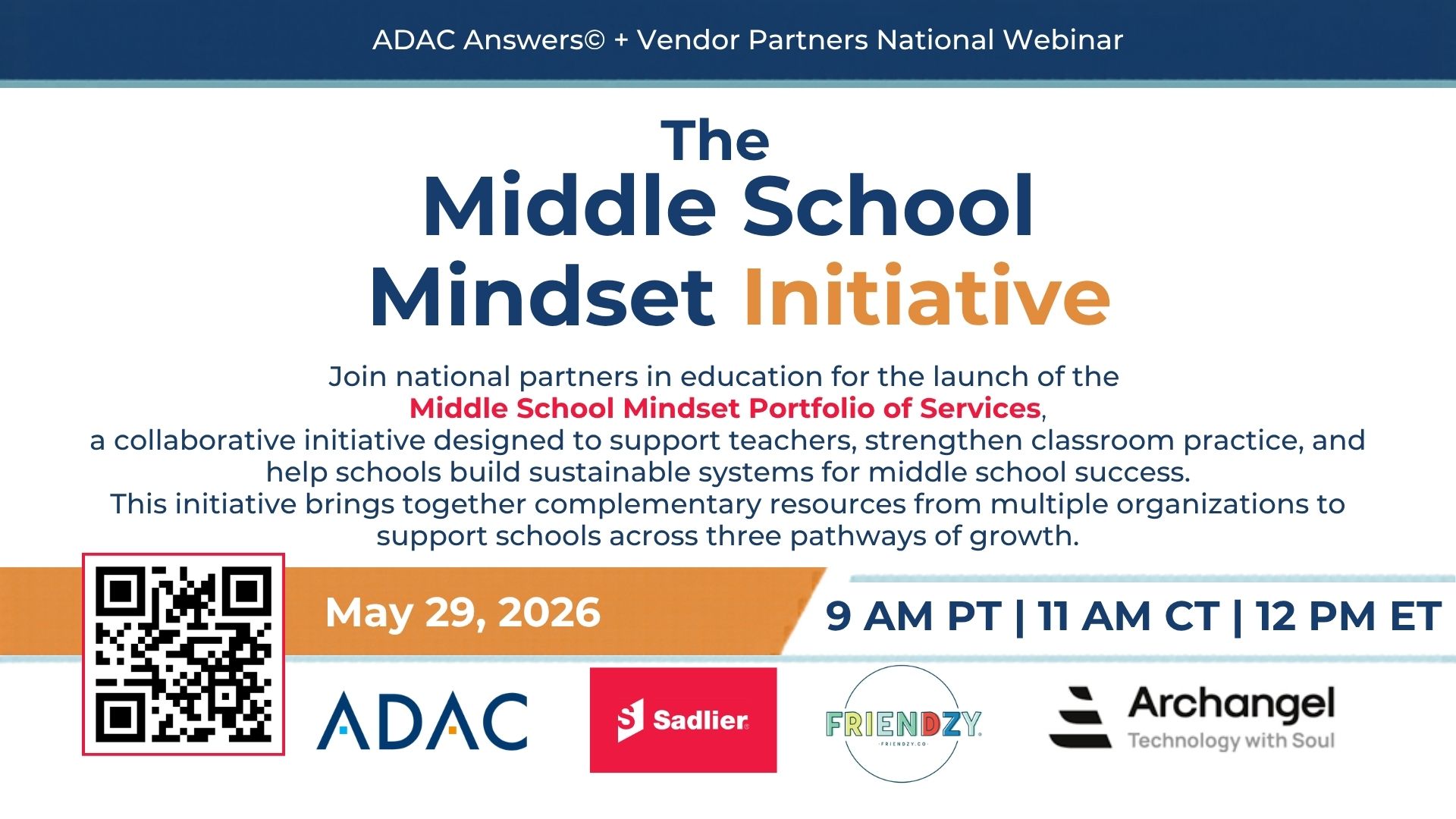
Over the past year, I have had the privilege of working alongside incredible partners to bring the Middle School Mindset Portfolio of Services to life. What began as an idea has grown into something far more powerful than any one organization could have accomplished alone. In just a few short weeks, we will launch this work nationally on May 29.
This moment feels significant, not simply because of the launch itself, but because of what it represents.
A Response to a Critical Moment
Middle school is a pivotal season of formation. It is a time when students are asking deeper questions about identity, belonging, and purpose. It is also a time when educators are navigating increasing complexity like academic recovery, student engagement, and social-emotional needs, all while striving to create classrooms where students feel known and valued.
We cannot meet this moment in isolation.
The Middle School Mindset Portfolio was built in response to that reality. It is not a single program or a one-size-fits-all solution. Rather, it is a collaborative ecosystem designed to support educators with practical strategies, meaningful resources, and a shared commitment to strengthening both instruction and culture.
The Gift of Partnership
One of the greatest joys in this work has been collaborating with mission-aligned partners who bring both expertise and heart to the table.
A special acknowledgment goes to Archangel Education and Technology, whose team is building an innovative digital ecosystem that will no doubt become a destination space for educators and system leaders. Their work reminds us that when technology is designed with purpose, it can truly amplify impact.
Equally inspiring has been our partnership with the Archdiocese of Miami pilot schools. On May 29th, during this complimentary webinar, we will hear directly from middle school teachers who have engaged in this work, educators who are thoughtfully applying strategies, reflecting on practice, and shaping what this portfolio will become at scale.
To visit these vendor partners supporting schools nationwide, please visit:
We can serve students and teachers more when we do it together!
From Research to Practice: Naming What Matters Most
This work has also deepened my ongoing collaboration with Dr. LaTonya White. Together, we are preparing to share our research in the forthcoming Middle School Culture Blueprint (Ball & White, 2026).
At the center of our work is a simple yet deeply impactful reminder: what we reinforce each day becomes the culture we experience, whether by intention or by default.
Middle school culture does not happen by accident. It is shaped in the small, consistent moments: in how we greet students, how we structure learning, how we respond to challenges, and how we create space for student voice. Belonging is not a program we implement. It is a condition we intentionally cultivate through every interaction, every structure, and every expectation (Ball & White, 2026).
When we are intentional, we create environments where students and teachers can thrive. When we are not, culture is still formed, but often in ways that do not serve our mission. The opportunity before us is to lead with clarity, purpose, and hope, and to build cultures where every student and educator knows they are seen, valued, and called to grow.
A Moment of Anticipation
As we look ahead to our national webinar launch on May 29, I am filled with gratitude for the partnerships, for the educators, and for the shared commitment to this work. This is more than a program launch. It is a reflection of what is possible when we come together, listen deeply, and build something that responds to the real needs of our schools. It is a reminder that we are not alone in this work. And… it is an invitation to continue to collaborate, to continue to learn, and to continue to see the good that is unfolding all around us.
The May 29th registration is live (scan the QR code above). Come and join the conversation!
Vendor Partner Middle School Mindset Portfolio of Services
The Middle School Mindset Portfolio of Services represents a unique national collaboration between: ADAC | William H. Sadlier | Friendzy | Archangel Education & Technology. An à la carte portfolio of resources.
ADAC, Inc.
ADAC partners with PK–12 schools, systems, and networks nationwide to help educators and leaders confidently meet the needs of every student.
Friendzy, Co.
An effective curriculum that teaches a new generation of students character development skills.
Curriculum Associates
Together with one million educators, we’re connecting every part of learning—from assessment to instruction, data to discovery—to empower classrooms and communities to thrive.
Archangel Education & Technology
Archangel brings a human touch to technology, blending passion, deep expertise, and a strong community focus to enrich educational experiences.
William H. Sadlier
Core and supplemental math programs teach the essentials students will use the rest of their academic and professional lives.
National Standards in Gifted and Talented Education
Standards provide a foundation for the policies, rules, and procedures necessary to deliver high-quality, systematic programs and services for high-ability students. Guidance and framework resources.
Standards and Assessments
Raising academic standards for all students and measuring student achievement to hold schools accountable for educational progress are central strategies for promoting educational excellence and equity in our Nation’s schools.
Odyssey of the Mind
An international educational program that provides creative problem-solving opportunities for students from kindergarten through college.
Math Chimps
Great online math games aligned to the Common Core State Standards~for ages 4-16
Team Building and Problem-Solving Strategies for the Classroom
Odyssey of the Mind
An international educational program that provides creative problem-solving opportunities for students from kindergarten through college.
Websites with Games and Activities Created by Authors
Oceanhouse Media
Great educational book apps and so much more. Check out often for FREE downloads to help your child learn letters, phonics & math!