
Summer Series 2026: Belonging, School Culture, and the Joy of the Work
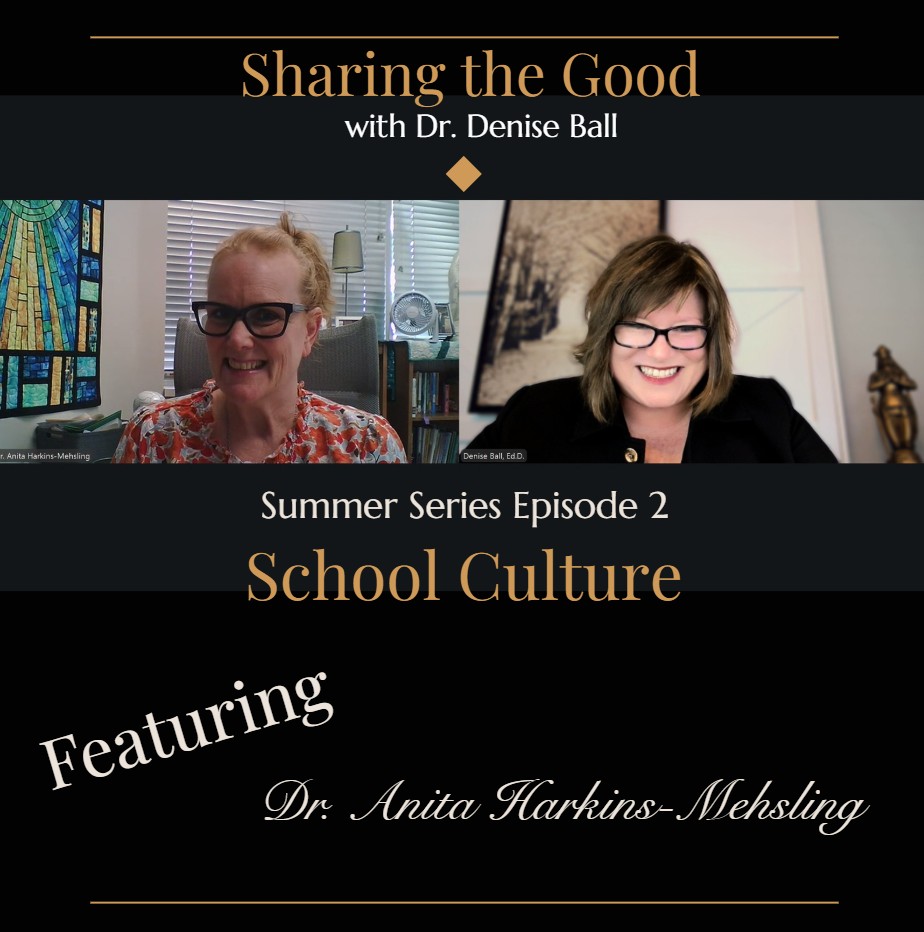
Episode 2 Featuring Dr. Anita Harkins-Mehsling

In Episode 2 of Summer Series 2026: Belonging, School Culture, and the Joy of the Work, I am grateful to continue the conversation with Dr. Anita Harkins-Mehsling, Associate Superintendent for the Archdiocese of Omaha.
In Episode 1, Anita and I reflected on why belonging matters and why summer is such a meaningful time for school leaders to pause, exhale, and consider the culture they hope to build and maintain for the 2026–27 school year.
In Episode 2, we turn our attention to the leader’s role in creating belonging and shaping a positive school culture.
A positive school culture does not happen by accident. It is nurtured through the rhythms, routines, relationships, words, and actions that help a school community stay connected to its mission. Culture is not created by a mission statement alone. Culture is experienced in the daily life of a school, in the way people are welcomed, supported, heard, encouraged, and invited to contribute to something greater than themselves.
Belonging is shaped through intentional relationships, communication, trust, presence, and the daily choices leaders make. The school leader sets the tone and helps create the conditions where people feel seen, valued, welcomed, and connected to the mission.
One of the important reminders Anita shared in this episode is that leaders should be intentional in how they welcome faculty and staff back to campus. The beginning of the school year is often filled with tasks, meetings, checklists, schedules, and classroom preparation. All of those things matter. Yet Anita reminds us that leaders also need to create space for people to reconnect, get to know one another, and remember that they are part of a shared mission.
That balance is so important. Teachers need time to prepare their classrooms. They need time to organize, plan, and feel ready to welcome students. They also need time to breathe, reconnect, laugh, share, pray, and remember that they do not carry the work alone.
The way a school year begins matters. People remember how they were welcomed (Ball, 2026). They remember whether the opening days were only about tasks or whether there was also time to reconnect with purpose, community, and joy.
As I listened to Anita, I found myself reflecting on my own leadership experiences and my research on school culture and teacher retention. I have spent much of the past decade studying and working in this area, and I continue to believe that school culture is created in ordinary moments. It is shaped in how a leader greets people, follows up, listens, remembers, encourages, and makes space for others to contribute.
One example from my own leadership practice was something I called Thankful Thursday. A couple of times a month, before the team arrived, I would leave notes of gratitude or encouragement. Sometimes the note was connected to something I noticed in a classroom. Sometimes it was simply a word of encouragement. They were not long or complicated, but they were intentional. These sticky notes were one more way of saying, “I see you. I notice the good work you are doing. Your presence and contribution matter here.” Gratitude helps shape culture and it sets a tone. It helps people know that their work is not invisible.
Another practical way leaders can strengthen culture is by creating intentional opportunities for table talk during faculty and staff meetings. Meetings do not have to be used only for announcements, updates, and logistics…in fact they shouldn’t be. These are school culture prime opportunities to build trust and distribute joy!. They can also become spaces where people reflect together, listen to one another, and contribute to the shared mission of the school.

For example, after sharing a schoolwide focus or initiative, a school leader might ask each table to discuss: “Where are we already seeing this lived well in our school?” or “What is one next step we can take together?” Then each table can share one insight with the larger group. That kind of routine communicates something important: every voice matters, perspectives matter, and we are building and maintaining this positive school culture together.
In this episode, Anita and I break open the importance of helping faculty and staff feel seen and valued in specific ways. A general “thank you” is always appreciated, but specific gratitude has a different kind of impact. When a leader says, “I noticed the way you helped that student,” or “I saw how you supported your colleague,” it communicates that the person and the work are truly seen.
Again, this does not need to be complicated. Leaders might begin the year with handwritten notes, ask each staff member what helps them feel supported, highlight quiet acts of service during faculty meetings, check in with new faculty after the first two weeks, or intentionally thank office staff, aides, maintenance staff, cafeteria staff, and all who help the school function each day. Create a school environment where gratitude is the norm. If the adults model it, the students will follow.
Culture is strengthened when leaders create a rhythm of noticing and naming the good.
Presence matters deeply, and in the life of a school, presence is not about hovering or checking up on people. It is about walking with people. It is about being close enough to the life of the school to understand where joy is visible, where support is needed, and where people may be carrying things quietly.
Dr. Harkins- Mehsling reminds us that sometimes the most powerful thing a leader can do is show up, listen, and remain steady. Presence builds trust over time, and is at the heart of belonging. In school culture work, trust is often the bridge between intention and impact. I call trust the glue for a strong positive school culture. Trust does not mean everything is easy. It means people believe they are being led with honesty, care, and purpose.
Leaders may intend to create belonging, but people experience belonging through communication, listening, relationships, and follow-through. Anita shared that she kept a notebook on her at all times, so she could jot down notes that would allow her to be intentional and follow-up with team members.
Listening does not mean leaders can do everything requested. It does mean people are treated with dignity. Communication should help people understand not only the “what,” but also the “why.” When people understand the why behind decisions, they are more likely to stay connected to the mission, even when decisions are difficult.
One of the most helpful ideas in this conversation is that belonging does not have to become one more program, one more initiative, or one more thing added to everyone’s plate. Belonging can and should be woven into the rhythms that already exist. It can be built into faculty meetings, prayer, mentoring, communication, classroom visits, welcome-back days, celebrations, and leadership team conversations.
It is a way of asking: How will this decision, meeting, message, or practice help people feel seen, valued, and connected?
As leaders prepare for the 2026–27 school year, Episode 2 offers a simple but meaningful invitation: start small and be intentional. Create space for preparation and connection. Know or get to know your people and listen before acting. Build trust through follow-through, and create rhythms that help your community notice and share the good.
Belonging does not require perfection, but it does require intention, consistency, and love for the people we are called to serve.
I am grateful to continue this summer conversation with Dr. Anita Harkins-Mehsling and hope Episode 2 encourages school leaders to reflect on the culture they are creating, the welcome they are preparing, and the daily habits that help people feel seen, valued, and connected to the joy of the work.
Pause. Exhale. Reflect.
Join us for Episode 3 of Summer Series 2026: Belonging, School Culture, and the Joy of the Work on Sharing the Good with Dr. Denise Ball on July 14th.
Until next time, keep sharing the good.
When we train our eyes to see the good, amazing things happen.
May we continue to seek knowledge in all things,
Denise