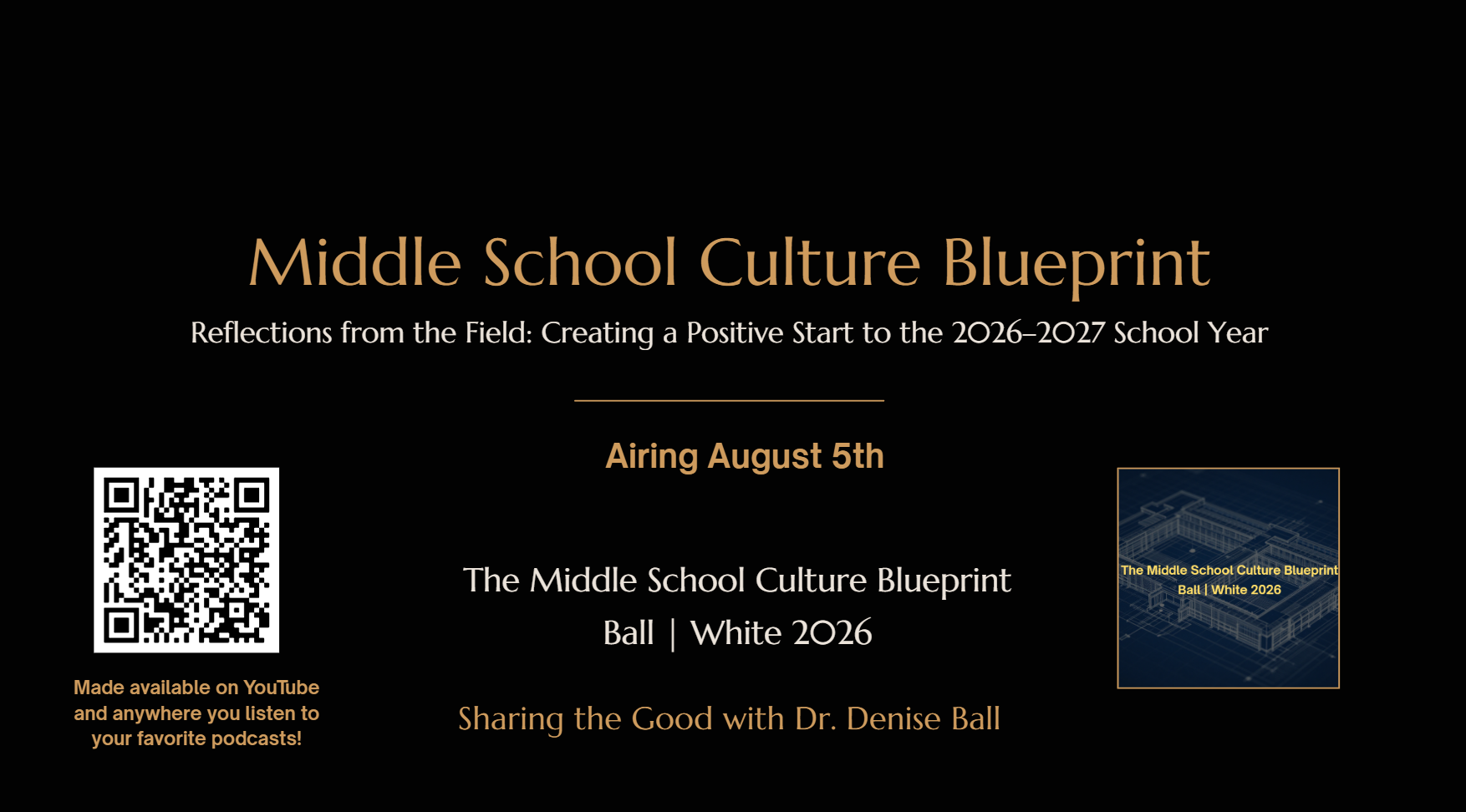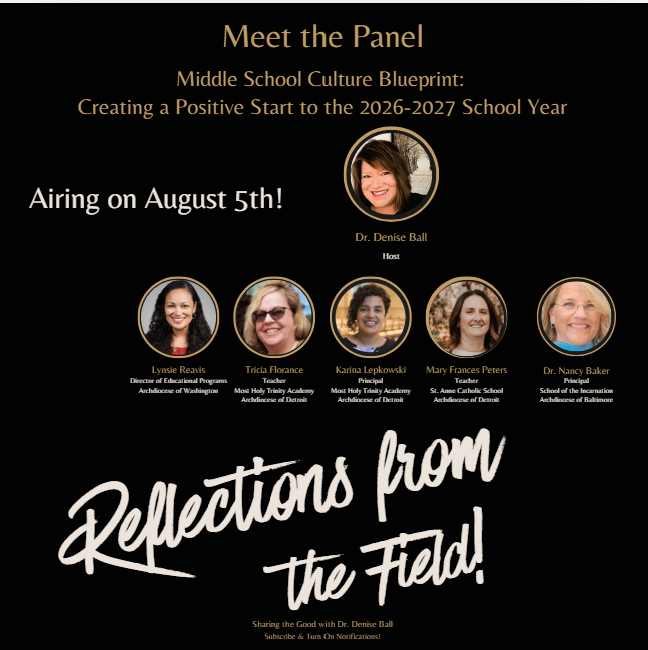
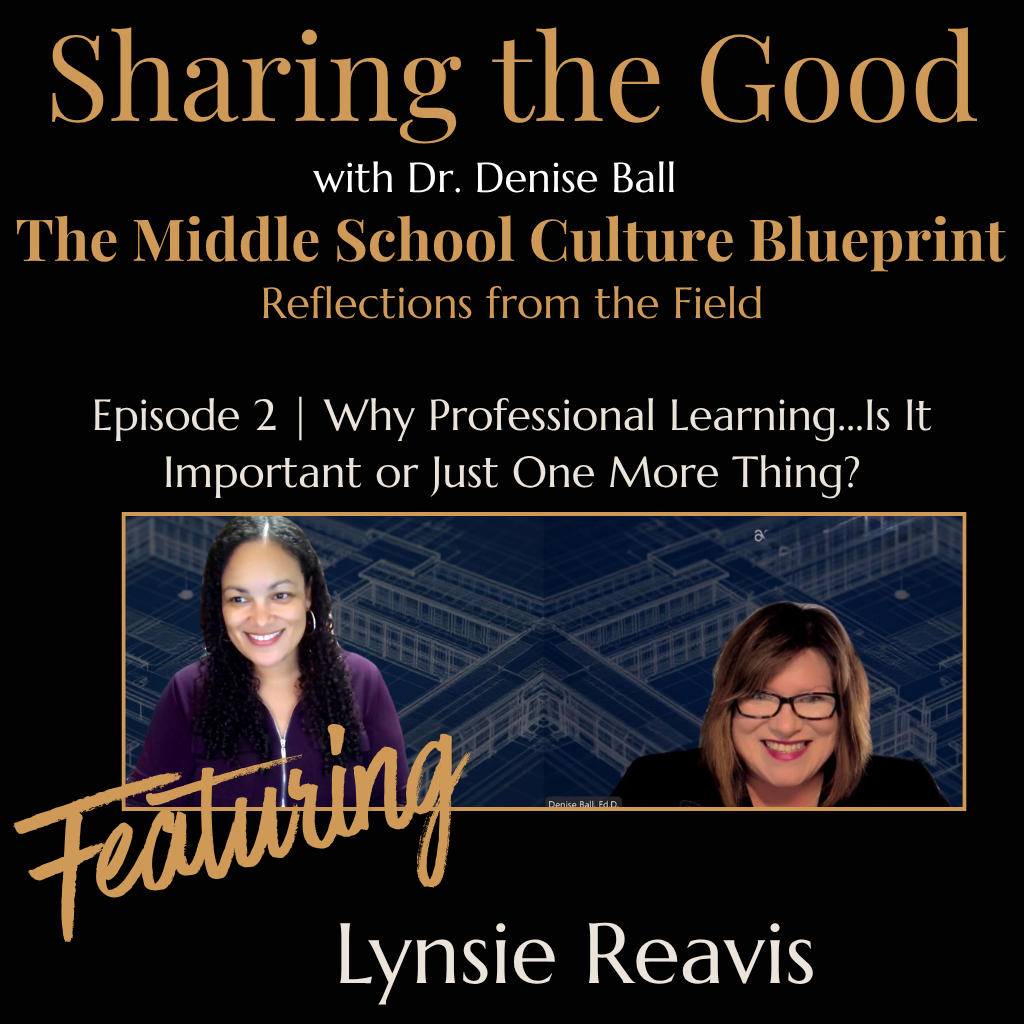
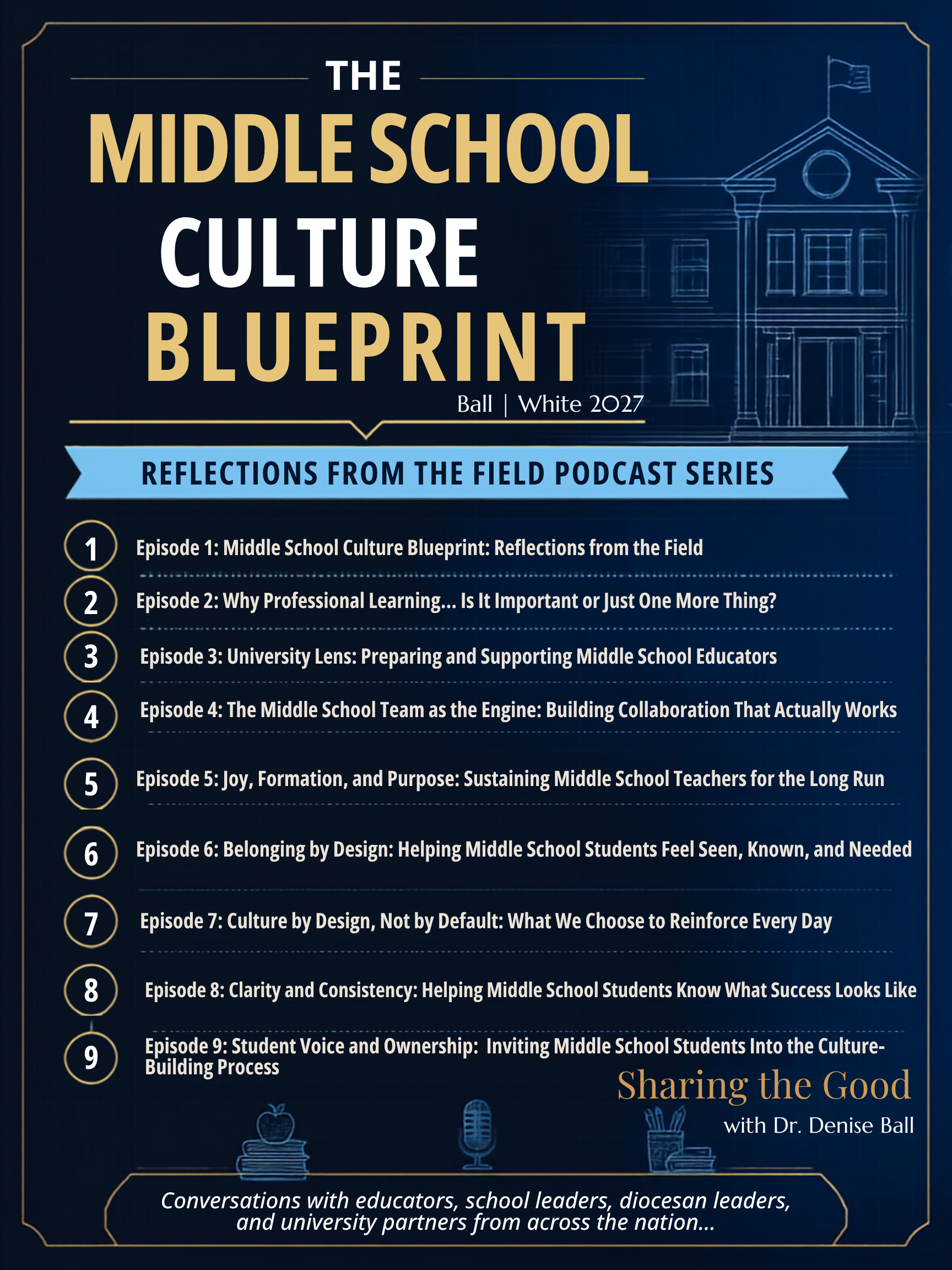
Professional learning is intended to help educators grow, strengthen their practice, and ultimately better serve students. Yet for teachers carrying increasingly full plates, even well-intentioned professional learning can sometimes feel like “one more thing.” That tension became the starting point for Episode 2 of The Middle School Culture Blueprint: Reflections from the Field, where I had the opportunity to talk with Lynsie Reavis, Director for Educational Programs for the Archdiocese of Washington. Our conversation offered an important reminder for those of us who lead and design professional learning: honoring teachers’ time, capacity, and experience must be part of the planning process.
One of Lynsie’s recommendations was beautifully practical…to choose one or two meaningful initiatives each year and avoid exceeding three. Teachers wear many hats, and meaningful implementation requires time. Rather than expecting every educator to embrace a new initiative at the same pace, Lynsie encouraged leaders to begin with those who are ready and willing. These educators can become “initiative ambassadors,” sharing authentically with colleagues how a new practice is influencing teaching and learning. Growth can often spread more effectively through trusted relationships and visible impact than through another mandate. That same relational approach shaped Lynsie’s own middle school teaching. She spoke about creating challenges and friendly competition to make learning collaborative and enjoyable and reflected on the familiar instructional progression of “I do, we do, you do.”
Our conversation also reinforced how professional learning can strengthen the culture of an entire middle school. Lynsie emphasized giving teams time to develop shared expectations around practices such as weekly assessment schedules, bell work, and family communication. These conversations require compromise, openness, and time, but the resulting coherence matters. Middle school students move among multiple teachers and classrooms each day, and, as Lynsie reminded us, they are always watching the dynamics and structures around them. Greater consistency among adults can create greater clarity and security for students. Professional learning, then, becomes more than the transfer of information. It becomes an opportunity to strengthen relationships, shared language, teamwork, and culture.
Click HERE to listen to episode 2 and available anywhere podcasts are enjoyed.
For educators interested in exploring this area further, Deans for Impact’s free The Science of Learning resource offers an accessible, research-informed look at how cognitive science can inform everyday instructional decisions.
https://www.deansforimpact.org/files/assets/thescienceoflearning.pdf?
Perhaps one of the most important themes of our discussion was reflection. Lynsie highlighted brain-based teaching and learning and reminded us that the instructional decisions educators make influence how students experience and process learning. That makes reflection essential, not optional. As Dr. LaTonya White and I continue our work on The Middle School Culture Blueprint (NCEA, 2027), these conversations continue to reinforce the interconnected nature of Belonging, Clarity, Coherence, and Formation, our middle school culture blueprint. Professional learning can contribute to each of these pillars when it is thoughtful, relevant, and connected to the actual work of teachers. And through all of the strategies, structures, initiatives, and demands of education, Lynsie left us with a simple reminder worth carrying with us, “Always remember your why!”
May we continue to seek knowledge in all things,
Denise
Denise M. Ball, Ed.D.
Retired Catholic Education Leader | Author | Researcher | Consultant
Assistant Professor | Marymount University
Join the conversation
LinkedIn: linkedin.com/in/deniseballedu
Instagram: deniseball_edu
YouTube: www.youtube.com/@SharingTheGoodwithDrDeniseBall
Facebook: https://www.facebook.com/SharingTheGoodWithDrDeniseBall
Blog: www.unlocktheteacher.org