Tag Archives: National Catholic Educational Association

Building Bridges of Hope: Leadership, Accompaniment, and the Future of Catholic Education

There are some conversations that leave you thinking long after the recording ends. My recent conversation with Dr. Steve Cheeseman, President and CEO of the National Catholic Educational Association, was one of those conversations.

As I listened to Steve reflect on his decades of service to Catholic education, I found myself returning to John 3:30: “He must increase; I must decrease.” That Scripture captures something I have come to appreciate about authentic Catholic leadership. The work is never ultimately about us. Leadership is about creating the conditions for others to flourish, drawing people into mission, listening deeply, discerning wisely, and helping others recognize the gifts God has placed within them. Throughout our conversation, Steve continually pointed away from himself and toward the good happening in Catholic schools across the country.
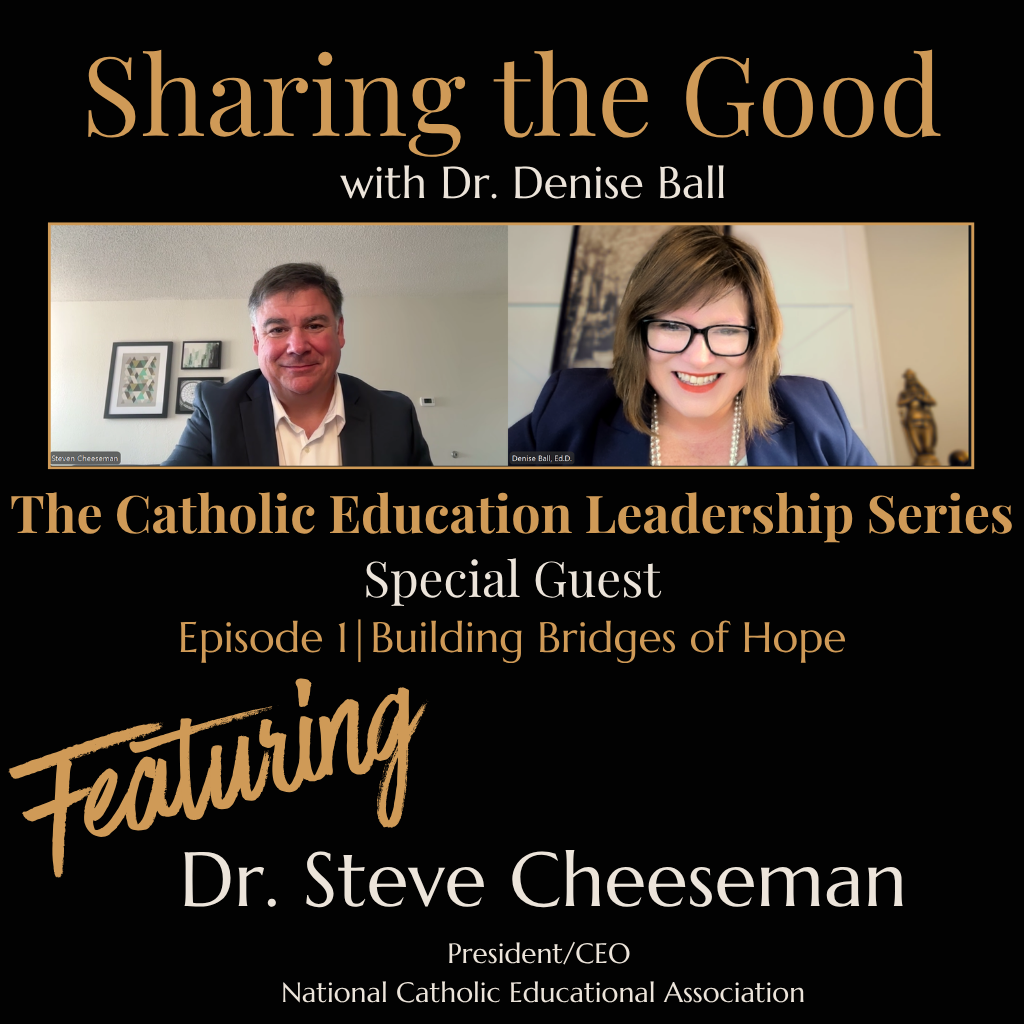
Building Bridges of Hope …a conversation with Dr. Steve Cheeseman.

Hope Rediscovered

One of the questions I asked Steve was simple: What fills your bucket? His response centered on hope.

Over the past two years, Steve’s “Bright Lights Tour” has taken him to more than 150 Catholic schools, giving him the opportunity to meet students, educators, school leaders, pastors, and communities serving Catholic education in many different settings. Each school, in its own way, has offered him a reminder of hope renewed and a chance to reconnect with why this vocation matters.

That resonated deeply with me. It can be easy, particularly in leadership, to become consumed by challenges, deadlines, budgets, staffing concerns, enrollment pressures, and the countless decisions that must be made each day. (I call this the “chaos wheel”) Yet when we intentionally train our eyes to look for the good, we begin to notice something else. We see educators who continue to show up for children, leaders who make difficult decisions rooted in mission, families who believe in the promise of Catholic education, and communities that support their schools through prayer, generosity, and service. In the midst of very real challenges, there remain countless reasons for hope.

Opportunity and Access

Our conversation also turned to the Federal Scholarship Tax Credit and what it may mean for families, schools, and the broader education landscape. Steve encouraged leaders to look at examples in states such as Florida, Texas, and Ohio and to consider what can become possible when families have greater access to educational choices.

What struck me was that the conversation was not simply about one sector of education. It was about creating opportunities for ALL children to flourish. That is an important lens for leaders to keep at the center. When we discuss policy, funding, governance, access, and sustainability, we are ultimately talking about children, families, and communities. Our responsibility is to ensure that the systems and decisions we build continue to serve that larger purpose.

Listen. Learn. Collaborate. Act.

At the recent Catholic Leadership Summit, Steve introduced the idea of “Hope Renewed” through four important movements: listen, learn, collaborate, and act. What struck me most was his emphasis on developing the habit of synergistic collaboration. Collaboration cannot be something we reserve for conferences, committees, or moments of crisis. It needs to become part of how we work. Catholic education is strengthened when dioceses, schools, universities, associations, pastors, organizations, partners, and leaders recognize that we do not have to solve every challenge independently. We can listen to one another, learn from one another, build together, and then act together in service to the mission we share.

Building Bridges

As we looked ahead to the 2027 NCEA Convention in Indianapolis and its theme, “Bridge Builders,” our conversation became even more reflective. Steve spoke about the importance of remembering the people who are already standing on the bridge. Some may need encouragement to keep moving forward. Others may need someone to walk beside them, reassurance that they belong, or simply the reminder that they are not alone.

That image resonates with me because leadership is not simply about constructing the bridge but it is also about accompanying people across it. In Catholic education, that means creating schools and organizations where people experience trust, belonging, mission, and support. It means building and sustaining school environments where students can flourish, educators can thrive, and families can feel welcomed into the life of the community. It also requires the courage to invite many voices to the table, listen carefully, and trust the people we have been called to serve alongside.

A Reminder for the Journey

Steve offered a reminder that I believe many Catholic educators and leaders need to hear… it is easy to lose steam along the way. The work can be demanding, leadership can feel heavy, and service can sometimes become exhausting. Yet we are not in this vocation alone. Lean on the Holy Spirit and lean on one another. That may be one of the most important messages I took from our entire conversation. Catholic education is a shared mission, and we need one another. We need spaces where we can listen, learn, pray, collaborate, encourage, and remind one another why this work matters, particularly during the seasons when the demands of leadership can make it difficult to see beyond what is directly in front of us.

After nearly three decades of attending NCEA gatherings and serving Catholic education in many different roles, I remain deeply grateful for the people who continue to answer this call. There is still much work to do, but there is also so much good, so much possibility, and so many reasons for hope.

Thank you, Dr. Steve Cheeseman, for your decades of service to Catholic education and for continuing to build bridges that strengthen our Catholic education community. I look forward to continuing the conversation, and I hope to see many friends in Indianapolis for the 2027 NCEA Convention.

We can do more for those we are called to serve when we do it together!

Please join the conversation on the Sharing the Good with Dr. Denise Ball podcast, available on YouTube and wherever you enjoy listening to your favorite podcasts.

May we continue to seek knowledge in all things,

Denise
Leave a comment

Filed under Educational Resources

Clarity Is an Act of Service: Helping Middle School Students Know What Success Looks Like

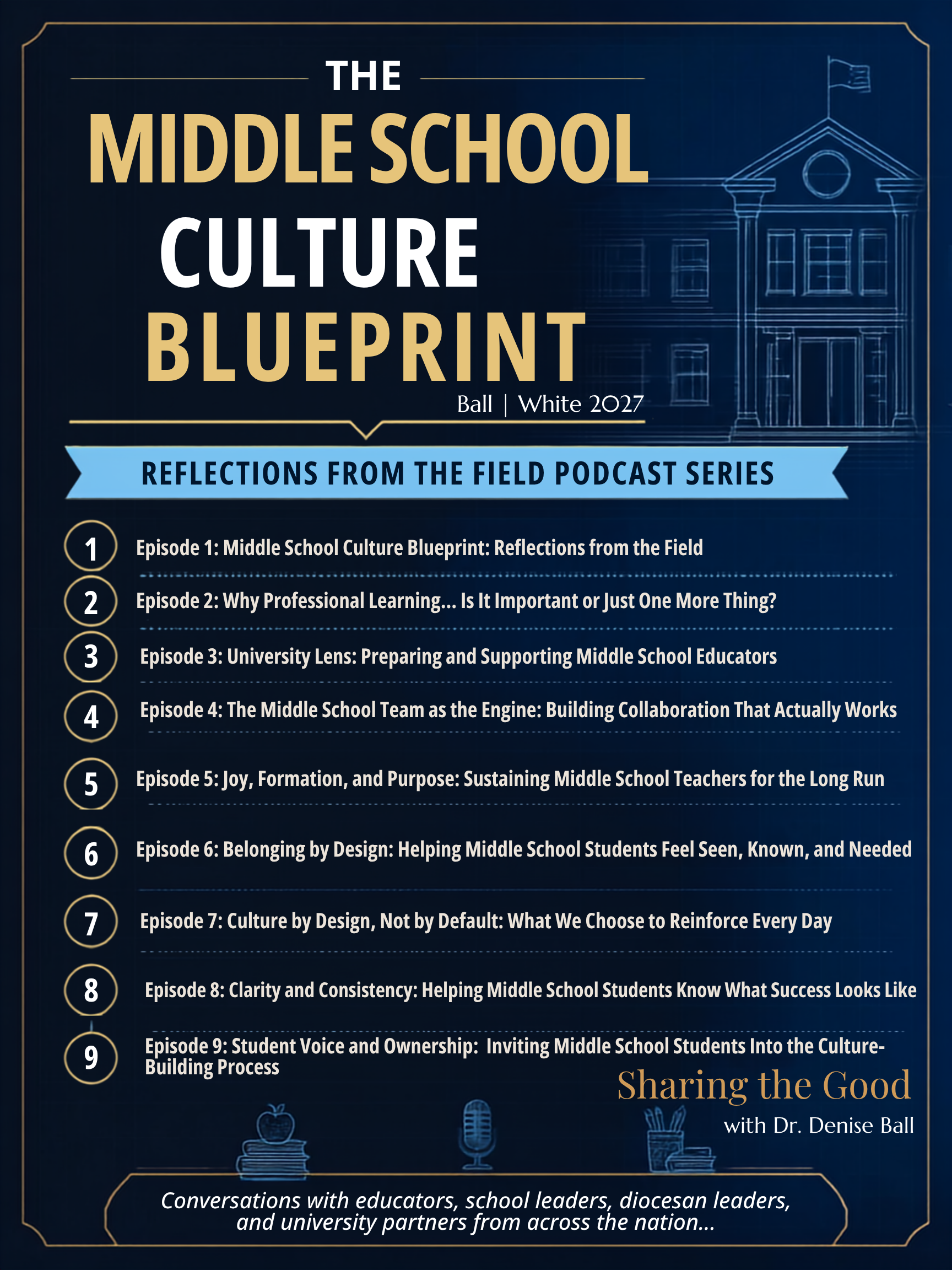
The Middle School Culture Blueprint: Reflections from the Field | Episode 8

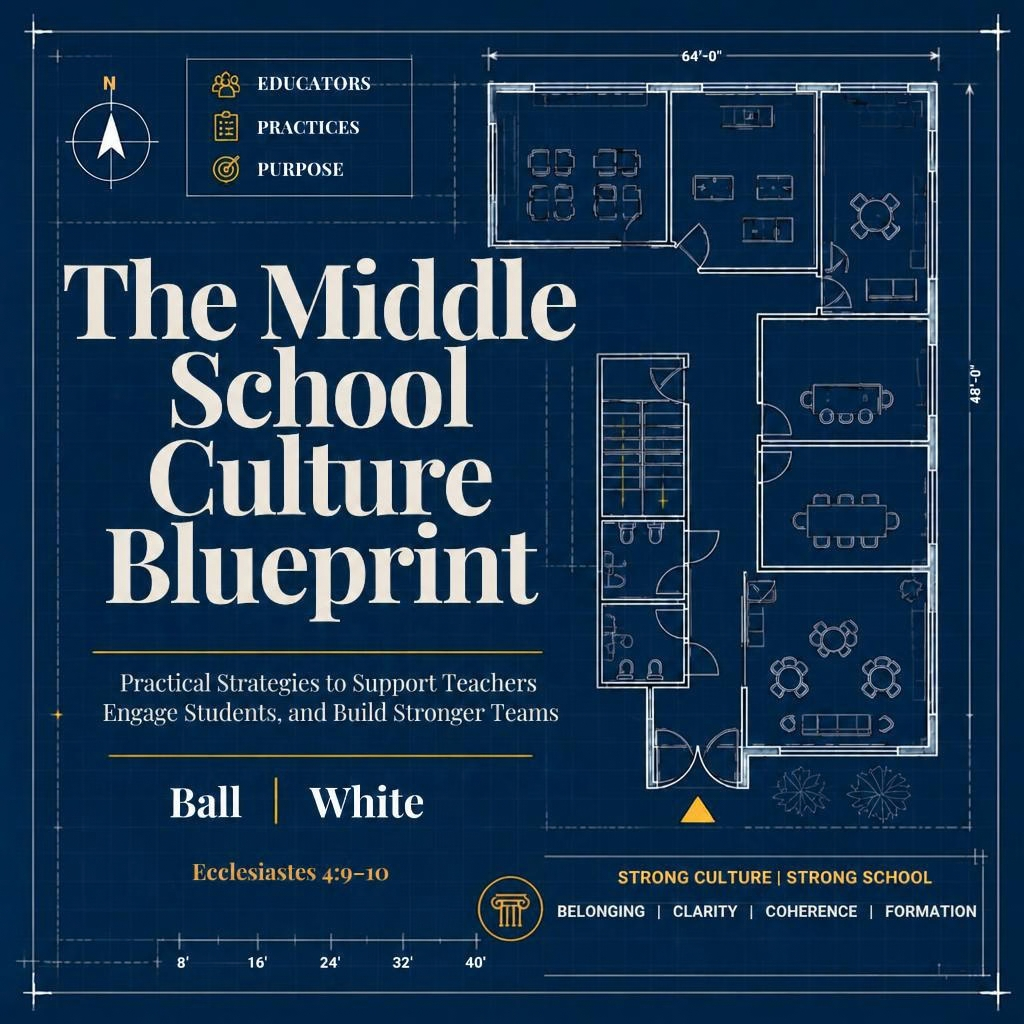
What if one of the most meaningful things we can do for middle school students is simply remove some of the unnecessary confusion they experience throughout the school day? I have been reflecting on this question as Dr. LaTonya White and I continue our work on The Middle School Culture Blueprint, a forthcoming manuscript in collaboration with the National Catholic Educational Association (NCEA).

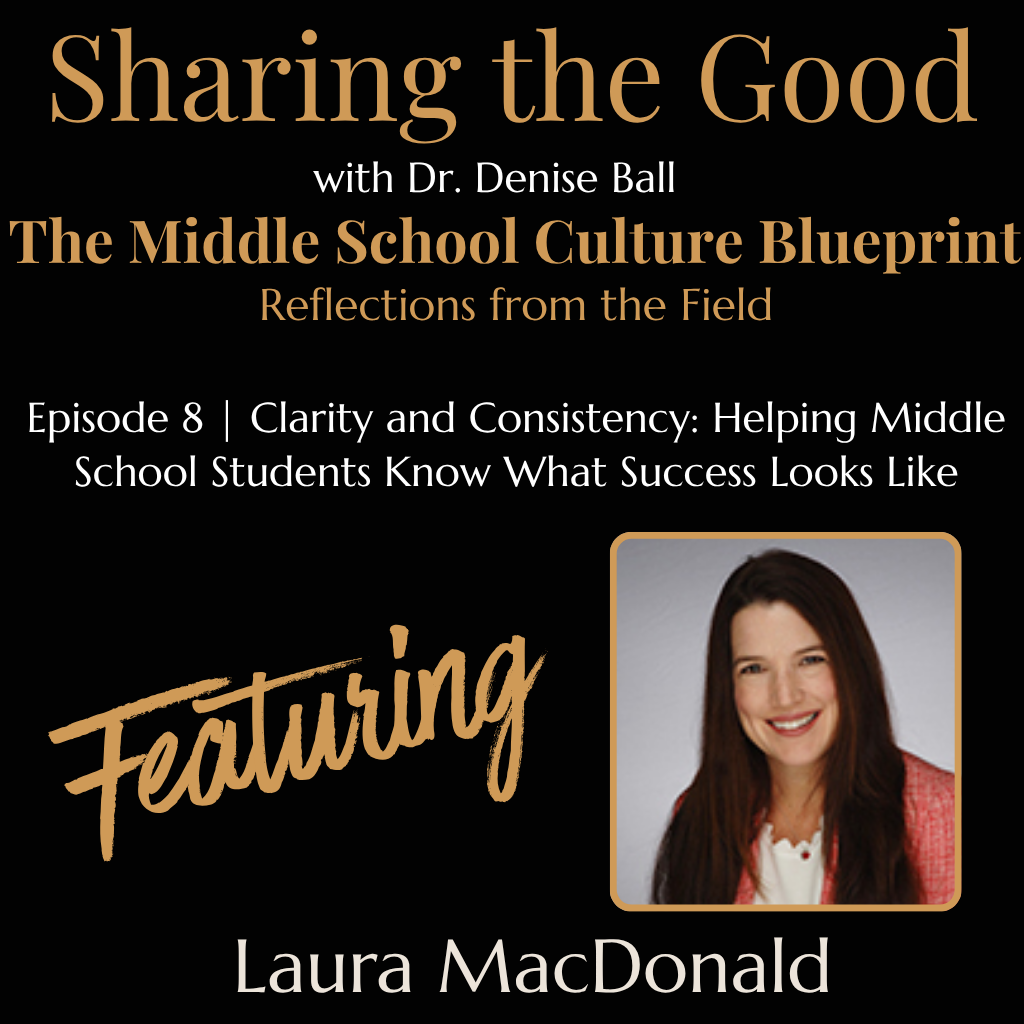
For Episode 8 of The Middle School Culture Blueprint: Reflections from the Field, I had the pleasure of welcoming Laura MacDonald, Vice President of Content and Program Development for NCEA, to explore an essential component of positive middle school culture: clarity and consistency. Laura brings a wealth of educational leadership experience and a deep commitment to supporting teachers and school leaders. Our conversation centered on an important question: How do we create learning environments where middle school students understand what is expected, know what success looks like, and feel confident enough to engage fully in learning? While clarity may sound like a simple concept, its influence on students, teachers, and the broader school community deserves our attention.

The Middle School Experience Through the Eyes of a Student

Imagine being a middle school student moving through six or seven different classrooms in a single day. Each classroom introduces a different teacher, instructional approach, set of routines, and perhaps a different way of communicating assignments or assessing student learning. Now consider the developmental changes students are navigating during early adolescence.

Middle school is a season of tremendous growth, possibility, and discovery. It can also bring uncertainty as students develop greater independence, manage increasingly complex academic responsibilities, and navigate changing relationships. When expectations differ significantly across classrooms, students may spend unnecessary energy simply trying to understand how each classroom operates. What if we could reduce some of that noise? This is where thoughtful clarity and consistency can make a meaningful difference.

The Education Endowment Foundation (2019), in its research-informed guidance Improving Behaviour in Schools, emphasizes the importance of clear and consistent approaches to expectations and behavior, while recognizing the need to understand and respond to individual students. Consistency, when thoughtfully implemented, can strengthen relationships and create supportive conditions for learning. For middle school teams, this means considering not only what we expect students to learn, but also how we communicate and reinforce those expectations across the school day.

Consistency Does Not Require Sameness

One of the distinctions I especially appreciate in conversations about school culture is the difference between coherence and conformity. Teachers bring extraordinary gifts, professional expertise, creativity, and personalities into their classrooms. These differences are strengths worth celebrating!

The goal of developing consistent schoolwide expectations is not to create identical classrooms or diminish the professional judgment of teachers. Rather, it is to identify the shared practices that help students experience greater clarity. For example, a middle school team might agree upon common language for classroom expectations, consistent procedures for communicating assignments, or shared approaches to helping students understand learning goals. Within those structures, teachers retain the freedom to design meaningful instruction, respond to student needs, and bring their individual strengths to the learning experience.

Consistency should create conditions for creativity, not eliminate it.

I believe this distinction is particularly important for school leaders and Laura provides some good insights during our conversation. When we invite teachers to collaborate in developing shared expectations, we honor their expertise while strengthening the collective experience of students. We are not asking teachers to become the same. We are asking them to work together with intention.

Clear Routines Can Create Greater Confidence and Independence

One of the most important purposes of classroom routines is to help students understand what comes next. When students know how to begin class, where to locate materials, how to ask for assistance, and what successful work looks like, they are better positioned to focus on learning. This is particularly valuable for students who need additional support with organization, attention, transitions, or managing multiple responsibilities.

Predictable routines can also provide a foundation for developing greater independence. The Education Endowment Foundation (2025), in its updated Metacognition and Self-Regulated Learning guidance, highlights the importance of explicitly teaching, modeling, and scaffolding strategies that help students plan, monitor, and evaluate their learning. These findings offer an important connection to our conversation about clarity. Students cannot be expected to independently manage their learning if we have not first helped them understand the expectations, processes, and strategies that support success.

For example, a teacher might model how to break a complex assignment into manageable steps, provide clear success criteria, or establish a consistent process for students to review their progress. Over time, these practices can help students become more confident and independent learners. Clarity, therefore, is not simply about classroom management. It is also about empowering students to take greater ownership of their learning.

The Power of Common Language

Another important consideration for middle school teams is the language we use when communicating with students and families. Do students encounter consistent terminology when teachers describe expectations, assignments, assessments, and behavior? Do families understand where to find information and how to support their children? Are our communications clear, or are we unintentionally adding complexity? These are important questions because communication is not simply about delivering information.

It is about ensuring that the intended message is understood. Common language can help students and families navigate the school experience with greater confidence. It can also strengthen collaboration among teachers by reinforcing shared priorities and expectations. This does not mean every communication needs to follow an identical script. Instead, it invites educators to consider how their communication practices support a coherent and understandable experience for students and families. Sometimes a small adjustment in language or process can make a meaningful difference.

Clarity Is Connected to Belonging, Coherence, and Formation

Throughout The Middle School Culture Blueprint, LaTonya and I have organized our work around four interconnected pillars: Belonging, Clarity, Coherence, and Formation. Although Episode 8 focuses specifically on clarity, it is difficult to consider this pillar without recognizing its relationship to the others. Belonging helps students know they are seen, valued, and needed within the community. Clarity helps them understand what is expected and how to experience success. Coherence ensures that the commitments we make as a school are reflected in the practices students experience throughout the day. Formation recognizes that our responsibility extends beyond academic instruction to supporting students’ growth in character, responsibility, faith, and service.

Together, these pillars offer a framework for creating the conditions in which middle school students and educators can thrive. I am drawn to the idea that clarity can communicate care. When we take time to explain expectations, establish understandable routines, and provide meaningful guidance, we communicate something important to students: We want you to succeed, and we are committed to helping you understand how. That is a powerful message for a young adolescent to experience.

Three Questions for Middle School Teams

As we consider how to bring greater clarity to the school day, I encourage middle school teachers and leaders to pause and reflect on three questions.

1. What should students be able to count on in every classroom?

Consider the routines, expectations, and communication practices that would benefit from greater consistency.

2. Where might we be creating unnecessary noise?

Take time to examine the school day through the eyes of a student. Are there competing expectations, confusing procedures, or processes that could be simplified?

3. How can we preserve teacher creativity while strengthening shared expectations?

Invite teachers into the conversation. Identify practices that benefit from consistency while protecting the professional judgment and creativity that make each classroom unique.

These questions do not require a new initiative or an elaborate implementation plan. They invite intentional reflection and collaborative action. and sometimes, that is exactly where meaningful improvement begins.

Clarity Is an Act of Service

As I reflect on this episode, I continue returning to one central idea. Clarity is an act of service. When we create understandable expectations, establish thoughtful routines, and communicate with consistency, we are helping students direct more of their energy toward learning, relationships, and growth. We are also supporting teachers by creating shared structures that can reduce unnecessary confusion and strengthen collaboration. Through clarity, we are also helping families experience a school community that is organized, intentional, and committed to student success.

A heartfelt thank you to Laura MacDonald for joining The Middle School Culture Blueprint: Reflections from the Field and contributing her leadership perspective to this important conversation.

I am grateful for the opportunity to continue learning alongside educators and leaders who generously share their experiences and wisdom for the good of our profession.

May we continue to pause, reflect, and recognize the opportunities we have to strengthen the daily experiences of the students and educators we serve.

Sometimes the most meaningful improvements are not the result of adding something new, but they begin by simplifying, clarifying, and protecting what matters most.

We can do so much more together!

May we continue to seek knowledge in all things,

Denise

References

Education Endowment Foundation. (2019). Improving behaviour in schools. https://educationendowmentfoundation.org.uk/education-evidence/guidance-reports/behaviour/

Education Endowment Foundation. (2025). Metacognition and self-regulated learning (2nd ed.). https://educationendowmentfoundation.org.uk/education-evidence/guidance-reports/metacognition


Join Dr. Denise Ball and Laura MacDonald for Episode 8, “Clarity and Consistency: Helping Middle School Students Know What Success Looks Like,” on Sharing the Good with Dr. Denise Ball. Watch on YouTube or listen wherever you enjoy your favorite podcasts.

Leave a comment

Filed under The Middle School Culture-Reflections from the Field Series

Deconstructed Retreat: Same Roads with an Intentional Way of Seeing

The journey is the retreat, gratitude is my compass, and JOY is found in the everyday.

What if a retreat was not defined by where we go, but by how we choose to see and respond to what surrounds us?

As educational leaders, we often encourage others to slow down, reflect, reconnect with their purpose, and care for their well-being. Yet, how often do we give ourselves permission to do the same? Perhaps we have made the idea of a retreat more complicated than it needs to be. Perhaps a retreat can happen on an ordinary drive, during a walk along the water, through a meaningful conversation, while listening to music, or in the unexpected kindness of others.

I am calling this my Deconstructed Retreat.

Gratitude: Beginning the Day with God

As I walk through this new season of life, I am striving to listen more intentionally, live more fully, and recognize God’s presence in all aspects of my life. One simple practice is beginning each morning with gratitude, giving thanks for another day to serve Him and others. My favorite morning jam these days is Phil Wickham’s Isn’t He Good. It is a beautiful reminder of God’s goodness and faithfulness. Recently, I shared the song with an NCEA intern. When I saw him a few weeks later, he shared that it had become his favorite morning jam, too!

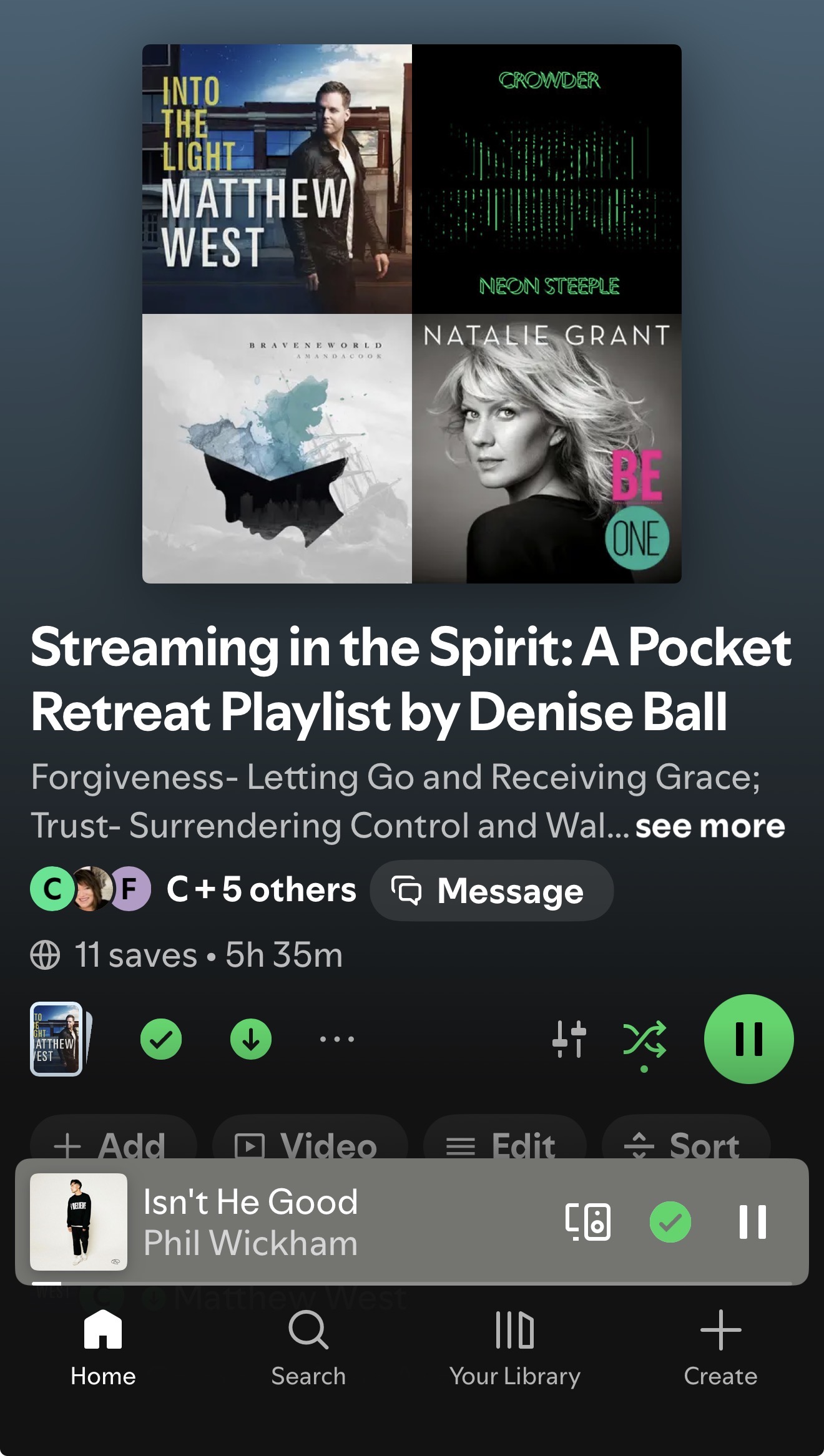
JOY is synergistic. When we share the good, it has a way of multiplying. Tune in to my favorite Spotify playlist I call, Streaming in His Spirit.

Figure 2. Streaming in the Spirit recommended praise and worship playlist supporting amazing Christian artists like Phil Wickham, Mathew West, Natalie Grant, Crowder, Amanda Cook and so many more artists lifting up their voice for the greater glory of God!

Surround Yourself with People and Ideas That Illuminate Your Soul

Throughout my educational leadership journey, I have found tremendous value in surrounding myself with people who carry His light, challenge my thinking, and inspire me to grow. I also love reading work that inspires my soul and lights my dendrites on fire!

One person I have recently discovered is author and podcaster Chris Stefanick, thanks to my husband sharing his morning men’s devotional with me. In Living Joy, Stefanick draws upon the wisdom of Blessed Solanus Casey: “It’s heaven begun, for the grateful on earth.” Stefanick (2020) reminds readers that gratitude helps us recognize and enjoy the blessings already present in our lives. What a powerful invitation for leaders. Gratitude does not remove our challenges. It changes the lens through which we experience them.

The Road Becomes the Retreat

This weekend, I traveled through Pennsylvania, Ohio, and Michigan, headed toward Lake Michigan in preparation for the MANS Great Lakes UNITY Conference and NCEA Catholic Leadership Summit.

The autumn colors, open roads, changing skies, and beauty of Lake Michigan provided an unexpected opportunity for reflection. As I traveled, I found myself returning to Matthew Kelly’s prayer of transformation in Rediscover Jesus (2015):

“Loving Father,

Here I am.

I trust that you have incredible plans for me.

Transform me. Transform my life.

Everything is on the table.

Take what you want to take and give what you want to give.

Transform me into the person you created me to be, so I can live the life you envisioned for me.

I hold nothing back; I am 100 percent available. How can I help?

Amen.”

In reading this invitation to trust God’s plans, hold nothing back, and become the person He created us to be felt particularly meaningful in this season of my life. There is something powerful about being willing to say, “How can I help?” Not simply in our professional lives, but in our personal and spiritual journeys as well. I am learning that sometimes the most meaningful transformation begins when we stop filling every moment with activity and allow ourselves to listen. I am so blessed to have my husband of 33 years, and two adult children, walking beside me on this journey, cheering, encouraging, and supporting the dream!

An Unexpected Gift of JOY

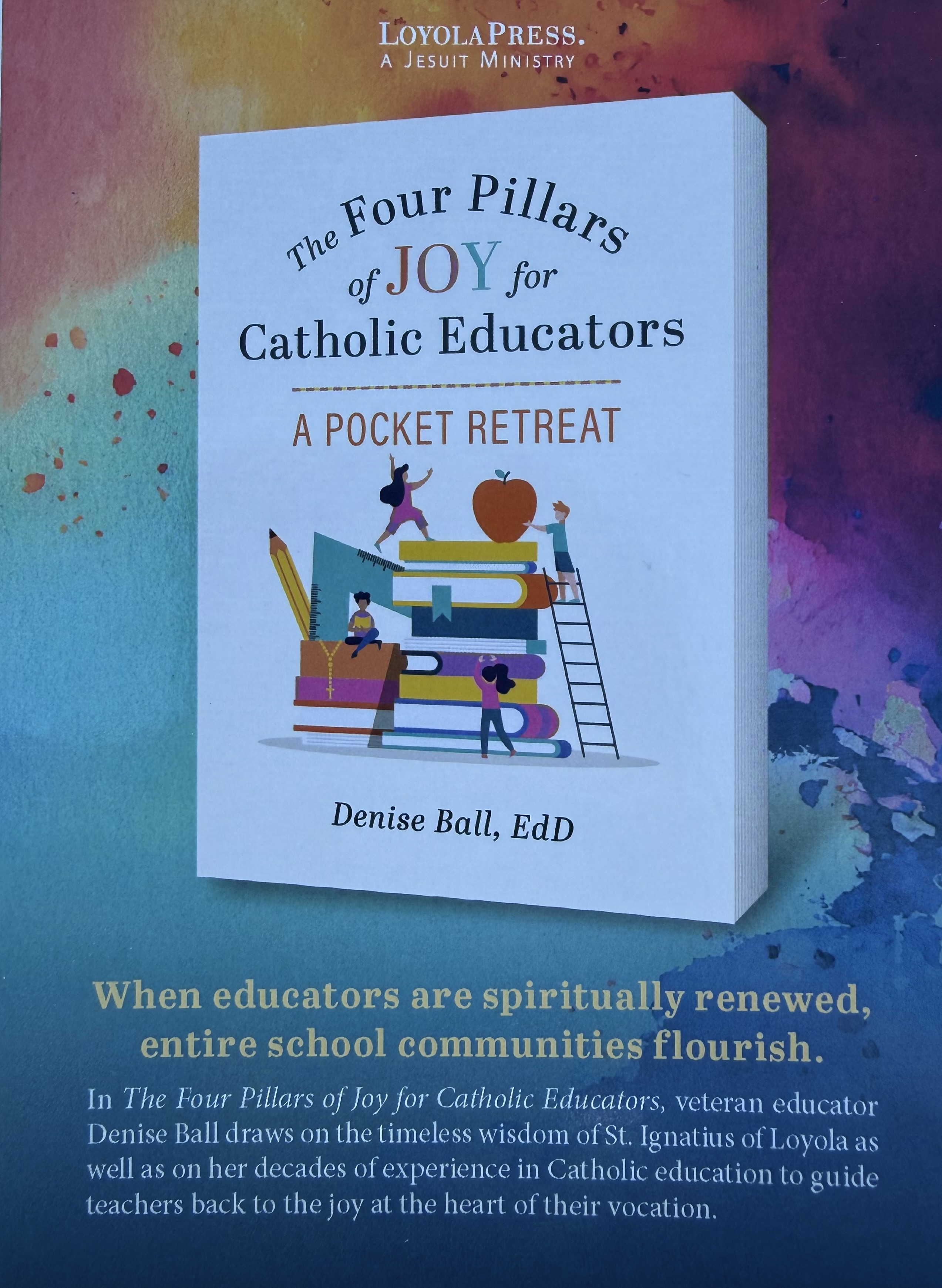
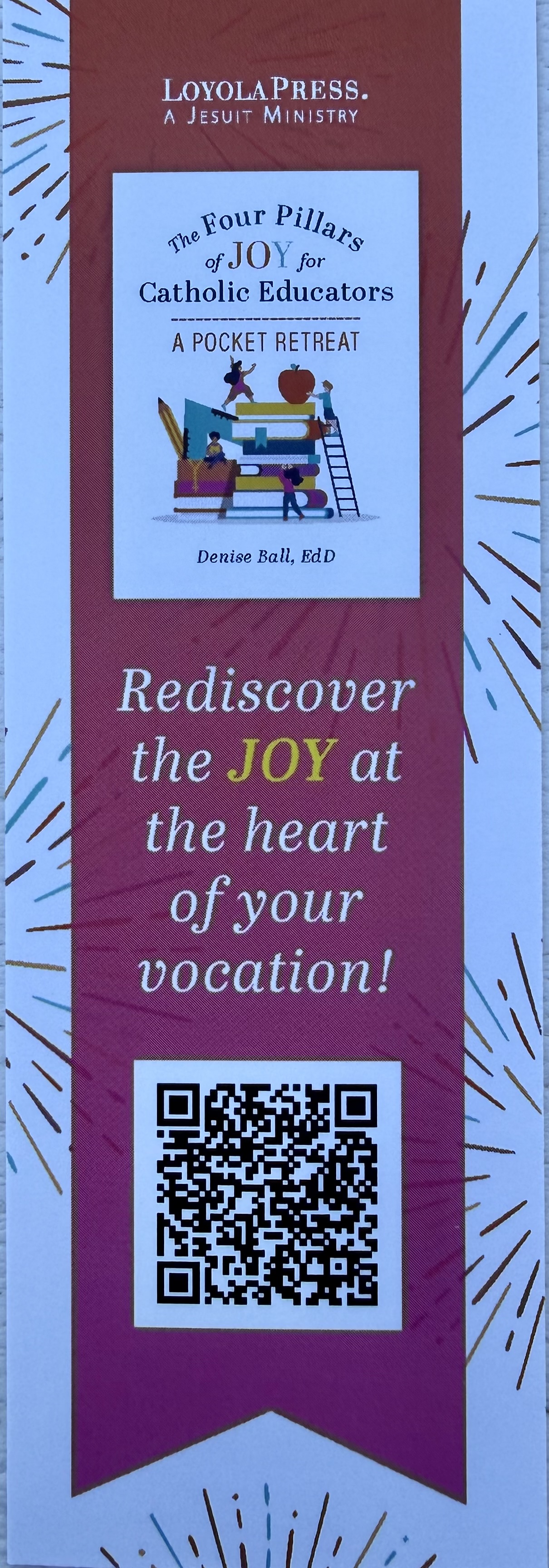
When I arrived at my destination today, a beautiful surprise awaited me. My Loyola Press partners had thoughtfully prepared a JOY Kit in celebration of my forthcoming book, The Four Pillars of JOY for Catholic Educators: A Pocket Retreat. What a gift! The kit includes creative resources designed to encourage educators to pause, reflect, and rediscover the JOY at the heart of their vocation. I am especially excited to raffle a few of these during my upcoming leadership session.

Choosing a publishing partner is an important process of discernment. I am deeply grateful to collaborate with a team that understands the heart of this work and the importance of nurturing the spiritual well-being of Catholic educators. Small acts of kindness can have a lasting impact.

Leading with Intention: The Retreat We Carry with Us

St. Ignatius of Loyola’s spirituality invites us to find God in all things. That invitation has become especially meaningful to me. What if we approached our everyday lives as opportunities for spiritual renewal? What if we intentionally made room to laugh, play, explore nature, enjoy fellowship, read something inspiring, and listen for God’s voice?

What if we recognized that caring for our own spiritual well-being is not separate from our leadership responsibilities, but essential to fulfilling them? As I prepare to spend time with educational leaders this week discussing Leading with Intention, I am reminded that intentional leadership begins with intentional living. We cannot continually pour into others without making space to be renewed ourselves.

As I traveled the highways, windows down, praise and worship turned up high, I realized that renewal does not always require a formal retreat. Sometimes it begins with gratitude, a beautiful sunrise, a favorite song, a conversation with a friend, or the courage to embrace a new season of life.

Continuously Streaming in His Spirit

Over these next few days, I am choosing to tune my eyes to God’s beauty, open my heart to His grace, and listen more closely to His invitations.

I intend to laugh, learn, explore, pray, and be fully present!

Not a traditional retreat, but a deconstructed retreat. One that reminds me that God is not waiting for us only at the destination. He is present throughout the journey. Same roads but an intentional, new way of seeing. I surrender!

Perhaps that is one of the greatest gifts of all, to discover that when we intentionally seek His presence, we can continuously stream in His Spirit!

What might change if you approached your next ordinary day as an opportunity for retreat?

With gratitude and JOY,

Dr. Denise Ball

References and Inspirations

Kelly, M. (2015). Rediscover Jesus: An invitation. Beacon Publishing.

Stefanick, C. (2020). Living Joy: 9 rules to help you rediscover and live joy every day. Emmaus Road Publishing.

Wickham, P. Isn’t He Good [Song].

Spiritual inspiration: St. Ignatius of Loyola and Blessed Solanus Casey.

Leave a comment

Filed under Retreats, Sharing the Good with Dr. Denise Ball