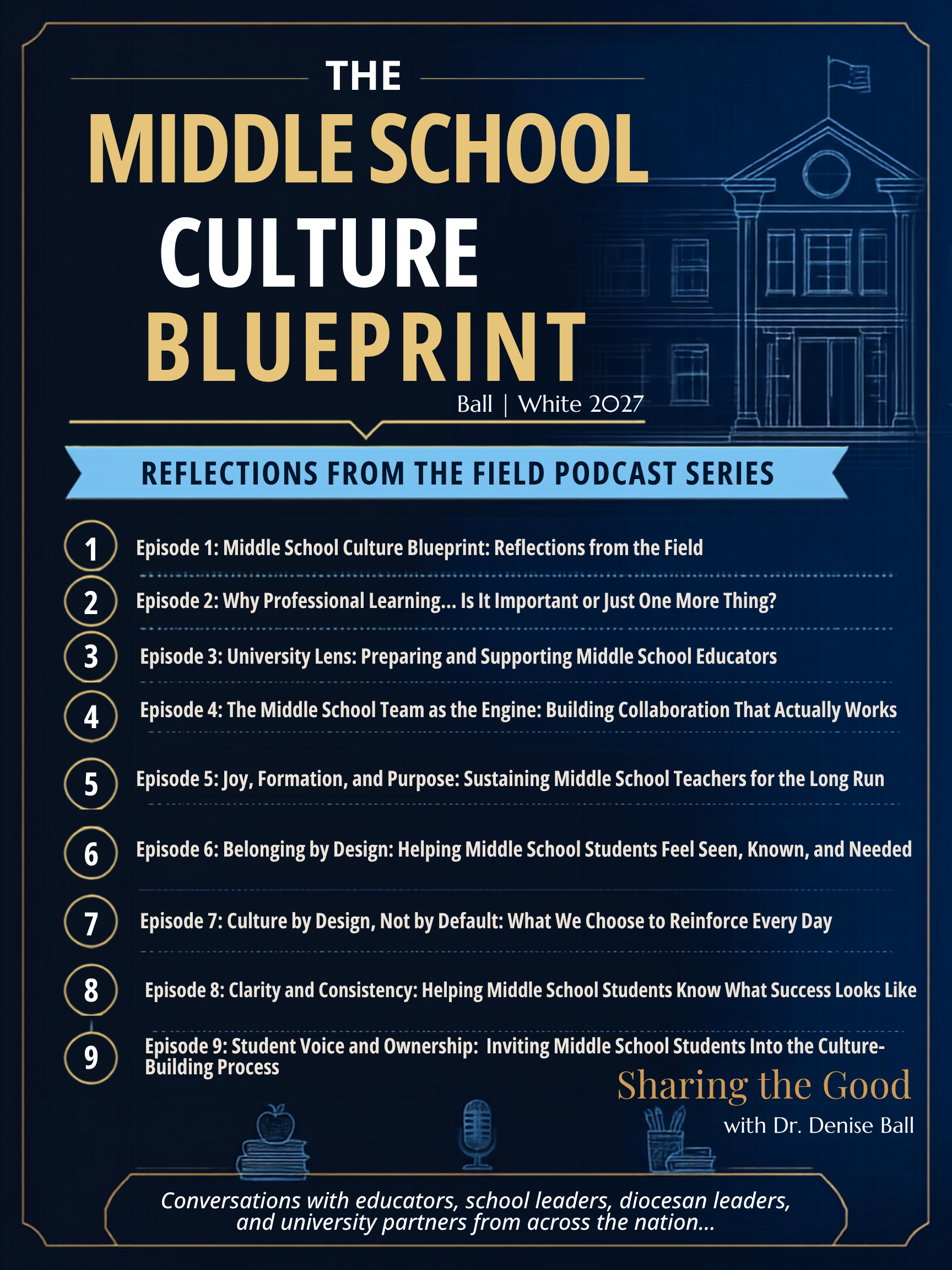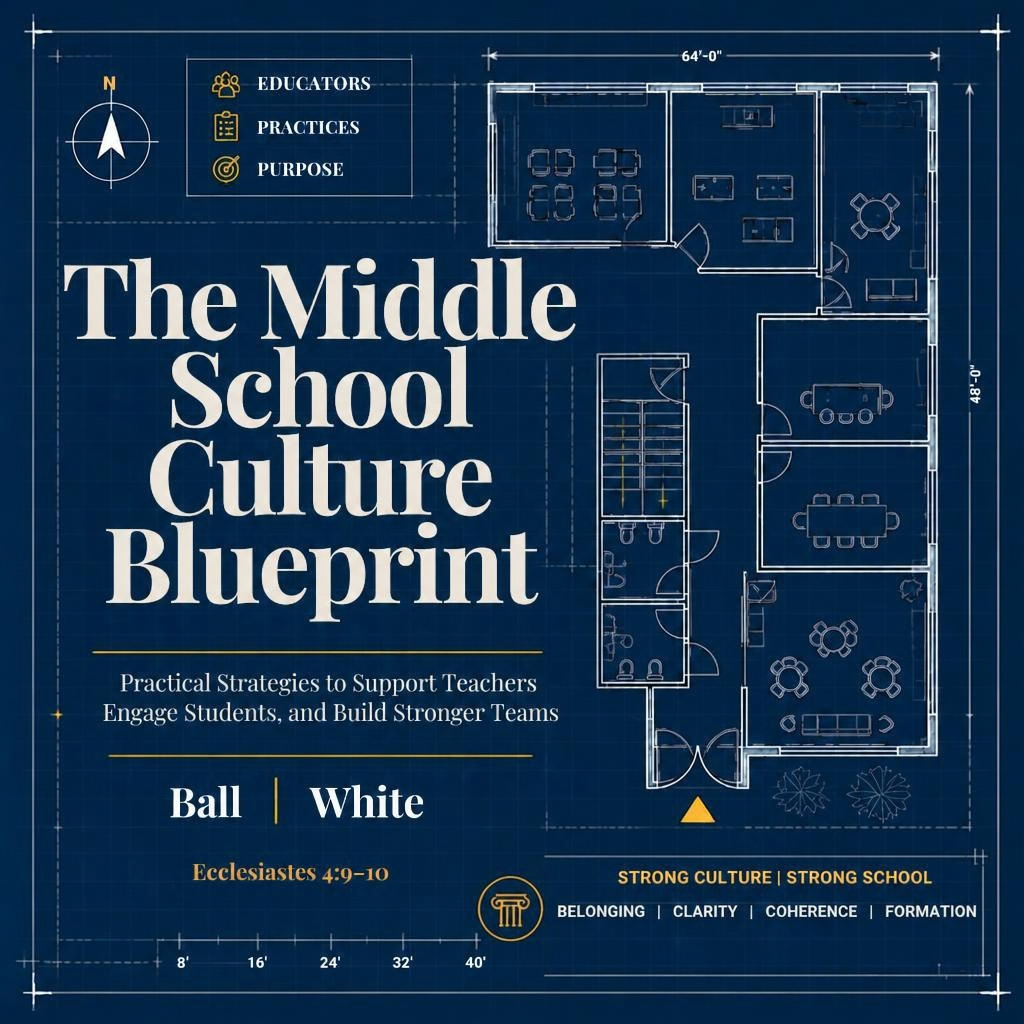
The Middle School Culture Blueprint: Reflections from the Field | Episode 8
What if one of the most meaningful things we can do for middle school students is simply remove some of the unnecessary confusion they experience throughout the school day? I have been reflecting on this question as Dr. LaTonya White and I continue our work on The Middle School Culture Blueprint, a forthcoming manuscript in collaboration with the National Catholic Educational Association (NCEA).
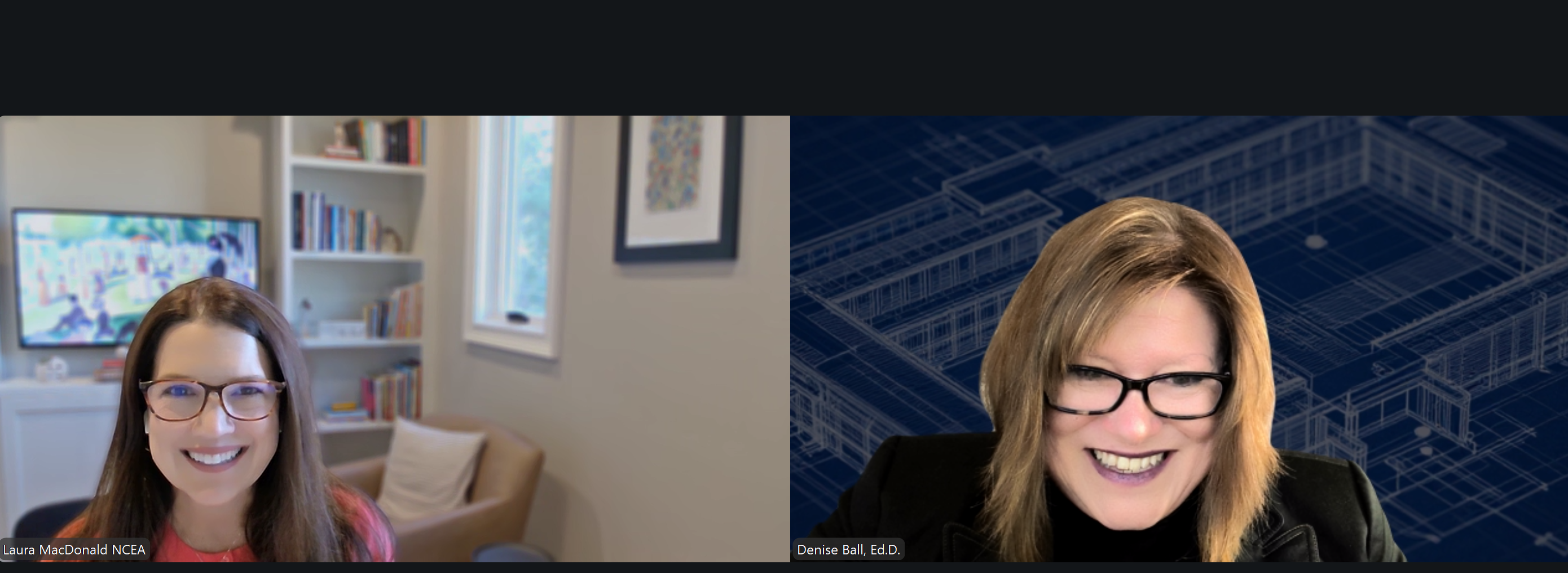
For Episode 8 of The Middle School Culture Blueprint: Reflections from the Field, I had the pleasure of welcoming Laura MacDonald, Vice President of Content and Program Development for NCEA, to explore an essential component of positive middle school culture: clarity and consistency. Laura brings a wealth of educational leadership experience and a deep commitment to supporting teachers and school leaders. Our conversation centered on an important question: How do we create learning environments where middle school students understand what is expected, know what success looks like, and feel confident enough to engage fully in learning? While clarity may sound like a simple concept, its influence on students, teachers, and the broader school community deserves our attention.

The Middle School Experience Through the Eyes of a Student
Imagine being a middle school student moving through six or seven different classrooms in a single day. Each classroom introduces a different teacher, instructional approach, set of routines, and perhaps a different way of communicating assignments or assessing student learning. Now consider the developmental changes students are navigating during early adolescence.
Middle school is a season of tremendous growth, possibility, and discovery. It can also bring uncertainty as students develop greater independence, manage increasingly complex academic responsibilities, and navigate changing relationships. When expectations differ significantly across classrooms, students may spend unnecessary energy simply trying to understand how each classroom operates. What if we could reduce some of that noise? This is where thoughtful clarity and consistency can make a meaningful difference.
The Education Endowment Foundation (2019), in its research-informed guidance Improving Behaviour in Schools, emphasizes the importance of clear and consistent approaches to expectations and behavior, while recognizing the need to understand and respond to individual students. Consistency, when thoughtfully implemented, can strengthen relationships and create supportive conditions for learning. For middle school teams, this means considering not only what we expect students to learn, but also how we communicate and reinforce those expectations across the school day.
Consistency Does Not Require Sameness
One of the distinctions I especially appreciate in conversations about school culture is the difference between coherence and conformity. Teachers bring extraordinary gifts, professional expertise, creativity, and personalities into their classrooms. These differences are strengths worth celebrating!
The goal of developing consistent schoolwide expectations is not to create identical classrooms or diminish the professional judgment of teachers. Rather, it is to identify the shared practices that help students experience greater clarity. For example, a middle school team might agree upon common language for classroom expectations, consistent procedures for communicating assignments, or shared approaches to helping students understand learning goals. Within those structures, teachers retain the freedom to design meaningful instruction, respond to student needs, and bring their individual strengths to the learning experience.
Consistency should create conditions for creativity, not eliminate it.
I believe this distinction is particularly important for school leaders and Laura provides some good insights during our conversation. When we invite teachers to collaborate in developing shared expectations, we honor their expertise while strengthening the collective experience of students. We are not asking teachers to become the same. We are asking them to work together with intention.
Clear Routines Can Create Greater Confidence and Independence
One of the most important purposes of classroom routines is to help students understand what comes next. When students know how to begin class, where to locate materials, how to ask for assistance, and what successful work looks like, they are better positioned to focus on learning. This is particularly valuable for students who need additional support with organization, attention, transitions, or managing multiple responsibilities.
Predictable routines can also provide a foundation for developing greater independence. The Education Endowment Foundation (2025), in its updated Metacognition and Self-Regulated Learning guidance, highlights the importance of explicitly teaching, modeling, and scaffolding strategies that help students plan, monitor, and evaluate their learning. These findings offer an important connection to our conversation about clarity. Students cannot be expected to independently manage their learning if we have not first helped them understand the expectations, processes, and strategies that support success.
For example, a teacher might model how to break a complex assignment into manageable steps, provide clear success criteria, or establish a consistent process for students to review their progress. Over time, these practices can help students become more confident and independent learners. Clarity, therefore, is not simply about classroom management. It is also about empowering students to take greater ownership of their learning.
The Power of Common Language
Another important consideration for middle school teams is the language we use when communicating with students and families. Do students encounter consistent terminology when teachers describe expectations, assignments, assessments, and behavior? Do families understand where to find information and how to support their children? Are our communications clear, or are we unintentionally adding complexity? These are important questions because communication is not simply about delivering information.
It is about ensuring that the intended message is understood. Common language can help students and families navigate the school experience with greater confidence. It can also strengthen collaboration among teachers by reinforcing shared priorities and expectations. This does not mean every communication needs to follow an identical script. Instead, it invites educators to consider how their communication practices support a coherent and understandable experience for students and families. Sometimes a small adjustment in language or process can make a meaningful difference.
Clarity Is Connected to Belonging, Coherence, and Formation
Throughout The Middle School Culture Blueprint, LaTonya and I have organized our work around four interconnected pillars: Belonging, Clarity, Coherence, and Formation. Although Episode 8 focuses specifically on clarity, it is difficult to consider this pillar without recognizing its relationship to the others. Belonging helps students know they are seen, valued, and needed within the community. Clarity helps them understand what is expected and how to experience success. Coherence ensures that the commitments we make as a school are reflected in the practices students experience throughout the day. Formation recognizes that our responsibility extends beyond academic instruction to supporting students’ growth in character, responsibility, faith, and service.
Together, these pillars offer a framework for creating the conditions in which middle school students and educators can thrive. I am drawn to the idea that clarity can communicate care. When we take time to explain expectations, establish understandable routines, and provide meaningful guidance, we communicate something important to students: We want you to succeed, and we are committed to helping you understand how. That is a powerful message for a young adolescent to experience.
Three Questions for Middle School Teams
As we consider how to bring greater clarity to the school day, I encourage middle school teachers and leaders to pause and reflect on three questions.
1. What should students be able to count on in every classroom?
Consider the routines, expectations, and communication practices that would benefit from greater consistency.
2. Where might we be creating unnecessary noise?
Take time to examine the school day through the eyes of a student. Are there competing expectations, confusing procedures, or processes that could be simplified?
3. How can we preserve teacher creativity while strengthening shared expectations?
Invite teachers into the conversation. Identify practices that benefit from consistency while protecting the professional judgment and creativity that make each classroom unique.
These questions do not require a new initiative or an elaborate implementation plan. They invite intentional reflection and collaborative action. and sometimes, that is exactly where meaningful improvement begins.
Clarity Is an Act of Service
As I reflect on this episode, I continue returning to one central idea. Clarity is an act of service. When we create understandable expectations, establish thoughtful routines, and communicate with consistency, we are helping students direct more of their energy toward learning, relationships, and growth. We are also supporting teachers by creating shared structures that can reduce unnecessary confusion and strengthen collaboration. Through clarity, we are also helping families experience a school community that is organized, intentional, and committed to student success.
A heartfelt thank you to Laura MacDonald for joining The Middle School Culture Blueprint: Reflections from the Field and contributing her leadership perspective to this important conversation.
I am grateful for the opportunity to continue learning alongside educators and leaders who generously share their experiences and wisdom for the good of our profession.
May we continue to pause, reflect, and recognize the opportunities we have to strengthen the daily experiences of the students and educators we serve.
Sometimes the most meaningful improvements are not the result of adding something new, but they begin by simplifying, clarifying, and protecting what matters most.
We can do so much more together!
May we continue to seek knowledge in all things,
Denise
References
Education Endowment Foundation. (2019). Improving behaviour in schools. https://educationendowmentfoundation.org.uk/education-evidence/guidance-reports/behaviour/
Education Endowment Foundation. (2025). Metacognition and self-regulated learning (2nd ed.). https://educationendowmentfoundation.org.uk/education-evidence/guidance-reports/metacognition
Join Dr. Denise Ball and Laura MacDonald for Episode 8, “Clarity and Consistency: Helping Middle School Students Know What Success Looks Like,” on Sharing the Good with Dr. Denise Ball. Watch on YouTube or listen wherever you enjoy your favorite podcasts.