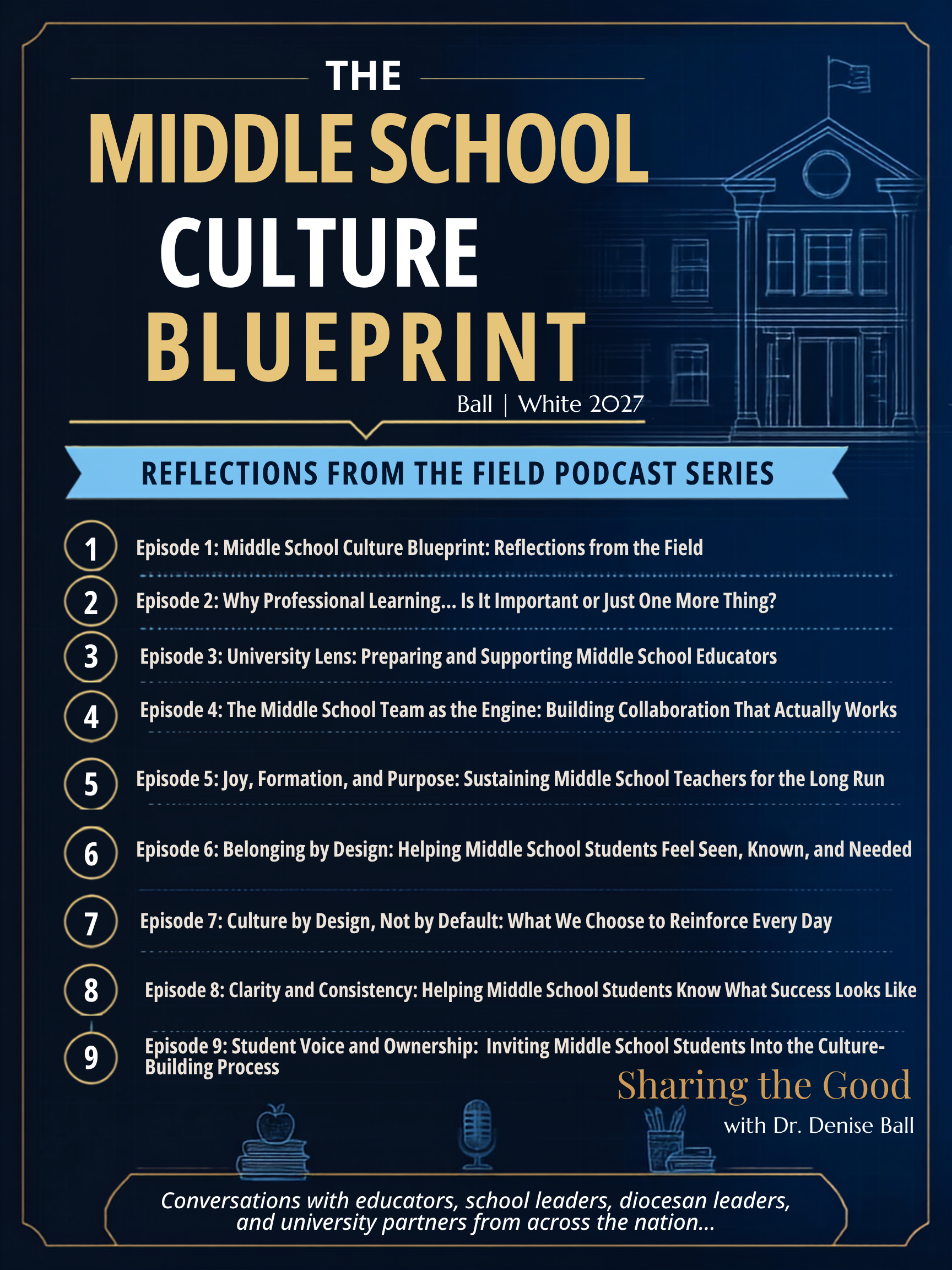
The Middle School Culture Blueprint: Reflections from the Field | Episode 7 with Dr. Anita Harkins-Mehsling

Sometimes the most powerful act of leadership is not offering a solution, but it is simply being present, listening, and acknowledging. This was one of the many meaningful reminders shared during my recent conversation with Dr. Anita Harkins-Mehsling, Associate Superintendent for the Archdiocese of Omaha Catholic Schools, for Episode 7 of The Middle School Culture Blueprint: Reflections from the Field.
Anita is a favorite voice of the Sharing the Good community, and it is always a JOY to welcome her into the conversation. With 36 years of experience serving in education, she brings a thoughtful combination of research, leadership experience, practical wisdom, and a deep commitment to Catholic education. Our discussion centered on a question that Dr. LaTonya White and I continue to explore through our work on The Middle School Culture Blueprint: How do we move from allowing school culture to develop by default to intentionally creating the conditions in which students and adults can thrive? Anita’s reflections offered several powerful lessons for school leaders and teachers alike.
Listening Is an Act of Leadership
Anita began by emphasizing the importance of intentional planning and discernment. As she reflected on professional learning and school improvement, she underscored the value of gathering feedback through surveys and then taking the additional step of personally asking questions, pausing, and truly listening to the responses. Even when feedback is constructive or difficult to hear, there is value in acknowledging the perspective being shared. I found this particularly important to share to remind us all.
As leaders, we can become so focused on solving problems, managing priorities, or moving initiatives forward that we unintentionally overlook the importance of simply listening. Yet the act of listening communicates respect. It reminds faculty, staff, families, and students that their voices matter. Most importantly, listening helps build trust. This is not always about agreeing with every perspective or immediately implementing every suggestion. It is about creating an environment where individuals know they have been heard and their contributions are valued.
Trust is strengthened when people experience that level of intentional care!

The Courage to Have Difficult Conversations
Another important thread in our conversation was the courage required to lead. Anita reminded us that school leaders must be willing to enter difficult conversations rather than avoiding them. This is especially important when we consider the culture we are creating within our school communities. Unresolved concerns, inconsistent expectations, and uncomfortable situations rarely disappear simply because they are left unaddressed. Leading with intention requires the courage to engage in honest dialogue while preserving the dignity of every individual involved.
I appreciate the connection between courage and compassion here because difficult conversations do not have to become confrontational conversations. When approached thoughtfully, they can become opportunities for understanding, growth, accountability, and stronger relationships. It is essential for us to recognize the dignity of every person, including in the moments when conversations are challenging.
Our Words Matter More Than We May Realize
One reflection that I hope every middle school educator takes to heart is Anita’s reminder about sarcasm. What an important point! Sarcasm can sometimes be perceived as harmless humor, but it can also be deeply hurtful, particularly for young adolescents navigating the complex social and emotional experiences of middle school. Students are paying attention to far more than the academic content we teach. They notice how adults speak to one another. They notice how teachers respond to mistakes. They notice whether corrections are offered with respect, and they notice whether humor strengthens relationships or comes at someone else’s expense.
Our middle school students come to us for learning, but they also come to us for formation. This is such an important distinction. We have the privilege of helping young people develop not only academic knowledge and skills but also character, confidence, responsibility, and an understanding of how to treat others. The words we choose are part of that formation. As Anita reminded us, the dignity of each person must remain at the heart of our work.
Collective Efficacy: Is This What Is Right for the Students?
One of my favorite moments in the conversation centered on collective efficacy and the importance of keeping students at the center of our decisions. Anita offered a question that I believe belongs at the forefront of every faculty meeting, leadership discussion, and school improvement effort:
“Is this what is right for the students?”
Such a simple question, yet one that can bring remarkable clarity to complex decisions. Anita then shared a story from her years in education that beautifully illustrates what collective commitment can look like in practice. While teaching at a school where English was a second language for many students, the faculty recognized an opportunity to strengthen communication with the students and families they served. Rather than placing the responsibility for communication entirely upon the families, the teachers approached the parent community with a question. Would parents be willing to tutor the teachers in Spanish one afternoon each week after school?
Think about the humility, trust, and partnership represented in that decision. The teachers recognized that they had something to learn from the very families they were serving. They identified a need. They invited collaboration, and they took collective responsibility for strengthening the school community. What a powerful example of educators placing students first!
This is the kind of story I hope we continue to celebrate and share. It reminds us that positive school culture is not simply created through programs, policies, or carefully written plans. It comes to life when individuals are willing to learn from one another and act together in service to students.
The Importance of Doing the Preparatory Work
As our conversation turned toward practical recommendations, Anita offered an important reminder to leaders who want to strengthen their school culture.
Do the preparatory work. Conduct an inventory and take time to have the conversations. Listen to the people who experience the culture every day, and allow the dignity of every person to guide the process.
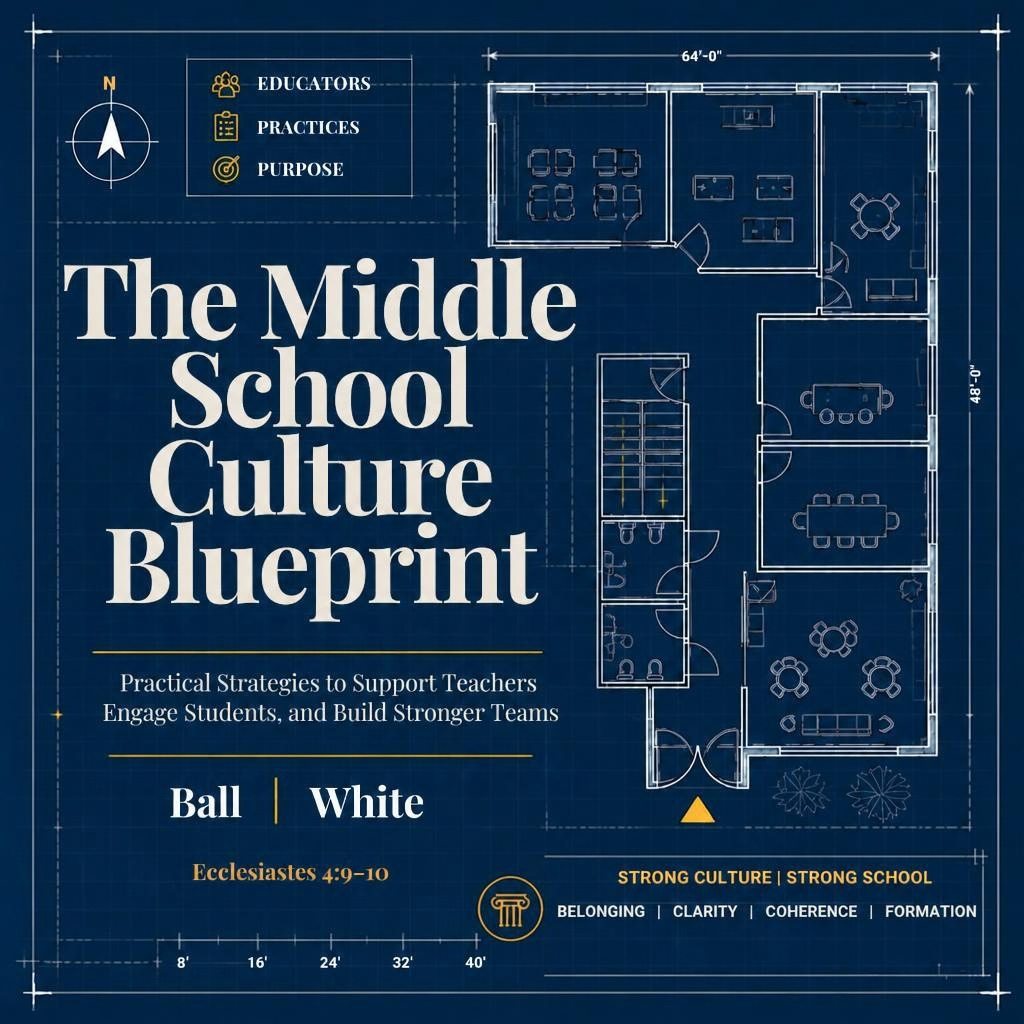
I appreciate how closely this aligns with the work LaTonya and I are developing through the four pillars of The Middle School Culture Blueprint: Belonging, Clarity, Coherence, and Formation.
Belonging invites us to create environments where individuals feel seen, known, valued, and needed.
Clarity challenges us to establish shared priorities and expectations.
Coherence encourages us to align our practices and decisions with those priorities.
Formation reminds us that our work is ultimately about helping young people grow academically, socially, spiritually, and personally.
These pillars are interconnected, and none can be sustained through good intentions alone. They require thoughtful reflection and daily attention. A culture inventory, meaningful conversations, and a willingness to examine our practices can help us recognize both the strengths worth protecting and the habits that may need to change.
Sometimes Presence Is Enough
As we approached the end of our conversation, Anita shared a reminder that I believe every school leader needs to hear: You do not always have to have the solution. Sometimes your presence is what matters most, and listening is enough. Acknowledging another person’s experience is the very thing that helps strengthen trust and connection. In a profession where leaders encounter countless decisions, competing priorities, and unexpected challenges, this is a particularly meaningful reminder.
We do not have to respond to every concern with a new initiative. We do not have to fill every silence with an answer. There is wisdom in pausing, listening, and allowing others to know that they are not navigating challenges alone… an essential part of culture by design.
The Gift of Serving in Education
As I reflect on this conversation, I am reminded of the blessing of collaboration and the extraordinary relationships we develop through serving in education. Relationships matter and remind me that the culture we intentionally cultivate is not limited to the walls of a school building. It extends across our schools, dioceses, universities, and professional communities. We are connected through a shared commitment to serve students, support educators, and strengthen those placed in our care.
A Final Reflection for School Leaders
As you consider the culture of your own school community, I invite you to reflect on three questions:
- Are we creating intentional opportunities to listen to those we serve, including when their feedback challenges our assumptions?
- Do our daily words, actions, and decisions consistently reflect the dignity and respect we hope our students will demonstrate?
- Are we collectively asking, “Is this what is right for the students?”
Culture by design begins when we make the intentional choice to examine what we are reinforcing each day. It grows when we have the courage to engage in meaningful conversations, and it thrives when we remain committed to listening, learning, and serving one another.
A heartfelt thank you to Dr. Anita Harkins-Mehsling for sharing her wisdom, experiences, and leadership with our Sharing the Good community.
Your commitment to serving others is a blessing to our profession.
May we continue to recognize that our words and actions matter, that every person deserves to be treated with dignity, and that we are called to serve with both courage and grace.
We can do so much more together.
Please feel welcome to watch Episode 7 of The Middle School Culture Blueprint: Reflections from the Field on Sharing the Good with Dr. Denise Ball, available on YouTube and your favorite podcast platforms.
Whether during your morning commute, a quiet moment of reflection, or a well-deserved pause in your day, I hope these conversations invite us to be intentional about learning from one another, reflecting on our shared mission, and rediscovering the JOY that first called us to serve.
We can do so much more together. It is easy to share the good!
May we continue to seek knowledge in all things,
Denise
#SharingTheGood #CatholicEducation #CatholicLeadership #MiddleSchoolCultureBlueprint #SchoolCulture