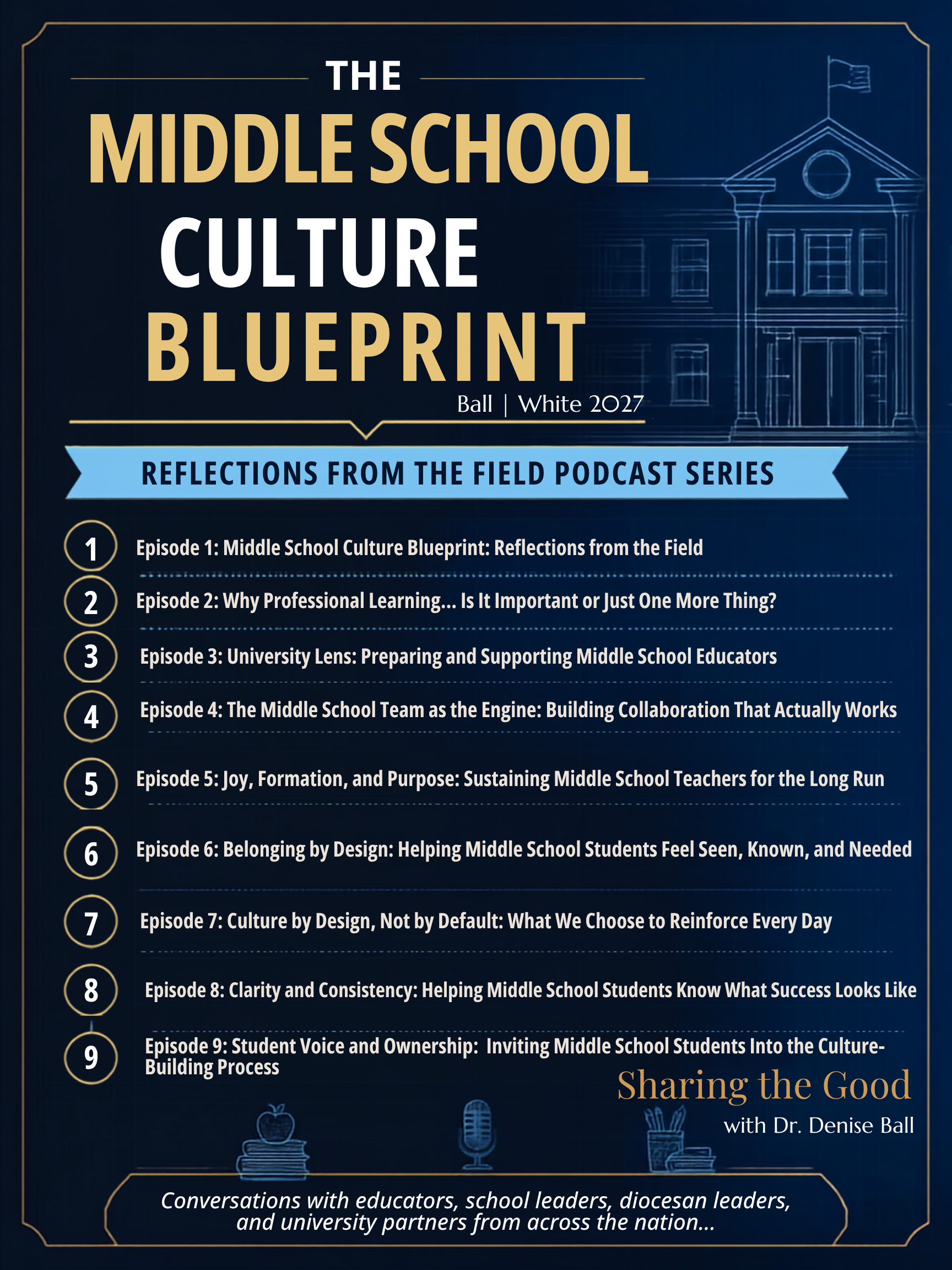
The Middle School Culture Blueprint: Reflections from the Field | Episode 6
What if one of the most powerful ways to help middle school students experience belonging is to give them a meaningful responsibility within their school community?
This question was at the heart of a wonderful conversation with the leadership and middle school team from Holy Redeemer Catholic School in Kensington, Maryland.
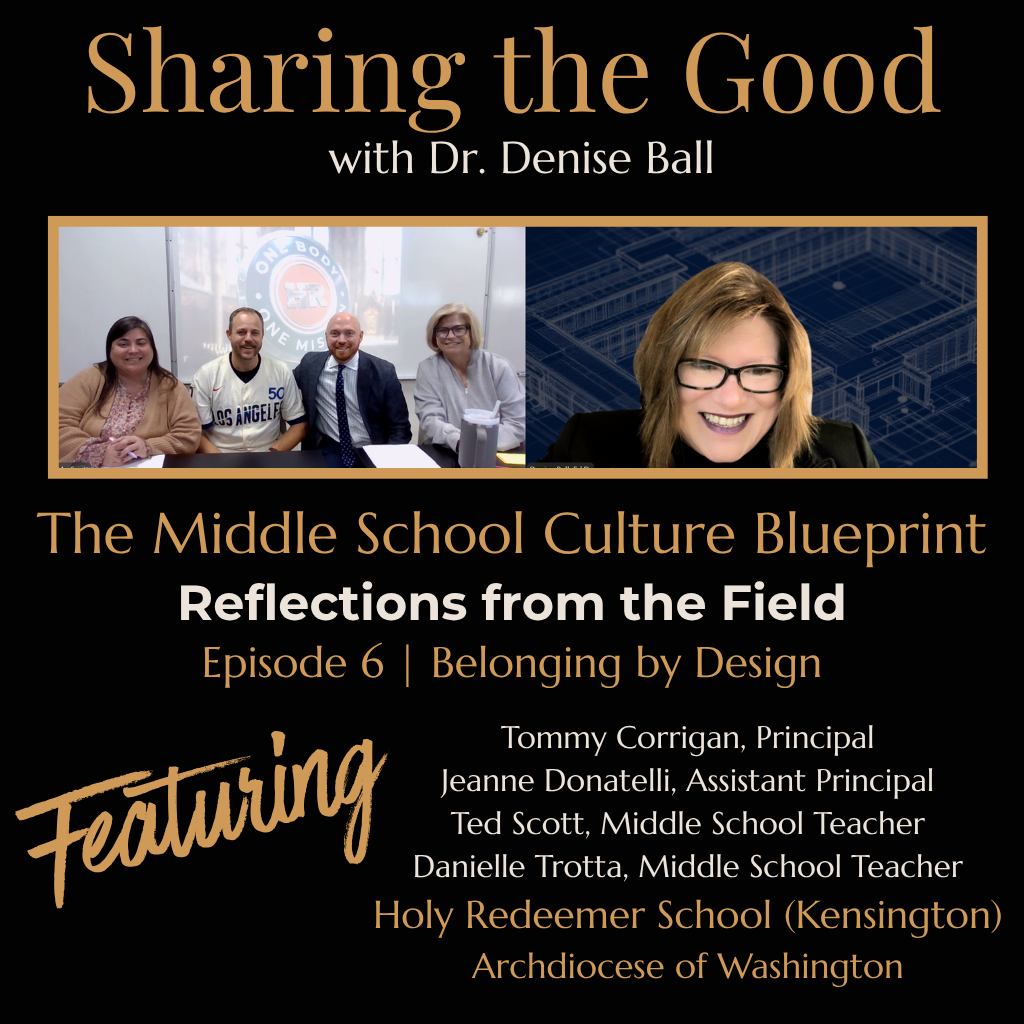
For Episode 6 of The Middle School Culture Blueprint: Reflections from the Field, I had the privilege of welcoming Principal Tommy Corrigan, Assistant Principal Jeanne Donatelli, and middle school teachers Ted Scott and Danielle Trotta to share how their school intentionally cultivates a culture where students are seen, known, and needed.
As Dr. LaTonya White and I continue developing The Middle School Culture Blueprint manuscript in collaboration with NCEA, we return often to a foundational principle, that a positive school culture does not happen by chance. It must be cultivated with intention.
Our conversation with the Holy Redeemer team offered a beautiful example of this principle in action.
From Belonging to Social Purpose
During our conversation, I shared the Thriving with Social Purpose model and research by Ford and Smith, highlighting the importance of helping students understand that they have a meaningful responsibility within their community. For middle school students, belonging is about more than being welcomed or included. It is also about understanding that their presence and contributions matter. I often think about the power of these three simple words and what it means for our students to be seen, known, and needed.
We want students to know that their teachers see them as individuals, recognize their gifts, and value the unique contributions they bring to the classroom. However, there is something especially powerful about helping students recognize that other people are counting on them. Ted and Danielle, both middle school teachers, brought this concept to life by describing the many “jobs” students have throughout the Holy Redeemer community.
These opportunities to contribute remind us that students are not simply recipients of an educational experience. They are active participants in building the community around them. What an important distinction! When we intentionally invite students to serve, lead, and assume responsibility, we help them recognize that they have a place and a purpose within the school.
Faith as the Foundation
Another meaningful thread throughout our conversation came from Tommy and Jeanne, who shared the importance of prayer in the daily life of Holy Redeemer. Prayer is not reserved for one moment of the school day. It is present throughout the day and serves as something the school community leans on. I found this particularly inspiring. In Catholic education, our shared faith provides the foundation upon which relationships, decisions, and community life are built. Prayer offers opportunities to pause, reconnect, express gratitude, and recognize that we are called to something greater than ourselves.
When prayer becomes part of the natural rhythm of a school, it reinforces a shared identity and purpose, and when students witness adults leaning on prayer, they experience an important lesson about the role of faith in everyday life.
Routines, Traditions, and Expectations Matter
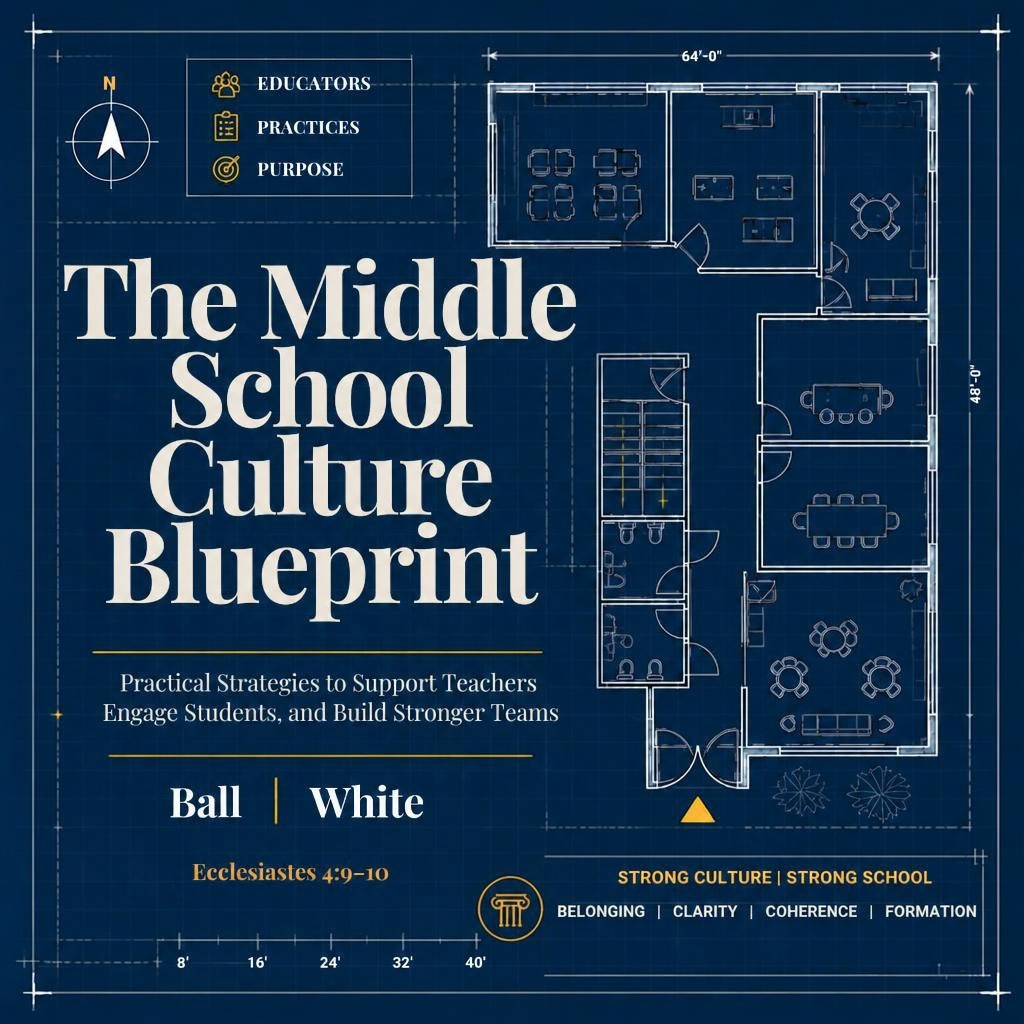
One of my greatest takeaways from this conversation was the intentionality with which the Holy Redeemer team has created a framework of routines, traditions, and expectations. We sometimes think about school culture primarily in terms of relationships. While relationships are essential, they are strengthened by the structures that support them. Routines create predictability, traditions strengthen community identity, and clear expectations provide consistency. Together, these elements create the conditions in which students and adults can thrive. Dr. White and I speak to the four pillars of The Middle School Culture Blueprint being Belonging, Clarity, Coherence, and Formation.
Belonging helps students recognize that they are valued members of the community. Clarity establishes shared expectations. Coherence ensures that those expectations and practices are experienced consistently. Formation invites students to grow in character, responsibility, faith, and service to others. Each pillar strengthens the others.
The Holy Redeemer conversation reminded me that a thriving middle school culture is not built through one initiative or a particularly successful school event. It is cultivated through the daily decisions and shared commitments of an entire school team.
Celebrating Community Through Traditions
Speaking of traditions, I may have discovered another reason to visit Holy Redeemer! The team shared their Friday Night Lights flag football tradition, and I have already decided that I need to experience one of these games firsthand. What a wonderful opportunity for students and families to come together, celebrate their community, and strengthen the relationships that extend beyond the classroom. Traditions such as these create shared memories and help students connect their school experience to something larger than themselves. They become part of the story students carry with them long after they leave middle school.
A Reflection for Middle School Teams
As I reflect on this conversation, I am reminded that every student who walks through our school doors deserves to experience a community where their presence matters. Perhaps one of the simplest questions we can ask as educators is: Does every student have a meaningful opportunity to contribute to the life of our school?
Not every student will seek the spotlight. Not every student will participate in the same activities or demonstrate leadership in the same way, but every student has gifts to share.
Our responsibility is to create multiple pathways for those gifts to be recognized, nurtured, and celebrated.
Sharing the Good
A heartfelt thank you to Tommy, Jeanne, Ted, and Danielle for sharing their experiences and offering such meaningful reflections from the field. Your commitment to your students, families, and one another is evident in the intentional culture you continue to cultivate at Holy Redeemer Catholic School. It is a privilege to highlight the good happening within our Catholic schools and to learn alongside educators who so generously share their wisdom for the benefit of others.
As Dr. LaTonya White and I continue our work on The Middle School Culture Blueprint, conversations like this reaffirm why we believe the voices of practitioners must be part of the story. Research provides an important foundation, and the experiences of educators bring that research to life.
May we continue creating middle school communities where every student is seen, known, and needed because belonging is not simply about having a place in the school community. It is about knowing that we have a part to play in making that community stronger.
We can do so much more together.
Watch Episode 6 of The Middle School Culture Blueprint: Reflections from the Field on Sharing the Good with Dr. Denise Ball, available on YouTube and your favorite podcast platforms.
May we continue to seek knowledge in all things,
Denise
Denise M. Ball, Ed.D.
Retired Catholic Education Leader | Author | Researcher | Consultant
Assistant Professor | Marymount University
Join the conversation
LinkedIn: linkedin.com/in/deniseballedu
Instagram: deniseball_edu
YouTube:www.youtube.com/@SharingTheGoodwithDrDeniseBall
Facebook: https://www.facebook.com/SharingTheGoodWithDrDeniseBall
Blog: www.unlocktheteacher.org