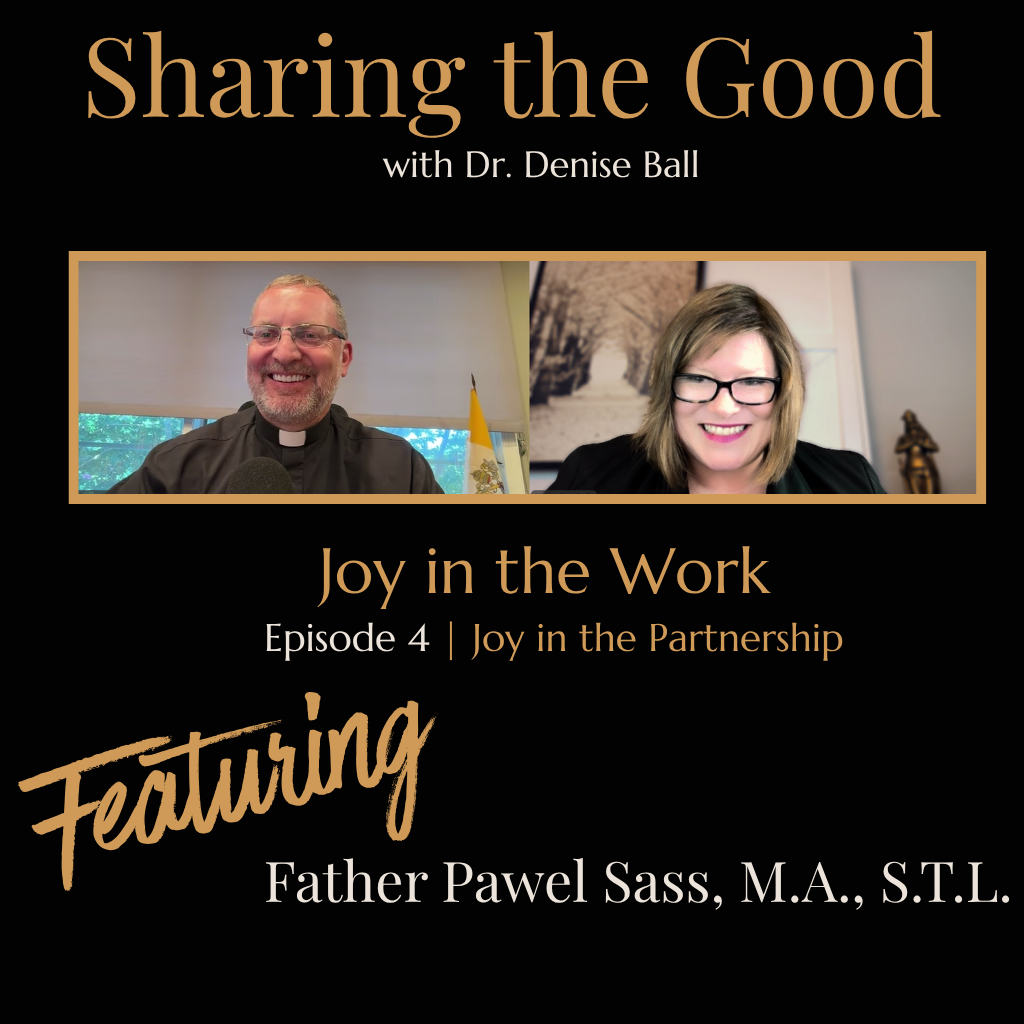
Joy in the Work | Episode 4 | A Conversation with Father Pawel Sass, M.A., S.T.L.
What becomes possible in our Catholic schools when pastors and principals see their partnership not simply as a responsibility, but as a gift?
That is the question I have been carrying with me since my recent conversation with Father Pawel Sass, Pastor of the Shrine of Saint Jude in Rockville, Maryland, for Episode 4 of the Joy in the Work series.
When we talk about strengthening Catholic schools, we rightfully talk about teachers, principals, students, families, curriculum, instruction, faith formation, and school culture. However, there is another relationship that I believe deserves much more of our attention: The pastor-principal partnership.
The pastor and principal have distinct roles and responsibilities, but they share something extraordinary: responsibility for advancing the mission of a Catholic school community. When that partnership is healthy, collaborative, prayerful, and rooted in mutual respect, the effects can extend far beyond the two people involved.
Teachers and students notice and experience it, and the school families and parishioners take notice and experience it. This partnership has a huge impact on a Catholic school culture.
Partnership Has Shaped My Own Leadership Lens
Throughout my years serving Catholic education, I have been blessed to work alongside wonderful priests and to learn from spiritual leaders who modeled a positive approach to Catholic schools. Msgr. Chuck Kosanke in the Archdiocese of Detroit and Father John Williamson in the Archdiocese of Baltimore are two priests whose mentorship and example helped shape my own understanding of partnership.

They helped me see that the relationship between pastor and principal does not need to be defined by hierarchy, territoriality, or uncertainty about who controls what.
At its best, it can be characterized by trust, communication, shared mission, respect for one another’s expertise, prayer, laughter, and a genuine belief that we are better when we serve together.
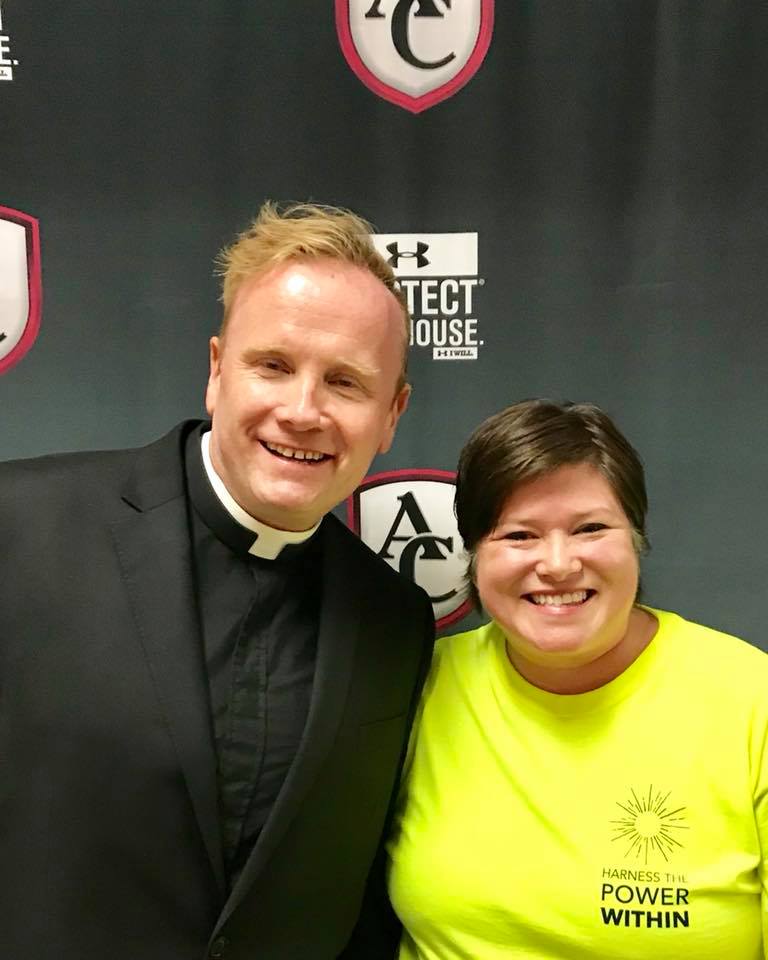
At one point in our conversation, Father Pawel offered a wonderfully simple reminder:
“We are too blessed to be stressed.” (Sass, 2026)
It made me smile. Of course, leadership can be stressful. Catholic school leaders and pastors carry real responsibilities, difficult decisions, competing priorities, and the needs of many people. Father Pawel was not suggesting otherwise. What I heard in his words was an invitation to remember the blessings while carrying the burdens.
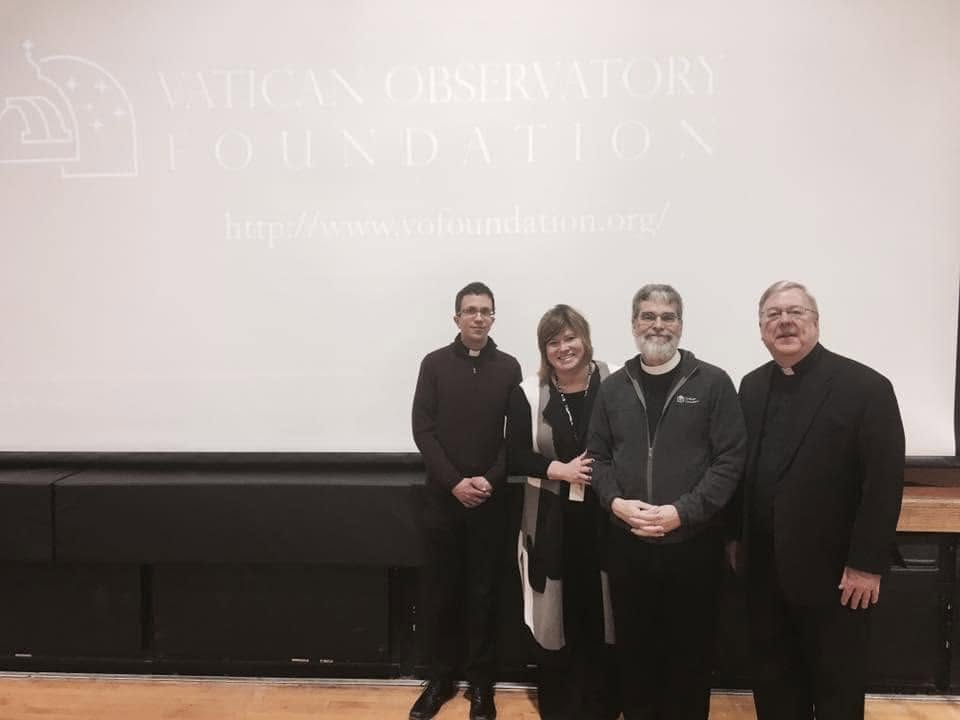
Leadership can become so consumed by what needs fixing that we forget to notice what is flourishing:
The student who finally understands. The teacher who stayed a few extra minutes to help. The family who expresses gratitude. The colleague who makes us laugh or put up a bulletin board. The parishioner who quietly supports the school. The opportunity to celebrate Mass together. The privilege of accompanying children as they grow in faith and knowledge, and the people God has placed beside us.
There will always be another problem to solve, but there will also always be something for which to give thanks. Perhaps part of sustaining joy in the work is learning to hold both realities at once.
Another image Father Pawel shared has stayed with me.
“Clean the cup.”
His reflection was that we need to clean the cup so we can be filled by the Holy Spirit and then empty ourselves again in service to others (Sass, 2026).
What a beautiful image for leadership. Those of us who serve others spend much of our lives pouring out. We give attention. We give encouragement, time, we solve problems and we listen. We teach, lead and we accompany others on this journey of life. But we cannot continually pour from a cup we never allow God to refill.
Prayer, reflection, rest, gratitude, community, and time with God are not distractions from leadership. They help prepare us for it.
Perhaps the question is not simply, “How much more can I give?”
Perhaps sometimes the better question is:
“What do I need to release so there is room for the Spirit to fill me again?”…Clean the cup, be filled, be poured out in service, return, and allow God to fill it again! There is a rhythm of vocation in that image that I find beautiful.
One of the most practical parts of my conversation with Father Pawel centered on conflict. Healthy partnerships are not partnerships without disagreement. Pastors and principals will disagree. Teachers and administrators will disagree. Colleagues will misunderstand one another. We are human beings doing important work together, so conflict will happen.
The question is not whether disagreement will occur. The question is what we do when it does.
Father Pawel offered three practices that are beautifully simple and profoundly useful.
1. Begin With Quiet, Personal Prayer
Before responding, reacting, emailing, calling, or entering the difficult conversation: Pray.
Not necessarily publicly, not performatively, but quietly and personally. Bring the situation to God before bringing it back to the other person. Prayer creates space between the emotion we are experiencing and the response we choose to make.
It invites us to ask: Am I listening? Am I seeking understanding? Is pride influencing my response? What might I be missing? Holy Spirit, how are You asking me to enter this conversation?
For Catholic leaders, perhaps prayer should not simply open our meetings. Perhaps it should also precede our disagreements.
2. Practice “Table Fellowship”
Father Pawel’s second recommendation may be my favorite:
Enjoy table fellowship. (Sass, 2026)
Sit down together, share a meal, have coffee, break bread, and just talk.
Father Pawel reminds us that there is something deeply human, and deeply Christian, about gathering around a table. The person across from us can become very easy to misunderstand when our interaction is reduced to an email, a disagreement, a meeting agenda, or a problem that needs solving. The table changes the posture. At the table, we remember the person. We listen differently. We tell stories. We laugh. We learn about one another, and we discover what we have in common.
I think sometimes the disagreement that seemed enormous becomes easier to navigate once the relationship returns to the center. There is wisdom in table fellowship that extends far beyond the pastor-principal relationship. What might change in our leadership teams, faculties, departments, and school communities if we spent a little more time breaking bread together?
3. Assume the Good
Father Pawel’s third piece of wisdom may be the most challenging:
Assume the good.
When someone says something that frustrates us, assume the good. When a decision surprises us, assume the good. When communication is imperfect, assume the good. When we disagree about the path forward, begin with the belief that the other person also cares about the mission.
Assuming the good does not mean avoiding accountability or pretending harmful behavior is acceptable. It means resisting the temptation to assign negative motives before we have taken the time to understand.
Imagine beginning a difficult pastor-principal conversation from this posture:
“I know you care about our school and our mission. Help me understand how you are seeing this.”
That is very different from beginning with:
“Why would you do this?”
One posture opens a door and the other may close it before the conversation even begins.
I keep returning to Father Pawel’s three practices:
- Pray
- Table Fellowship
- Assume the good
They require no new program, no strategic plan, no committee, or budget. They require intentionality. I think this is one of the lessons emerging throughout this entire Joy in the Work series. Positive culture is often built through seemingly small, repeated relational practices.
How we enter the room, how we listen, how we choose to respond to mistakes, how we welcome people, how we handle a disagreement is important to the partnership.
How we recognize another person’s gifts, how we repair a relationship, and how we choose to begin again can build trust and a strong foundation for the partnership.
As shared in earlier episodes, small moments, repeated consistently, have a way of becoming culture.
A healthy pastor-principal partnership does not require the pastor to become the principal or the principal to become the pastor. Their roles are distinct, their gifts are different, and areas of expertise vary. That is not a weakness in the partnership, and it may be one of its greatest strengths.
Partnership asks us to recognize: You bring something to this mission that I cannot bring alone. In Catholic education, that recognition carries particular significance. The pastor brings spiritual leadership, sacramental life, theological formation, and pastoral care. The principal brings educational leadership, instructional expertise, organizational leadership, and the daily stewardship of the school community. Together, they can help ensure that Catholic identity is not simply something written in a mission statement, but becomes something people experience.
As the Joy in the Work series continues, another piece of the larger picture is becoming clearer to me.
- Dr. Christina Mendez-Hall invited us to Lead with Joy,
- Dr. Nicci Dowd encouraged us to Make Room for Joy,
- Dr. Joy Roberts helped us explore Joy, Belonging, and the Power of Community, and
- Father Pawel Sass reminds us that there can also be Joy in the Partnership.
We do not have to carry the mission alone, and that in itself is a source of joy. There is someone beside us. Someone with different gifts. Someone who sees things we may not see. Someone with whom we can pray, and can break bread together. Someone with whom we can disagree and begin again. Someone who can remind us, on the difficult days, why we said yes to this work in the first place.
I left my conversation with Father Pawel inspired and grateful.
The Shrine of Saint Jude and St. Jude Catholic School in Rockville, Maryland, are blessed to have a pastor who so clearly values Catholic education and recognizes the importance of collaboration.
Our conversation has me reflecting on…
What becomes possible in our Catholic schools when pastors and principals see their partnership not simply as a responsibility, but as a gift?
Perhaps we create stronger relationships, and we navigate conflict with greater grace. Perhaps our teachers feel more supported, and families experience greater unity. Perhaps students encounter a more authentic witness of Christian community, and perhaps we make a little more room for joy.
I am grateful to Father Pawel Sass for sharing his faith, wisdom, humor, and JOY in Episode 4 of the Joy in the Work series:
Joy in the Partnership: The Pastor-Principal Relationship and the Culture We Create
Join the conversation on YouTube: https://youtu.be/BqIdg4uuwCU or listen wherever you enjoy your favorite podcasts.
Maybe the next time conflict finds its way into our work, we can remember Father Pawel’s simple wisdom:
Pray, enjoy table fellowship, and assume the good! Maybe, every once in a while, remind ourselves: “We are too blessed to be stressed.” (Sass, 2026)
When we train our eyes to see the good, amazing things happen!
Reference
Ball, D. M. (2026). Joy in the partnership: The pastor-principal relationship and the culture we create [https://youtu.be/BqIdg4uuwCU]. Sharing the Good with Dr. Denise Ball.