
Belonging Begins with the Words We Choose
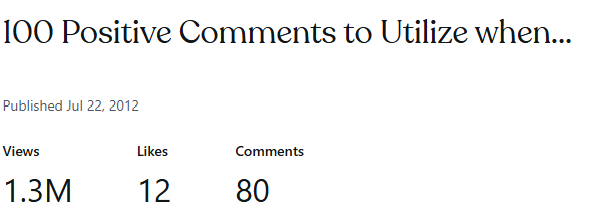
Since 2012, I have shared resources via this Unlock the Teacher blog focusing on positive comments, praise, and how to create positive classroom environments with a reminder that words matter! Since that time, these posts have received more than 1.3 million views. This continued reach has reinforced something I have believed throughout my years in education, that teachers and school leaders are searching for practical language that helps them recognize the good in students.
Positive words can encourage students and strengthen relationships. Yet, as our understanding of school culture continues to grow, we are also invited to think more deeply about the messages our words communicate.
Our comments can do more than acknowledge appropriate behavior, completed work, or academic performance. They can communicate:
- I see you.
- I value your ideas.
- Your voice matters.
- You are capable of growth.
- You are an important member of this community.
- You belong here.
School connectedness exists when students believe that the adults and peers in their school care about them as individuals and care about their learning. This sense of being valued, supported, and included is associated with stronger engagement, attendance, academic outcomes, and overall well-being.
Relationships are not built only through large programs or special events. They are shaped through daily interactions: the greeting at the classroom door, the response to a student’s question, the note written on an assignment, the conversation following a mistake, and the words chosen when a student takes a risk.
Research on relationship-centered classrooms emphasizes the importance of authentic affirmation, active listening, student agency, and opportunities for young people to know that their voices are taken seriously.
Student voice is more than allowing students to speak. It includes providing meaningful opportunities for them to influence their learning, make choices, offer feedback, participate in decisions, and see that their contributions can lead to action.
This updated educator toolkit offers 90 positive comments organized around nine dimensions of belonging. The statements can be adapted for:
- Daily classroom conversations
- Written feedback
- Student conferences
- Report cards and progress reports
- Notes or messages sent home
- Family conferences
- Advisory periods
- Morning meetings
- Restorative conversations
- Celebrations of student growth
These comments are not intended to become generic scripts or empty praise. They are starting points. The most powerful affirmations are sincere, specific, timely, and connected to something an educator has genuinely noticed.
1. Welcoming Every Student
- I am glad you are here today.
- Your presence adds something important to our classroom.
- You are an important member of this learning community.
- There is a place for your ideas in this classroom.
- I appreciate the energy you brought into the room today.
- I noticed that you came in ready to participate and contribute.
- Your experiences help our class learn and grow.
- You do not have to know every answer to belong in this classroom.
- Thank you for bringing your ideas, interests, and questions with you.
- Our classroom community is stronger because you are part of it.
2. Recognizing Identity and Voice
- Your perspective helped us see this topic differently.
- Thank you for sharing an idea that was important to you.
- You expressed your thinking with honesty and confidence.
- Your experiences give you insights that can help others learn.
- I appreciate how clearly you explained the reasoning behind your opinion.
- You asked us to consider something we had not discussed before.
- Your voice helped shape the direction of our conversation.
- You found a meaningful way to communicate your ideas.
- You advocated for yourself respectfully and clearly.
- Your contribution showed that there can be more than one valuable way to understand a topic.
3. Encouraging Effort and Growth
- I can see the growth you have made since you began this work.
- You used feedback to strengthen your thinking.
- You tried a new strategy when your first approach did not work.
- You asked for the support you needed to move forward.
- You stayed engaged even when the work became challenging.
- You set a goal and took meaningful steps toward reaching it.
- You are learning how to recognize which strategies work best for you.
- You took ownership of your learning today.
- You made a thoughtful choice about how to improve your work.
- Your progress shows what can happen when you remain open to learning.
4. Affirming Curiosity and Courage
- Your question helped deepen our learning.
- You were willing to say that you did not understand, and that took courage.
- You respectfully challenged an idea and encouraged us to think more carefully.
- You took an academic risk by sharing your thinking before you were certain that you for trusting our class.
- You followed your curiosity and discovered something new.
- You explored more than one possible answer.
- You made a connection that helped bring this concept to life.
- You were open to revising your thinking when you encountered new information.
- You asked for evidence instead of simply accepting an answer.
- Your curiosity helped make today’s learning more meaningful for everyone.
5. Strengthening Collaboration
- You made room for another person’s voice.
- You listened to understand, not simply to respond.
- You built upon a classmate’s idea in a respectful way.
- You helped your group identify a path forward.
- You disagreed respectfully while remaining open to another perspective.
- You asked a question that encouraged someone else to participate.
- You used your strengths to support the work of the group.
- You accepted responsibility for your part of the team’s work.
- You noticed when the group needed encouragement and offered it.
- You helped your team move forward without taking over the work.
6. Recognizing Kindness and Care
- You noticed that someone needed support and chose to help.
- The care you showed helped another person feel valued.
- You included someone who might otherwise have felt left out.
- You treated another person’s ideas with dignity and respect.
- You chose kindness even when the situation was difficult.
- You helped create a space where someone felt comfortable asking a question.
- You offered a sincere apology and worked to repair the relationship.
- You celebrated someone else’s success without taking attention away from them.
- Your words helped another person feel encouraged.
- You showed empathy by trying to understand how someone else might be feeling.
7. Building Responsibility and Trust
- I can depend on you to follow through on your commitments.
- You completed the responsibility you accepted.
- You made a responsible choice, even when no one was reminding you.
- You used your time in a way that supported your learning.
- You took care of our shared space and materials.
- You were honest about what happened and helped us find a solution.
- You recognized when you needed assistance and asked for it.
- You accepted responsibility for your choice without blaming someone else.
- You came prepared and ready to contribute.
- You used your independence while also knowing when to seek guidance.
8. Supporting Resilience and Reflection
- You paused to think before deciding what to do next.
- You did not allow one difficult moment to define the rest of your day.
- You changed your approach when you realized something was not working.
- You identified what you needed in order to begin again.
- You recognized a challenge and made a plan for addressing it.
- You gave yourself time to learn instead of expecting immediate perfection.
- You used a mistake as information for your next step.
- You returned to the work after feeling frustrated.
- You were patient with yourself while learning something new.
- You reflected honestly on your choices and identified how you would respond differently next time.
9. Creating Classroom Community
- Your actions helped make our classroom more welcoming.
- You helped create a space where others felt comfortable participating.
- You contributed an idea that improved our classroom community.
- You invited others to help make a decision.
- You reminded us of the expectations we created together.
- You helped our class solve a problem in a fair and respectful way.
- You shared a strength or talent that enriched our learning.
- You helped us recognize and celebrate someone else’s growth.
- You made a choice that supported both your learning and the learning of others.
- You showed through your actions that everyone has something meaningful to contribute.
Moving From Praise to Partnership
Positive comments become even more powerful when they invite students to recognize their own growth. Instead of ending the interaction after an affirmation, educators can add a reflective question.
For example:
- You stayed engaged even when the assignment became difficult. What helped you keep going?
- You made room for another person’s voice. What did you notice about the group after you did that?
- You tried a new strategy when the first one did not work. How did you decide what to try next?
- Your perspective helped us see the topic differently. What gave you the confidence to share it?
- You advocated for yourself respectfully. How might you use that skill in another situation?
These questions move the conversation from adult approval to student reflection. As an educator, you are identifing something meaningful, and the student is invited to name the choices, strategies, and strengths that contributed to the outcome.
Over time, this approach can help students develop the language to say:
- I know how I learn.
- I can make thoughtful choices.
- I can ask for what I need.
- I can contribute to my community.
- I can grow.
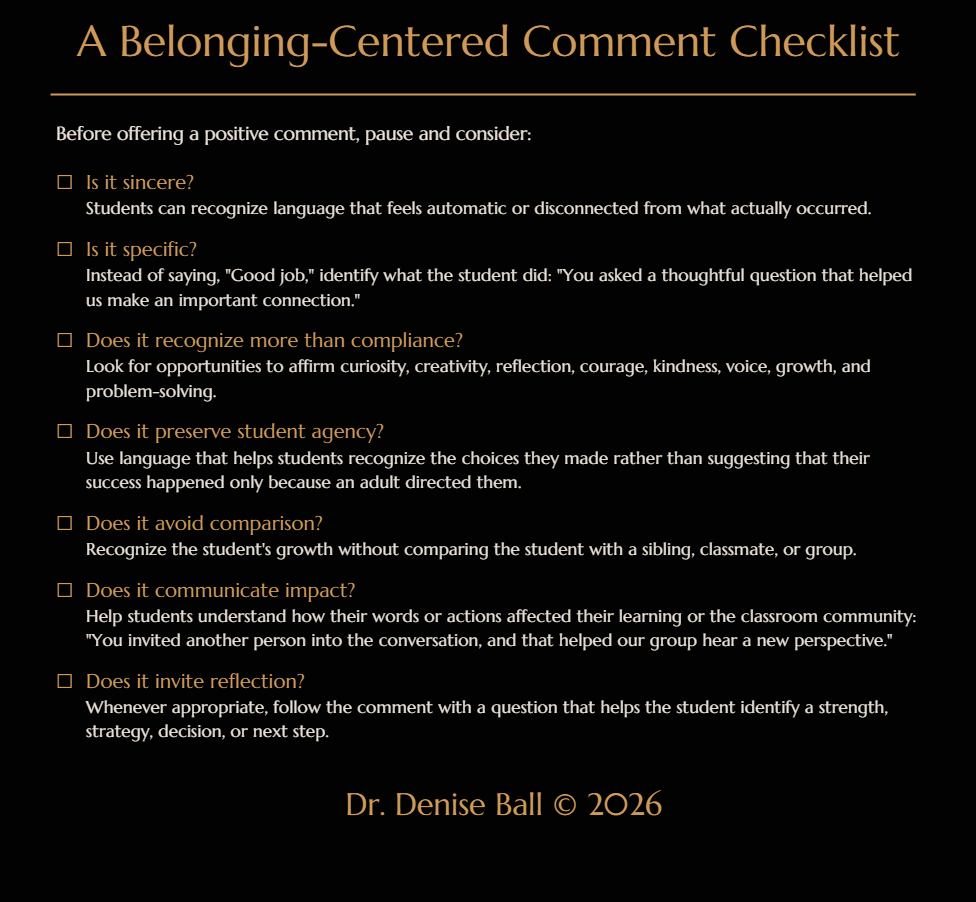
A Belonging-Centered Comment Checklist
Words Help Shape Culture
Positive language does not mean ignoring mistakes, avoiding difficult conversations, or removing accountability. Belonging-centered classrooms maintain clear expectations while communicating that a student’s mistake does not remove the student from the community.
Students need to hear more than what they should stop doing. They also need language that helps them understand what they are doing well, how they are growing, how their choices affect others, and how they can contribute.
There will always be a need to redirect behavior, offer correction, and establish boundaries. The question is whether students also hear:
-I believe you can make a different choice.
-You are still an important member of this community.
-Let us think together about what happened.
-What do you need to move forward?
-How can you help repair the situation?
-I am here to help you begin again.
The language educators use becomes part of the environment students experience each day. A carefully chosen comment may appear to be a small gesture, but to a student, it can communicate something much larger:
My teacher sees me.
My ideas matter.
I am capable.
I have choices.
I can make a difference.
I belong here.
As educators prepare classrooms, develop lessons, establish routines, and welcome students into a new year of learning, may we also prepare the language we will use.
Belonging is strengthened one interaction at a time.
When we train our eyes to see the good, amazing things happen.
May we continue to seek knowledge in all things,
Denise
References and Additional Resources
Ball, D. M. (2012, July 22). 100 positive comments to utilize when referencing student behavior. Unlock the Teacher.
Centers for Disease Control and Prevention. (2024, November 18). School connectedness helps students thrive.
Hernández, L. E., Darling-Hammond, L., & Nielson, N. (2024, November 21). Cultivating relationships in secondary classrooms: Practices that matter. Learning Policy Institute.
Regional Educational Laboratory Pacific. (2025). Including voice in education: Addressing equity through student and family voice in classroom learning. Institute of Education Sciences.


