
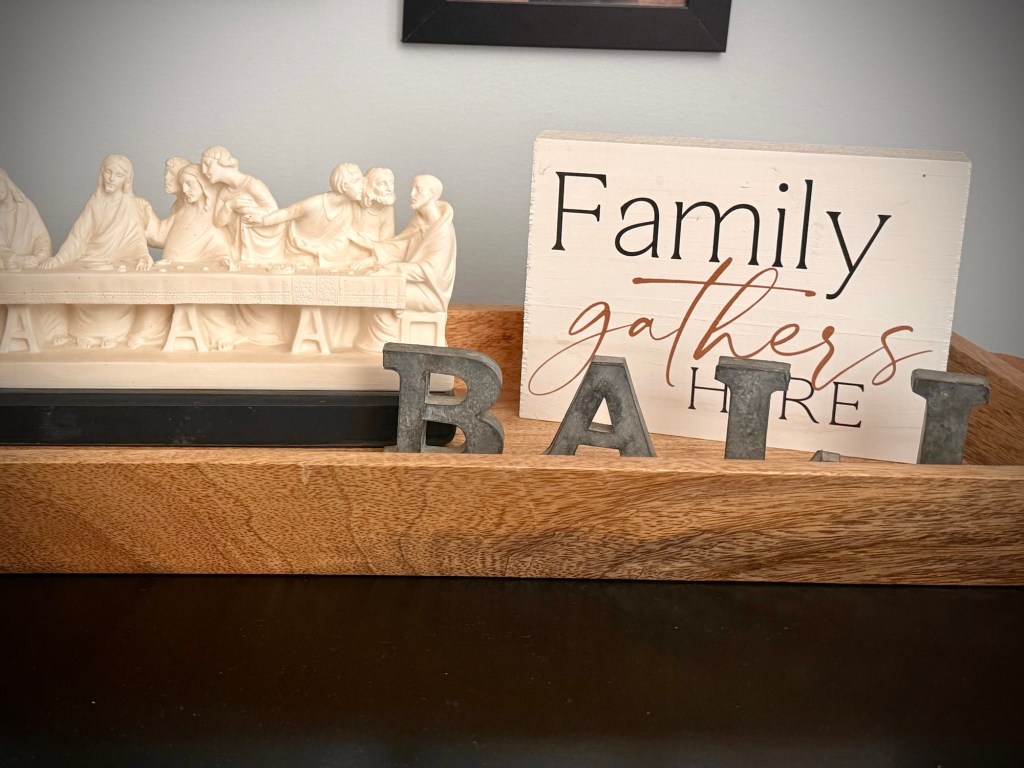
We are raising children in a world of scroll, swipe, and sound bites. Information arrives in 30-second clips, fragmented headlines, and algorithm-driven content streams. Research suggests that rapid, high-frequency digital consumption can shorten attention spans and contribute to cognitive overload (Carr, 2010; Ophir et al., 2009). Attention is divided. Moments are rushed. Noise is constant.
In this environment, parents and teachers are called to be architects of pause.
Traditions and routines are not small things. They are anchors. They slow the train. They invite us to stop long enough to see, truly see, the children in our classrooms and the people in our homes.
These pauses do something powerful to the human spirit…
They create predictability in an unpredictable world. They foster emotional safety. They promote a grounded sense of reality, a reminder that life is more than reaction and response; it is relationship and presence. Research consistently links predictable routines with improved emotional regulation, reduced anxiety, and stronger mental and physical health outcomes in children and adolescents (Fiese et al., 2002; Spagnola & Fiese, 2007).
A Situation We Recognize
Imagine a middle school classroom on a Monday morning.
Students arrive buzzing from weekend activity and digital stimulation. Some are anxious about assignments. Others are carrying silent burdens from home. The energy is scattered.
Instead of diving immediately into content, the teacher begins with “Monday Morning Light.” A candle is turned on (battery operated for safety). Soft instrumental music plays for two minutes. Students are invited to write one gratitude and one intention for the week.
The room shifts…
Breathing slows. Shoulders drop. Eye contact increases. Students are no longer fragmented individuals entering from separate worlds, they are a community beginning together!
Over time, this simple ritual becomes a stabilizing force. It lowers stress responses and supports emotional regulation, outcomes that research connects to consistent family and classroom routines (Spagnola & Fiese, 2007).
That two-minute tradition communicates:
You are safe here. You belong here. We begin together.
Traditions do not waste time. They redeem it.
Why Traditions Matter
Traditions:
-Provide emotional security in uncertain times
-Strengthen identity and belonging
-Reinforce shared values
-Reduce stress through predictable rhythms
-Build intergenerational memory and meaning
-Cultivate hope
Traditions remind us of good memories of what was and give us hope for what is to come.
Let us never underestimate the power of hope. Hope strengthens resilience. Hope sustains effort. Hope fuels joy!
Simple Traditions to Begin Today
In the Classroom
1. Gratitude Friday
End every Friday with students naming one win from the week: academic, personal, or relational.
2. “Light the Week” Ritual
Begin Mondays with a short reflection, Scripture, quote, or moment of silence.
3. Celebration Wall
Create a space where students post small victories: kindnesses, perseverance, improvement.
4. Monthly Service Spotlight
Each month highlight a virtue or service theme and celebrate students who model it.
5. Seasonal Reset Days
At the start of each quarter, pause for goal-setting and community-building before diving into content.
At Home
1. Sunday Supper Tradition
Phones away. One question around the table that invites storytelling.
2. Birthday Blessings
Each family member speaks a word of affirmation over the birthday child, regardless of age.
3. First-Day-of-School (First-Day-of Quarter) Breakfast Ritual
Same meal. Same prayer. Same photo spot. Every year/every quarter.
4. Advent or Lent Reflection Nights
Short candle-lit gatherings with reflection and shared intention.
5. Monthly Memory Night
Pull out old photos and tell stories. Children anchor their identity in narrative memory. (Note: my kids are in their twenties and Michael and I still lean in on this tradition a few times a year.)

Intentional Pauses are Essential
Traditions are not elaborate productions. They are intentional pauses.
In a world that accelerates, traditions decelerate.
In a culture that fragments, traditions gather.
In a society that overwhelms, traditions ground.
Children, young and old, do not simply need information. They need formation.
They need rhythms that say:
You belong. You are known. You are part of something lasting.
As parents and teachers, we are not just managing days.
We are shaping memories.
We are cultivating hope.
We are building anchors that will steady our children long after they leave our classrooms and homes.
Let us be people who pause, let us be people who build traditions, and let us be people who carry hope forward.
Stay tuned for more information on making a difference for children and in service to others. When We Train Our Eyes to See the Good—Amazing Things Happen (Ball, 2026) is in one of the final draft phases 😉.
I would love to hear the classroom and home traditions and routines being used—please leave a comment and share with those who follow this blog. This blog has surpassed over 1 million views…thank you for sharing the good!
May we continue to seek knowledge in all things~
Denise
References
Carr, N. (2010). The shallows: What the Internet is doing to our brains. W. W. Norton & Company.
Fiese, B. H., Tomcho, T. J., Douglas, M., Josephs, K., Poltrock, S., & Baker, T. (2002). A review of 50 years of research on naturally occurring family routines and rituals: Cause for celebration? Journal of Family Psychology, 16(4), 381–390. https://doi.org/10.1037/0893-3200.16.4.381
Ophir, E., Nass, C., & Wagner, A. D. (2009). Cognitive control in media multitaskers. Proceedings of the National Academy of Sciences, 106(37), 15583–15587. https://doi.org/10.1073/pnas.0903620106
Spagnola, M., & Fiese, B. H. (2007). Family routines and rituals: A context for development in the lives of young children. Infants & Young Children, 20(4), 284–299. https://doi.org/10.1097/01.IYC.0000290352.32170.5a
 Unlock the Teacher