Tag Archives: Curriculum

The Power of Traditions in a 30-Second World at Home & in the Classroom

We are raising children in a world of scroll, swipe, and sound bites. Information arrives in 30-second clips, fragmented headlines, and algorithm-driven content streams. Research suggests that rapid, high-frequency digital consumption can shorten attention spans and contribute to cognitive overload (Carr, 2010; Ophir et al., 2009). Attention is divided. Moments are rushed. Noise is constant.

In this environment, parents and teachers are called to be architects of pause.

Traditions and routines are not small things. They are anchors. They slow the train. They invite us to stop long enough to see, truly see, the children in our classrooms and the people in our homes.

These pauses do something powerful to the human spirit…

They create predictability in an unpredictable world. They foster emotional safety. They promote a grounded sense of reality, a reminder that life is more than reaction and response; it is relationship and presence. Research consistently links predictable routines with improved emotional regulation, reduced anxiety, and stronger mental and physical health outcomes in children and adolescents (Fiese et al., 2002; Spagnola & Fiese, 2007).

A Situation We Recognize

Imagine a middle school classroom on a Monday morning.

Students arrive buzzing from weekend activity and digital stimulation. Some are anxious about assignments. Others are carrying silent burdens from home. The energy is scattered.

Instead of diving immediately into content, the teacher begins with “Monday Morning Light.” A candle is turned on (battery operated for safety). Soft instrumental music plays for two minutes. Students are invited to write one gratitude and one intention for the week.

The room shifts…

Breathing slows. Shoulders drop. Eye contact increases. Students are no longer fragmented individuals entering from separate worlds, they are a community beginning together!

Over time, this simple ritual becomes a stabilizing force. It lowers stress responses and supports emotional regulation, outcomes that research connects to consistent family and classroom routines (Spagnola & Fiese, 2007).

That two-minute tradition communicates:

You are safe here. You belong here. We begin together.

Traditions do not waste time. They redeem it.

Why Traditions Matter

Traditions:

-Provide emotional security in uncertain times

-Strengthen identity and belonging

-Reinforce shared values

-Reduce stress through predictable rhythms

-Build intergenerational memory and meaning

-Cultivate hope

Traditions remind us of good memories of what was and give us hope for what is to come.

Let us never underestimate the power of hope. Hope strengthens resilience. Hope sustains effort. Hope fuels joy!

Simple Traditions to Begin Today

In the Classroom

1. Gratitude Friday

End every Friday with students naming one win from the week: academic, personal, or relational.

2. “Light the Week” Ritual

Begin Mondays with a short reflection, Scripture, quote, or moment of silence.

3. Celebration Wall

Create a space where students post small victories: kindnesses, perseverance, improvement.

4. Monthly Service Spotlight

Each month highlight a virtue or service theme and celebrate students who model it.

5. Seasonal Reset Days

At the start of each quarter, pause for goal-setting and community-building before diving into content.

At Home

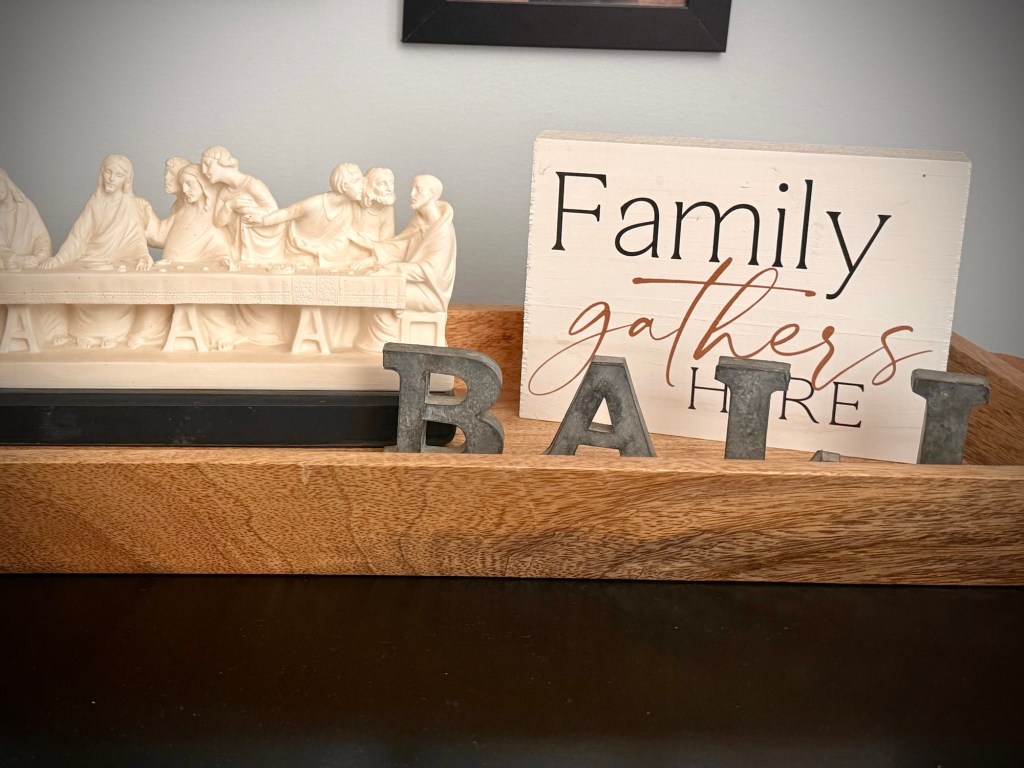
1. Sunday Supper Tradition

Phones away. One question around the table that invites storytelling.

2. Birthday Blessings

Each family member speaks a word of affirmation over the birthday child, regardless of age.

3. First-Day-of-School (First-Day-of Quarter) Breakfast Ritual

Same meal. Same prayer. Same photo spot. Every year/every quarter.

4. Advent or Lent Reflection Nights

Short candle-lit gatherings with reflection and shared intention.

5. Monthly Memory Night

Pull out old photos and tell stories. Children anchor their identity in narrative memory. (Note: my kids are in their twenties and Michael and I still lean in on this tradition a few times a year.)

Intentional Pauses are Essential

Traditions are not elaborate productions. They are intentional pauses.

In a world that accelerates, traditions decelerate.

In a culture that fragments, traditions gather.

In a society that overwhelms, traditions ground.

Children, young and old, do not simply need information. They need formation.

They need rhythms that say:

You belong. You are known. You are part of something lasting.

As parents and teachers, we are not just managing days.

We are shaping memories.

We are cultivating hope.

We are building anchors that will steady our children long after they leave our classrooms and homes.

Let us be people who pause, let us be people who build traditions, and let us be people who carry hope forward.

Stay tuned for more information on making a difference for children and in service to others. When We Train Our Eyes to See the Good—Amazing Things Happen (Ball, 2026) is in one of the final draft phases 😉.

I would love to hear the classroom and home traditions and routines being used—please leave a comment and share with those who follow this blog. This blog has surpassed over 1 million views…thank you for sharing the good!

May we continue to seek knowledge in all things~

Denise

References

Carr, N. (2010). The shallows: What the Internet is doing to our brains. W. W. Norton & Company.

Fiese, B. H., Tomcho, T. J., Douglas, M., Josephs, K., Poltrock, S., & Baker, T. (2002). A review of 50 years of research on naturally occurring family routines and rituals: Cause for celebration? Journal of Family Psychology, 16(4), 381–390. https://doi.org/10.1037/0893-3200.16.4.381

Ophir, E., Nass, C., & Wagner, A. D. (2009). Cognitive control in media multitaskers. Proceedings of the National Academy of Sciences, 106(37), 15583–15587. https://doi.org/10.1073/pnas.0903620106

Spagnola, M., & Fiese, B. H. (2007). Family routines and rituals: A context for development in the lives of young children. Infants & Young Children, 20(4), 284–299. https://doi.org/10.1097/01.IYC.0000290352.32170.5a

Leave a comment

Filed under Creating a Positive School Culture, Inspiration, Positive School Culture, Traditions for Home & the Classroom

F-R-E-E Educational Webinars for Teachers and Parents

Given our economy, professional development has been slim for many educators. There is a plethora of free webinars online. Have fun learning!

Life is busy and for those of us who do not have time to attend a class for learning or pleasure, webinars can be just the tool needed to achieve our goal. Given technology, webinars can be the next best thing for teachers too.

PBS Teachers Live Should be in Every Teacher’s Toolbox

PBS Teachers Live offers a wealth of webinars in many areas across the disciplines. For example, if a teacher were interested in educating students about Earth Day in April (hopefully), then PBS Teachers Live would be
a valuable tool. Teachers sign up for free and log on to various webinars, full of ideas, lesson plans and across the curriculum connections, to name a few.

Webinars, an Awesome Resource for Educators

After doing some research, here are a few webinar sites across the Internet that is recommended by those within the world of education:

Education Week (one of my personal favorites) offers many enlightening webinars. Check out “E-educators’ Evolving Skills”…talk about relevant!

American Statistical Association offers various webinars…currently hosting a K-12 “Meeting within a Meeting” for Science and Math Teachers

Exploring Middle School MiddleWeb is a blog powered by Typepad. They are a promoter of 21st Century Learning and offer live and archived webinars. Check out the latest webinar: The National Middle School Association is teaming up with the NSF-funded Middle School Portal to offer “Free math and Science Webinars”…the goal was to not only make the training affordable but user friendly; teachers could watch from home.

Webinars and Educational Professional Development

The life of a teacher is very demanding and organization is necessary. This is also true for those entrusted to lead and provide professional development for their educational staff. Given this amazing age of technology, regardless of budget, there is no reason that professional development is not occurring within schools.

All of the webinars posted here in this article, can be utilized to strengthen and enrich any school faculty. Educators can watch at their own pace or gather and watch as a team. This type of professional development is only going to increase not decrease as we progress further into the world of technology. There are many curriculum developers/professional development trainers, who utilize programs like these mentioned to create meaningful professional development for educators around the world.

OneNote and Education:
This MSDN blog was created to have a dialog about OneNote and education, including sharing ideas, resources, and building community with teachers, students and faculty.

Parents are the first teachers. All of these webinars mentioned are open to anyone interested in learning and changing the life of a child. This will be one of many articles written on the topic of professional development within the world of education. There is a plethora of free programs out there for all of us to learn and use, to meet the needs of our children,
our future.

May we continue to seek knowledge in all things,

Denise


6 Comments

Filed under Curriculum Resources, FREE Educational Webinars for Teachers and Parents

Teachers are Planters of Seeds…What Kind of Seeds are you Planting?

As I sit and review my notes for Unlock the Teacher‘s first professional development session for the 2011/2012 school year, I reflect and wonder, what
words can I provide that might inspire and instill hope for all the amazing teachable moments that will happen in the life of the teachers with whom I will be speaking to tomorrow. Teaching is SO much more than a job, I honestly believe it is a calling; an urge that a person feels to make a difference, and is played out in the classroom.

We often think about all the teachable moments that happen throughout the school year for our students, our future. However, I also think of the amazing teachable moments that occur for the individual teacher. I hope that at this time of year, the teacher is reflecting and writing a curriculum map for the school year that will be used as a master plan.

The teacher, who starts the school year, is often different from the one who finishes it. Hopefully, this is the case, as a true reflective practitioner will evolve throughout the year as his/her students will…keeping in mind no two students are alike, no school year should ever mirror another for a teacher.

In regards to a teacher’s master curriculum plan, this is just a tool that is utilized to create lessons full of discovery for each quarter, with one scaffolding on the next to ensure that students are maximizing their potential. However, this is just a plan, as all good teachers know, true
“teachable moments” sometimes just happen and must be capitalized on in the moment.

I have chosen the theme of “Teachers are Planters of Seeds” for tomorrow.  I have had the pleasure of working with this staff on curriculum alignment and I am honored to be asked back into their building on their first day back to school before their eager students arrive next week.

I think as teachers, we have the awesome power to create new worlds in our students’ minds. We can take them to places they might not ever get an opportunity to experience, tell them and show them how to achieve the impossible dream OR we can crush the human spirit with one angry glance or snide comment.

Think about what kind of world we hope to have in the future and remember that it all begins with how we treat our children today, what opportunities we provide, what words of encouragement or defeat did we choose to utilize at the moment of chaos in the classroom. When we train our eyes to see the good and choose to use words to share the good, amazing things can happen!


Children Learn What They Live

By Dorothy Law Nolte


If children live with criticism,
They learn to condemn.

If children live with hostility,
They learn to fight.

If children live with ridicule,
They learn to be shy.

If children live with shame,
They learn to feel guilty.

If children live with encouragement,
They learn confidence.

If children live with tolerance,
They learn to be patient.

If children live with praise,
They learn to appreciate.

If children live with acceptance,
They learn to love.

If children live with approval,
They learn to like themselves.

If children live with honesty,
They learn truthfulness.

If children live with security,
They learn to have faith in themselves and others.

If children live with friendliness,
They learn the world is a nice place in which to live!


What kind of seeds are you getting ready to plant this school year?

May we all continue to seek knowledge in all things,

Denise


2 Comments

Filed under Curriculum Resources, Professional Development Workshops for Educators

“All Around our Town” to Launch the 1st of March in 2011

My community has many beautiful parks.

All proceeds from the eBook for  “All Around our Town”  will be donated to St. Mary’s School in Royal Oak, Michigan.  This school has a wonderful curriculum plan that incorporates art and reading across the curriculum. 

The art teachers exhibits a passion for her craft and enjoys showcasing the many beautiful art projects created by her students. The 7th and 8th graders are so well read in this building, I enjoy stopping in to ask them what they are reading and why.  I can not wait to see what wonderful ways this building will utilize our gift.

May we continue to seek knowledge in all things-

Denise


Leave a comment

Filed under Achievement Gap Blogs, Common Core State Standards "Nuts & Bolts", Grants and Funding Resources, March 2011 Promoting Literacy Campaign, Promoting Literacy, Recommended Books to Read, to Learn, to Inspire